
Great Wall Motor

Search documents
Qualcomm(QCOM) - 2026 Q1 - Earnings Call Transcript
2026-02-04 22:45
Financial Data and Key Metrics Changes - The company reported record revenues of $12.3 billion and non-GAAP earnings per share (EPS) of $3.50 for fiscal Q1 2026, with non-GAAP EPS at the high end of guidance [5][17] - QCT revenues reached a record $10.6 billion, with strong year-over-year growth across automotive and IoT segments [17] - Licensing business revenues were $1.6 billion, with an EBT margin of 77%, driven by higher units and favorable mix [17] Business Line Data and Key Metrics Changes - QCT handset revenues reached a record $7.8 billion, benefiting from recently launched flagship smartphones [17] - QCT IoT revenues grew 9% year-over-year to $1.7 billion, driven by demand across consumer and networking products [17] - QCT Automotive revenues grew to $1.1 billion, up 15% year-over-year, reflecting increased demand for Snapdragon Digital Chassis platforms [17] Market Data and Key Metrics Changes - Global consumer demand for handsets, particularly in the premium and high-tier segments, exceeded expectations, with healthy sell-through observed [5] - The handset industry is expected to face constraints due to memory availability and pricing, particularly DRAM, as suppliers redirect capacity to meet AI data center demand [5][6] Company Strategy and Development Direction - The company is focused on expanding its presence in the premium and high-tier smartphone segments, with a dual flagship product strategy that has seen broad OEM adoption [6][7] - The company is also investing in AI-native smartphones and intelligent wearables, positioning Snapdragon platforms as the choice for the industry [7][8] - In automotive, the company aims to reinforce its technology leadership with multiple design wins and collaborations with major automakers [10][11] Management's Comments on Operating Environment and Future Outlook - Management expressed confidence in the fundamentals of the handset business despite near-term challenges related to memory supply and pricing [19] - The company anticipates returning to prior growth trajectories for QCT handset revenues once memory supply normalizes [19] - Management remains optimistic about the long-term growth potential in automotive and IoT, with expectations for continued revenue acceleration [21] Other Important Information - The company completed the acquisition of Alphawave Semi, enhancing its high-speed wire connectivity technologies [15] - The company is actively engaging with leading hyperscalers and cloud service providers to develop data center solutions [14] Q&A Session Summary Question: What factors are driving the weakness in handset outlook beyond memory pricing? - Management indicated that the weakness is entirely related to memory availability, with strong microeconomic indicators and handset demand observed [26][27] Question: Is the automotive revenue growth driven by ADAS wins? - Management confirmed that the automotive pipeline continues to translate into revenue, with new car launches contributing to record revenues [29][30] Question: How is the company managing the memory supply situation? - Management clarified that they do not purchase memory directly but work closely with customers who do, ensuring flexibility with various memory providers [69][70] Question: What is the outlook for the data center business? - Management stated that progress is on track, with positive feedback from engagements with hyperscalers and cloud service providers [35][36] Question: How does the company view the impact of memory shortages on the overall handset market? - Management emphasized that the size of the handset market will be determined by memory availability, with expectations for premium and high-tier segments to remain resilient [40][76]

全球电池供应链_储能系统激增;关键矿产-Global Battery Supply Chain_ Monthly Recharge_ BESS surge; critical minerals
2025-12-08 15:36
Summary of Key Points from the Conference Call Industry Overview - **Industry Focus**: Global Battery Supply Chain, specifically Battery Energy Storage Systems (BESS) and Electric Vehicles (EVs) [2][10] - **Market Dynamics**: The demand for BESS is projected to grow significantly, with global battery installation forecasts raised to 3.8 TWh by 2030 [2][10] Core Insights and Arguments - **Battery Demand Forecasts**: - Global battery demand for 2025-2030 has been revised upward by 1-11%, with BESS demand increasing by 4-37% [2][10] - BESS is expected to account for 31% of total battery demand by 2030, with an estimated 1.19 TWh [2][10] - U.S. BESS demand is projected to rise by 14%-21% to 177 GWh by 2030, driven by investment tax credits and data center expansions [2][10][3] - **EV Market Adjustments**: - Global EV sales forecasts have been trimmed by 1-7%, with specific reductions in China and the U.S. due to policy changes [12][10] - Expected EV penetration rates for 2030 are 39% globally, 76% in China, 41% in the EU, and 17% in the U.S. [10] - **Critical Minerals and Supply Chain Resilience**: - Critical materials are increasingly viewed as strategic assets, with demand driven by energy transition, automation, and geopolitical tensions [4][57] - Investment in supply chain redundancy and local processing is essential to mitigate risks associated with reliance on specific countries, particularly China [4][57] Additional Important Insights - **Policy Impacts**: - New guidelines from China's NDRC and NEA are expected to enhance BESS economic viability through improved capacity compensation mechanisms [11][34] - The U.S. market is facing electricity supply/demand imbalances, with BESS seen as a solution to support data center expansions [3][11] - **Investment Recommendations**: - Top picks for exposure to the BESS market include LG Energy Solution (LGES), which is well-positioned to capture U.S. market share [13][18] - Other recommended companies include Sungrow and CSI Solar, which are expected to benefit from robust global BESS demand [37][13] - **Market Trends**: - The U.S. electricity demand is projected to grow at a CAGR of 3.0% from 2025 to 2030, primarily driven by data centers [16][39] - The anticipated growth in BESS demand is supported by significant government subsidies covering approximately 70% of capital expenditures [17][3] - **Challenges and Bottlenecks**: - Key bottlenecks include interconnection and local permitting approvals, which can delay project timelines [22][23] - The transition to onshore battery sourcing is expected to increase, but challenges remain regarding the import of Chinese components due to regulatory changes [24][31] Conclusion The global battery supply chain is undergoing significant transformations driven by increasing demand for BESS and EVs, influenced by policy changes and market dynamics. Investment in critical minerals and supply chain resilience is crucial for future growth, with specific companies identified as key players in this evolving landscape.
中国新能源车企-第三季度财报后:寒意渐显-China EV Makers_ Post-Q3 results_ feeling the chill
2025-12-02 06:57
Summary of the Conference Call on China EV Makers Industry Overview - **Industry**: Electric Vehicle (EV) sector in China - **Current Context**: The sector is experiencing a slowdown in demand as the Q4 volume guidance from major players is below market expectations, indicating a cautious outlook for the auto market as a whole [2][3] Key Company Insights - **XPeng and Nio**: Both companies provided Q4 volume guidance that was below street expectations, suggesting flat sales in November and December compared to October. Their share prices reacted negatively to this news [3] - **Li Auto**: While Li Auto's Q4 volume guidance is more optimistic (approximately 20% higher than October), management expressed caution regarding Q1 2026 volume and indicated weak margin guidance for Q4 2025, projecting a decrease of about 3-4 percentage points from Q3 [3] - **Demand Factors**: The expiration of local government trade-in subsidies is cited as a direct cause for the cooling demand, despite the continuation of central government scrappage subsidies and EV purchase tax exemptions until year-end [3] Market Outlook - **2026 Projections**: The overall domestic passenger vehicle (PV) market is expected to decline by 2%, with the EV market facing growth slowdowns due to policy retreats and diminishing stimulus effects. The premium segment may show resilience, while exports could become a key growth driver for mass-market companies [4][5] - **Strategic Shifts**: Some companies, like XPeng, are diversifying into new areas such as humanoid robots and robotaxis, which may take longer to yield returns [4] Valuation and Investment Strategy - **Cautious Stance**: The report maintains a cautious outlook for the near term, suggesting that the market needs time to adjust to the slowdown in domestic demand and increasing price competition [5] - **Long-term Drivers**: Continuous technological innovation, product mix upgrades, and global expansion are identified as long-term growth drivers for Chinese automakers [5] - **Recommended Companies**: Staying invested in industry leaders like CATL and BYD, as well as valuation-friendly companies like Great Wall Motor (GWM), is suggested as a prudent strategy [5] Risks and Challenges - **Traditional ICE Sector Risks**: Include economic slowdown, excessive capacity leading to oversupply, and regulatory changes affecting demand [7] - **NEV Sector Risks**: Include potential declines in government subsidies, new market entrants, and overcapacity in the NEV battery industry [7][10] - **Valuation Risks for BYD**: Changes in favorable policies, raw material price fluctuations, and overall competition in the NEV market are highlighted as downside risks [8] Conclusion - The conference call reflects a cautious sentiment in the Chinese EV market, with major players adjusting their forecasts downward amid a cooling demand environment. Strategic shifts and long-term growth drivers are emphasized, while various risks remain pertinent to the sector's outlook.

禾赛科技:五大催化因素下,2026 财年股价或翻倍;维持 “买入” 评级,为汽车科技板块首选标的
2025-12-01 00:49
Summary of Hesai Group (HSAI.O / 2525.HK) Conference Call Company Overview - **Company**: Hesai Technology - **Industry**: Auto-Tech, specifically focusing on LiDAR solutions for autonomous vehicles and robotics - **Market Position**: Global leader in three-dimensional light detection and ranging (LiDAR) solutions, established in 2014 Key Financial Metrics - **2025-27E LiDAR Volume Forecasts**: 1.68 million (2025), 3.68 million (2026), 5.79 million (2027) units [1] - **2026E LiDAR Shipments**: Expected contributions from major clients including Li Auto (450k), Xiaomi (700k), Leapmotor (400k), BYD (350k), Geely (500k), GWM (200k), and Robotics (400-500k) [1] - **Average Selling Price (ASP) Adjustments**: Cut to Rmb1.93k (2025), Rmb1.75k (2026), Rmb1.65k (2027) due to product mix changes and annual price decline [1] - **Gross Profit Margin (GPM) Forecast**: Increased by 1.9-2.2 percentage points to 41.7% (2025), 37.3% (2026), 35.0% (2027) [1] - **Net Profit (NP) Forecast**: Adjusted to Rmb392 million (2025), Rmb1,015 million (2026), Rmb1,449 million (2027) [1] - **Target Price**: Maintained at US$38.1 / HK$296.9 based on a PEG of 1.2x for 2025E [1] Catalysts for Growth 1. **L3 Policy/Legislation**: Anticipated progress in 1H26 could increase LiDAR value content per car from USD200 (L2+) to USD500-1,000 (L3) [2] 2. **Market Penetration**: Introduction of models under Rmb100k ASP adopting LiDAR, starting with Chang'an Qiyuan Q05 and Leapmotor A10 in 1H26 [2] 3. **Cost Management**: ATX cost reductions expected to offset ASP declines, maintaining resilient margins [2] 4. **Robotics Contribution**: Robotics LiDAR expected to contribute over 50% of gross profit in 2025E, accounting for 40% of total revenue [2] 5. **Long-range LiDAR Sensor Milestone**: Achieved C-sample milestone for a long-range LiDAR sensor with a top European OEM, with supply expected by end-2026 [2] Competitive Landscape - **Pricing Strategy**: Hesai's LiDAR pricing is generally 10-15% higher than peers, leveraging technology advantages [12] - **Market Dynamics**: The LiDAR industry is expected to have multiple competitors, with no single company dominating [12] Risks - **Competition**: Rising competition from various companies developing LiDAR products [25][29] - **Product Defects**: Potential defects could reduce market adoption and harm reputation [25][29] - **Cost Fluctuations**: Risks associated with raw material cost increases [25][29] - **Market Penetration**: Lower-than-expected LiDAR/ADAS penetration could impact growth [25][29] - **Price Wars**: Potential price wars could affect blended ASP [25][29] - **Regulatory Risks**: Changes in regulations could impact operations [25][29] Conclusion - **Investment Rating**: Buy rating maintained for Hesai, with expectations of strong growth driven by technological advancements and market penetration strategies [23][27] - **Valuation Methodology**: PEG valuation methodology applied, with a target price reflecting robust order wins and favorable policy support [28]
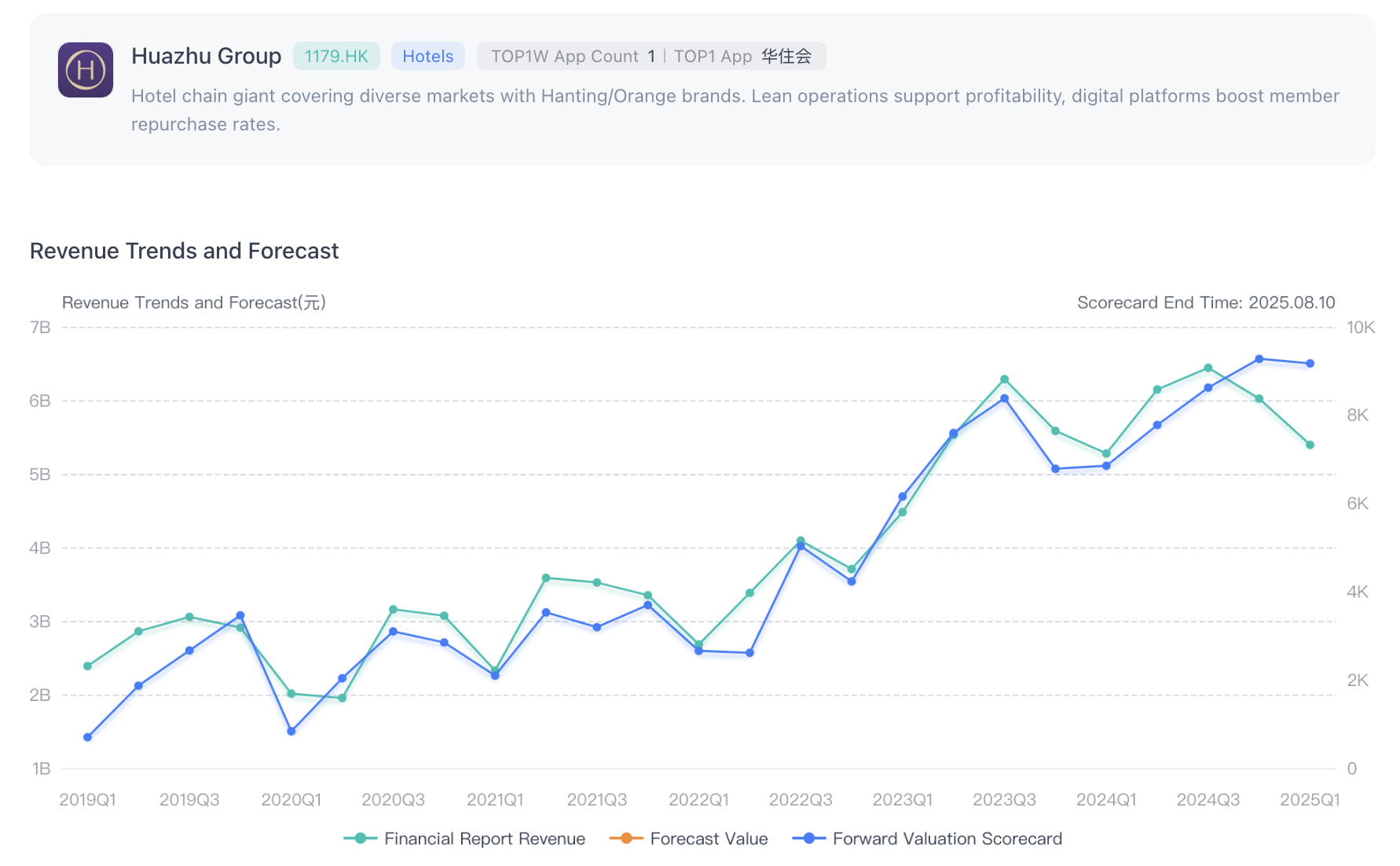
MoonFox Data Launches New Financial Alternative Data Solution to Empower Investment Decisions Across Multiple Scenarios
Globenewswire· 2025-11-14 10:00
Core Insights - MoonFox Data, a subsidiary of Aurora Mobile, has launched its Financial Alternative Data Solution to enhance investment decision-making efficiency and accuracy by providing real-time, precise data support [1][12]. Investment Analysis Pain Points - Investment institutions face challenges such as delayed performance forecasting due to a 1–1.5 month information lag, which complicates revenue predictions for listed companies [2]. - Limited data coverage restricts research and consulting institutions to either online or offline data, hindering comprehensive evaluations of corporate operations and industry competition [2]. - Private equity and venture capital firms struggle to validate data-financial linkages, making it difficult to assess enterprise value and investment potential [2]. - Identifying high-growth sectors is challenging for investment institutions, risking missed investment opportunities [2]. Application Scenarios - The solution supports earnings forecasting for public companies, allowing funds and investment banks to predict revenues ahead of earnings releases by integrating various data sources [3]. - Real-time corporate performance monitoring is available for all investment institutions, enabling them to track operational dynamics and identify performance risks or growth signals [8][14]. - Subsector opportunity discovery assists VC/PE and research institutions in rapidly identifying high-growth sectors and screening for top-performing targets [9][15]. - Competitive benchmarking allows corporate strategy and research teams to compare operational performance across multiple companies within an industry [10][16]. Compliance and Data Coverage - MoonFox Financial Alternative Data complies with industry-leading data security and privacy standards, offering historical data tracing since 2019 and flexible output granularity [11]. - The platform covers over 300 listed companies and more than 1,000 brands across A-shares, Hong Kong, and US markets, serving clients like BlackRock and Goldman Sachs [12].


BorgWarner(BWA) - 2025 Q3 - Earnings Call Transcript
2025-10-30 14:30
Financial Data and Key Metrics Changes - The company reported sales of just under $3.6 billion for Q3 2025, reflecting a 2% year-over-year increase excluding foreign exchange impacts [15][21] - Adjusted operating margin was strong at 10.7%, a 60 basis point improvement year-over-year despite a $17 million net tariff headwind [15][17] - Free cash flow for the quarter was $266 million, a 32% increase from the previous year [15][21] Business Line Data and Key Metrics Changes - Organic sales growth was just over 2%, with a 4% increase in foundational sales, while the CV battery and charging system segment saw a decline [6][15] - Light vehicle eProduct sales increased by 6%, contributing to overall organic sales growth [16] - PowerDrive Systems (PDS) sales grew by 12% year-over-year, driven by growth in China [29] Market Data and Key Metrics Changes - The company expects a full-year sales benefit of $170 million due to the strengthening of the Euro against the U.S. Dollar [19] - The full-year market production outlook has improved to flat to down 1% year-over-year, compared to previous guidance of down 0.5% to down 2.5% [19] Company Strategy and Development Direction - The company aims to drive strong financial performance by launching profitable businesses globally and managing overall cost structures [12][13] - Focus on securing new business across the portfolio to contribute to long-term growth [13] - The company is committed to a balanced capital allocation approach that rewards shareholders while making inorganic investments [13][57] Management's Comments on Operating Environment and Future Outlook - Management acknowledged headwinds from a cyber-related shutdown at a European customer and supply constraints affecting production [15][68] - The company expects adjusted EPS in the range of $4.60 to $4.75 per diluted share, representing an 8% increase year-over-year at the midpoint [21] - Management remains optimistic about the long-term outlook for the battery business despite current sales headwinds [46] Other Important Information - The company returned approximately $136 million to shareholders in Q3, representing over 50% of free cash flow [8][22] - The company secured multiple new business awards across its portfolio, indicating strong demand for its products [12][14] Q&A Session Summary Question: Visibility on Q4 impact from Oswego - Management indicated a $50 to $100 million impact expected in Q4 due to the North American program [26] Question: Divisional margins, particularly PowerDrive Systems - PowerDrive Systems sales were over $580 million, with expectations for mid-teens incrementals as growth continues [29] Question: Unusual items in Q3 margin - No unusual one-time items were reported; strong performance attributed to cost controls and higher sales [36] Question: Battery and charging sales outlook - Management expects the battery business to be slightly EBITDA and free cash flow positive in 2025, despite current challenges [46] Question: Nexperia chip situation - The company has direct exposure to Nexperia and is managing the situation to mitigate impacts on customers [96] Question: Class 8 trucking market outlook - The Class 8 trucking market has been soft, but the company does not expect significant noise by year-end [98] Question: Capital allocation and share repurchases - The company plans to return $135 million in Q4, maintaining a balance between share repurchases and potential organic investments [81]

How Chinese EVs Won Brazil — And Left U.S. Automakers Behind
CNBC· 2025-10-26 15:00
On the streets of Rio. It's not hard to find electric vehicles from China. I've seen a lot of BYD cars on the streets and many electric cars because of the price.Everyone is getting on board. There are a lot of Chinese cars on the streets. Brazil is South America's largest auto market, and the country is quickly becoming the next frontier in China's EV expansion.In 2024, Brazil imported around 138,000 EVs and hybrids from China. That number is up nearly 100,000 from 2023. The momentum in South America mirro ...


Hesai Group Reports Second Quarter 2025 Unaudited Financial Results
Globenewswire· 2025-08-14 21:00
Financial Performance - Quarterly net revenues reached RMB 706.4 million (US$ 98.6 million), representing a year-over-year increase of 53.9% from RMB 458.9 million [6][9] - Quarterly net income was RMB 44.1 million (US$ 6.2 million), a significant improvement compared to a net loss of RMB 72.1 million in the same period last year [2][9] - For the first six months of 2025, total shipments surpassed those of the entire year of 2024, with net income reaching RMB 26.5 million (US$ 3.7 million) [2][9] Business Growth and Market Position - The second quarter saw a surge in growth momentum, with net revenues increasing over 50% year-over-year, driven by strong customer demand and operational execution [2] - The company secured numerous design wins for 20 models from 9 leading OEMs, including a platform win for multiple 2026 models with a top ADAS customer [2][3] - In the Robotics sector, the company ranked No. 1 in lidar shipments in China for the first half of 2025, indicating strong market leadership [2][7] Product and Technology Development - The company achieved the C-sample milestone for its long-range lidar sensor with a top European OEM, confirming product maturity and successful testing [3] - The long-range lidar debuted at the 2025 Shanghai Auto Show, showcasing its application in high-profile vehicles such as SAIC Audi's sports car and Cadillac VISTIQ SUV [3] - The company is positioned to capitalize on the growing demand for lidar technology in both automotive and robotics applications, leveraging its expertise and global scale [2][7] Operational Highlights - Total lidar shipments for the second quarter were 352,095 units, a remarkable increase of 306.9% from 86,526 units in the same period of 2024 [8] - ADAS lidar shipments reached 303,564 units, representing a 275.8% increase from 80,773 units in the corresponding period of 2024 [8] - The company reported a gross margin of 42.5% for the second quarter, slightly down from 45.1% in the same period last year, primarily due to a decrease in high-margin service revenues [9]

中国汽车业_反内卷及其潜在受益者_将广州汽车和中升集团评级上调至增持-China Autos_ Anti-involution and its potential beneficiaries_ Upgrade Guangzhou Auto and Zhongsheng Auto to OW
2025-08-05 03:19
Summary of Key Points from the Conference Call Industry Overview - **Industry**: China Autos - **Key Focus**: The impact of the Chinese government's "anti-involution" initiatives aimed at curbing irrational competition and addressing overcapacity in the automotive sector, particularly in New Energy Vehicles (NEVs) [2][8][12] Core Insights - **Challenging Pricing Environment**: - The average industry capacity utilization rate was around 70% in 2024, with significant variance among OEMs [6][15] - The top 10 brands accounted for only 55% of the market share in 1H25, indicating a lack of market concentration [6][18] - The pricing environment worsened in 2Q25 due to price cuts initiated by key OEMs like BYD and Nissan [14] - **Government Initiatives**: - The government is implementing measures to stabilize pricing and improve margins by phasing out outdated capacity [12][14] - Initial signs of a stabilizing pricing environment are emerging, supported by government actions and company-level restructuring [6][12][37] - **Consolidation Trends**: - A two-phase consolidation is expected, with the first phase involving the exit of smaller OEMs and the second phase seeing Chinese brands gaining market share from foreign brands [6][23][32] Company-Specific Insights - **Guangzhou Auto (GAC)**: - Upgraded from Underweight (UW) to Overweight (OW) with a price target of Rmb11.00, implying a potential upside of 42% [40][58] - GAC is undergoing a comprehensive restructuring aimed at improving profitability, with expected benefits starting in 2026 [41][61] - The company plans to launch new NEV models and enhance its product offerings, focusing on technology and connectivity [44][46] - **Zhongsheng Auto**: - Upgraded to Overweight (OW) due to expected benefits from Mercedes-Benz's restructuring and a strong model cycle [2][40] Financial Projections - **Guangzhou Auto Financials**: - Revenue is projected to grow from Rmb107.78 billion in FY24 to Rmb139.34 billion in FY27 [57] - Adjusted net income is expected to improve significantly, with a forecast of Rmb1.33 billion in FY26 [57] - The company is currently trading at a low price-to-book (P/B) ratio of 0.2x for FY25E and FY26E, indicating favorable risk-reward dynamics [40][41] Risks and Considerations - **Downside Risks**: - Potential risks include worse-than-expected sales volume and profitability at major joint ventures, as well as slower-than-anticipated growth for GAC's own-brand operations [63] Conclusion - The Chinese automotive sector is poised for a turnaround driven by government initiatives and company-level restructuring, with specific companies like Guangzhou Auto and Zhongsheng Auto positioned to benefit significantly from these changes [2][8][40][58]

瑞银: 中国股票策略:反内卷-目前选择性参与-UBS-China Equity Strategy Anti-involution-selectively participate for now
瑞银· 2025-08-05 03:15
Investment Rating - The report suggests a selective participation strategy in sectors with attractive risk-reward profiles, specifically highlighting solar, chemicals, and lithium as top picks [1][6]. Core Insights - The anti-involution campaign is broadening into various sectors, including healthcare and financial services, with mixed feedback from analysts regarding its potential impact [1][2]. - Despite skepticism in the market about the effectiveness of the anti-involution initiatives, the motivations behind these initiatives are considered valid, leading to an upside skew in share price risks [3]. - The report emphasizes that the relevant sectors have not significantly outperformed the broader market, and investor expectations are generally low, indicating potential for positive surprises in future policies [3]. Sector Summaries Solar - The solar sector is characterized by very low profitability compared to other sectors, with significant long-term growth potential and external pressures to reduce excess capacity [6][8]. Chemicals - The chemicals sector faces low profitability and is close to historical troughs in valuation, with potential for cutting outdated capacities [6][8]. Lithium - The lithium sector is noted for its strong long-term growth potential and asymmetric risk-return profile, making it an attractive investment opportunity [6][8]. Auto - The auto sector is under pressure from fierce price competition and global excess capacity, with regulatory scrutiny aimed at promoting rational competition [2][8]. Healthcare - In healthcare, the focus is shifting towards non-price conditions in procurement, which may impact pricing strategies in the sector [2][8]. Food Delivery - The food delivery sector is experiencing regulatory pressure to rectify aggressive promotional practices, which may affect demand sensitivity [2][8]. Coal - The coal sector is facing production limits in certain provinces, which could lead to slight price increases [2][8]. Hog - The hog sector is under scrutiny for production capacity controls, with recent upward revisions in price forecasts [2][8].