医保支付方式改革

Search documents
优化医药集采、深化医保支付方式改革,代表委员这样建议
第一财经· 2026-03-05 08:57
2026.03. 05 本文字数:1700,阅读时长大约3分钟 作者 | 第一财经 林志吟 3月5日,十四届全国人大四次会议开幕。今年的政府工作报告提出,优化医药集中采购和价格治 理,深化医保支付方式改革,完善结余资金使用政策。 集采通过"以价换量"机制,显著压缩了药械流通环节的价格水分。如何进一步优化医药集采和价格 治理,也成为此次全国两会人大代表或政协委员们热议的话题之一。 全国人大代表、迈普医学董事长袁玉宇表示,国家及各省市医用耗材带量采购常态化落地实施以来, 国产替代进程持续提速,不仅有效降低患者负担,规范了市场竞争秩序,更为医药产业高质量发展注 入了强劲动力。目前带量采购制度向常态化与精细化持续迈进,动态调控的中选价机制逐步建立健 全。随着带量采购覆盖的产品类别不断扩大,不同细分领域在政策实施过程中,仍然面临一系列执行 性挑战:如保护历史量、恶意低价竞争等问题。 近年来,国家医保局通过集采节省下的医保资金,转向支付临床价值显著的创新药,满足临床亟需, 鼓励药企研发创新。 此次全国两会,有政协委员也在建议进一步加强医保基金对创新产品的战略购买。 因此,袁玉宇建议:一是优化集采报量规则,平衡集采效率与市 ...





芜湖入选 国家中医优势病种按病种付费试点城市
Xin Lang Cai Jing· 2026-02-11 17:43
Group 1 - The core viewpoint of the article is the announcement of pilot regions for Traditional Chinese Medicine (TCM) payment by disease, with Wuhu City in Anhui Province being selected as one of the nine pilot cities nationwide [1] - This pilot program is part of the national effort to reform medical insurance payment methods and support the inheritance and innovation of TCM [1] - Wuhu will build on previous experiences with TCM payment practices to refine implementation plans and promote the pilot program steadily, aiming to explore replicable and scalable TCM medical insurance payment experiences [1] Group 2 - The initiative aims to better leverage the unique characteristics of TCM, which are described as "simple, effective, and economical," to benefit a larger number of insured individuals [1]
普瑞眼科2025年业绩预亏收窄,新医院培育与政策影响受关注
Jing Ji Guan Cha Wang· 2026-02-11 07:30
经济观察网 普瑞眼科2025年业绩预告显示营收预计27.5亿至28.5亿元,净利润亏损5000万至6900万元, 较上年亏损有所收窄。年度报告正式披露后将提供详细财务数据。 业绩经营情况 公司预计2025年度营业收入为27.5亿元至28.5亿元,归属于上市公司股东的净利润亏损5000万元至6900 万元,较2024年亏损额有所收窄。年度报告的正式披露将提供详细财务数据及业务说明。 公司项目推进 公司自2023年以来持续推进"全国连锁化+同城一体化"扩张战略,新开设的十余家眼科医疗机构仍处于 市场培育期。这些新院产生的固定资产折旧、人员薪酬等刚性开支较大,对整体利润形成阶段性压力。 随着营业收入逐步爬升,其规模效应能否驱动亏损进一步收窄值得关注。 业务与技术发展 普瑞眼科在2025年作为全国首批机构引进了卡尔蔡司新一代全飞秒SMILE Pro技术,用于屈光手术,并 重点推广飞秒激光辅助白内障手术等高端解决方案。这些技术引进旨在优化屈光和白内障项目的业务结 构,提升平均客单价。 行业政策与环境 国家组织的人工晶体带量采购政策已在2025年全面执行,叠加医保支付方式改革,对公司白内障项目的 收入和利润空间构成结构性 ...
费用更透明 支付更便捷
Ren Min Ri Bao· 2026-01-26 21:47
本报重庆电(记者沈靖然)"以前看病报销流程复杂,现在改革后方便多了,费用也更透明,我们老百姓 真是实实在在受益了。"日前,正在重庆市长寿区人民医院办理出院手续的赵先生说道。近年来,在医 疗保障改革进程中,长寿区医保局积极探索创新,构建"双向发力抓改革、数字赋能强监管、长效运行 促协同"的三维攻坚体系,大力推进医保支付方式改革,取得显著成效。 数字赋能方面,长寿区打通医保、卫健数据系统,开发"DRG三医协同监管"应用,实现智能监管三阶防 控,政策直达临床一线。协同机制上,建立"2+N"联席会议制度,医保、卫健部门联动监测整改,组建 专家库指导规范诊疗,推动医疗机构主动控费。 改革红利惠及民生,居民和职工医保次均费用低于全市平均,群众就医负担切实减轻。长寿区医保局相 关负责人表示,将持续深化改革,以创新举措提升基金效能,为医保高质量发展注入动力,助力健康中 国建设。 据介绍,该区将单病种管理嵌入DRG(诊断相关分组)付费体系,实现二级以上医院DRG全覆盖,基金占 比达84.16%,多项指标全市领先。改革中,区级医院示范引领,基层医疗机构全面覆盖,单病种结算 率5个月内从35%升至100%。 ...
内蒙古扎实开展按病种分值付费宣讲培训
Xin Lang Cai Jing· 2026-01-25 19:17
据了解,病种目录是医保基金清算实现"精准化、科学化"的关键基础。内蒙古在全面总结前期版本运行 经验、广泛征求各级医疗机构意见建议的基础上,经多轮专家论证与修订,形成的新版病种目录在分组 逻辑、编码规则、支付匹配等方面实现系统性优化,分组机制更清晰、支付导向更合理。 本报1月25日讯 (记者 梅刚)记者从自治区医疗保障局获悉,为深入推进按病种分值付费(DIP)改 革,夯实全区医保基金清算"三年提质增效"基础,连日来,自治区医疗保障局联合自治区卫健委组成宣 讲团,深入鄂尔多斯、兴安盟、呼和浩特、包头、巴彦淖尔、赤峰开展按病种分值付费宣讲培训。 (来源:内蒙古日报) 转自:内蒙古日报 宣讲团以"政策解读+实操指导+互动答疑"模式,重点阐释了目录成组规则、病种分类优化与分值赋值 机制,结合实际案例对病案首页填报规范、结算清单质量控制、清算流程衔接等关键环节进行专项辅 导,并对2025年度清算工作的整体安排、阶段任务与时间节点作了详细解读。同时,培训现场答疑环节 对医疗机构关注的病种入组、中医病种适用、特殊病例结算等问题进行了解答。 据悉,自治区医保与卫健部门将密切跟踪政策落地效果与基金清算进展,持续推动医保支付方式改 ...
民生为大 书写健康中国新答卷
Xin Lang Cai Jing· 2026-01-02 18:29
Group 1: Core Insights - The article emphasizes the importance of prioritizing public health and improving the quality of life for citizens through various reforms and initiatives aimed at building a healthier China by 2025 [1] - Key reforms include increasing public health service funding, enhancing maternal and child care subsidies, and expanding access to innovative medications [1] - The Central Economic Work Conference has identified improving public health and optimizing healthcare systems as key tasks for 2026, indicating a commitment to deepening existing reforms [1] Group 2: Grassroots Healthcare Development - Strengthening grassroots healthcare is crucial for ensuring a solid foundation for public health, with community health centers providing specialized services and facilitating easier access to higher-level medical care [2] - In 2025, community health centers have improved their services through digital platforms, allowing for easier appointment scheduling and personalized medication management [2] - Over 90% of residents can access healthcare services within 15 minutes, highlighting the effectiveness of grassroots healthcare initiatives [2] Group 3: Healthcare Reform Implementation - Significant progress has been made in healthcare reforms, with 25 provinces establishing provincial-level imaging clouds and over 3.5 billion instances of data retrieval [3] - The introduction of the "Strong Foundation Project" aims to enhance the capabilities of grassroots healthcare institutions through the integration of new technologies like AI and big data [3] - The Guangxi region is leading efforts to create a unified healthcare information system, facilitating better data sharing and improving diagnostic capabilities [4] Group 4: Medical Insurance Payment Reform - The Central Economic Work Conference has prioritized optimizing drug procurement and reforming medical insurance payment methods as key components of improving public welfare and economic stability [5] - The reforms in drug procurement and insurance payment methods have shifted from broad cost control to more precise management strategies, enhancing the efficiency of healthcare spending [6] - The introduction of a new payment model emphasizes value-based care, encouraging healthcare providers to focus on patient outcomes and the quality of care [8] Group 5: Future Directions in Healthcare - The upcoming 3.0 version of the disease-based payment grouping will refine classifications based on disease type and severity, ensuring more accurate payment standards [9] - The reforms aim to support genuine innovation in healthcare by aligning insurance payments with the clinical and social value of new treatments [10] - The establishment of a commercial insurance directory for innovative drugs is expected to enhance the multi-tiered healthcare system and support the development of high-value treatments [10]
用医保温度书写“民生答卷”
Xin Lang Cai Jing· 2025-12-30 20:11
转自:成都日报锦观 制度筑基 服务赋能 用医保温度书写"民生答卷" ——成都市医疗保障工作"十四五"发展综述 数说"十四五" ■全市基本医保参保人数约1885万人。 ■新增949种药品进入医保目录。 ■300余家定点医疗机构实现医保码就医全流程应用。 ■建成"市县镇村"四级经办体系,设立200余个医保工作站。 ■长期护理保险参保累计享受待遇21.56万人。 "十四五"期间,全市基本医保参保人数约1885万人,职工医保和城乡居民医保参保规模稳步扩大;全市1.76万家定点医药机构实现了追溯码上 传,医药机构追溯码采集接入率为100%;截至2025年11月,全市长期护理保险参保累计享受待遇21.56万人……翻阅过去五年成都医保的"民生 账单",一份份翔实的数据折射出全市人民不断提升的医保获得感。 幸福的体现,不仅在一串串上涨的数字之间,更在一句句群众切身的话语之中——"老伴胃癌手术,报销了大半费用""带娃看病刷个医保码, 全程不用找卡片""4岁患病孙女儿有了长护险上门护理,全家有了盼头"…… 从政策体系到服务落地,"十四五"期间,成都医保的惠民温度藏在千万市民的切身感受里。作为事关群众健康福祉的重大民生工程,成都以 ...
国际医学:积极适应行业变革实现运营效率持续优化
Sou Hu Cai Jing· 2025-12-30 13:00
Core Viewpoint - The company acknowledges the challenges posed by the central economic meeting's decisions regarding the healthcare sector in 2026, but emphasizes the potential for new development opportunities through strategic adjustments and operational improvements [1] Group 1: Industry Response - The central economic work meeting has outlined a commitment to high-quality development in the healthcare sector, focusing on "three medical collaborations," optimization of drug procurement, and reforms in medical insurance payment methods [1] - These policy changes will raise expectations for all medical institutions, indicating a shift towards higher operational standards and efficiency [1] Group 2: Company Strategy - The company plans to adhere to its strategic objectives by maintaining stable operations, enhancing cost control, and improving efficiency [1] - Emphasis will be placed on improving medical quality and patient service experience, alongside strengthening discipline construction and optimizing the patient service system [1] - The company aims to build competitive advantages through differentiated strategies, enhancing service value, and adapting to industry changes for orderly expansion and continuous operational efficiency improvement [1]

按病种付费3.0版将发布 推进医保支付方式改革还将如何发力
Yang Shi Xin Wen· 2025-12-28 23:14
Core Insights - The National Healthcare Security Administration (NHSA) has been implementing the "Diagnosis-Related Group (DRG)" payment reform since 2019, which has now covered all medical insurance coordination areas in China [1] - The DRG payment model aims to standardize the use of medical insurance funds by grouping similar inpatient cases and establishing a unified payment standard based on historical data, transitioning from a fee-for-service model to a value-based payment model [1][22] - The upcoming release of the DRG 3.0 version in 2026 is expected to further refine payment groupings and enhance the efficiency of medical insurance fund usage, hospital sustainability, and patient satisfaction [1][22] Payment Reform and Its Implications - The traditional fee-for-service model incentivized excessive medical practices, leading to issues like "over-prescription" and "over-testing" [1] - The DRG model shifts the focus from paying for services rendered to paying for patient outcomes, encouraging hospitals to control costs and reduce unnecessary procedures [1] - Some hospitals have imposed arbitrary limits on hospital stays, such as "no more than 15 days," which can negatively impact patient care [1][3] Collaboration Between Insurance and Healthcare Providers - Effective collaboration between medical insurance and healthcare institutions is crucial for the success of the DRG model, ensuring that funds are used efficiently while hospitals receive appropriate compensation [1][22] - In Anyang, a city implementing DRG, a "special cases, negotiated settlement" mechanism allows for separate billing for complex cases, ensuring that hospitals are not financially penalized for treating severe patients [8][10] Financial Outcomes and Efficiency - The Anyang region has seen a turnaround in its medical insurance fund, achieving a surplus after implementing the DRG model, with total fund expenditures reaching 2.66 billion yuan for special cases in 2024 [8][11] - The average hospitalization cost in Anyang decreased from over 11,100 yuan in 2020 to 9,780 yuan in 2024, a reduction of 11.99% [15] - The overall efficiency of the medical insurance fund has improved, maintaining a balance between income and expenditure, with a surplus of 5.78 billion yuan in 2024 [15] Day Surgery and Cost Reduction - The introduction of "day surgery" has allowed patients to complete procedures within 24 hours, significantly reducing hospitalization time and costs [19][21] - Nearly 60% of tertiary public hospitals in China have adopted day surgery, contributing to faster patient turnover and lower medical expenses [19] Future Directions for DRG Reform - The DRG 3.0 version is expected to introduce more detailed classifications for payment groups, addressing variations in disease severity and treatment methods [22] - Future efforts should focus on enhancing the service capabilities of primary care hospitals and facilitating patient referrals from community settings to hospitals for better resource allocation [22]
众安在线前11个月保费增长5.63%,健康与车险已成“新引擎”
Hua Er Jie Jian Wen· 2025-12-15 16:27
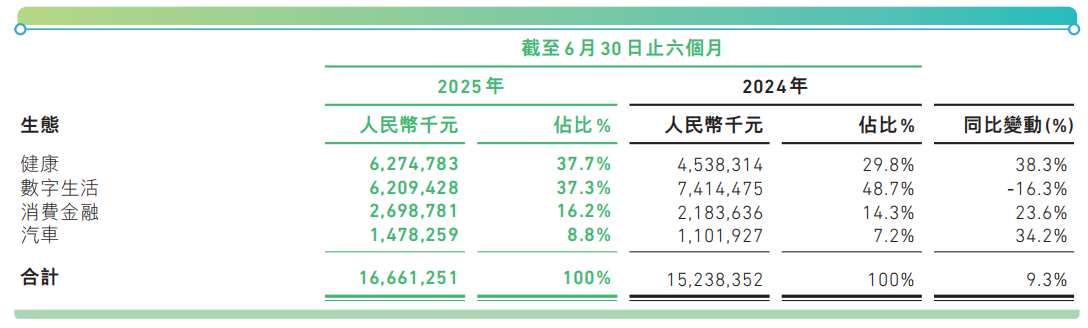
Core Viewpoint - The performance trends of leading insurance companies are becoming clearer as the year-end approaches, with ZhongAn Online reporting record premium income and significant profit growth, indicating potential for continued success in 2025 [1][2]. Group 1: Premium Income and Profitability - ZhongAn Online recorded premium income of RMB 32.904 billion for the first 11 months of the year, representing a year-on-year increase of 5.63%, marking the highest historical performance close to the projected full-year premium of RMB 33.418 billion for 2024 [1]. - The company reported a net profit of RMB 668 million for the first half of the year, surpassing the total net profit of RMB 608 million for the entire previous year, suggesting a strong potential for exceeding both premium and profit targets in 2025 [2]. Group 2: Segment Performance - The contribution rates of various segments to premium income for the first half of the year were as follows: Health (37.7%), Digital Life (37.3%), Consumer Finance (16.2%), and Automotive (8.8%), with significant growth observed in the Health and Automotive segments [3][4]. - The health insurance segment saw a 3.1% increase in premium scale, with ZhongAn focusing on a diverse product matrix including critical illness and high-end medical insurance, leading to an enhanced market share [5]. Group 3: Business Operations and Management - ZhongAn has transitioned its automotive insurance business from a joint operation with Ping An to independent management, achieving a breakthrough in compulsory traffic accident insurance in Shanghai and Zhejiang [5]. - The company has recently confirmed the continuation of its leadership under Chairman Yin Hai for the next three years, which is expected to provide stability and continuity in strategic direction [5]. Group 4: Financial Trends and Challenges - Despite the positive trends, ZhongAn has faced significant fluctuations in performance over the past five years, with profit growth rates showing extreme variability, including a 1103.54% increase in the first half of 2025 [5]. - Revenue growth has shown a declining trend, with a slight contraction of 0.4% in the first half of 2025, indicating ongoing challenges in sustaining performance [5].