
商业健康保险发展

Search documents
居民增收计划、养老金上涨、支持AI开源社区……45个关键词读懂2026政府工作报告
经济观察报· 2026-03-05 09:11
Economic Growth - The GDP growth target for 2026 is set at 4.5% to 5%, reflecting a pragmatic policy approach and considering both internal and external pressures on the economy [4][5] - The adjustment in the growth target aims to balance quality and reasonable growth, laying a foundation for high-quality economic development [5] Fiscal Policy - The proposed deficit rate for 2026 is around 4%, with a deficit scale of 5.89 trillion yuan, an increase of 230 billion yuan from the previous year [7] - Public budget expenditure is expected to reach 30 trillion yuan for the first time, with a focus on optimizing expenditure structure to support consumption and improve living standards [9][10] Tax and Financial Reforms - The government plans to advance tax and financial system reforms, including increasing the proportion of state-owned capital returns and enhancing local tax systems [12] - The emphasis on zero-based budgeting aims to optimize fund allocation and improve the efficiency of fiscal spending [12] Employment and Income - The urban survey unemployment rate target is set at around 5.5%, reflecting the need for policies to stabilize employment amid structural pressures [18] - The government aims to synchronize resident income growth with economic growth, emphasizing measures to increase income for low-income groups and improve social security systems [20][22] Environmental Goals - The target for reducing carbon dioxide emissions per unit of GDP is set at around 3.8%, aligning with the goal of achieving carbon peak by 2030 [26][27] - The shift from energy consumption control to carbon emission control reflects the need for a more precise approach to managing carbon emissions [27][28] State-Owned Enterprise Reforms - The government plans to implement a systematic approach to deepen state-owned enterprise reforms, focusing on optimizing the layout of state-owned capital and structural adjustments [29][30] - The emphasis on improving the modern enterprise system aims to enhance corporate governance and promote market-oriented reforms [31] Open Economy - The government intends to further expand high-level opening-up, focusing on service sector liberalization and enhancing international cooperation [35][36] - The approach aims to balance reform depth with security, promoting a competitive and fair business environment [36] Agricultural and Rural Development - The government is set to promote agricultural insurance development and enhance comprehensive disaster prevention capabilities in agriculture [59] - Policies will focus on improving rural elderly care services and implementing long-term care insurance systems to address the challenges of an aging population [45][47] Capital Market Stability - Measures to stabilize the stock market include comprehensive policies to enhance market confidence and promote active trading [54] - The government aims to improve the mechanism for long-term capital entering the market, ensuring a stable and healthy capital market [63] Innovation and Technology - The government plans to cultivate emerging and future industries, encouraging state-owned enterprises to lead in opening application scenarios for new technologies [69][70] - Support for artificial intelligence and open-source community development is expected to drive innovation and commercialization in various sectors [75]


同比增7.4%!2025年保险业保费收入首超6万亿元 专家看好保险股估值修复
Guo Ji Jin Rong Bao· 2026-02-02 15:34
Core Insights - The insurance industry in China is projected to achieve a record premium income of 6.12 trillion yuan in 2025, marking a year-on-year growth of 7.4%, although the growth rate has slowed down [1] - The total assets of the insurance industry reached 41.31 trillion yuan by the end of 2025, reflecting a 15.1% increase from the beginning of the year [1] Group 1: Life Insurance Performance - Life insurance accounted for a premium income of 4.65 trillion yuan in 2025, with a year-on-year growth of 9.1% [1] - The life insurance sector showed strong growth, with premium income from life insurance reaching 3.56 trillion yuan, up 11.4% year-on-year [2] - The health insurance segment achieved a premium income of 9.973 billion yuan, growing by 2.0% year-on-year, nearing the 10 billion yuan mark [2] Group 2: Property Insurance Trends - Property insurance companies generated a premium income of 1.76 trillion yuan in 2025, reflecting a year-on-year growth of 3.9% [4] - The auto insurance segment contributed 940.9 billion yuan, with a growth rate of 3.0%, continuing a downward trend in its market share [4] - Non-auto insurance business saw a premium income of 816.1 billion yuan, growing by 5% and accounting for 46.4% of total premiums, indicating a shift towards diversified and high-quality business structures [5] Group 3: Market Outlook and Future Developments - Analysts expect a strong performance in the insurance sector for the first quarter of 2026, driven by high market demand and the transformation of dividend insurance [1][3] - The commercial health insurance market is projected to continue its robust growth, with an average annual compound growth rate exceeding 20% over the past decade [2][3] - The penetration of new energy vehicles is anticipated to boost auto insurance premiums, with an expected scale of 200 billion yuan and a growth rate exceeding 30% [5]
保险业协会 召开健康保险高质量发展工作座谈会
Jin Rong Shi Bao· 2026-01-23 01:24
Group 1 - The meeting held by the China Insurance Industry Association on January 22 aims to promote the development of the health insurance sector in alignment with national strategies and policies [1] - The commercial health insurance sector has experienced a compound annual growth rate (CAGR) of over 20% in the past decade, with more than 11,000 medical insurance products currently available [1] - The meeting highlighted the importance of policy support and market demand in driving the sustainable development of the health insurance industry [1] Group 2 - Commercial health insurance has expanded its coverage to include high-value treatments and technologies, such as CAR-T therapy and proton therapy, which were added to the responsibility list over the past decade [2] - It is estimated that by 2025, the total compensation amount for innovative drugs and devices by commercial health insurance will reach approximately 14.7 billion yuan, with a CAGR of 70% over the past four years [2] - The insurance industry is encouraged to enhance service quality and product offerings to better meet the high-quality health protection needs of the population, especially in response to aging demographics and the support of key national industries [2]
2025年商业健康保险对创新药械的总赔付金额约147亿元
Xin Hua Wang· 2026-01-22 13:44
Group 1 - The core viewpoint of the articles emphasizes the continuous expansion of commercial health insurance in China, enhancing health protection services and capabilities [1][2] - By 2025, the estimated total compensation amount for innovative drugs and medical devices from commercial health insurance is approximately 14.7 billion yuan, showing rapid growth for four consecutive years [1] - The insurance industry is experiencing growth driven by both policy support and market demand, leading to an increase in business scale, product variety, and service capabilities [1] Group 2 - As of the third quarter of 2025, insurance funds have directly invested nearly 30 billion yuan in the medical and elderly care sectors, covering various sub-sectors such as biotechnology, new drug technology, and medical devices [1] - Indirect investments in the healthcare sector have exceeded 250 billion yuan, focusing on core areas of health such as medical services, innovative drugs, and medical data [1] - The Actuarial Association is working on developing a comprehensive commercial medical insurance product system to improve the matching of insurance rates with underwriting risks [1]
近10年商业健康险年均复合增长率超过20%,在售医疗保险产品超过1.1万个
Xin Lang Cai Jing· 2026-01-22 11:18
Core Insights - The China Insurance Industry Association held a seminar on the high-quality development of health insurance, focusing on the growth of commercial health insurance and enhancing collaboration between commercial insurance and the medical sector [1] - Representatives at the meeting noted that a series of policies from the government have created a favorable environment for the development of commercial health insurance, with the National Financial Regulatory Administration strengthening guidance to promote sustainable growth in the health insurance sector [1] - Driven by policy support and market demand, the scale of commercial health insurance has been expanding, with a rich variety of products and improved service capabilities [1] Industry Growth - Over the past decade, the average annual compound growth rate of commercial health insurance has exceeded 20% [1] - There are more than 11,000 medical insurance products currently available for sale, providing robust support for public health security [1]
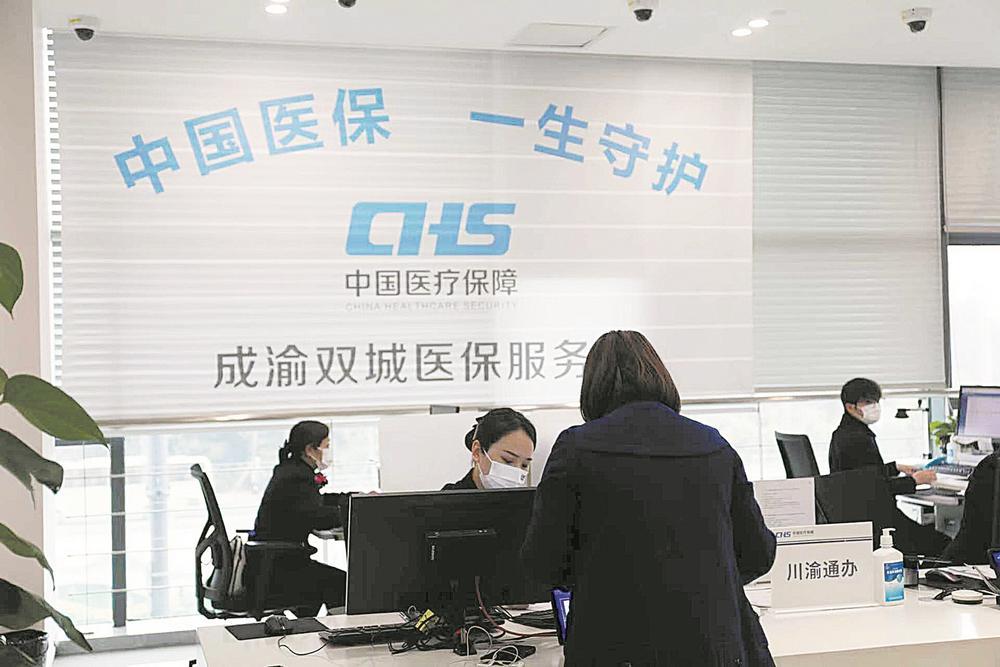
用医保温度书写“民生答卷”
Xin Lang Cai Jing· 2025-12-30 20:11
Core Insights - Chengdu's medical insurance system has significantly improved during the "14th Five-Year Plan" period, enhancing the healthcare experience for nearly 19 million insured individuals [3][4][6]. Group 1: Insurance Coverage and Policy Enhancements - The total number of basic medical insurance participants in Chengdu is approximately 18.85 million, with steady growth in both employee and urban-rural resident insurance [3][5]. - A total of 949 new drugs have been added to the medical insurance catalog, ensuring better access to medications for the public [6]. - The city has established a four-tier management system for medical insurance, with over 200 insurance workstations set up to facilitate services [3][4]. Group 2: Payment Policies and Support Mechanisms - Payment policies have been clarified, including the unification of medical consumables payment standards and the addition of 296 new medical service items to the payment scope [7]. - The medical assistance system has been improved, with 63.21 million instances of assistance provided to medical aid recipients during the "14th Five-Year Plan" period [7]. - The long-term care insurance program has benefited 215,600 individuals, reflecting the city's commitment to supporting vulnerable populations [3][12]. Group 3: Service Quality and Technological Integration - Chengdu has implemented a comprehensive electronic medical insurance system, with over 15 million users activating their medical insurance codes, achieving an activation rate of 80.96% [8][9]. - The city has established a "one-window" service model for insurance processing, ensuring efficient handling of insurance matters [9]. - The integration of technology has led to a significant increase in the convenience of medical services, with over 300 medical institutions adopting full-process applications for medical insurance codes [8][9]. Group 4: Long-term Care Insurance Development - The long-term care insurance system has expanded to cover all age groups, with a focus on providing comprehensive support for individuals with disabilities [12][13]. - By November 2025, over 19.2 million individuals are expected to be covered under the long-term care insurance program, with total fund payments reaching 6.162 billion yuan [13]. - Chengdu's long-term care insurance has become a model for national standards, enhancing the city's reputation as a leader in healthcare innovation [13].
金融监管总局:正研究制定《关于提升健康保险服务保障水平的指导意见》
Sou Hu Cai Jing· 2025-08-21 10:26
Group 1 - The Financial Regulatory Administration is developing guidelines to enhance health insurance services, focusing on aligning supply and demand, improving industry capabilities, strengthening regulation, and optimizing the development environment for health insurance [1] - Commercial health insurance has become a significant payment method for innovative drugs, with total compensation for innovative drugs expected to reach approximately 12.4 billion in 2024, reflecting a compound annual growth rate of 103% over three years [1] - The ongoing reforms in payment methods and policies are expected to gradually resolve the challenges related to hospital admissions for insured drugs, thereby improving accessibility to innovative drugs [1] Group 2 - The Financial Regulatory Administration supports pilot reforms in commercial health insurance, encouraging local initiatives to explore solutions for data sharing, chronic disease coverage, and multi-tiered care systems [2] - Efforts are being made to promote interoperability between commercial health insurance and medical data, with a focus on one-stop settlement for medical expenses to enhance patient experience [2] - The National Medical Insurance Bureau is exploring the integration of medical insurance data to empower insurance companies and facilitate synchronized settlements between medical insurance funds and commercial insurance [2]