电动自行车安全

Search documents
电动自行车电池进水后充电引发火灾 车主被判赔偿邻居30多辆车损毁损失
Xin Lang Cai Jing· 2026-01-22 10:59
Core Viewpoint - The case highlights the legal responsibilities of electric bicycle owners regarding modifications and safety precautions, emphasizing that negligence can lead to significant liability for damages caused by fire incidents [1][2][3]. Group 1: Incident Overview - An electric bicycle owner, Liu, modified his vehicle by extending the charging line and adding a sound system, which led to a fire that damaged over thirty neighboring electric bicycles [1]. - The fire was determined to be caused by battery thermal runaway, exacerbated by Liu's negligence in charging the bike after discovering water in the battery compartment [1][2]. Group 2: Legal Findings - The court found Liu directly responsible for the fire due to his unauthorized modifications and failure to address known safety hazards, constituting legal fault [2]. - Liu was ordered to compensate the affected neighbors for their losses, which ranged from hundreds to thousands of yuan, based on the extent of damage [2]. Group 3: Safety Implications - The case underscores the risks associated with unauthorized modifications to electric bicycles, which can lead to electrical overloads and increased fire hazards [3]. - The court emphasized the importance of recognizing significant safety signals, such as water intrusion in battery compartments, and the need for immediate action rather than superficial fixes [3]. Group 4: Recommendations for Stakeholders - Electric bicycle owners are advised against unauthorized modifications and should cease use immediately upon noticing any safety issues [4]. - Property management should enhance oversight of electric bicycle charging and parking practices to prevent unsafe behaviors [4]. - Charging equipment providers must ensure the safety and reliability of their devices, incorporating protective features and effective monitoring systems [4].
3.2万余项国家标准免费公开! 有效满足企业和公众需求
Yang Shi Wang· 2026-01-22 03:11
Core Insights - The National Standard Full Text Free Publicity initiative has significantly increased the number of downloadable national standards from over 1,500 to more than 32,000 in one year, effectively meeting the needs of enterprises and the public [1] Group 1: System Usage Statistics - By December 31, 2025, the national standard full text public system is projected to achieve over 100 million views, with visitor numbers exceeding 35 million and online reading reaching over 35 million times [1] - The download volume is expected to reach 24 million, which is more than 11 times the downloads in 2024 [1] Group 2: Regional Performance - Economically developed regions lead in online reading and download volumes, with Shanghai and Guangdong recording over 4.8 million and 3.3 million online readings, respectively [1] - Beijing, Jiangsu, and Guangdong have each surpassed 2 million downloads [1] Group 3: Standard Popularity - Over 10,000 national standards have been read and downloaded more than 1,000 times, with 800 standards exceeding 10,000 times [1] - Specific standards such as GB/Z 33451—2016 and GB 2894—2025 have notable online reading and download figures, indicating high interest in areas like smart cities and safety regulations [1]
广东在线阅读量居前
Xin Lang Cai Jing· 2026-01-13 00:13
Core Insights - The National Standard Full Text Open System has significantly increased the number of downloadable national standards from over 1,500 to more than 32,000 in one year, effectively meeting the needs of enterprises and the public [1] Group 1: System Usage Statistics - By December 31, 2025, the system is projected to achieve over 100 million views, with more than 35 million visitors and 35 million online readings, while download volume is expected to reach 24 million, which is over 11 times that of 2024 [1] - Economic developed regions, such as Shanghai and Guangdong, lead in online reading and download volumes, with Shanghai reaching over 4.8 million reads and Guangdong over 3.3 million reads [1] Group 2: Popular Standards - Over 10,000 national standards have exceeded 1,000 online readings, and more than 800 standards have surpassed 10,000 readings, indicating high interest in specific standards [2] - Notable standards include GB/Z 33451-2016 "Geographic Information Spatial Sampling and Statistical Inference" with 674,000 online readings, and GB 2894-2025 "Safety Colors and Safety Signs" with 9.3 million downloads, particularly in areas like smart cities, safety production, hazardous chemicals safety, and electric bicycle safety [2]
3.2万余项国家标准免费公开!有效满足企业和公众需求
Yang Shi Wang· 2026-01-12 08:12
Core Insights - The National Standard Full Text Free Publicity initiative has significantly increased the number of downloadable national standards from over 1,500 to more than 32,000 in one year, effectively meeting the needs of enterprises and the public [1] Group 1: Usage Statistics - By December 31, 2025, the national standard full text public system is projected to achieve over 100 million views, with visitor numbers exceeding 35 million and online reading reaching over 35 million times [1] - The download volume is expected to reach 24 million, which is more than 11 times the downloads in 2024 [1] Group 2: Regional Performance - Economic developed regions, such as Shanghai and Guangdong, lead in online reading and download volumes, with Shanghai achieving over 4.8 million reads and Guangdong over 3.3 million reads [1] - Major cities like Beijing and Jiangsu have download volumes exceeding 2 million [1] Group 3: Standard Popularity - Over 10,000 national standards have been read online and downloaded more than 1,000 times, with 800 standards exceeding 10,000 downloads [1] - Specific standards such as GB/Z 33451—2016 and GB 2894—2025 have notable online reading and download figures, with 674,000 reads and 9.3 million downloads respectively [1]
电动自行车安全头盔测评:六成样品不符合标准,存在安全风险
Nan Fang Du Shi Bao· 2026-01-06 17:50
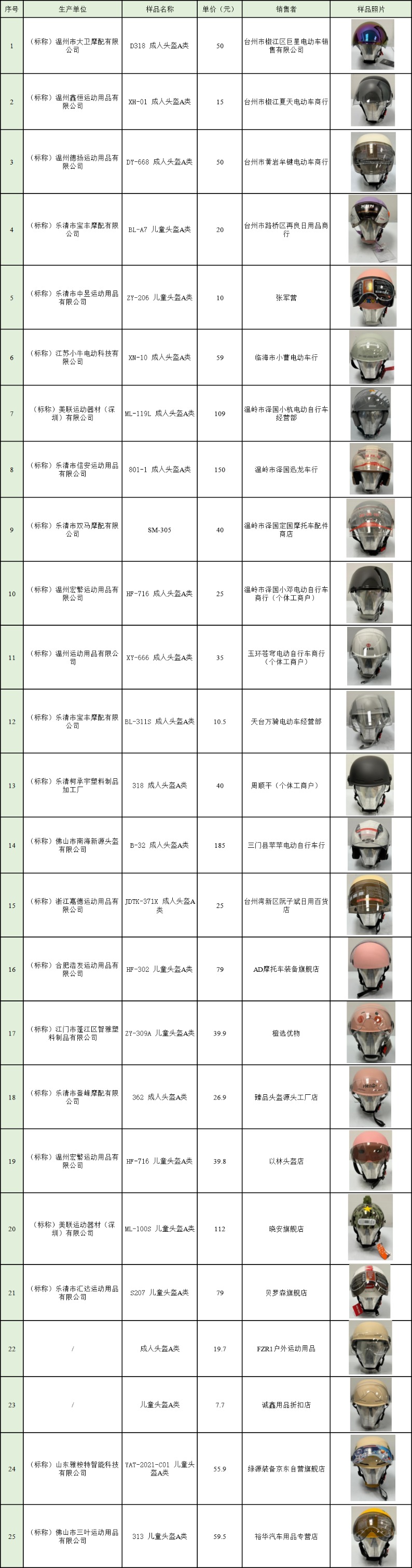
Core Viewpoint - Electric bicycles have become an important mode of transportation for citizens, but the associated safety risks cannot be ignored. The Taizhou Consumer Rights Protection Committee recently released a comparative test report on electric bicycle safety helmets for 2025, aiming to provide consumers with authoritative and practical guidance for purchasing safe and reliable helmet products [1][2]. Group 1: Test Results - Out of 25 helmet samples tested, 15 did not meet the required standards, including 9 adult helmets and 6 children's helmets. The non-compliance mainly focused on five aspects: visor, retention system strength, labeling, penetration resistance, and structure [1][2]. - The comparative test involved random sampling of helmets from physical stores and e-commerce platforms in Taizhou, with all samples being Class A helmets [2]. - The testing criteria were based on GB 811-2022, which includes seven testing items: structure, quality, visibility, visor, retention system strength, penetration resistance, and labeling [2]. Group 2: Specific Non-compliance Issues - Three samples failed to meet structural standards, which could lead to "protection failure" during accidents. The core issue was that the retention system's strap width did not meet the ≥20mm standard [7]. - Eight samples were found to have visors with a visible light transmittance below the required 85%, which could impair the rider's visual judgment and increase accident risks [10][12]. - Nine samples did not meet the strength standards for the retention system, with issues such as strap tearing, slipping from connectors, and overall damage [14]. - Four samples failed the penetration resistance test, where a steel cone penetrated the helmet, violating the performance requirement that it should not contact the head model [17]. Group 3: Labeling and Compliance - Six samples did not comply with labeling standards, which are crucial for conveying product safety information. Issues included incomplete labeling, incorrect usage restrictions, and misleading claims about certification [19]. - The Taizhou Consumer Rights Protection Committee noted that some merchants exhibited "goods not matching the description" phenomena, particularly regarding the presence of CCC certification marks [19]. Group 4: Consumer Guidance - Consumers are advised to recognize CCC certification marks when purchasing electric bicycle helmets and to choose reputable physical stores or online platforms. They should carefully check product labels for manufacturer information, production dates, and compliance standards [24]. - It is essential to inspect the helmet's structural integrity, ensuring no cracks, clear visor visibility, and proper fit before use [24].

电动车入户充电起火致8人遇难!官方发布调查报告
第一财经· 2026-01-02 07:30
Core Viewpoint - The article discusses the investigation report of a significant fire incident that occurred on April 12, 2025, in a motorcycle parts shop in Kunming, Yunnan, which resulted in 8 fatalities and direct economic losses of 530,400 yuan [5][6]. Group 1: Incident Overview - The fire was caused by the improper charging of an electric bicycle, which had been illegally modified, leading to a short circuit of the battery [6][9]. - The incident highlighted multiple violations, including unauthorized residential use of a commercial building and the lack of fire safety measures [11]. Group 2: Fire Cause Analysis - The electric bicycle was illegally modified with a non-compliant large-capacity lithium battery, creating significant safety hazards [11]. - The building was used for both commercial and residential purposes without proper fire separation, which contributed to the rapid spread of the fire [11]. - The occupants, including vulnerable individuals such as an elderly person, three women, and four children, lacked adequate fire safety awareness and self-rescue capabilities [12]. Group 3: Accountability and Recommendations - The shop owner, who is suspected of arson, is under criminal investigation, and it is recommended that legal action be taken against him [13]. - The investigation identified issues with the responsibilities of 10 government units and 25 individuals, suggesting that these matters be referred to the local disciplinary committee for accountability [13].

紫牛热点︱未佩戴头盔加重自身伤情,获赔金额“缩水”! 别侥幸,戴和不戴真的不一样
Yang Zi Wan Bao Wang· 2025-12-30 11:42
Core Viewpoint - The importance of wearing safety helmets for electric bicycle riders is emphasized, as it significantly reduces head injuries in accidents and can legally protect the rider's rights [1][2]. Group 1: Legal Implications - A recent case in Haimen Court highlighted that while not wearing a helmet does not affect the determination of fault in a traffic accident, it can lead to a reduction in compensation for damages due to increased injury severity [2]. - The court ruled that the rider's failure to wear a helmet contributed to the severity of their injuries, resulting in a 10% reduction in the compensation owed by the insurance company [2]. Group 2: Safety Statistics - In Nanjing, statistics from the first half of 2023 showed that head injuries were the leading cause of death among electric bicycle riders, accounting for 85.1% of fatalities, with a 4.9% decrease compared to the same period in 2020 [3]. - Proper helmet use has been shown to save hundreds of lives by significantly reducing the risk of head injuries in accidents involving electric bicycles [3].
【年终特稿·2025法制回眸】2025,这些新法新规来到你我身边
Xin Lang Cai Jing· 2025-12-24 19:51
Core Viewpoint - A series of new laws and regulations will be implemented in 2025, addressing contemporary issues and protecting specific rights, marking significant progress in the rule of law in China [1] Group 1: Private Economy Promotion Law - The Private Economy Promotion Law will take effect on May 20, 2025, as the first foundational law specifically for the development of the private economy in China [2] - The law aims to optimize the development environment for the private economy and ensure fair market competition for all economic organizations [2] - It establishes a nationwide negative list system for market access, ensuring that anything not prohibited is allowed, and protects the personal rights, property rights, and operational autonomy of private economic organizations and their operators [2] Group 2: Judicial Interpretation on Labor Disputes - The Judicial Interpretation on Labor Disputes (Part II) will be implemented on September 1, 2025, addressing key issues such as non-compete agreements and social insurance disputes [3] - It standardizes the application of laws to protect the legitimate rights of workers, explicitly stating that agreements to not pay social insurance are invalid [3] - Workers can terminate contracts and seek economic compensation if employers fail to pay social insurance, with courts supporting such claims [3] Group 3: New National Standard for Electric Bicycles - The new national standard for electric bicycles, GB 17761—2024, will be enforced starting September 1, 2025, with all sales of old standard bicycles ceasing by December 1, 2025 [4] - The new standard enhances fire resistance requirements for non-metal materials, reducing fire hazards [4] - It also improves requirements for battery packs, controllers, and speed limiters, significantly raising the technical barriers for illegal modifications [4] Group 4: Revised Anti-Unfair Competition Law - The revised Anti-Unfair Competition Law will come into effect on October 15, 2025, aimed at strengthening the rules and enforcement against unfair competition [5] - It includes provisions against unfair competition behaviors using data, algorithms, and platform rules, and introduces regulations to protect data rights [5] Group 5: Revised Food Safety Law - The revised Food Safety Law will be implemented on December 1, 2025, focusing on the regulation of liquid food transportation and infant formula liquid milk [6] - It establishes a licensing system for the road transportation of key liquid foods and includes registration management for infant formula liquid milk, clarifying regulatory frameworks [6]
新闻1+1丨“旧国标”停售 电动自行车安全再升级
Yang Shi Xin Wen Ke Hu Duan· 2025-12-02 09:13
Core Viewpoint - The implementation of the new national standard for electric bicycles starting December 1 will significantly change sales, consumer choices, and regulatory practices in the industry, emphasizing safety and compliance with updated technical specifications. Group 1: Changes in Standards - The new national standard requires electric bicycles to have a CCC certification mark and enhances safety features such as fire-resistant materials and anti-tampering technology [1] - The weight limit for lead-acid battery models has been increased from 55 kg to 63 kg, allowing for larger batteries and longer range [1] - The new standard does not mandate the installation of pedals, which may result in compliant models lacking pedals [1] Group 2: Consumer Concerns - Consumers are particularly interested in whether the new standard includes an automatic power cut-off when speeds exceed 25 km/h, which is designed to prevent excessive speed under extreme conditions [2] - The new standard allows for the installation of child safety seats on a rear rack, although not all new models may include this feature, leaving design choices to manufacturers [2] - The new standard encourages the installation of rearview mirrors for safety, although some models may not include them, allowing consumers to choose based on their safety needs [3] Group 3: Market Transition and Safety - The transition to the new standard is significant but will take time due to the existing stock of 380 million old standard electric bicycles that need to be phased out [4] - Ensuring the safety of existing old standard vehicles through regular maintenance and incentivizing consumers to switch to new standard vehicles is crucial [4] - The safety of electric bicycles involves not only vehicle standards but also user behavior and infrastructure, necessitating comprehensive efforts to ensure safe operation on roads [5] Group 4: Regulatory Challenges - The prevalence of illegal modifications by retailers is driven by profit motives and regulatory gaps, necessitating stricter enforcement against such practices [6] - The new standard vehicles are more expensive and harder to modify, which may require strategies to eliminate the competitive advantages of old standard vehicles [6]
电动自行车新国标落地 企业与消费者在经历哪些变化?
Yang Shi Xin Wen· 2025-11-08 15:49
Core Viewpoint - The implementation of the new national standard for electric bicycles, regarded as the strictest to date, aims to enhance safety and quality in the industry, addressing rising concerns over accidents and fire hazards associated with electric bicycles [1][55]. Group 1: Industry Changes - The new standard mandates significant changes in materials and fire resistance, limiting plastic use to 5.5% of the total vehicle weight and requiring key components to be made from high flame-retardant materials [8][10]. - As of November 4, 2023, 99 companies have received mandatory product certification for 468 models compliant with the new standard, indicating a shift in production capabilities [46]. - The new regulations are expected to lead to a market "shakeout," where weaker companies may be eliminated, while those with R&D and production capabilities will thrive [42][55]. Group 2: Consumer Behavior - Consumers are increasingly prioritizing safety features when purchasing electric bicycles, with the new standard's enhanced fire safety and anti-theft measures becoming key selling points [3][16]. - The new standard includes advanced anti-theft technology, such as built-in Beidou positioning systems and mobile app monitoring, which were largely absent in older models [16][18]. Group 3: Regulatory and Compliance Aspects - The new standard introduces a tamper-proof design to prevent modifications that could increase speed beyond legal limits, addressing a significant safety concern [33][35]. - Enforcement measures are being strengthened, with authorities prepared to penalize businesses that engage in illegal modifications and users of modified bicycles [28][30][32]. Group 4: Transition Period and Market Adaptation - A transition period has been established, allowing old standard bicycles to be sold until November 30, 2025, to facilitate market adaptation [49][51]. - Companies are actively preparing for the transition, ensuring that they can meet the demand for new standard bicycles while continuing to support existing customers with old models [54][53].