资产隔离

Search documents
3亿美元买一张保单?揭秘吉尼斯纪录天价保单背后的财富密码
Sou Hu Cai Jing· 2026-02-28 03:36
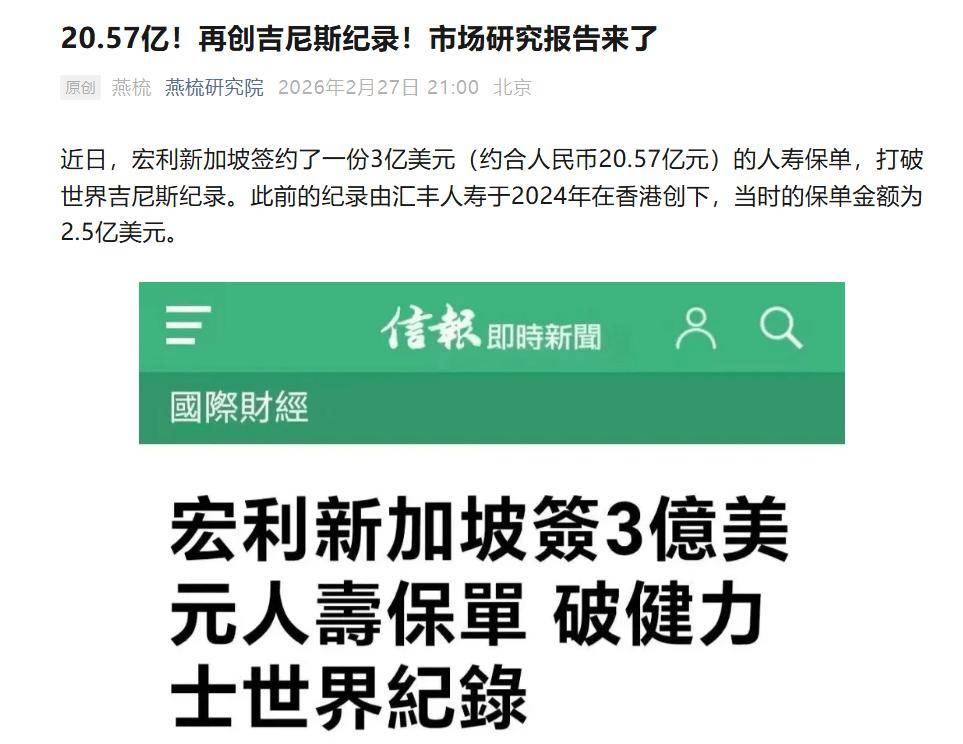
一份3亿美元的人寿保单,打破了吉尼斯世界纪录。这不是冰冷的数字,而是全球超级富豪财富焦虑的缩影。 最近,宏利新加坡签下一份3亿美元(约合人民币20.57亿元)的人寿保单,刷新了吉尼斯世界纪录。此前的纪录保持者是汇丰人寿, 2024年在香港创下的2.5亿美元。 杠杆率大约10倍。这就是保险的魅力:小保费撬动大保障。 问:除了身故赔偿,这笔钱还能干嘛? 消息一出,全球保险业和财富管理圈都炸了锅。3亿美元,普通人几辈子都花不完的钱,为什么要拿来买一张保单? 这背后到底藏着什么门道?金融界燕梳研究院为您揭开背后的秘密。 这份保单到底长什么样? 问:3亿美元的保单,是要一次性交3亿美元吗? 答:不是。实际交的钱远低于3亿美元。 这就好比买房付首付——你只需要付一部分钱,就能拥有整套房子的权益。这份保单也是如此。 以40岁健康男性为例,如果选择10年缴费,每年只需交270万-300万美元,总保费约2700万-3000万美元。也就是说,他用不到3000万美 元,就锁定了3亿美元的身故保障。 答:钱在保单里还能"生钱"。 这就是这类产品的核心卖点——指数型万能险(IUL)。 简单来说,你交的保费扣除成本后,剩下的钱进入一个" ...

家族信托的主要功能有哪些方面?
Sou Hu Cai Jing· 2026-02-23 06:05
Group 1: Core Functions of Family Trusts - Wealth inheritance is one of the fundamental functions of family trusts, allowing the grantor to specify the beneficiaries, conditions for exercising rights, and methods of asset distribution to ensure precise transmission of family wealth across generations, avoiding potential family disputes from statutory inheritance [1] - Asset isolation is a prominent feature of family trusts, as per the revised trust law in 2025, which states that trust assets are separated from the grantor's, trustee's, and beneficiaries' inherent properties, protecting them from the grantor's debts and the trustee's bankruptcy risks, thus creating a protective barrier for family wealth [1] - Legal and compliant tax optimization is an important function of family trusts, where grantors can design trust structures to reduce tax costs during wealth transmission, such as estate and gift taxes, thereby enhancing the efficiency of wealth transfer while adhering to national tax laws [1] Group 2: Additional Functions of Family Trusts - Family trusts can also serve charitable purposes, allowing grantors to include clauses in the trust contract to allocate part or all of the trust assets for supporting education, poverty alleviation, and environmental protection, thus transforming family wealth into social value [2] - Family trusts possess professional wealth management capabilities, with trustees acting as professional financial institutions that can diversify asset allocation and manage trust assets dynamically, ensuring the preservation and appreciation of trust assets while providing stable long-term returns for beneficiaries [2]
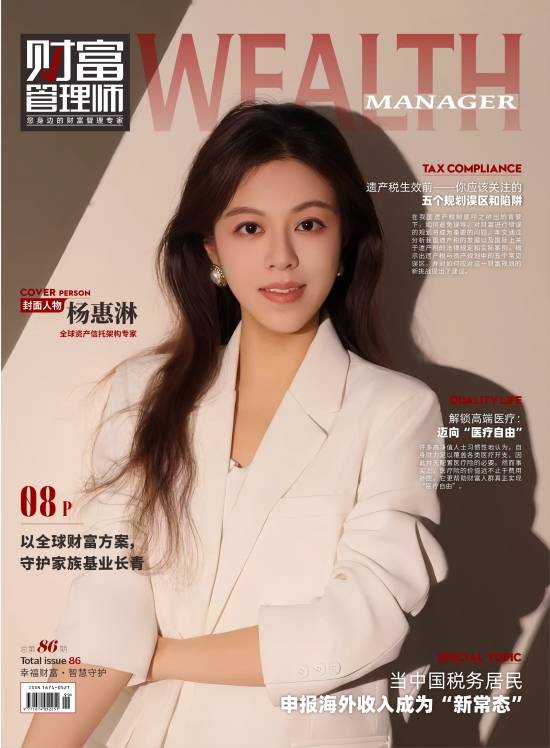
《财富管理师》封面人物|杨惠淋:以全球财富方案,守护家族基业长青
Sou Hu Cai Jing· 2026-02-10 07:16
Core Insights - The article emphasizes the evolving wealth management needs of business owners and high-net-worth individuals, highlighting a shift from a focus on asset appreciation to a demand for security, certainty, and orderly wealth transfer [2][4][5]. Group 1: Wealth Management Risks - Business owners are facing a "risk cube" that includes economic cycle risks, corporate debt risks, tax risks, marital risks, and inheritance risks, rather than just market volatility [4]. - Economic cycles, domestic macro and industrial policy adjustments, and the life cycle of businesses can lead to cash flow issues, potentially triggering personal wealth crises [4]. - Marital risks are increasingly significant, with cases of asset division during divorces highlighting the need for preemptive marital asset planning to protect family wealth and personal safety [4][5]. Group 2: Changing Wealth Management Demands - The core demand for wealth management has shifted from "value creation" to "safety," with high-net-worth individuals seeking systems that ensure their family's living standards and wealth transfer align with their intentions [5]. - The tightening of compliance and regulatory frameworks, such as the implementation of the "Golden Tax Phase IV" in China and the Common Reporting Standard (CRS) globally, has increased awareness of tax risks associated with overseas assets [5]. Group 3: Cross-Border Wealth Management - Effective cross-border wealth management requires establishing a top-level legal structure before selecting financial products, with trusts often serving as the core of this structure [7]. - Trusts can provide asset isolation and ensure that wealth is passed on according to the grantor's wishes, highlighting the importance of professional and compliant structure design [8]. Group 4: Comprehensive Wealth Solutions - A thorough assessment of family assets and tax risks is essential for creating tailored wealth management solutions, considering factors such as asset distribution, family member nationalities, and future immigration plans [10]. - The focus is on designing a comprehensive legal-financial framework that includes arrangements for business equity, family trusts, and investment management, rather than recommending single products [10][11]. Group 5: Value of Certainty in Wealth Management - The unique value proposition in wealth management lies in providing certainty amidst a world of variables, with a focus on reverse planning to clarify clients' ultimate goals [13]. - Establishing a clear legal framework for asset ownership is crucial, as it provides a reliable foundation for wealth management that does not depend on individual circumstances [13][14].
从心智障碍者到独居老人 信托如何为特殊群体兜底未来?
经济观察报· 2026-01-22 02:08
特殊需要信托适用范围不只局限于心智障碍特殊群体,还可进 一步延伸至独居老人、单身群体等更广泛的受众群体。 作者:老盈盈 封图:图虫创意 从儿子两岁被确诊孤独症起,黄女士便为孩子的未来思虑了18年。如今儿子已20岁,因属于无民 事行为能力人,偶尔会情绪失控,让照护他的阿姨手足无措。 虽然照顾大龄孤独症患者,就像管理一个充满未知变量的项目,但大部分时间黄女士对孩子的未来 都有着明确的规划。随着自己的年纪迈入50岁关口,黄女士开始思考这样一个问题:当自己和孩 子的爸爸渐渐老去,丧失行动能力甚至离世之后,儿子的人生该如何继续? 在黄女士看来,把这个问题拆解之后,解决的方案无非是人、钱、地三方面的规划。其中,钱的问 题尤为重要,需要确保孩子在父母身故后,在有生之年始终拥有充足的经济来源,而信托计划是目 前黄女士认为较为可靠的金融和法律工具。她也正在咨询专业人士,打算设立一个专项信托计划, 确保财产能按她的意愿进行分配,长期且稳定地用于孩子未来的生活,而不被挪用或转移。 记者注意到,近日多家信托公司相继落地了首单特殊需要信托。事实上,该类服务信托的适用范围 不只局限于心智障碍特殊群体,还可进一步延伸至独居老人、单身群体等 ...

从心智障碍者到独居老人 信托如何为特殊群体兜底未来?
Jing Ji Guan Cha Bao· 2026-01-22 01:01
(原标题:从心智障碍者到独居老人 信托如何为特殊群体兜底未来?) 经济观察报 记者 老盈盈 从儿子两岁被确诊孤独症起,黄女士便为孩子的未来思虑了18年。如今儿子已20岁,因属于无民事行为 能力人,偶尔会情绪失控,让照护他的阿姨手足无措。 虽然照顾大龄孤独症患者,就像管理一个充满未知变量的项目,但大部分时间黄女士对孩子的未来都有 着明确的规划。随着自己的年纪迈入50岁关口,黄女士开始思考这样一个问题:当自己和孩子的爸爸渐 渐老去,丧失行动能力甚至离世之后,儿子的人生该如何继续? 在黄女士看来,把这个问题拆解之后,解决的方案无非是人、钱、地三方面的规划。其中,钱的问题尤 为重要,需要确保孩子在父母身故后,在有生之年始终拥有充足的经济来源,而信托计划是目前黄女士 认为较为可靠的金融和法律工具。她也正在咨询专业人士,打算设立一个专项信托计划,确保财产能按 她的意愿进行分配,长期且稳定地用于孩子未来的生活,而不被挪用或转移。 记者注意到,近日多家信托公司相继落地了首单特殊需要信托。事实上,该类服务信托的适用范围不只 局限于心智障碍特殊群体,还可进一步延伸至独居老人、单身群体等更广泛的受众群体。 在黄女士看来,这种信托计 ...
“债权家族信托”:是创新,还是噱头?
Xin Lang Cai Jing· 2025-12-29 09:13
Core Viewpoint - The article discusses the concept of debt family trusts, arguing that they do not significantly differ from general family trusts and questioning the unique advantages promoted by self-media. It emphasizes that family enterprise debts are not personal assets and raises concerns about the legality and effectiveness of transferring such debts into family trusts [1][3][5]. Group 1: Debt Family Trusts - Debt family trusts are presented as a normal operation, similar to transferring funds, equity, or real estate into family trusts, with no special attention required [1]. - The article critiques the notion that debt family trusts can effectively separate personal and family enterprise assets, highlighting that family enterprise debts are not family assets and questioning the legality of such transfers [3][7]. Group 2: Asset Isolation Mechanisms - The article outlines two methods for asset isolation through debt family trusts: transferring existing debts to the trust to remove them from personal balance sheets and allowing the trust to issue compliant loans to family enterprises, creating clear debt relationships [1]. - A case study is provided where a family successfully protected their core wealth by transferring 80 million yuan in enterprise debt into a family trust, which was later recognized as independent from enterprise liabilities by the court [2]. Group 3: Legal and Compliance Considerations - The article raises concerns about whether loans from family trusts to family enterprises can be classified as debt trusts, arguing that merely lending does not qualify as a debt family trust [8]. - It emphasizes the need for compliance with regulatory frameworks, such as the Commercial Bank Entrusted Loan Management Measures, and the legality of related party transactions between family trusts and enterprises [8].
陈昊东等:典型美元基金的设立模式——以Cayman和BVI为例
Sou Hu Cai Jing· 2025-11-21 01:29
Core Insights - The article discusses the increasing popularity of offshore fund structures, particularly the Cayman Islands Segregated Portfolio Company (SPC) and the British Virgin Islands (BVI) Approved Fund, as preferred choices for USD fund establishment due to their mature legal frameworks, flexible regulatory environments, and tax neutrality [2][27]. Group 1: Cayman Islands SPC - The SPC structure allows for statutory asset segregation, enabling multiple independent portfolios under a single legal entity, which is ideal for managing diverse investment strategies and isolating specific project risks [4][5]. - SPCs are exempt from various taxes for a period of 50 years, making them attractive for fund managers [4]. - The governance structure of SPCs includes managing shareholders with voting rights and participating shareholders without voting rights, ensuring clear decision-making processes [10]. Group 2: BVI Approved Fund - The BVI Approved Fund is designed for small-scale private funds, offering a streamlined regulatory path that enhances efficiency and reduces operational costs [20][22]. - The fund structure is characterized by its rapid approval process and flexibility in compliance requirements, making it suitable for emerging fund managers [20][23]. - BVI Approved Funds can manage various types of products, including private equity and hedge funds, and can seamlessly upgrade to more comprehensive regulatory frameworks as they grow [23][27]. Group 3: Comparative Analysis - The registration and establishment process for BVI Approved Funds is generally faster, taking 1-2 working days for company registration and about 1-2 months for regulatory approval, compared to the 7-10 working days and 2-3 months for Cayman SPCs [26]. - BVI Approved Funds have a strict limit of 20 investors, while Cayman SPCs do not have such limitations, although they typically require a minimum investment of $100,000 per investor [26]. - The operational costs for BVI Approved Funds are lower due to fewer mandatory compliance requirements, while Cayman SPCs incur higher costs due to mandatory audits and the need for multiple independent portfolios [26].

许家印家族信托金身被“破”? 香港高院裁决清盘人接管其全部资产
智通财经网· 2025-10-17 03:32
Core Viewpoint - The recent court ruling regarding Xu Jiayin, founder of Evergrande, has raised significant discussions about the effectiveness of offshore family trusts in asset protection, indicating that such structures may not be immune to legal scrutiny and intervention [1][13][16]. Group 1: Court Ruling and Asset Management - The Hong Kong High Court appointed liquidators as the receivers of all assets belonging to Xu Jiayin, including those controlled through offshore companies, marking a significant legal precedent in the treatment of offshore trusts [1][3][5]. - The court's decision was influenced by Xu's non-compliance with asset disclosure orders, which raised concerns about potential asset flight, leading to the need for a more invasive investigation into his asset structures [2][4][11]. - The ruling allows liquidators to identify, preserve, and investigate Xu's assets, but does not grant them the authority to dispose of these assets without further court approval [4][11]. Group 2: Legal Implications for Offshore Trusts - The court emphasized that the effectiveness of offshore trusts in asset isolation is not absolute, and the actual control over assets can lead to legal actions that penetrate these structures [8][15]. - Legal experts noted that the ruling serves as a warning to those relying on offshore trusts for asset protection, highlighting that such arrangements must be established on legitimate grounds and with independent oversight [14][15]. - The ruling reflects a judicial principle that prioritizes substantive control over formal ownership, allowing courts to act against perceived fraudulent asset transfers [7][15]. Group 3: Future Considerations and Market Impact - The case may influence high-net-worth individuals and the wealth management industry, prompting a reevaluation of the perceived safety of offshore family trusts [16]. - The outcome of the liquidators' investigations and the cooperation between Hong Kong and U.S. courts will be crucial in determining the future of Xu's offshore trust assets [16]. - The ruling may lead to stricter compliance standards and scrutiny in the establishment of trusts, as reliance on complex structures to evade debt obligations could be challenged in court [13][16].
许家印家族信托金身被“破”?
财联社· 2025-10-17 03:19
Core Viewpoint - The recent court ruling regarding Xu Jiayin's offshore family trust has sparked significant discussion about the legal boundaries of asset isolation and the effectiveness of offshore trusts in protecting wealth from creditors [2][19][20]. Group 1: Court Ruling and Asset Management - The Hong Kong High Court appointed liquidators as the receivers of Xu Jiayin's assets due to his non-compliance with asset disclosure orders, indicating a serious risk of asset flight [3][6][7]. - The ruling allows for a comprehensive investigation into Xu Jiayin's assets, including those held through offshore companies and potential trust structures, emphasizing that offshore does not equate to being outside the law [2][11][19]. - The court's decision is seen as a temporary measure to ensure asset preservation and investigation, rather than a final ruling on asset ownership [3][15]. Group 2: Financial Implications and Debt Recovery - As of July 31, 2025, the liquidators reported claims totaling approximately HKD 350 billion (USD 45 billion) from creditors, significantly higher than previously disclosed liabilities [8]. - The liquidators have initiated global asset recovery efforts, including actions against Xu Jiayin and related entities to reclaim around USD 6 billion in dividends and compensation from 2017 to 2020 [5][8]. Group 3: Offshore Trusts and Legal Precedents - The court clarified that the assets of offshore companies associated with Xu Jiayin are subject to the same scrutiny as his personal assets, challenging the notion of absolute safety in offshore trusts [9][20]. - Legal experts noted that the ruling highlights the importance of the actual control over assets rather than mere legal ownership, suggesting that complex offshore structures may not provide the intended protection against creditors [11][19]. - The case serves as a warning to high-net-worth individuals regarding the limitations of offshore trusts and the necessity for compliance with legal standards to ensure asset protection [19][21].

金价这么高,到底谁在买?网友:“买黄金没有技巧,全靠买得早”!
Sou Hu Cai Jing· 2025-10-15 01:37
Group 1 - Central banks are major buyers of gold, with China's central bank increasing reserves to 2,298 tons over ten consecutive months, alongside purchases from Russia, Turkey, and Poland, driven by a desire for de-dollarization [3][5][10] - Young consumers are increasingly purchasing small amounts of gold, with a 26.77% year-on-year increase in gold bar and coin consumption in China in the first half of 2025, reflecting a shift in investment strategy towards tangible assets [5][6] - Middle-class individuals, referred to as "Chinese aunties," are selling gold jewelry acquired in previous years to fund their children's home purchases, demonstrating a savvy approach to asset management [8][10] Group 2 - High-net-worth individuals are using gold as a means of asset protection, opting for discreet purchases through banks to isolate their wealth from market volatility [10][12] - Speculative traders are engaging in gold trading through ETFs, with a significant inflow of 46.4 billion yuan in the second quarter, indicating a trend towards short-term trading strategies [12][16] - Traditional gold jewelry remains in demand despite high prices, driven by cultural factors such as wedding customs, with consumers adapting to price changes by opting for lighter designs [14][16]