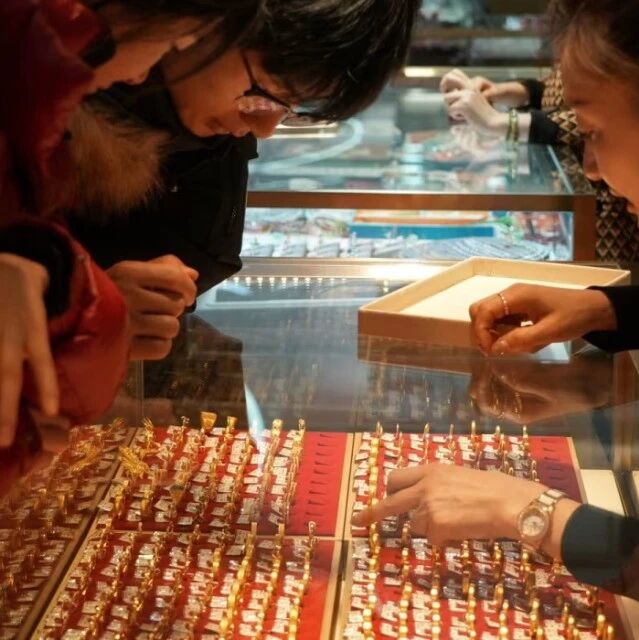
金豆

Search documents
黄金拉升超2%,投资金条遭抢购,有金店日销百万元,多家银行卖断货
21世纪经济报道· 2026-03-04 11:30
Core Viewpoint - The article highlights the significant fluctuations in international gold prices due to ongoing geopolitical tensions, particularly in Iran, leading to increased demand for physical gold in the domestic market [1][10]. Group 1: Market Trends - As of March 3, the price of branded gold in China surpassed 1600 yuan per gram, with investment gold bars experiencing a surge in sales, with some stores reporting daily sales exceeding one million yuan [1][6]. - There is a notable shortage of investment gold bars in bank channels, with major banks like ICBC and ABC showing sold-out statuses on their apps [1][8]. - The demand for smaller investment gold bars (10 to 20 grams) is particularly high, with prices ranging from 10,000 to 20,000 yuan [6][10]. Group 2: Price Volatility - On March 3, international gold prices fell below 5000 USD per ounce, experiencing a single-day drop of over 300 USD, while oil prices surged by 9% [1][10]. - Following this, gold prices rebounded on March 4, nearing 5200 USD per ounce, indicating a complex interplay between geopolitical risks and macroeconomic expectations [1][10]. Group 3: Product Differentiation - The market distinguishes between investment gold bars and crafted gold bars, with the former being priced closely to real-time market rates and the latter incorporating higher brand premiums and craftsmanship costs [7][8]. - Investment gold bars are not available for repurchase at many stores, which only buy back their own crafted gold products [6][7]. Group 4: Future Outlook - Analysts predict that gold prices will remain volatile in the short term, supported by factors such as weakened dollar credit and ongoing central bank purchases of gold [3][11]. - The geopolitical uncertainties, particularly regarding U.S.-Iran relations, are expected to continue influencing gold prices, with a potential for long-term upward trends in gold investment [11].


startrader:金价高位震荡 黄金消费与投资市场双火爆
Sou Hu Cai Jing· 2026-02-27 03:16
Core Viewpoint - The recent high volatility in international and domestic gold prices is accompanied by a surge in both consumption and investment, leading to a "double boom" in the market, although opinions on the sustainability of this trend remain divided [1][4]. Consumption Market - Gold consumption has seen a significant increase, with major markets like Beijing, Shanghai, and Shenzhen experiencing a surge in foot traffic, particularly in Shenzhen where visitor numbers rose over 30% year-on-year [3]. - Retail prices for gold have reached around 1560 CNY per gram, with some brands like Chow Tai Fook and Chow Sang Sang pricing their gold at 1576 CNY per gram, yet this has not dampened consumer enthusiasm [3]. - The demand is driven by wedding-related purchases and a growing preference for high-end traditional gold, with younger consumers (under 30) making up over 70% of buyers [3]. - Innovative savings methods like "saving 1 gram of gold per month" are gaining popularity, and promotional activities such as discounts and trade-in offers are helping to sustain consumption despite high prices [3]. Investment Market - The investment side is also thriving, with physical gold bars at major banks often sold out or requiring reservations, particularly for smaller denominations like 10g and 20g, which are favored by investors [3]. - Gold ETFs have seen substantial inflows, with 44 billion CNY entering in January 2026 alone, setting a new record for holdings [3]. - Recent adjustments by banks to their precious metals business, including raising thresholds and risk assessment requirements, indicate a cautious approach to managing high price volatility [3][4]. Market Drivers - The dual boom in consumption and investment is supported by several factors, including sustained gold purchases by central banks, with the People's Bank of China increasing its gold reserves for 15 consecutive months [4]. - Global economic uncertainties, such as expectations of interest rate cuts by the Federal Reserve and geopolitical tensions, have heightened the demand for gold as a safe-haven asset [4]. - The increasing need for wealth preservation among residents has further solidified gold's status as a key asset in both consumption and investment strategies [4]. Divergent Views - There is a noticeable divide in market opinions regarding the sustainability of the current "double boom," with some institutions maintaining a bullish outlook based on ongoing central bank purchases and diversified consumer demand [4]. - Conversely, cautious perspectives highlight the risks associated with high gold prices, including potential technical corrections and the impact of market volatility on investor behavior [5]. - Data from the China Gold Association indicates a shift in consumption patterns, with gold bars and coins surpassing jewelry consumption for the first time in 2025, reflecting a growing investment focus [5].
压岁钱理财需分年龄段,攒金攒股等多元规划成趋势丨经济周刊·理财
Guang Zhou Ri Bao· 2026-02-26 16:26
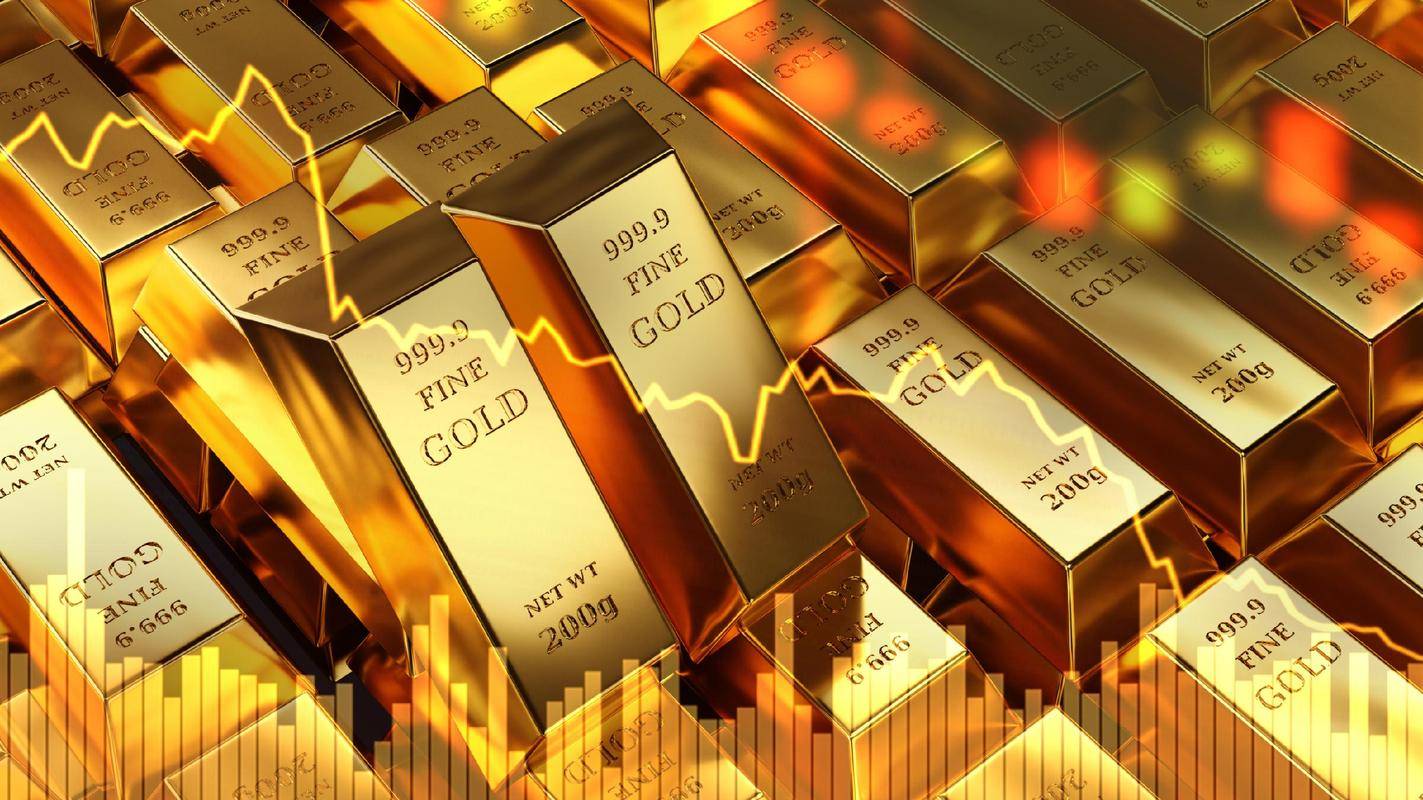
Core Insights - The article discusses the increasing trend among parents to manage their children's New Year's money (lucky money) as a means of financial education, emphasizing the importance of age-appropriate financial planning [1][3]. Age-Based Planning - Financial management of lucky money should be tailored to different growth stages of children, with a focus on the relationship between money and time [3]. - A suggested approach is to divide the lucky money into three parts using the "541 principle": 50% for long-term growth, 40% for foreseeable goals (like education and travel), and 10% for daily expenses [3][4]. - Financial education should be gradual, adapting to children's varying levels of understanding and self-control as they age [3][4]. Specific Age Stages - For children aged 3-6, the focus is on establishing a basic understanding of money, using savings accounts or cash to illustrate wealth accumulation [4]. - For ages 7-12, the emphasis shifts to developing saving habits and low-risk investment practices, allowing children to manage small amounts for daily spending [4]. - For those aged 13 and above, the focus is on fostering independent planning and diversified investment thinking, encouraging the use of low-risk investment options like mutual funds and gold accumulation [4]. Diverse Investment Trends - Parents are increasingly looking to invest lucky money in gold, high-yield stocks, and insurance products, reflecting a shift in financial perspectives among new-generation parents [5]. - The article highlights that many families are now investing in gold as a tangible asset, with some parents purchasing gold beans for their children as a way to teach saving and investment [5]. - The rising interest in capital markets has led some parents to invest in stocks and funds for their children's future education and marriage expenses, focusing on long-term holding strategies [5]. Insurance as a Financial Tool - Financial professionals recommend using long-term savings insurance products for managing lucky money, which can provide stable and continuous growth [6]. - Current market rates for universal life insurance products show guaranteed rates around 1%, with many products offering settlement rates above 2%, and some reaching up to 3.5% [6]. Investment Cautions - The article advises that lucky money management should prioritize stable investments, with common choices including fixed deposits, low-risk financial products, gold, and insurance [8]. - For families considering stock investments, it is suggested to use a dollar-cost averaging approach to mitigate risks associated with market volatility [8].
今日金价:2月25日大家做好准备!接下来,黄金有可能会历史重演
Sou Hu Cai Jing· 2026-02-25 23:41
Group 1 - The precious metals market is experiencing significant volatility, with international spot gold reaching a peak of $5249 per ounce before retreating below $5200 due to profit-taking [1] - Silver, platinum, and palladium prices have also declined in response to gold's fluctuations, while domestic markets in China show a rise in gold prices, with Au9999 spot price at 1150.01 yuan per gram, reflecting a 3.71% increase [1] - Retail gold prices in major cities remain high, with brands like Chow Tai Fook and Lao Feng Xiang in Beijing quoting 1565 yuan per gram, and similar prices observed in Shanghai and Guangzhou [1] Group 2 - Major banks are adjusting their gold bar prices in line with market trends, with Industrial Bank's "Ruyi Gold Bar" priced at 1165.95 yuan per gram and other banks offering competitive rates [2] - The national average recovery price for 999 gold is approximately 1143 yuan per gram, indicating a consistent pricing trend across online and offline channels [2] Group 3 - The market is showing characteristics reminiscent of the significant gold price increase in 2019, with a maintained price gap between brand stores and wholesale prices, alongside a mix of essential purchases and small investment demands [4] - As gold prices surpass 1500 yuan per gram, consumers are increasingly opting for smaller weight products like gold beads and "money flower" blind boxes, which cater to both decorative and value retention needs [4]
春节买金新智慧:金价高位震荡下的花小钱办大事
Sou Hu Cai Jing· 2026-02-20 13:25
Core Insights - The gold market in China is experiencing significant changes, with international gold prices fluctuating around $5000 per ounce and domestic gold jewelry prices ranging from 1529 to 1562 yuan per gram [1][17] - Young consumers are increasingly opting for smaller gold items and innovative products like "golden nails" and "gold beans," reflecting a shift in purchasing behavior [4][15][17] Price Trends - Domestic brand gold stores have slightly adjusted their prices, with Chow Tai Fook at 1529 yuan/gram and Lao Feng Xiang at 1538 yuan/gram, while the wholesale price in Shenzhen has dropped to around 1275 yuan/gram [1][10] - The price difference between branded stores and the Shenzhen market has led to a phenomenon known as the "brand tax," with significant savings available through alternative purchasing methods [3][17] Consumer Behavior - Young consumers are adopting new strategies for purchasing gold, such as saving for small gold items, with a reported 150% increase in sales of low-weight gold products on platforms like Dewu App [3][15] - The trend of "golden nails," where old gold jewelry is repurposed into nail art, has gained popularity, with high demand reported in major cities [4][17] Market Dynamics - Brand gold stores are adjusting their product offerings to cater to younger consumers, focusing on smaller weights and unique designs [6][17] - Complaints regarding "one-price" gold products have surged, with many consumers reporting discrepancies in weight and pricing, highlighting the need for transparency in the market [7][9] Regulatory Environment - New regulations implemented in early 2026 aim to address issues in the gold market, requiring clear labeling of weights and prices for "one-price" products and ensuring consumer protection during transactions [9][12] - The gold recycling market is also active, with consumers advised to be cautious of potential scams and hidden fees during transactions [12][17] Investment Trends - The demand for investment gold products, such as gold bars and coins, has increased, with a notable 35.14% rise in gold bar and coin consumption in 2025 [15][17] - The introduction of the 2026 Panda gold coin has become a popular choice for consumers, offering a reliable investment option with a robust buyback system [12][17]
春节消费热情在何处?金价过山车,老铺黄金依然火爆
Sou Hu Cai Jing· 2026-02-14 04:11
Core Viewpoint - The international gold price experienced a dramatic surge, reaching historical highs before a significant drop, influenced by market reactions to U.S. Federal Reserve leadership changes and trading regulations [1][3][4][19]. Price Movements - Gold prices rose from approximately $4600 per ounce at the beginning of January 2026 to a peak of $5598.75 on January 29, marking a nearly 30% increase [1][19]. - Following the announcement of Kevin Walsh as the next Federal Reserve Chair, gold prices plummeted over 11% in a single day, dropping to $4682.55 [4][19]. Market Reactions - The surge in gold prices led to a frenzy among consumers, with jewelry prices in domestic stores rising above 1700 yuan per gram [3]. - The market saw a significant increase in trading activity, with over 220,000 futures accounts liquidated due to margin calls on January 30 [4][19]. Consumer Behavior - Despite the price drop, consumer interest remained high, with long queues at gold stores like the Shanghai Yuyuan Old Shop, indicating strong demand for gold jewelry [7][10]. - Online sales of gold jewelry surged, with a reported 214% increase in sales on platforms like Meituan since the beginning of the year [12][21]. Structural Changes in Consumption - There is a noticeable shift in gold consumption patterns, with a significant increase in demand for gold bars and coins, while traditional jewelry sales have declined [12][15]. - The trend of "light investment" in gold, particularly among younger consumers, is gaining traction, with products like low-weight gold items becoming popular [12][13]. Market Dynamics - Global central banks have been significant buyers of gold, with purchases reaching 863 tons in 2025, and expectations of continued high demand in 2026 [16][21]. - Geopolitical tensions and concerns over U.S. debt have contributed to increased gold investment demand, with 2025 seeing record levels of gold investment [18][19].
春节黄金热:年轻人爱“无痛攒金”,有宝妈炒金浮亏6万多
Di Yi Cai Jing Zi Xun· 2026-02-12 12:36
Core Viewpoint - The article discusses the rising popularity of gold purchases among consumers, particularly during the festive season, highlighting the dual motivations of investment and emotional value in gold products [2][10]. Group 1: Consumer Trends - The demand for gold products, especially smaller and more affordable items like "mobile gold stickers," has surged, with sales of emotional value gold products increasing by 300% year-on-year [4]. - Young consumers are increasingly engaging in "pain-free gold accumulation," with low-weight gold items becoming popular as a form of light investment, leading to a 150% year-on-year growth in low-weight gold sales [11]. - The trend of emotional consumption is evident, with products featuring custom designs and IP collaborations gaining traction among younger demographics [5][11]. Group 2: Pricing Dynamics - Gold jewelry prices have seen fluctuations, with recent discounts making gold items more attractive to consumers, as prices have dropped from over 1700 yuan per gram to around 1500 yuan [6][10]. - Major brands like Chow Tai Fook are planning price increases of 15% to 30% on certain products, indicating a strategy to maintain profitability amid rising production costs [7][8]. - The pricing strategy for gold products is shifting, with a focus on high-margin items that are less sensitive to gold price fluctuations, while still catering to essential demand in wedding and cultural contexts [8]. Group 3: Investment Behavior - The investment aspect of gold is becoming more pronounced, with a reported 35.14% increase in gold bar and coin consumption, while gold jewelry consumption has decreased by 31.6% [10]. - The article highlights the experiences of individual investors engaging in gold trading, showcasing the volatility and emotional stress associated with short-term trading in gold markets [13][14]. - The accumulation of gold through bank accounts is seen as a beginner-friendly investment option, appealing to those looking to gradually build wealth over time [13][15].

春节黄金热:年轻人“无痛攒金”成理财新潮 有宝妈炒金浮亏6万多元
Di Yi Cai Jing· 2026-02-12 11:59
Group 1: Market Trends and Consumer Behavior - The popularity of gold products, especially small and emotional value items like "mobile gold stickers," is on the rise, with a reported 300% year-on-year increase in GMV sales for emotional value gold products from 2026 to date [2] - Young consumers are increasingly engaging in "pain-free gold accumulation," with a significant rise in low-weight gold purchases, showing a 150% year-on-year increase in GMV for low-weight gold on platforms like Dewu [8] - The trend of emotional consumption is evident, with products featuring phrases like "Happy Birthday" and "Success" gaining traction among younger buyers [2][3] Group 2: Pricing Strategies and Market Dynamics - Gold jewelry prices are experiencing a dual trend of discounts and anticipated price increases, with brands like Chow Tai Fook planning to raise prices by 15% to 30% on certain products starting in March [5][6] - Discounts are being offered to attract consumers during the pre-Spring Festival period, with some gold shops reducing prices by 100 yuan per gram, making gold jewelry more affordable [4] - The pricing strategy reflects a focus on high-margin products, as brands aim to counteract the volatility of international gold prices while maintaining profitability [6] Group 3: Investment and Speculation in Gold - The investment aspect of gold is becoming more prominent, with a 35.14% year-on-year increase in gold bar and coin consumption, while gold jewelry consumption has decreased by 31.6% [7] - Retailers are observing a shift in consumer behavior, with more individuals viewing gold as a viable investment option rather than just a luxury item [7] - The phenomenon of "gold speculation" is growing, with individuals engaging in gold trading through bank accounts, leading to both significant gains and losses due to fluctuating gold prices [9][10]
春节黄金热:年轻人“无痛攒金”成理财新潮,有宝妈炒金浮亏6万多元
Di Yi Cai Jing· 2026-02-12 11:57
Core Insights - The upcoming Spring Festival is driving a surge in gold consumption, characterized by investment, gifting, and emotional purchases, with low-weight gold products and IP collaboration items seeing significant sales growth [1][4][12]. Group 1: Market Trends - The popularity of low-weight gold products, such as "mobile gold stickers," is on the rise, with emotional consumption and lower barriers to entry being key selling points [4][5]. - Sales of emotional value gold products have seen a 300% year-on-year increase in GMV as of 2026 [4]. - The trend of "buying gold beans" among young consumers is gaining traction, with low-weight gold items becoming a popular form of light investment [13]. Group 2: Pricing Strategies - Gold retailers are employing discount strategies to attract consumers during the Spring Festival, with some stores reducing gold prices by 100 yuan per gram [6][7]. - Despite discounts, some brands, like Chow Tai Fook, are planning to increase prices on certain products by 15% to 30% starting March 2026, focusing on high-margin items [7][8]. - The pricing strategy reflects a balance between maintaining profitability and responding to market demand, particularly for high-margin products that are less sensitive to price changes [8]. Group 3: Consumer Behavior - Investment in gold bars and coins is increasingly favored over gold jewelry, with a reported 35.14% increase in gold bar and coin consumption, while jewelry consumption has decreased by 31.6% [12]. - The emotional and cultural significance of gold products, especially in wedding and ceremonial contexts, continues to drive stable demand despite price fluctuations [8][12]. - The market is witnessing a split in consumer preferences, with traditional gold products maintaining steady demand while IP collaboration items face more volatility based on brand innovation and emotional value [8]. Group 4: Investment Dynamics - The recent volatility in gold prices has led to a more cautious approach among investors, with many opting for long-term accumulation strategies rather than short-term trading [15][17]. - The "accumulated gold" investment model is becoming popular among small investors, allowing for easier entry into gold trading [15][17]. - The market dynamics suggest that while emotional purchases are significant, the fundamental value of gold as a stable investment remains a priority for many consumers [12][15].

华尔街日报:黄金和白银狂热背后的“中国大妈”
美股IPO· 2026-02-09 04:27
Core Insights - The article discusses the surge in gold and silver investments among Chinese retail investors, particularly in the context of rising global tensions and economic uncertainty [1][3][4]. Group 1: Investment Trends - Chinese retail investors, referred to as "Aunties," have significantly contributed to the global gold and silver frenzy, with purchases of approximately 432 tons of gold bars and coins in 2025, marking a 28% increase from the previous year [3][5]. - The demand for gold in China remains strong, as evidenced by the persistent premium on gold and silver prices compared to international benchmarks [6]. - The influx of funds into gold ETFs in China reached a historical high last year, indicating a growing preference for gold as a safe-haven asset amid economic volatility [6]. Group 2: Market Dynamics - Recent fluctuations in gold prices have led to significant losses for many investors, with a notable drop occurring on January 30, when gold and silver prices experienced their largest single-day decline in decades [6][7]. - Some banks in China have tightened margin requirements, limiting the amount customers can borrow to purchase metals, reflecting a cautious market sentiment [7]. - Despite the recent price drop, there has been an increase in foot traffic at jewelry markets, suggesting that lower prices may attract buyers, although overall consumer sentiment remains cautious [7][8]. Group 3: Shifts in Investment Preferences - Some investors are shifting their focus from gold to silver, believing that silver has more potential for appreciation, as indicated by individuals who have started accumulating silver instead of gold [10][11].