
轨道上的都市圈

Search documents
年内运送乘客超32亿人次
Shen Zhen Shang Bao· 2025-12-29 03:05
Group 1 - In 2025, Shenzhen Metro's passenger volume reached a record high, transporting over 3.2 billion passengers, marking a year-on-year increase that leads among first-tier cities [1][2] - The average daily passenger flow reached 8.9853 million, showing a significant year-on-year growth of 6.2%, with single-day passenger volume exceeding 10 million becoming a new norm [1] - Shenzhen is advancing the construction of Metro Line Phase V, with expectations to exceed 800 kilometers of operational mileage by 2030, laying the foundation for a "railway urban circle" [1][2] Group 2 - The expanding metro network is driving the optimization of regional industrial layout and accelerating urbanization, with new lines primarily extending from the city center to the outskirts [2] - The construction of new metro lines has facilitated extensive coverage in areas outside the original special economic zone, enhancing connectivity between urban centers and promoting economic integration [2] - Future metro lines are planned to connect with neighboring Dongguan and Huizhou, providing potential for the development of a metropolitan area centered around Shenzhen [2]
5万公里高铁冲刺:广东登顶,湖北赢了?
Mei Ri Jing Ji Xin Wen· 2025-12-22 14:29
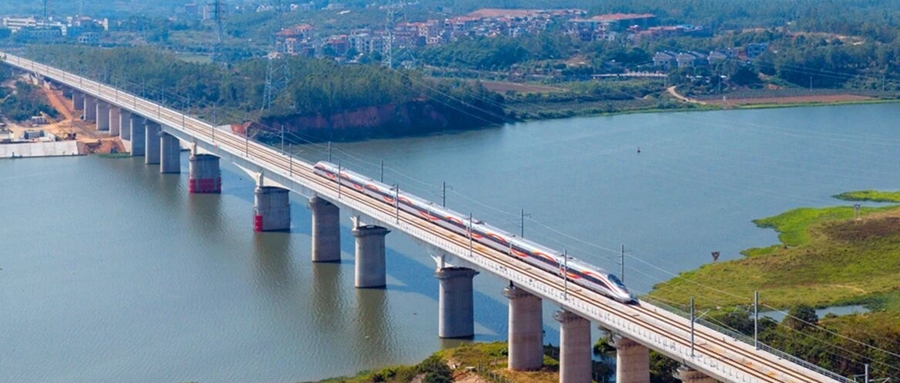
Core Viewpoint - Guangdong has surpassed Shandong to become the province with the most high-speed rail mileage in China, reaching a total of 3,437 kilometers after the opening of two new lines, Guangzhang High-speed Railway and Shantou-Shanwei High-speed Railway [1][6]. Group 1: High-speed Rail Expansion - On December 22, two new high-speed rail lines were opened in Guangdong, adding a total of 421 kilometers to the province's rail network [1][6]. - By the end of 2024, the national high-speed rail operating mileage is expected to reach 48,000 kilometers, with approximately 2,700 kilometers added in 2023 [1][6]. - The completion of the "Eight Vertical and Eight Horizontal" high-speed rail network is nearing, with a target of over 50,000 kilometers in operational mileage [1][22]. Group 2: Provincial Rankings and Developments - Guangdong's high-speed rail mileage increased by 421 kilometers, while Shandong's remained at 3,047 kilometers, leading to Guangdong's rise to the top position [6][11]. - Hubei is projected to have the highest growth in high-speed rail mileage by 2025, with an increase of approximately 429 kilometers, moving it into the top five provinces [6][11]. - Other provinces like Liaoning and Zhejiang are also expected to see significant increases in their high-speed rail mileage, with additions of 173 kilometers and 131 kilometers, respectively [6][11]. Group 3: Infrastructure and Economic Impact - The rapid expansion of high-speed rail in Guangdong addresses previous transportation shortcomings and enhances connectivity within the Pearl River Delta region [10][11]. - The development of high-speed rail networks is not only about increasing mileage but also about improving network efficiency and connectivity, facilitating better economic integration among urban areas [12][15]. - The "railway urban circle" concept is being emphasized, with high-speed rail serving not just long-distance travel but also daily commuting and regional connectivity [14][15]. Group 4: Future Projections and Policy Directions - The "14th Five-Year Plan" aims to accelerate the construction of urban transportation networks, with a focus on enhancing connectivity in major city clusters [13][22]. - The upcoming "15th Five-Year Plan" will prioritize high-speed rail development in underdeveloped regions, with increased financial support for projects in central and western China [25][26]. - The strategic focus is shifting from merely increasing efficiency to ensuring equitable development across regions, particularly in less developed areas [25][26].

新里程!京沪城轨双双突破900公里
Xin Lang Cai Jing· 2025-12-22 10:51
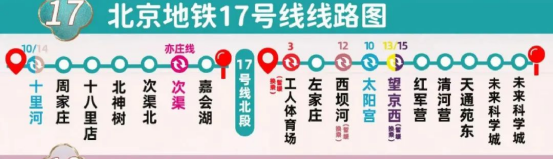
Core Insights - The article highlights a significant milestone in China's urban rail transit sector, with both Beijing and Shanghai set to exceed 900 kilometers of operational rail lines, marking a new phase in public transportation systems in major Chinese cities [1][9]. Group 1: Beijing's Developments - Beijing is set to open three new lines: the 17th line mid-section, the 18th line, and the southern extension of the 6th line, totaling approximately 30.1 kilometers, which will address various transportation challenges in different regions [10][1]. - The southern extension of the 6th line, although only 2.1 kilometers long, will enhance connectivity between the city's sub-center and the central urban area [15]. - After the new lines are operational, Beijing's rail transit mileage will increase from 879 kilometers to 909 kilometers, officially surpassing the 900-kilometer mark [16]. Group 2: Shanghai's Developments - Shanghai's 18th line phase two, which connects the Changjiang South Road Station to the Kangwen Road Station, has passed safety assessments and is expected to begin initial operations soon [2][16]. - The 18th line phase two, with a total investment of 12.6 billion yuan, will significantly improve transportation for residents in Baoshan District, breaking the previous transportation barriers in the area [18]. - This line is not only a public welfare project but also a crucial support for Shanghai's "North Transformation" strategy, linking key industrial areas and facilitating urban integration [18]. Group 3: Urban Development Logic - The expansion to a 900-kilometer rail network signifies not just improved commuting but also a transformation in urban spatial structure and an engine for industrial development [19]. - The ongoing competition between Beijing and Shanghai in rail transit development reflects the inherent demand for efficient public transportation systems in mega-cities [19]. Group 4: Future Outlook - Following the achievement of 900 kilometers, the next target for Beijing is to reach 1,000 kilometers of operational rail lines by 2025 [20]. - Shanghai aims to achieve a blueprint of "three 1,000 kilometers" by 2035, which includes 1,000 kilometers of metro, regional rail, and intercity rail [21]. - Future urban rail construction in China will focus on effectiveness and sustainable development, with an emphasis on enhancing networks in first-tier cities and promoting regional collaboration through intercity rail projects [21].

中国最长的跨市地铁,要来了
虎嗅APP· 2025-11-29 03:06
以下文章来源于国民经略 ,作者凯风 国民经略 . 在这里,读懂中国经济、城市和楼市 本文来自微信公众号: 国民经略 ,作者:凯风,题图来自:AI生成 不是一城,胜似一城。 最长的跨市地铁,要来了。 刚刚,东莞地铁1号线正式开通运行,这座"双万之城"终于迎来第二条地铁,真正连线成网。 早在2016年,东莞首条地铁 (2号线) 就已开通,但在同年完成立项的1号线,历经10年终于修成正 果。 一 对于一个不设区县、只有镇街、多中心模式且城区人口超千万的"直筒子市"来说,一条地铁难以形成 网络效应,新线可谓及时雨。 与市内交通相比,新线更重要的意义在于—— 打通广深地铁网络 。 根据规划,东莞1号线向西将与广州5号线、向东与深圳6号线支线打通,连通两大一线城市。 如果加上城际铁路等"大号地铁",以广州为中心,西连佛山、肇庆、清远,东通东莞、深圳、惠州, 南接中山、珠海的超级轨道交通网络,正在逐步成形。 超级地铁塑造不只是基建硬联通,更是人流、物流、信息流、资金流、数据流的高度融通。 基建饱和时代,大湾区为何还要建地铁? 过去几年,地铁审批全面收紧,三四线城市"地铁梦"就此搁浅,就连一二线地铁规划也全面缩水。 究其原因 ...
市域(郊)铁路成都至德阳线启动预制梁架设
Zhong Guo Xin Wen Wang· 2025-11-26 08:51
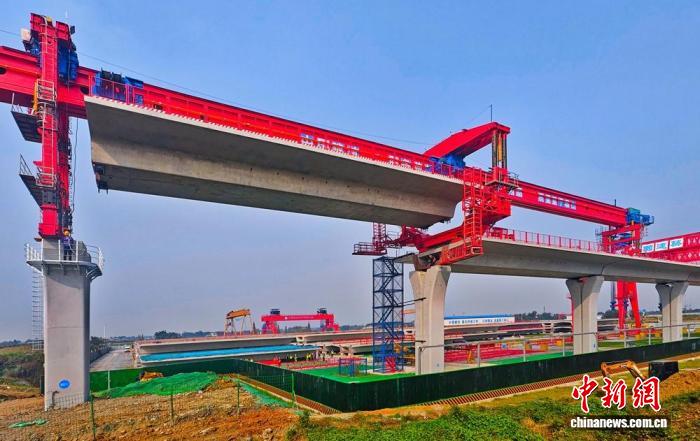
Core Viewpoint - The Chengdu-Deyang Line of the suburban railway has commenced the prefabricated beam installation, marking a significant advancement in the construction of the elevated section of the line [1] Group 1: Project Overview - The Chengdu-Deyang Line is a key project in the "urban rail transit circle," utilizing a "factory prefabrication and on-site installation" method to enhance construction efficiency and reduce environmental impact compared to traditional methods [3] - The elevated section of the Chengdu-Deyang Line spans approximately 45.4 kilometers, accounting for 64% of the total line length, requiring the installation of 1,156 prefabricated beams produced at three manufacturing sites [3][4] Group 2: Construction Techniques and Innovations - The construction employs a composite foundation reinforcement technique to address the challenges of soft soil in the Sanxingdui area, ensuring the safe placement of heavy prefabricated beams [3] - A smart beam yard management platform has been established to create a "growth profile" for each prefabricated beam, enabling digital control of production parameters for quality assurance and traceability [4] Group 3: Project Progress and Impact - As of now, significant milestones have been achieved, including the completion of the main structure for nine underground stations and the ongoing installation of electromechanical systems and decorations in two stations [4] - The Chengdu-Deyang Line is expected to significantly reduce travel time between Chengdu and Deyang, facilitating regional industrial collaboration and efficient transportation for personnel [4]
谱写城轨建设新篇章——福州地铁滨海快线开通
Zhong Guo Jin Rong Xin Xi Wang· 2025-09-29 09:21
Core Points - The Fuzhou to Changle Airport Intercity Railway, known as the "Binhai Express Line," officially opened on September 29, with a total length of 62.4 kilometers and 13 stations, designed for a speed of 140 km/h [1][2] - The project connects key hubs such as Fuzhou Railway Station and Changle International Airport, facilitating rapid transit between the main city and the coastal new city, and is a core project for promoting the strategy of development along the river and towards the sea [1][2] Company Insights - Guangzhou Metro Design Institute played a crucial role in the design and coordination of the project, collaborating with other design institutes to overcome key technical challenges and achieve multiple industry breakthroughs [1][2] - The project features an innovative combined operation mode, integrating various travel options, and utilizes a domestically leading A-type train designed for city areas, showcasing advancements in seating layout, smart monitoring systems, and eco-friendly materials [1][2] Industry Trends - The successful implementation of the Binhai Express Line highlights the technical strength and organizational capabilities of Guangzhou Metro Design Institute in large network integration and multi-system collaboration [2] - The institute aims to continue supporting Fuzhou in building a "railway urban circle" and contributing to the coordinated development of the Northeast Fujian region, while focusing on innovation, green development, and transportation integration in future urban construction projects [2]
湖北首条城际铁路要变身了
Chang Jiang Ri Bao· 2025-07-24 00:25
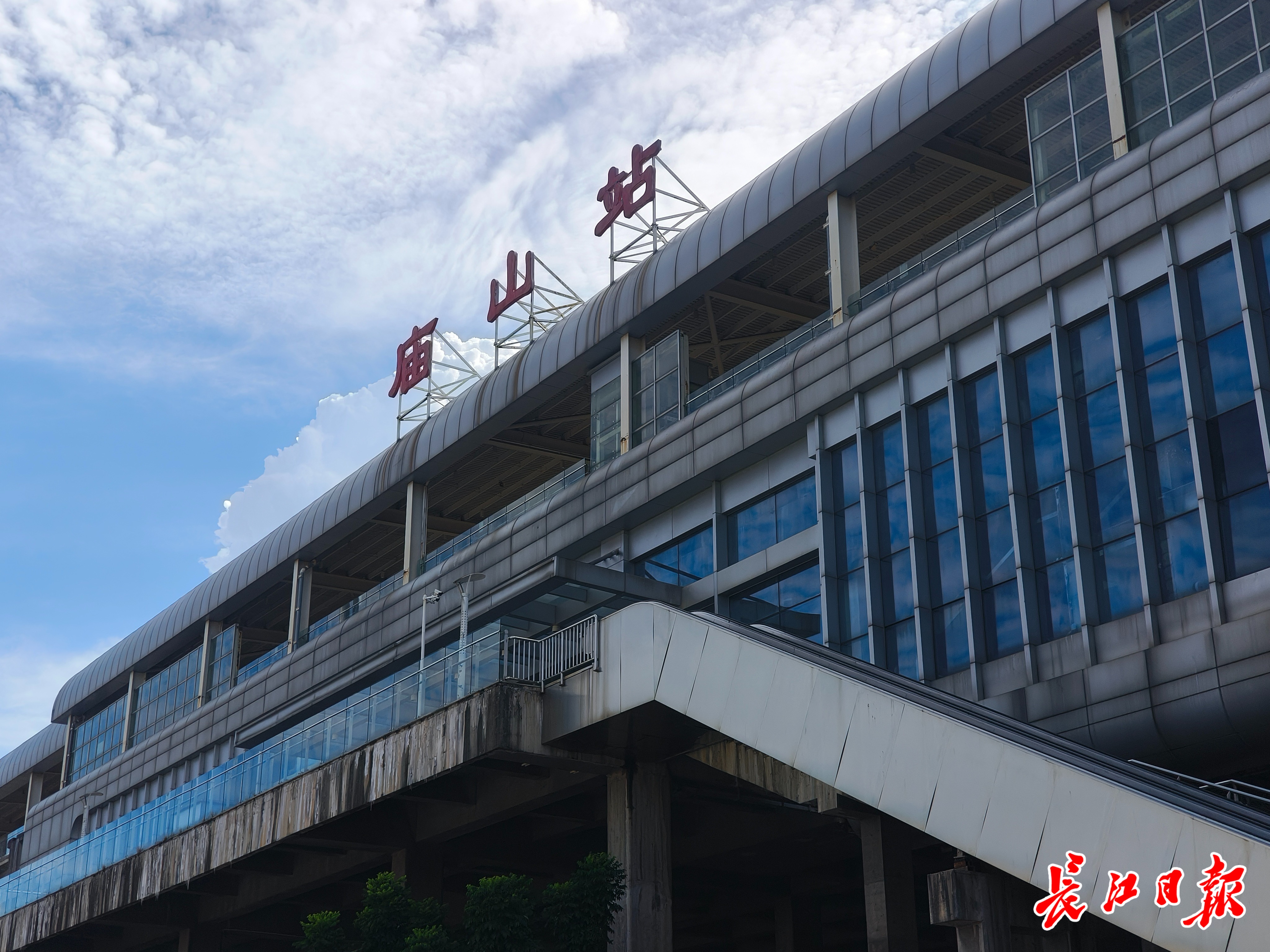
Core Viewpoint - The Wuxian Intercity Railway, which has struggled with low passenger numbers since its opening, is set to undergo a transformation into a bus-like operation by the end of October 2023, aiming to improve its service frequency and attract more commuters [1][5][6]. Summary by Sections Background of Wuxian Intercity Railway - The Wuxian Intercity Railway, the first intercity railway in Hubei Province, opened on December 28, 2013, covering a length of 76 kilometers with 12 stations and a design speed of 250 km/h, primarily serving short-distance commuters between Wuhan and Xianning [1]. Current Operational Challenges - The railway has faced significant operational challenges, with daily train services reduced from over 10 pairs to just 5 pairs due to insufficient passenger flow. Some stations have been forced to close due to low ridership [5][6]. - A comparison shows that taking the Wuguang High-Speed Railway is more time-efficient and cost-effective, with a one-way trip taking only 24 minutes at a minimum fare of 39 yuan, compared to the Wuxian Intercity Railway's 1-hour journey at a minimum fare of 37 yuan [5]. Upcoming Transformation - A new bidding announcement indicates that a bus-like operation project will commence, upgrading customer service systems at seven stations, including Wuhan East Station and Miaoshan Station, and procuring two sets of four-car trains with a maximum speed of no less than 200 km/h [5][6]. - The goal is to achieve at least one train per hour and one train every half hour during peak times, enhancing the service frequency significantly [5]. Precedents and Broader Context - The "New City Express Line," which began operations on January 24, 2024, serves as a precedent for bus-like operations in the Wuhan metropolitan area, increasing its daily train pairs from 12.5 to a maximum of 25 to meet commuter needs [6][11]. - The integration of transportation infrastructure is accelerating the development of the Wuhan metropolitan area, with various projects enhancing connectivity and economic growth, as evidenced by the metropolitan area's GDP surpassing 3.6 trillion yuan in 2024 [11][16]. Future Implications - The transformation of the Wuxian Intercity Railway is expected to create a more integrated urban living environment, promoting a "half-hour reach" lifestyle and enhancing the overall quality of life in the metropolitan area [16].
京津冀蓝皮书发布:完善三地公共服务配套 打造职住平衡通勤圈
Bei Jing Shang Bao· 2025-07-21 07:54
Core Viewpoint - The "Blue Book" on the development of the Beijing-Tianjin-Hebei region emphasizes the importance of high-quality integration and urbanization, focusing on transportation connectivity and public service improvements to enhance regional collaboration [1][2]. Group 1: Overall Structure of the Blue Book - The "Blue Book" consists of 2 general reports, 7 thematic reports, and 3 regional reports, addressing the current status and issues of high-quality integration in the Beijing-Tianjin-Hebei region [1]. - It analyzes key aspects such as core drivers, critical areas, green foundations, and supporting facilities for high-quality integration [1]. Group 2: Transportation and Public Services - The report highlights the need to enhance regional express connections and public service facilities to advance the spatial integration of Beijing-Tianjin and Xiong'an [2]. - It proposes the development of a transportation network comprising intercity rail, highways, and high-speed rail to expand the "one-hour commuting circle" around Beijing [2]. - The plan includes improving public transportation systems in areas like Tongzhou, Daxing, Langfang, and Wuqing to facilitate regional collaborative development [2]. - The report advocates for a transit-oriented development (TOD) model to create multifunctional urban areas around high-speed rail and subway stations, promoting a balanced commuting environment [2].
“轨道上的都市圈”加速形成(大数据观察)
Ren Min Ri Bao· 2025-07-04 21:56
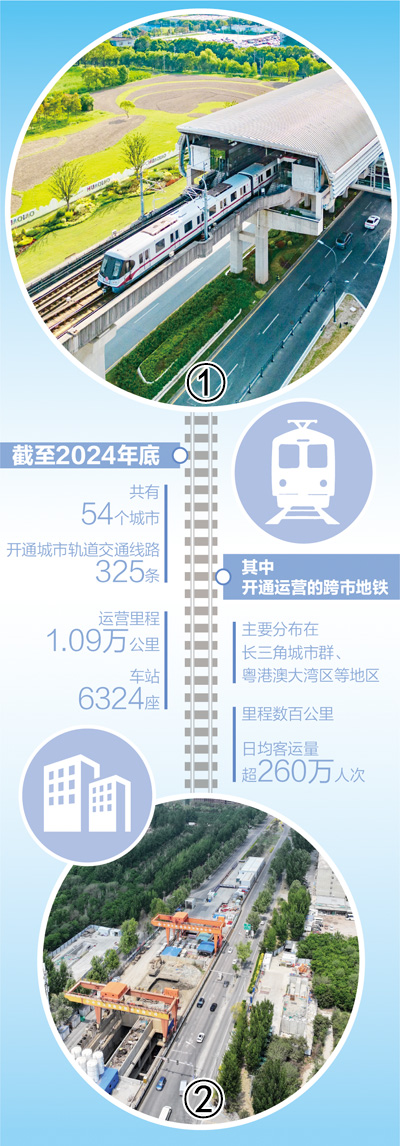
Core Insights - The article highlights the rapid development of intercity metro systems in China, which are enhancing regional integration and improving urban connectivity [5][10][12] Group 1: Overview of Intercity Metro Development - By the end of 2024, 54 cities in China will have operational urban rail transit lines, totaling 1.09 million kilometers and 6,324 stations, with daily passenger volumes exceeding 2.6 million [5][6] - The intercity metro lines are primarily concentrated in the Yangtze River Delta and the Guangdong-Hong Kong-Macau Greater Bay Area, facilitating significant commuter traffic [6][10] Group 2: Specific Projects and Their Impact - The Beijing Metro Line 22, which connects Hebei's Yanjiao to Beijing, is currently under rapid construction, expected to reduce travel time to the city center significantly [2][4] - The Guangzhou-Foshan metro line, operational since 2010, has become a vital transportation artery, with daily ridership projected to reach 1.896 million by 2024 [3][10] Group 3: Integration and Connectivity - The seamless transfer between Shanghai and Suzhou metro lines exemplifies successful intercity connectivity, allowing passengers to switch lines without exiting the station [7][8] - The establishment of collaborative management frameworks between cities is crucial for the effective operation of intercity metro systems, ensuring safety and efficiency [8][9] Group 4: Future Prospects and Strategic Goals - The Chinese government aims to add 3,000 kilometers of intercity and suburban rail lines by 2025, as part of the broader "14th Five-Year Plan" [12][13] - The integration of metro systems with other transport modes is a priority, aiming to create a comprehensive and convenient transportation network [13]
今年前半年一批交通建设项目迎来新进展 年底广东高速公路将达1.2万公里
Nan Fang Ri Bao Wang Luo Ban· 2025-07-02 08:24
Core Viewpoint - The transportation infrastructure projects in Guangdong are making significant progress in the first half of 2025, contributing to the province's goal of reaching 12,000 kilometers of expressways by the end of the 14th Five-Year Plan [1][6]. Group 1: Transportation Projects Progress - Major transportation projects have seen new developments, including the completion of the 218-kilometer "most beautiful tourist road" in Huizhou, which connects scenic areas and enhances local tourism [2][6]. - The construction of the Zeng Tian Expressway is underway, with full surface paving expected to be completed by the end of the year, improving traffic flow in eastern Guangzhou [2][3]. - The Yuedong Intercity Railway has achieved a cumulative investment of 2.142 billion yuan, with significant milestones reached in construction, including the completion of all bridge substructures [4][6]. Group 2: Economic and Social Impact - The transportation projects are not only vital for economic development but also serve as important public welfare initiatives, enhancing the quality of life for residents [2]. - The completion of these projects is expected to reduce travel time significantly, with the Zeng Tian Expressway cutting the distance to downtown Guangzhou by nearly 30 kilometers [3]. - The successful execution of these projects is anticipated to strengthen the transportation network in the Shantou-Chaozhou-Jieyang urban agglomeration, promoting regional integration [4][6]. Group 3: Future Outlook - Guangdong plans to complete nine expressway projects this year, contributing to the overall goal of 12,000 kilometers of expressways by the end of the 14th Five-Year Plan [6]. - Four out of seven planned railway projects are already in the acceptance stage, indicating a strong pipeline for future transportation infrastructure [6].