
金融腐败

Search documents
招行原副行长王庆彬被公诉,涉贷款审批与员工招聘
Xin Lang Cai Jing· 2026-02-11 02:54
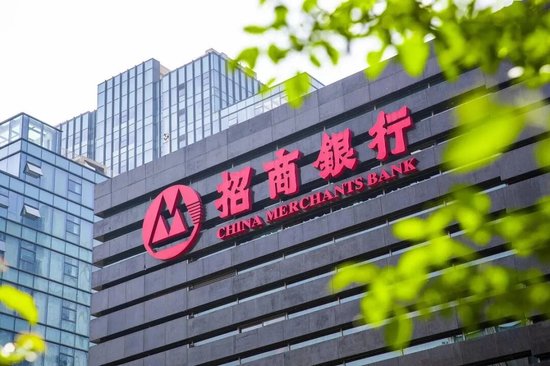
Core Viewpoint - Wang Qingbin, former vice president of China Merchants Bank, has been prosecuted for bribery, highlighting ongoing issues of corruption within the banking sector [2][3][16]. Group 1: Background of Wang Qingbin - Wang Qingbin was born in December 1956 and has a long career in banking, starting at China Construction Bank before joining China Merchants Bank in May 2000 [3][16]. - He held several key positions within China Merchants Bank, including the head of various branches and assistant to the president, before becoming vice president in June 2011 [4][17]. - After retiring from his role as vice president in June 2016, he continued to work in the financial sector, serving as the chairman of China Merchants Jinling Leasing Co., Ltd. until January 2021 [5][18]. Group 2: Legal Proceedings - The prosecution alleges that Wang Qingbin used his positions to facilitate loan approvals and recruit employees while illegally accepting substantial bribes [3][16]. - The investigation into Wang Qingbin and other officials from China Merchants Bank was conducted by the Qinghai Haidong Supervisory Commission, indicating a broader inquiry into the bank's operations [2][8]. Group 3: Other Involved Officials - Other officials from China Merchants Bank, including former vice president Ding Wei and former Chongqing branch president Chen Lei, have also faced legal issues, with Ding Wei being investigated for similar bribery charges [8][21]. - Chen Lei has been charged with both bribery and accepting bribes, which is relatively rare among financial executives [10][22]. Group 4: Implications for the Banking Sector - The cases of Wang Qingbin and other officials underscore significant concerns regarding corruption in the banking industry, particularly in areas related to loan approvals and personnel management [12][25].


冯建龙,被开除党籍!通过民间借贷获取大额回报、违规收受大额钱款
券商中国· 2026-01-28 14:34
Core Viewpoint - The article discusses the disciplinary actions taken against several senior officials of state-owned banks in China, highlighting the ongoing crackdown on corruption within the banking sector, particularly focusing on the case of Feng Jianlong, a former senior executive of Agricultural Bank of China [1][2][3]. Summary by Sections Disciplinary Actions - Feng Jianlong, former chief expert and party secretary of Agricultural Bank of China Zhejiang branch, was expelled from the party and is under criminal investigation for serious violations of discipline and law [1]. - Since 2026, multiple senior officials from state-owned banks have faced similar disciplinary actions, including Wang Guobiao, Gao Qiang, and Chen Kunyong, all of whom were expelled from the party and public office [1][4]. Corruption Allegations - Feng Jianlong is accused of losing his ideals and beliefs, resisting organizational scrutiny, and engaging in superstitious activities. He violated central regulations by accepting banquets, misusing service vehicles, and seeking special treatment for himself and his family [2][3]. - He also allegedly engaged in illegal activities such as obtaining large returns through private lending, receiving substantial sums of money, and misusing his position for personal gain [3]. Broader Context of Corruption in Banking - The article notes that several other senior officials from the Zhejiang branch of state-owned banks have also been implicated in corruption, including Cheng Jun and Guo Xingan from Bank of China, and Shen Rongqin from Industrial and Commercial Bank of China [4][6]. - High Qiang's case is highlighted, where he was found to have lost his ideals, engaged in corrupt practices, and used his position to benefit others in loan approvals and financing [4][5]. Recent Developments - In 2023, several other senior officials from state-owned banks have been expelled for serious violations, including Chen Kunyong and Ge Chunyu, both of whom faced similar allegations of corruption and misconduct [6][7].




建设银行浙江省分行原党委书记、行长高强被开除党籍
Xin Lang Cai Jing· 2026-01-23 10:42
Group 1 - The central issue involves the serious disciplinary violations and illegal activities of Gao Qiang, the former Party Secretary and President of China Construction Bank's Zhejiang branch, leading to an investigation by the Central Commission for Discipline Inspection and the Beijing Municipal Supervisory Commission [1][2] - Gao Qiang is accused of losing his ideals and beliefs, resisting organizational scrutiny, and engaging in corrupt practices such as accepting gifts and money that could influence his official duties, as well as violating organizational principles for personal gain [1][2] - The investigation revealed that Gao engaged in activities such as gambling, misusing his position for personal financial benefits, and failing to adhere to the Party's disciplinary regulations, which resulted in severe consequences including expulsion from the Party and referral to the prosecution [2] Group 2 - Gao Qiang's actions reflect a broader issue of corruption within state-owned financial institutions, highlighting the risks associated with the "revolving door" phenomenon between government and business [2] - The case underscores the importance of strict adherence to political, organizational, and ethical disciplines within the banking sector, especially in the context of ongoing anti-corruption efforts following the 18th, 19th, and 20th National Congresses of the Communist Party [2] - The disciplinary actions taken against Gao Qiang serve as a warning to other officials within the financial industry regarding the consequences of corruption and the need for integrity in public service [2]
九江农商银行原董事长减刑被驳,1.7亿违法放贷案警示
Sou Hu Cai Jing· 2026-01-11 13:47
Core Viewpoint - The rejection of Gu Hailong's sentence reduction highlights the ongoing challenges of corruption in the financial sector, emphasizing the need for stricter governance and accountability measures within financial institutions [2][6]. Group 1: Case Background - Gu Hailong, former chairman of Jiujiang Rural Commercial Bank, was involved in a significant financial corruption case, including illegal loans amounting to 1.75 billion yuan, resulting in direct losses of 1.12 billion yuan [4]. - His career spanned 40 years, witnessing key transformations in the rural financial system, but ended in disgrace following his investigation and subsequent expulsion from the party [4]. Group 2: Legal Proceedings - The Nanchang Intermediate People's Court denied Gu's request for sentence reduction based on insufficient compliance with financial penalties, highlighting the importance of fulfilling financial obligations as a measure of remorse [3]. - The court's decision reflects a judicial trend towards stricter penalties for financial crimes, signaling a commitment to combating corruption in the financial sector [3][6]. Group 3: Corruption Patterns - Gu's case exemplifies a "power monetization" model of corruption, where public authority is exploited for personal gain, revealing deep-rooted issues within the financial governance framework [5]. - The case also illustrates the detrimental impact of corruption on family and social ethics, as financial executives misuse industry resources for personal benefit [5]. Group 4: Implications for the Financial Sector - The ongoing issues within Jiujiang Rural Commercial Bank, such as a non-performing loan ratio of 1.95% as of Q3 2025, indicate lingering effects of past illegal lending practices [5]. - The rejection of Gu's sentence reduction serves as a reminder of the need for robust governance structures in financial institutions to prevent future corruption and ensure financial stability [6].
九江农商行原董事长顾海龙减刑被驳,金融腐败敲响警钟
Sou Hu Cai Jing· 2025-12-19 14:15
Core Viewpoint - The case of Gu Hailong, former chairman of Jiujiang Rural Commercial Bank, highlights serious financial corruption issues within the banking sector, as his application for sentence reduction was rejected due to failure to fulfill financial penalties, emphasizing the need for stricter governance and risk management in financial institutions [1][4]. Group 1: Case Background - Gu Hailong, who served as chairman from 2015 until his investigation in 2022, was found guilty of accepting bribes exceeding 30.06 million yuan and illegally issuing loans amounting to 175 million yuan, resulting in a direct loss of 112 million yuan [2][4]. - The bank's non-performing loan ratio peaked at 3.36% in 2018 and remained at 1.95% in Q3 2025, above the industry average, indicating ongoing asset quality issues [2]. Group 2: Judicial Considerations - The court's rejection of Gu's sentence reduction was based on his inadequate payment of a 3.1 million yuan fine, having only paid 180,000 yuan by the time of his application, which contradicted his claims of remorse [4]. - The case exemplifies "option corruption," where corrupt practices continued even after Gu's tenure, complicating investigations and reflecting a trend of hidden financial corruption [4]. Group 3: Governance Challenges - The case reveals governance weaknesses in the rural credit system, with Jiujiang Rural Commercial Bank struggling with "insider control" despite multiple reforms since its establishment in the 1950s [5]. - Common issues in rural financial institutions include excessive concentration of power in leadership, incomplete reforms leading to bureaucratic management, and ineffective employee conduct management [5]. Group 4: Implications for the Industry - The rejection of Gu's sentence reduction signals a stricter judicial approach towards financial crimes causing significant economic losses, with a focus on enforcing financial penalties [6]. - The case offers three key lessons for corporate governance in small and medium-sized banks: strengthening checks and balances, enhancing credit process controls, and implementing lifetime accountability for executives [6].
千亿银行原董事长,被查!
券商中国· 2025-11-22 23:33
Core Viewpoint - The article discusses the investigation of Li Dunman, the Vice President of Guangxi Investment Group, for serious disciplinary violations, highlighting a pattern of corruption within the leadership of Liu Zhou Bank and its associated entities [1][5]. Group 1: Li Dunman's Background and Career - Li Dunman, aged 54, has extensive experience in local financial institutions, having held various positions in China Bank and Liu Zhou Bank, including Chairman and President [3]. - He served as the Chairman of Liu Zhou Bank from March 2017 until April 2021, when he was appointed as Vice President of Guangxi Investment Group [3]. - Li was later nominated as the Chairman of Guangxi Financial Investment Group in April 2023, a position he held until his dismissal in September 2025 [3]. Group 2: Guangxi Investment Group Overview - Guangxi Investment Group was established in 1988 with a registered capital of 23 billion yuan and is set to become a state-owned capital investment company by August 2024 [4]. - The group is recognized as Guangxi's first "World's 500 Strong" enterprise, with approximately 270 subsidiaries, four publicly listed companies, over 32,000 employees, total assets exceeding 860 billion yuan, and annual revenue surpassing 237 billion yuan [4]. Group 3: Corruption Patterns in Liu Zhou Bank - Li Dunman is the third consecutive Chairman of Liu Zhou Bank to face corruption allegations, following his predecessors Li Yaoqing and Liu Zhong, both of whom were implicated in serious corruption cases [5]. - Li Yaoqing was investigated for accepting bribes, while Liu Zhong was sentenced to 16 years in prison for bribery and illegal loan issuance [5]. Group 4: Liu Zhou Bank's Financial Performance - Liu Zhou Bank reported an operating income of 3.401 billion yuan for the first three quarters of 2025, reflecting a year-on-year increase of 6.73% [6]. - As of the end of the third quarter, the bank's total assets reached 259.181 billion yuan, marking a 5.22% increase from the beginning of the year [6].

从田惠宇、丁伟再到王庆彬,招商银行缘何出现塌方式腐败?
水皮More· 2025-09-15 09:26
Group 1 - The article highlights a systemic issue of corruption within China Merchants Bank, exemplified by the cases of former executives Wang Qingbin, Ding Wei, and Tian Huiyu, who have faced investigations and severe penalties for their actions [2][5][6] - The investigation into these executives is indicative of a broader trend of "collapsing-style corruption" within the bank, which was once a leader in retail banking innovation [5][8] - The concentration of power within the bank, particularly through the "one-person responsible system," has led to a lack of checks and balances, facilitating corrupt practices among high-ranking officials [7][8] Group 2 - The rapid development of innovative business models, such as integrated investment and commercial banking, has outpaced regulatory oversight, allowing executives to exploit loopholes for personal gain [7][8] - The corporate culture at China Merchants Bank has shifted towards a performance-driven mindset, where executives feel entitled to share in the profits generated by the bank, blurring the lines between personal and corporate interests [7][8] - The article raises questions about whether the issues stem from individual failings or systemic flaws, suggesting that both factors contribute to the current situation [8]
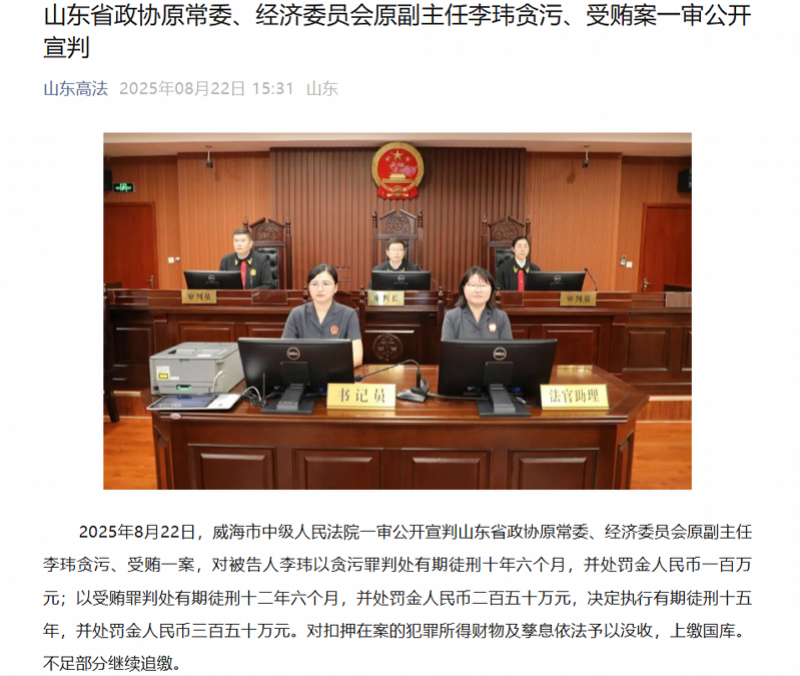
贪污受贿超五千万!李玮一审被判15年,曾任中泰证券董事长
Nan Fang Du Shi Bao· 2025-08-27 12:32
Core Viewpoint - Li Wei, former chairman of Zhongtai Securities, was sentenced to 15 years in prison for corruption and bribery, with total illicit gains exceeding 50 million RMB [1][4]. Group 1: Case Details - Li Wei was found guilty of embezzling over 10.03 million RMB from 2007 to 2020 while serving as chairman of Qilu Securities and Zhongtai Securities [4]. - He received over 39.98 million RMB in bribes from 2003 to 2023, leveraging his positions to benefit others in stock purchases, loan processing, and job placements [4]. - The court imposed a combined sentence of 15 years in prison and a fine of 3.5 million RMB, with confiscation of illegal gains [5]. Group 2: Professional Background - Li Wei held leadership roles in Qilu Securities and Zhongtai Securities for over 17 years, significantly impacting the local securities industry [6][7]. - He played a crucial role in the consolidation of local securities firms during the early 2000s, leading to the establishment of Zhongtai Securities as a major player [7]. - Li Wei's career included various financial positions, culminating in his tenure as chairman of Zhongtai Securities from 2003 until 2020 [8]. Group 3: Additional Context - Li Wei's actions were characterized by a pattern of misconduct, including accepting gifts and engaging in nepotism, which led to his eventual downfall [9]. - His case reflects broader issues of corruption within the financial sector, particularly in the context of regulatory oversight and governance [9].

农行原副行长楼文龙,被判无期
Zhong Guo Ji Jin Bao· 2025-08-25 11:08
Core Points - The court sentenced Lou Wenlong, former deputy governor of the Agricultural Bank of China, to life imprisonment for accepting bribes totaling over 84.51 million yuan from 2005 to 2024, which caused significant losses to the state and the public [1][2][3] - The court acknowledged mitigating factors such as Lou's confession, cooperation with the investigation, and the return of all illicit gains, which led to a lighter sentence despite the severity of the crime [2][3] Company and Industry Summary - Lou Wenlong held various significant positions in banking regulation, including roles at the China Banking Regulatory Commission and the Agricultural Bank of China, where he exploited his authority to facilitate illegal financial transactions [1][4] - His actions included providing assistance in regulatory approvals, equity investments in urban commercial banks, and financing loans, which were tied to substantial bribes [1][3] - The case highlights ongoing issues of corruption within the banking sector, emphasizing the need for stricter regulatory oversight and adherence to ethical standards [3][4]
斩断“职业背债人”背后黑色产业链 绝不允许“职业背债”蔓延
Jing Ji Ri Bao· 2025-08-05 02:47
Core Viewpoint - The emergence of "professional debt-bearing" scams poses significant risks to consumers and the financial system, necessitating increased vigilance and protective measures from regulatory authorities [1][2]. Group 1: Definition and Mechanism - "Professional debt-bearing" refers to individuals selling their personal credit to assume debts for others in exchange for high profits, which fundamentally constitutes fraud [1]. - The scams involve false advertising, document forgery for loans, and high commission extraction, undermining the credit system of financial institutions and threatening economic order [1]. Group 2: Impact on Individuals and Society - Individuals who become "professional debt-bearers" often face substantial debts, risking their personal credit and potential legal consequences for involvement in fraud, illegal fundraising, loan fraud, or money laundering [1]. - The targeted individuals are typically from low-income backgrounds, lacking social security and education, making them particularly vulnerable to these scams, which exacerbates their financial difficulties [2]. Group 3: Industry Response and Recommendations - To combat the proliferation of "professional debt-bearing" activities, a multi-faceted approach is required, including stricter enforcement against illegal practices and increasing the costs of crime for all involved parties [2]. - Financial institutions must enhance internal controls for loan risk management and improve supervision and education for key credit personnel to prevent involvement in such scams [2].