银行增资扩股

Search documents
中央要求后,地方银行继续“补血”,多地国资增持
Guan Cha Zhe Wang· 2026-01-13 08:10
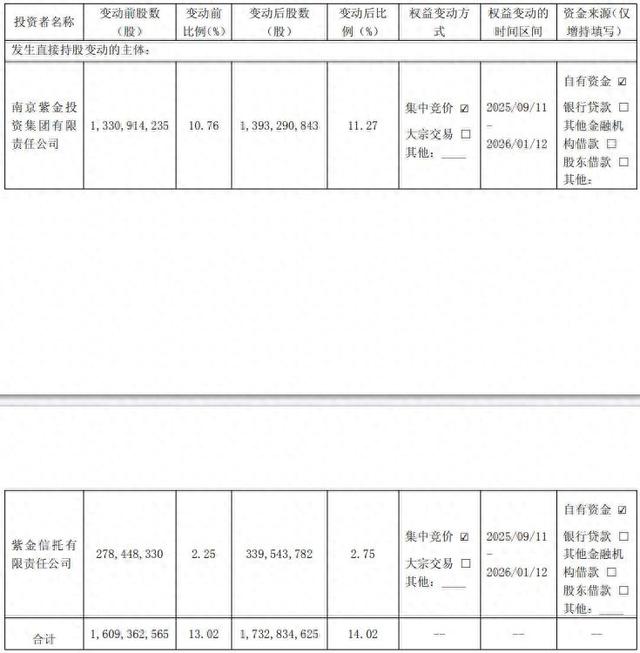
Core Viewpoint - The recent surge in capital increases and share expansions in the banking sector is primarily driven by local banks, aiming to enhance their capital adequacy and support regional economic development [1][4]. Group 1: Capital Increases and Share Expansions - Nanjing Bank announced that its major shareholder, Zijin Investment Group, will increase its stake by acquiring 12,347,200 shares, raising its ownership from 13.02% to 14.02% [1]. - Long-term issues such as capital inadequacy and high non-performing loans in small financial institutions have prompted many banks to attract state-owned capital to bolster their capital base [4]. - Changan Bank's capital increase plan attracted participation from several provincial key enterprises, with Shaanxi Guotou planning to invest up to 800 million yuan for a stake of no more than 2.09 billion shares [4]. Group 2: Innovative Capital Structure Optimization - Some local banks are optimizing their capital structures through innovative methods such as equity transfers and simultaneous capital reductions and increases [5]. - Inner Mongolia Bank and Ordos Bank adopted a combination of "simplified capital reduction + targeted capital increase + special debt-to-equity swaps," adjusting their registered capital to 100.75 billion yuan and 28.18 billion yuan, respectively [6]. - As of January 11, 33 banks have received regulatory approval for changes in registered capital, indicating a broader trend of capital restructuring in the banking sector [6]. Group 3: Implications for Future Growth - For institutions with plans to go public, capital increases are seen as a crucial step towards advancing their listing processes, with Xinjiang Bank being included in the 2025 annual resource pool for listed companies [7]. - The ongoing capital replenishment among local banks is expected to enhance the local financial ecosystem, providing sustained financial support for high-quality regional economic development [7].


开年多家商业银行变更注册资本获批!
Xin Lang Cai Jing· 2026-01-12 00:16
Core Viewpoint - In early 2026, several small and medium-sized banks in China have made progress in capital increases, with 33 commercial banks approved for changes in registered capital as of January 11 [1][3]. Group 1: Capital Increase Approvals - On January 9, Ningxia Yanchi Rural Commercial Bank and Ningxia Huanghe Rural Commercial Bank received approval to change their registered capital, with the former increasing by 15 million yuan from 57.3154 million yuan to 72.3154 million yuan, and the latter increasing by 117 million yuan from 1.733 billion yuan to 1.850 billion yuan [1][3]. - On January 6, the Shangrao Regulatory Bureau approved capital changes for eight banks, including Shangrao Rural Commercial Bank and Jiangxi Dexing Rural Commercial Bank, all of which applied for capital increases [1][3]. Group 2: Regional Focus - The banks increasing their registered capital are primarily regional small and medium-sized banks, mainly concentrated in Jiangxi, Hebei, and Qinghai provinces [1][3]. Group 3: Capital Raising Methods - Many banks plan to raise capital through private placements, introducing new shareholders or increasing stakes from major shareholders, such as Jiangxi Rural Commercial Union Bank investing in multiple rural commercial banks in Jiangxi [2][4]. - On January 6, the Qinghai Regulatory Bureau approved Qinghai Bank's capital change plan, allowing the issuance of 648 million shares and approving the qualifications of shareholders from Western Mining Group and Qinghai Transportation Holding Group [5]. Group 4: Market Implications - According to Professor Tian Lihui from Nankai University, in the context of limited internal capital replenishment capabilities, capital increases and expansions help regional small and medium-sized banks strengthen their risk defenses, open up business development space, and convey stability signals to the market [2][5].
陕国投拟参与长安银行增资扩股,增资金额不超过8亿元
Cai Jing Wang· 2026-01-08 04:36
Core Viewpoint - Shaanxi International Trust Co., Ltd. (referred to as "Shaanxi Guotou") plans to participate in the capital increase of Chang'an Bank, with an investment amount not exceeding 800 million yuan and a maximum of 209 million shares to be acquired [1][2] Group 1 - Shaanxi Guotou received an invitation from Chang'an Bank for participation in the capital increase on November 26, 2025, and the board approved the investment on December 18, 2025 [1] - The China Securities Regulatory Commission approved Chang'an Bank's application for a specific object stock issuance on December 31, 2025 [1] - After the capital increase, Chang'an Bank will have a total share capital of not more than 10.188 billion shares, with no controlling shareholder and the actual controller being the Shaanxi Provincial Government [1] Group 2 - The funds from this capital increase will be used to supplement Chang'an Bank's core Tier 1 capital, enhancing its capital adequacy, operational capacity, profitability, market competitiveness, and risk resistance [2]

年内多家商业银行增资“补血”方案获批
Zheng Quan Ri Bao· 2025-12-24 15:49
Group 1 - Weihai Bank has signed a subscription agreement with Tianlian Group to issue up to 150 million H-shares at a price of 3.29 RMB per share, raising a total of up to 493.5 million RMB, which will be used to supplement core tier one capital [1] - Several banks, including Weihai Bank, have received approval for capital increase plans this year, indicating a trend among small and medium-sized banks to address capital pressure through equity financing [1] - The successful introduction of capital, especially at a price above market value, serves as a strong endorsement of the bank's fundamentals and future prospects, helping to stabilize expectations [1] Group 2 - The subscription for Weihai Bank's H-shares by Tianlian Group, which is fully controlled by Tianjin TEDA Industrial Group and indirectly owned by the Tianjin Municipal Government, highlights the increasing involvement of local state-owned assets in regional bank capital increases [2] - Bank capital increases often lead to optimized equity structures, creating opportunities to attract long-term focused shareholders and improve corporate governance [2] - The involvement of local state-owned enterprises in banks strengthens the connection between banks and local economic development, facilitating better alignment with government development plans and key projects [2] - Long-term healthy development of small and medium-sized banks relies on their ability to enhance operational efficiency and risk management, transitioning from reliance on external capital to internal growth [2]
资讯丨多家银行公告增资扩股
Sou Hu Cai Jing· 2025-12-15 14:06
Group 1 - Suzhou Bank's major shareholder, Suzhou International Development Group, announced an increase in shareholding by acquiring 44.706654 million shares, representing 1% of the total share capital from July 1, 2025, to December 5, 2025 [1] - Hunan Bank received approval from the Hunan Financial Regulatory Bureau to increase its registered capital by 1 billion RMB, raising it from approximately 7.75 billion RMB to about 8.75 billion RMB, an increase of nearly 13% [1] - After the capital increase, Hunan Bank's capital adequacy ratio will rise to 12.6%, and its core tier 1 capital adequacy ratio will increase to 9.2%, significantly enhancing its capital strength [1] - The Shaanxi Financial Regulatory Bureau approved Chang'an Bank's capital increase plan, allowing it to raise no more than 2.611 billion shares, with all funds aimed at supplementing core tier 1 capital [1] Group 2 - Numerous small and medium-sized banks, including Jiujiang Bank, Qingdao Bank, and Luzhou Bank, have joined the capital increase and expansion trend this year [2] - As of the end of the third quarter of 2025, the capital adequacy ratio for commercial banks (excluding foreign bank branches) was 15.36%, with a tier 1 capital adequacy ratio of 12.36% and a core tier 1 capital adequacy ratio of 10.87% [2] - City commercial banks and rural commercial banks had capital adequacy ratios of 12.4% and 13.2%, respectively, which are lower than the average levels of large commercial banks at 17.99% and joint-stock commercial banks at 13.48% [2] Group 3 - Local state-owned capital has become the main force in the current wave of capital increases and expansions among small and medium-sized banks [3] Group 4 - A new 2 billion RMB AIC merger fund was registered in Xi'an Economic Development Zone, aimed at regional industrial upgrades and the cultivation of new productive forces [4] - The fund is a collaboration between local state-owned capital, local professional investment institutions, and national financial institutions, marking the largest equity investment fund in Shaanxi since the AIC pilot [4] - The fund focuses on strategic emerging industries such as new materials, semiconductors, and new energy vehicles, aligning closely with the industrial direction of Xi'an Economic Development Zone [4]
时隔两年九江银行再次启动增资,年内中小银行“补血”超10家
Xin Lang Cai Jing· 2025-11-03 10:09
Core Viewpoint - Jiujiang Bank has announced a proposal to issue up to 860 million domestic shares and up to 175 million H-shares to qualified investors, aiming to enhance its core tier one capital and optimize its equity structure [1][3][5]. Group 1: Capital Increase Details - The funds raised will be used entirely to supplement core tier one capital, enhancing the bank's risk resilience and optimizing its equity structure [3]. - If the issuance reaches its upper limit, Jiujiang Bank's total share capital will increase from 2.847 billion shares to 3.882 billion shares, representing a growth of over 36% [3]. - The domestic shares will be issued to no more than 35 qualified domestic institutional investors, including major shareholders [3]. Group 2: H-share Issuance - The H-share issuance will involve up to 175 million shares, targeting no more than 10 independent qualified investors [5]. - The actual number of shares issued will depend on regulatory approvals and market conditions [5]. - The pricing mechanism will consider the bank's financial status, market environment, and legal requirements, with H-share prices adjusted to align with domestic shares if issued simultaneously [5]. Group 3: Context of Capital Increases in the Industry - There has been a surge in capital replenishment plans among small and medium-sized banks this year, with over 10 institutions pursuing capital increases, primarily driven by local state-owned capital [2][6]. - Similar capital increase cases have been observed, with many banks seeing an increase in the proportion of state-owned capital post-issuance [8][10]. - The capital increase is viewed as a strategic move to meet regulatory requirements and enhance the banks' ability to support local economies [7][10].

大规模增资!超5200亿上市银行,新动作曝光!
券商中国· 2025-11-01 14:54
Core Viewpoint - Jiujiang Bank is planning a significant capital increase by issuing up to 860 million domestic shares and up to 175 million H-shares to enhance its core tier one capital and optimize its equity structure [1][2]. Group 1: Capital Increase Details - The proposed issuance will increase Jiujiang Bank's total share capital from approximately 2.847 billion shares to about 3.882 billion shares, representing an increase of over 36% [1]. - The funds raised will be used entirely to supplement the bank's core tier one capital, thereby improving its risk resistance capabilities [2]. - The domestic share issuance will target up to 35 qualified domestic institutional investors, including major shareholders [2]. Group 2: Shareholder Information - Major shareholders of Jiujiang Bank include Jiujiang Municipal Finance Bureau (15.78%), BAIC Group (12.85%), Industrial Bank (10.34%), Fangda Carbon (6.01%), and Foshan Gaoming Jindun (3.37%) [2]. - The H-share issuance will be directed towards up to 10 independent qualified investors, with the actual number depending on regulatory approvals and market conditions [2]. Group 3: Historical Context and Performance - Jiujiang Bank was established in November 2000 and listed on the Hong Kong Stock Exchange in July 2018, being the first city commercial bank in Jiangxi Province to do so [4]. - As of September 2023, the bank's total assets exceeded 520 billion yuan, ranking second among local city commercial banks in Jiangxi [5]. - In the first three quarters of 2023, Jiujiang Bank achieved a net profit of 870 million yuan, reflecting a year-on-year growth of 4% [5].

6000亿省级城商行,大规模增资获批!
Sou Hu Cai Jing· 2025-10-26 12:56
Core Points - Hunan Bank has received approval from the CSRC to issue 1 billion ordinary shares to specific investors, all of which are state-owned entities [1][2] - The bank aims to increase its state-owned shareholding from 81.77% at the end of last year to nearly 84% after the capital increase [2] - The capital increase is part of Hunan Bank's strategy to enhance its capital adequacy, optimize its capital structure, and improve its risk resilience and sustainable operational capacity [2] Group 1: Capital Increase Details - Hunan Bank's capital increase plan has been approved by the provincial government and the financial regulatory authority [1][2] - The bank's registered capital is set to increase from 77.5 billion yuan, with the capital increase expected to strengthen its ability to meet regulatory capital requirements [4][5] - The bank's total assets exceeded 600 billion yuan as of June, with a target to surpass 750 billion yuan within five years [5] Group 2: Historical Context and Ownership Changes - Hunan Bank was established in 2010 as a provincial-level commercial bank, evolving from the merger of several local banks and credit cooperatives [3] - The bank's major shareholder, China Huarong, transferred its 40.53% stake in Hunan Bank in 2021, leading to a new ownership structure where Caixin Financial Holdings and Central Huijin became the primary shareholders [3] - The bank's strategic goal includes becoming a listed bank within five years, with a focus on improving its operational metrics [5] Group 3: Industry Trends - There has been a trend among local banks in China to increase state-owned capital through targeted share issuances, with at least eight banks completing similar capital increases this year [6][7] - These capital increases are primarily subscribed by local state-owned enterprises, significantly raising the proportion of state-owned shares in these banks [6][7]
6000亿省级城商行,大规模增资获批!
券商中国· 2025-10-26 12:39
Core Viewpoint - Hunan Bank is set to complete its first large-scale capital increase, having received approval from the CSRC to issue 1 billion shares to specific state-owned entities, aiming to enhance its capital adequacy and support its growth strategy [1][2][3]. Group 1: Capital Increase Approval - On October 24, Hunan Bank announced that the CSRC approved its plan to issue 1 billion ordinary shares to specific investors, all of which are state-owned entities [1][2]. - The capital increase is part of a broader strategy to respond to complex economic conditions and regulatory requirements, aiming to improve the bank's capital structure and adequacy [2][3]. Group 2: Historical Context and Future Goals - Hunan Bank, formerly known as Huarong Xiangjiang Bank, was established in 2010 and aims to become a listed bank within five years of its inception [4][6]. - The bank's asset size exceeded 600 billion yuan as of June 2023, with a target to surpass 750 billion yuan in assets within five years [6]. Group 3: Financial Performance and Regulatory Compliance - As of June 2023, Hunan Bank reported a revenue of 5.6 billion yuan and a net profit of 1.94 billion yuan, reflecting a year-on-year decline of 6.8% and 2.6%, respectively [6]. - The bank is under pressure to replenish its core Tier 1 capital ratio, which has decreased since the beginning of the year, necessitating this capital increase [3]. Group 4: Broader Industry Trends - Hunan Bank's capital increase aligns with a trend among local banks in China, where at least eight banks have completed or initiated capital increases this year, primarily funded by local state-owned enterprises [7][8]. - This trend indicates a significant rise in state ownership within these banks, enhancing their stability and regulatory compliance [7][8].

增资潮起 中小银行密集“补血”
Jing Ji Guan Cha Wang· 2025-06-15 08:08
Core Viewpoint - Local small and medium-sized banks in China are accelerating capital replenishment actions in response to regulatory pressures and the need for financial stability [2][8] Group 1: Capital Replenishment Actions - Su Nong Bank plans to increase its registered capital from 1.803 billion to 2.019 billion yuan through the conversion of convertible bonds and capital reserves [2] - Luzhou Bank intends to issue up to 1 billion new H shares, with a shareholder meeting scheduled for the end of June [2] - Several banks, including Jilin Bank and Tianjin Rural Commercial Bank, are also in the process of capital replenishment through various means [2] Group 2: Challenges and Pressures - The banking sector is experiencing a prolonged low-interest-rate environment, leading to a narrowing net interest margin and increased pressure on revenue growth [3] - Rising default rates among corporate and individual clients due to real estate market issues and local government debt are further straining asset quality [3] - Regulatory bodies are imposing stricter requirements on risk management and internal controls for small and medium-sized banks, necessitating reforms and restructuring [3] Group 3: Strategic Considerations - Optimizing equity structure and enhancing market competitiveness are key considerations for capital increases, with potential benefits from introducing strategic investors [5] - Capital adequacy is crucial for banks to maintain trust and expand business operations in a competitive market [5] Group 4: Effects of Capital Increase - Capital increases will enhance capital adequacy ratios, allowing banks to meet regulatory requirements and expand credit offerings [6] - Higher capital levels improve risk resilience, providing a buffer against potential losses amid economic downturns [6] - Introducing strategic investors can lead to improved governance and operational efficiency [6] Group 5: Future Trends in Capital Replenishment - The trend of capital replenishment among local banks is expected to continue, driven by regulatory demands and the need for strategic development [8] - The banking sector is likely to seek diverse capital sources, including local state-owned enterprises and foreign investments, to optimize governance and enhance competitiveness [9] - As economic structures evolve, banks will need to invest in new business areas, necessitating further capital increases to support digital transformation and risk management improvements [9]