非法经营罪

Search documents
Web3 开发者不可不知的四类刑事高危项目模式
Xin Lang Cai Jing· 2026-02-21 16:12
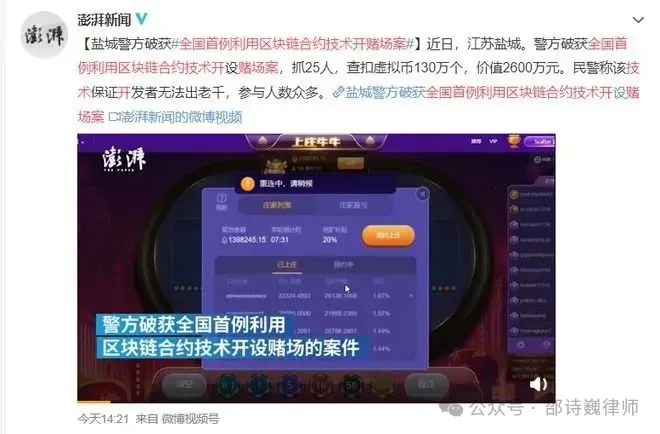
Core Viewpoint - The article emphasizes the importance of compliance in Web3 projects, highlighting that merely registering overseas or deploying servers abroad does not guarantee compliance. The focus should be on the project's business model, funding structure, and operational substance, especially for teams serving Chinese users [2][4]. Group 1: High-Risk Project Identification - Developers should construct a "high-risk project identification radar" to recognize four common criminal risk patterns in Web3 projects: gambling-related crimes, pyramid scheme activities, illegal fundraising, and illegal business operations [4][5]. - The highest risk crime identified is "operating a gambling house," particularly prevalent in GameFi and blockchain gaming projects, where developers can be held liable even if they are not direct operators [5][6][9]. - The most concealed crime is "organizing and leading pyramid schemes," which often disguise themselves as promotional incentives. Developers must be cautious of reward structures that resemble pyramid schemes [11][12]. - The most explicit crime is related to illegal fundraising, where projects that issue tokens without regulatory approval can be prosecuted under laws against illegal fundraising [14][15][18]. - The current hottest crime is "illegal business operations," particularly in the context of virtual currency platforms facilitating illegal currency exchanges, which have seen increased regulatory scrutiny [22][24]. Group 2: Risk Identification Framework - Developers can identify potential legal risks by recognizing key signals in project structures, such as the presence of gambling mechanics, pyramid-like reward systems, illegal fundraising practices, and illegal business operations [28][30][32][34][37]. - Specific characteristics of gambling-related projects include recharge mechanisms, random gameplay, and withdrawal paths that can be interpreted as gambling loops [30][31]. - Pyramid scheme projects often involve user fees, referral rewards, and multi-level commission structures, which can lead to legal repercussions for developers involved in their design [32][33]. - Illegal fundraising projects typically promise returns to the public without financial regulatory approval, making them susceptible to legal action [34][36]. - Illegal business operations are characterized by facilitating currency exchanges without proper licensing, which poses significant legal risks for developers involved in such systems [37][40]. Group 3: Legal Awareness for Developers - Developers must possess a basic understanding of legal risks associated with Web3 projects, as their involvement in system architecture and key functionalities can expose them to criminal liability [41][42]. - Key factors that may indicate a developer's awareness of potential legal risks include their role in the project, involvement in critical modules, and any concerns raised about the project's legality [43][44]. - Developers should conduct self-assessments before engaging in Web3 projects, focusing on identifying high-risk structures, questioning the project's logic, and documenting their role to mitigate potential legal repercussions [45][46].

10万变2万!亿元“黄金泡沫”杰我睿爆雷
Sou Hu Cai Jing· 2026-02-06 11:07
Core Viewpoint - The "gold investment" bubble involving Shenzhen's Jie Wo Rui Jewelry Company has burst, leading to significant financial losses for investors, with claims amounting to over 100 million yuan [2][9][12]. Group 1: Company Overview - Jie Wo Rui Jewelry Company was established in 2014, with a registered capital of 11 million yuan and only 15 employees [5][12]. - The company initially operated as a gold trading business but expanded to offer enticing investment opportunities through social media platforms, attracting numerous investors [8][12]. Group 2: Investment Scheme and Operations - The company utilized a model resembling a Ponzi scheme, collecting funds from new users to pay off older investors, without a sustainable profit mechanism [12][15]. - Jie Wo Rui operated multiple mini-programs focused on gold and silver transactions, offering services like free exchange of gold and high buyback prices to lure customers [13][15]. Group 3: Investor Impact and Response - Investors, including many vulnerable individuals, faced severe losses, with some reporting investments exceeding 100,000 yuan, only to receive a fraction of their funds back [9][12][17]. - A proposed repayment plan offered only 20% of the account balance, leading to widespread dissatisfaction among affected investors [9][12]. Group 4: Regulatory and Legal Issues - The company has faced scrutiny for operating without the necessary licenses for futures trading, raising concerns about regulatory compliance in the gold investment sector [15][19]. - Legal actions have been complicated, with the local court halting civil lawsuits against the company, forcing victims to submit reports to a special task force for processing [5][12]. Group 5: Industry Implications - The incident has triggered a crisis of confidence in the gold trading industry in Shenzhen, with other similar platforms also facing scrutiny and operational challenges [16][17]. - The regulatory environment is under examination, as social media and payment platforms are being questioned for their role in facilitating these fraudulent activities [19][20].

打击非法经营! 这些案件宣判!
Xin Lang Cai Jing· 2026-02-04 12:21
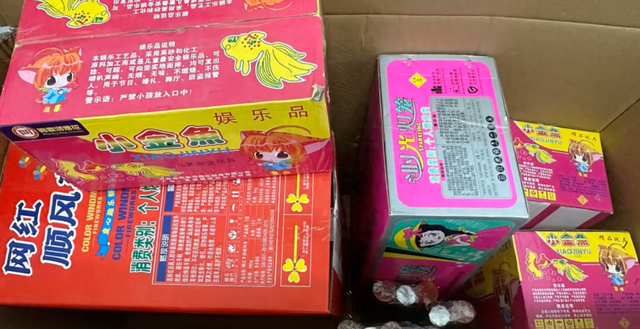
Core Viewpoint - The recent court rulings in Tianjin against illegal fireworks and firecrackers operations highlight the enforcement of laws to maintain market order and public safety, with penalties including imprisonment and fines for offenders [1][2][3]. Group 1: Legal Enforcement - Courts in Tianjin have sentenced individuals involved in illegal fireworks operations to prison terms ranging from six months to one year and nine months, along with fines and confiscation of illegal gains [1]. - The illegal operations were classified as "illegal business operations" under Chinese law, with specific thresholds for individuals and entities that trigger criminal charges [1]. Group 2: Case Examples - One defendant, Liu (pseudonym), was sentenced to one year and nine months in prison and fined 25,000 RMB for illegally purchasing and selling over 5,000 boxes of fireworks valued at over 200,000 RMB without a business license [2]. - Another defendant, Li (pseudonym), who repeatedly violated regulations by illegally transporting and selling fireworks, received a ten-month prison sentence after multiple administrative penalties [2]. Group 3: Public Safety Concerns - The Tianjin courts emphasize the dangers associated with fireworks, which are classified as flammable and explosive materials, necessitating a licensing system for their production, operation, and transportation [3]. - The authorities warn that engaging in illegal fireworks operations not only violates laws but also poses significant risks to public safety, especially with the upcoming Spring Festival [3].
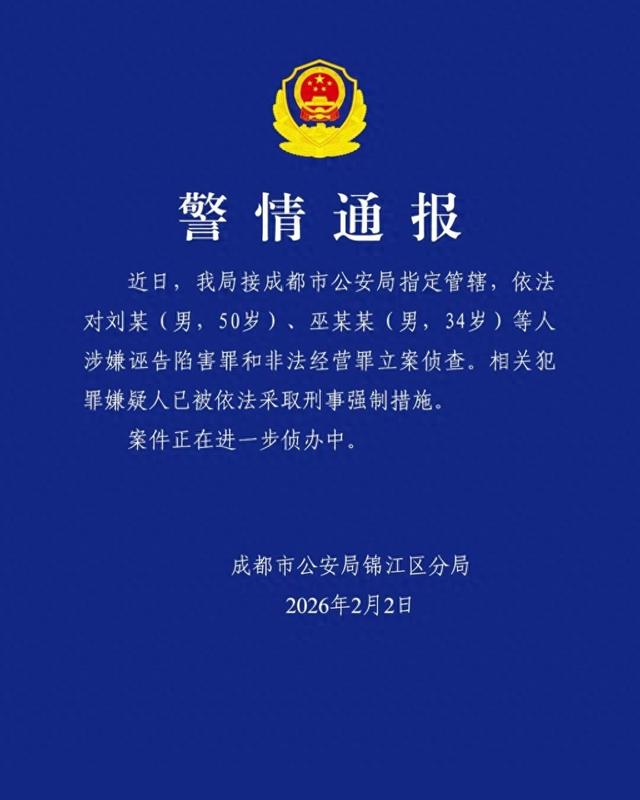
成都警方:刘某、巫某某等人涉嫌诬告陷害罪和非法经营罪,被采取刑事强制措施
Xin Lang Cai Jing· 2026-02-02 12:50
Core Viewpoint - The Chengdu Public Security Bureau Jinjiang District Branch has initiated an investigation into individuals suspected of false accusation and illegal business operations, with criminal coercive measures already taken against the suspects [1] Group 1 - The suspects involved in the case are Liu (male, 50 years old) and Wu (male, 34 years old) [1] - The investigation is being conducted under the jurisdiction designated by the Chengdu Public Security Bureau [1] - The case is currently under further investigation [1]
最高法:2025年串通投标罪案件增长50%
Zhong Guo Jing Ji Wang· 2026-01-20 13:14
Group 1 - The core viewpoint of the article highlights a decline in criminal case filings in Chinese courts, while there is an increase in economic crimes and unfair competition cases [1] - In 2025, the number of criminal cases filed in courts is expected to continue decreasing, with a 2.2% increase in cases related to crimes disrupting the socialist market economy [1] - Notable increases in specific economic crimes include a 50% rise in bid-rigging cases, a 32% increase in fraudulent invoicing, and a 20% rise in loan fraud and bribery cases involving non-state employees [1][1][1] Group 2 - The bankruptcy trials in 2025 are projected to lead to the clearance of 29,000 "zombie enterprises" and the revival of 1,481 companies [1] - The settlement rate for intellectual property civil cases is 5.1 percentage points higher than that of other civil cases, with a 15 percentage point decrease in batch lawsuits in the copyright field [1] - There is a significant increase in the adjudication of foreign-related civil and maritime cases, with growth rates of 31.6% and 30% respectively [1][1]
德邦基金互金总请刷茶,爱理财的小羊请喝牙
Xin Lang Cai Jing· 2026-01-16 09:18
Group 1 - The core issue involves the influencer "Love Finance Little Sheep," who lacks the necessary qualifications to promote mutual funds and is suspected of illegal operations by receiving a 0.3% commission for guiding fund subscriptions [2][4] - The influencer has not registered in the public system of the fund industry association and does not hold a fund practitioner qualification certificate or authorization from any fund sales institution [2][4] - The collaboration with Debon Fund's e-commerce department for a "volume rebate" arrangement raises legal concerns, as the influencer's actions may implicate the fund company as an accomplice facing potential criminal liability [2][4] Group 2 - The MACD golden cross signal has formed, indicating a positive trend for certain stocks [3][5]

取得许可证后超范围跨区域销售走私烟
Xin Lang Cai Jing· 2026-01-13 16:41
Core Viewpoint - The case involves the illegal sale of smuggled cigarettes by an individual named Zhu, who initially faced charges of illegal business operations but was later convicted of concealing and disguising criminal proceeds after an appeal [1][2]. Group 1: Case Background - Zhu purchased smuggled and exported cigarettes without holding a valid retail license, selling them to a buyer named Wei, resulting in a total sales revenue of 3,684,851 yuan and a profit of at least 52,732 yuan [1]. - A total of 4,925.4 cartons of cigarettes were seized, with a purchase price of 725,896 yuan, including 19 counterfeit cartons and 45 cartons with fake trademarks [1]. Group 2: Court Findings - The Hainan Free Trade Port Intellectual Property Court found that Zhu held a valid tobacco retail license but exceeded its scope by engaging in cross-regional wholesale and retail of smuggled cigarettes [2]. - The court determined that Zhu knowingly purchased smuggled or counterfeit cigarettes and concealed criminal proceeds amounting to over 4 million yuan, leading to a conviction for concealing and disguising criminal proceeds [2]. Group 3: Sentencing - The initial sentence of seven years for illegal business operations was reduced to five years for concealing criminal proceeds, with a fine of 80,000 yuan imposed [2].
涉非法经营罪,昔日百亿私募上海保银遭起诉!案件将于本月开庭
Sou Hu Cai Jing· 2026-01-09 11:14
Group 1 - Shanghai Baoyin Private Fund Management Co., Ltd. and its executives are being prosecuted for illegal business operations, with a court date set for January 22, 2026 [1] - Shenzhen Qianhai Qianhui Asset Management Co., Ltd. is also facing similar charges, with reports indicating that employees were investigated in the first half of 2024 due to issues related to "margin trading" [1] - Shanghai Baoyin was established in 2014 with a registered capital of 10 million yuan and a management scale between 5 billion to 10 billion yuan [2] Group 2 - By 2017, Shanghai Baoyin had entered the ranks of private funds managing over 10 billion yuan, but by 2025, its management scale had significantly decreased, and several products reported negative returns [2] - In July 2024, Shanghai Baoyin was subjected to administrative regulatory measures by the Shanghai Securities Regulatory Bureau for improperly delegating fund management responsibilities [2] - The former legal representative and general manager, Li Mo, along with the compliance officer, received warning letters from the regulatory authority [2] Group 3 - On December 19, 2025, Shanghai Baoyin submitted information regarding changes in its executives, but the latest status indicates that the change has been terminated [3]
突发!深圳前海千惠资产涉嫌非法经营罪
Xin Lang Cai Jing· 2026-01-07 09:08
Core Viewpoint - A well-known quantitative private equity firm, Shenzhen Qianhai Qianhui Asset Management Co., Ltd. (referred to as "Qianhui Asset"), is facing criminal charges for illegal business operations, a rare occurrence in the industry [1][16]. Group 1: Legal Proceedings - The Shanghai Changning Court has announced a hearing involving Qianhui Asset and several individuals, with the case being classified as illegal business operations [1][16]. - The case has progressed to the prosecution stage, indicating that prior investigations have confirmed criminal activity [18]. Group 2: Definition of Illegal Business Operations - According to Article 225 of the Criminal Law, illegal business activities include: 1. Operating restricted items without permission 2. Trading in import/export licenses and other required documents without authorization 3. Engaging in securities, futures, or insurance business without approval 4. Other serious disruptions to market order [19]. Group 3: Company Overview - Qianhui Asset was established in March 2016 and registered in June 2017, with a registered capital of 12.5 million yuan and a paid-in ratio of 90% [20]. - The firm has maintained an asset scale of 5 to 10 billion yuan [20]. Group 4: Employee Structure - The company employs 80 staff members, including 2 executives, with 75 holding fund practitioner qualifications, significantly exceeding the average in the industry [21]. - Qianhui Asset ranked 74th among quantitative private equity firms in Shenzhen, with its employee count far surpassing that of its peers [21]. Group 5: Performance and Products - Qianhui Asset's products have shown mixed performance; some index products managed by Chen Lixi achieved over 30% returns last year, while others underperformed with returns below 5% [28]. - Currently, Qianhui Asset has 122 funds in early liquidation status, with 88 funds still operational [27].

最近别发这种朋友圈!已有人被抓,多地通报典型案例
Xin Lang Cai Jing· 2026-01-01 05:26
Core Viewpoint - The illegal sale of fireworks and firecrackers is a growing concern, with multiple arrests made for violations of safety regulations and laws regarding their storage and sale [1][3][5]. Group 1: Illegal Sales and Enforcement Actions - Shanghai police discovered illegal sales of fireworks through online advertisements, leading to the identification and investigation of a local company [3]. - The company’s owner, identified as Shi, purchased fireworks for personal use but attempted to sell them for profit, resulting in police intervention before any sales occurred [5]. - Multiple cases across different regions, including Anhui, Shandong, and Zhejiang, highlight the trend of individuals illegally selling fireworks via social media, leading to administrative detentions [5][7][9]. Group 2: Legal Regulations and Requirements - According to the Fireworks Safety Management Regulations, selling fireworks requires a retail license, and businesses must comply with safety production supervision [11]. - Posting sales information in social media is legal only if it directs customers to a designated sales location; otherwise, it constitutes illegal activity [11]. - Individuals involved in the illegal sale of fireworks, especially those with significant financial transactions, may face criminal charges for illegal business operations [11][12]. Group 3: Legal Responsibilities - Sharing or forwarding advertisements for the sale of fireworks also incurs legal responsibilities, implicating both sellers and those who promote such sales [12][13]. - In the event of any issues arising from sold fireworks, both the seller and the promoter may be held legally accountable [13].