
Agentic Engineering

Search documents
3000亿港元AI巨头发力AI编程 公开GLM-5技术细节
Sou Hu Cai Jing· 2026-02-24 06:00
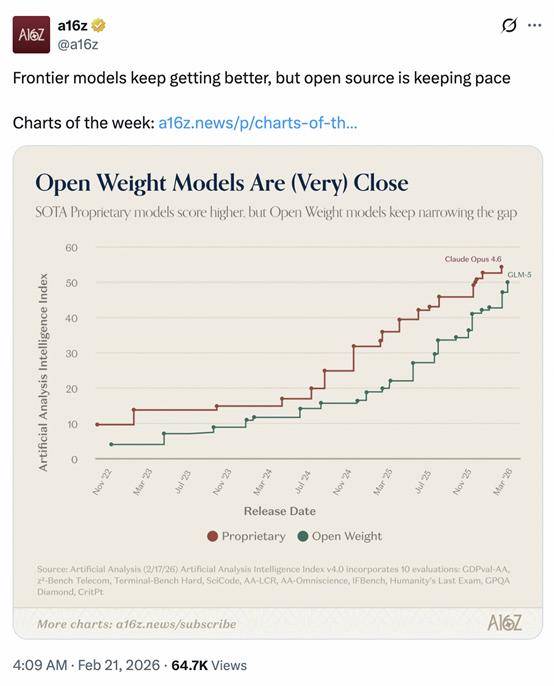
Core Insights - The article highlights the significant breakthroughs achieved by the domestic AI model company, Zhipu, in both capital markets and technological innovation as of early 2026. Zhipu's stock price surged over 15%, with a market capitalization exceeding HKD 300 billion, positioning it as a leader in the Hong Kong TMT sector [1][2]. Market Performance - Zhipu's stock reached a market cap of HKD 323.2 billion on February 20, 2026, surpassing traditional internet giants like JD.com and Kuaishou, marking its ascent to the top tier of the Hong Kong TMT sector [1]. - The AI application sector in Hong Kong showed strong performance, with Zhipu's stock leading the gains [1]. Technological Advancements - Zhipu's GLM-5 model has gained global attention for its capabilities in real-world programming tasks, significantly outperforming previous open-source baseline models [1][2]. - The GLM-5 model has been recognized as the top open-source model in multiple benchmark tests, establishing Zhipu as a key player in the global AI landscape [2][8]. Paradigm Shift in AI Programming - The introduction of GLM-5 signifies a shift from "Vibe Coding" to "Agentic Engineering," redefining AI programming by enabling AI to autonomously handle end-to-end software engineering tasks [4][7]. - This new paradigm allows AI to function as a "virtual engineer," capable of executing complex development tasks without human intervention, thus enhancing productivity in software development [7][8]. Competitive Landscape - The global landscape for Agentic Engineering is evolving, with Zhipu and other domestic startups making significant strides in core technologies and open-source ecosystems [5]. - Major players like Microsoft, OpenAI, and Google DeepMind are currently leading the field, but Zhipu's advancements position it as a formidable competitor [4][5]. Technical Breakthroughs of GLM-5 - Zhipu's GLM-5 has achieved four major breakthroughs: 1. Slime asynchronous reinforcement learning infrastructure, enhancing GPU utilization and training efficiency [23]. 2. AgentRL asynchronous reinforcement learning algorithm, optimizing planning and execution capabilities in dynamic environments [23]. 3. DSA sparse attention mechanism, significantly reducing computation costs while maintaining long-context capabilities [23]. 4. Full-stack adaptation to domestic chips, achieving performance comparable to dual-GPU clusters and reducing processing costs by 50% [23]. Practical Applications - Real-world testing of GLM-5 demonstrated its ability to autonomously create a deployable personal photography website and conduct complex technical analyses, showcasing its practical utility in various scenarios [12][20].

智谱发布GLM-5技术细节:工程级智能,适配国产算力
Hua Er Jie Jian Wen· 2026-02-22 11:20
Core Insights - The release of GLM-5 marks a significant advancement in AI model capabilities, shifting the focus from mere parameter size to system engineering capabilities [2][15] - GLM-5 demonstrates the ability to perform complex tasks, improve training efficiency, and fully adapt to domestic chip architectures, indicating a move towards an independent technological ecosystem in China [2][14] Group 1: Model Capabilities - GLM-5 can handle complex tasks beyond simple code generation, showcasing "engineering-level intelligence" [4][5] - The model supports a context length of 200K tokens, enabling it to manage long-term planning and multi-round interactions effectively [4][6] - The introduction of DSA (DeepSeek Sparse Attention) reduces computational complexity by 1.5-2 times without loss of performance, allowing for more efficient processing [6][7][9] Group 2: Training and Efficiency Innovations - GLM-5 features a restructured reinforcement learning (RL) architecture that decouples model generation from training, significantly enhancing throughput [13] - The model's training efficiency is optimized through asynchronous RL algorithms, allowing for stable learning in complex environments [13] - The overall design emphasizes efficiency innovations over sheer computational power, which is crucial for the Chinese AI landscape [10] Group 3: Hardware Adaptation - GLM-5 is natively compatible with various domestic GPU ecosystems, including Huawei Ascend and others, marking a shift towards system-level adaptation rather than reliance on foreign hardware [14] - The model's performance on a single domestic computing node is comparable to that of a cluster of two international GPUs, with deployment costs reduced by 50% in long-sequence processing scenarios [14] Group 4: Comprehensive AI Engineering - The development of GLM-5 represents a complete closed-loop system that integrates model architecture innovation, training efficiency optimization, and deep adaptation to domestic chips [15] - This signifies a transition for Chinese AI from application-level advantages to full-stack optimization, including architecture, algorithms, training systems, and inference frameworks [15][18] - The report emphasizes a mature approach to AI development, focusing on practical engineering metrics rather than competitive benchmarking [18]
「AI新世代」一场心照不宣的春节AI卡位战:去年DeepSeek意外破圈,今年国产大模型集体“交卷”
Xin Lang Cai Jing· 2026-02-13 10:07
Core Insights - The Chinese large model industry is experiencing a surge in new model releases, with companies like Zhiyu, iFlytek, and MiniMax launching competitive models ahead of the Spring Festival, indicating a strategic push to capture market share before 2026 [2][4][6] - The focus of large models has shifted from parameter competition to engineering efficiency, with an increasing number of Chinese open-source models gaining recognition on global platforms [2][8] - The release of Zhiyu's GLM-5 model has led to significant stock price increases, reflecting strong market enthusiasm and the model's high performance in programming tasks [3][4] Company Developments - Zhiyu's GLM-5 model was launched on February 12, achieving a market capitalization of HKD 216.2 billion after a stock price increase of 28.68% [2][3] - iFlytek introduced the Xinghuo X2 model on February 11, claiming it matches international top models in various capabilities, while MiniMax's M2.5 model was released on February 13, showing improved decision-making capabilities [4] - The Kimi K2.5 model from Moonlight Dark Side achieved a token call volume of 1.53 trillion, ranking first globally, showcasing the competitive landscape among Chinese AI models [5] Market Trends - The recent model releases are seen as a response to the success of DeepSeek, which gained significant traction last year, prompting other companies to replicate its success [6][7] - The AI large model industry is entering a phase of engineering maturity, with companies focusing on showcasing their research achievements to enhance brand recognition [5][8] - Predictions indicate a potential market stratification, where major players like ByteDance and Alibaba dominate general models, while smaller firms seek opportunities in niche verticals [8]


GLM-5封神,智谱市值五天翻倍,中国AI火力全开了
机器之心· 2026-02-13 05:08
Core Viewpoint - The article highlights the significant advancements in China's AI landscape, particularly focusing on the launch of GLM-5 by Zhiyu, which is positioned as a leading model capable of handling complex system engineering tasks, marking a transition from "Vibe Coding" to "Agentic Engineering" [3][36]. Group 1: AI Developments - The 2026 Spring Festival period is expected to be pivotal in the history of AI development in China, driven by the release of Seedance 2.0 and GLM-5 [3][4]. - Seedance 2.0 showcases China's creative capabilities in AI, while GLM-5 demonstrates its execution strength, establishing a "twin star" dynamic in the AI sector [4][6]. - The market response to GLM-5 has been described as "frenzied," with high demand leading to rapid sellouts of its coding plans despite price increases [6][9]. Group 2: Technical Capabilities of GLM-5 - GLM-5 is characterized as the first "system architect" level model in the open-source community, capable of addressing complex system-level problems [13][14]. - The model's performance in coding tasks has been validated through rigorous testing, achieving a 100% pass rate in core algorithm performance metrics [26]. - GLM-5's architecture allows it to autonomously handle tasks such as building a high-concurrency distributed scheduling system, showcasing its advanced understanding of system architecture and engineering [19][24]. Group 3: Market Position and Performance - GLM-5 ranks fourth globally and first among open-source models in the Artificial Analysis intelligence ranking, indicating its competitive edge [39]. - In the Agentic ranking, GLM-5 is positioned third, surpassing other models like GPT-5.2 and Claude Opus 4.5, demonstrating its advanced capabilities [40]. - The model has achieved significant scores in various benchmarks, including SWE-bench-Verified and Terminal Bench 2.0, outperforming competitors like Gemini 3.0 Pro [42]. Group 4: Ecosystem and Future Prospects - The launch of GLM-5 is accompanied by the introduction of Z Code, a new development environment that enhances the coding process through natural language task breakdown and multi-agent collaboration [53]. - GLM-5's capabilities extend beyond coding to include document generation and other productivity tools, indicating a comprehensive approach to AI application [55]. - The integration with domestic computing platforms ensures that GLM-5 operates efficiently, paving the way for broader AI applications in 2026 and beyond [58][60].

OpenClaw 启示录:Agent 的扩散速度取决于入口与社区 | Jinqiu Select
锦秋集· 2026-02-12 12:25
Core Insights - OpenClaw has gained significant traction since its launch in early 2026, achieving high visibility in the global developer community, including over 180,000 stars on GitHub, and leading to the emergence of social experiments like Moltbook, showcasing a new trend in interactive AI agents [3][15] - The creator, Peter Steinberger, emphasizes that the success of OpenClaw is not solely due to technology but rather its community engagement and low entry barriers, allowing users to modify the software easily [6][9] - The project has sparked discussions about the future of AI agents, the redefinition of traditional applications, and the evolution of human-agent interactions, which many entrepreneurs have yet to fully grasp [5][6] Project Origin - The inception of OpenClaw began with Peter's personal need for an AI assistant in April 2024, leading to a series of early experiments that culminated in the project's creation due to frustration over its absence [9][10] - The first working prototype was developed in just one hour, demonstrating the core functionality of interacting with a computer through a chat application [11][12] - The project experienced viral growth after an unexpected feature emerged, showcasing the agent's ability to autonomously handle tasks without prior instruction [12][13] Technical Architecture - OpenClaw's architecture includes several sophisticated components, such as a chat client gateway for decentralized access, a core decision engine, and a skills system for functionality expansion [16][17] - The agent's self-awareness allows it to read and modify its own source code, which is a significant advancement in software engineering [17][18] - The project has faced challenges related to security and brand protection, particularly after its rapid rise in popularity, highlighting the need for integrated security measures [6][27] Community and Social Impact - MoltBook, a social network for AI agents, has emerged as a phenomenon, where agents interact in a Reddit-like environment, leading to discussions that sometimes cause public concern [27][28] - The term "AI psychosis" was coined by Peter to describe the mix of genuine concern and sensationalism surrounding AI developments, reflecting societal fears about AI's role in the digital age [28][29] - OpenClaw represents a balance between freedom and responsibility, as users gain control over their data while also being accountable for its security [30][31] Business Model and Future Outlook - Despite the project's popularity, Peter has chosen to reject significant funding offers, prioritizing the open-source ethos and community engagement over commercial pressures [32][33] - The current financial status shows monthly revenues between $10,000 and $20,000, with ongoing discussions for partnerships with major tech labs, provided the project remains open-source [33][34] - Peter envisions a future where traditional applications may be replaced by AI agents, fundamentally altering the app market landscape [39][40]

智谱GLM-5重磅发布!使用感受逼近Claude Opus 4.5!这些A股公司有望受益!
私募排排网· 2026-02-12 10:22
Core Viewpoint - The article highlights the significant market performance and technological advancements of Zhipu AI, particularly with the launch of its new flagship model GLM-5, which marks a shift in AI programming capabilities from "Vibe Coding" to "Agentic Engineering" [2][6]. Group 1: Market Performance - On February 12, Zhipu AI's stock surged over 40%, reaching a market capitalization of over HKD 170 billion [2]. - A-share companies related to Zhipu AI, such as Shoudu Online and Youkede, also experienced a 20% limit-up [2]. Group 2: Technological Advancements - The GLM-5 model features a substantial upgrade in parameters from 355 billion in GLM-4.7 to 744 billion, and pre-training data increased from 23 trillion tokens to 28.5 trillion tokens [3]. - The new "Slime" framework allows for larger models and complex reinforcement learning tasks, while the integration of the DeepSeek sparse attention mechanism reduces deployment costs without compromising long text performance [3]. Group 3: Competitive Positioning - GLM-5 achieved a state-of-the-art (SOTA) performance in programming and agent tasks, ranking fourth globally and first among open-source models according to the Artificial Analysis Intelligence Index v4.0 [4]. - The model's capabilities are approaching those of Claude Opus 4.5, particularly in complex systems engineering and long-range agent tasks [4]. Group 4: Pricing Strategy - Zhipu AI announced a price increase of at least 30% for its GLM Coding Plan, indicating a shift in pricing logic influenced by overseas models like OpenAI [7]. - The change reflects a transition from a "subsidy for market" approach to a "value for premium" strategy, emphasizing the intrinsic value of foundational models [7].

智谱宣布开源新一代旗舰大模型GLM-5 并宣布GLM Coding Plan涨价
Xin Jing Bao· 2026-02-12 04:57
Group 1 - The core point of the news is the announcement of the new flagship model GLM-5 by Zhiyu, which features significant enhancements in parameters and pre-training data, indicating a strong focus on AI programming and advanced capabilities in the field [1][2] - GLM-5's parameter scale has increased from 355 billion (activated 32 billion) to 744 billion (activated 40 billion), and pre-training data has risen from 23 terabytes to 28.5 terabytes, enhancing the model's general intelligence level [1] - The model introduces a new "Slime" framework that supports larger model scales and more complex reinforcement learning tasks, improving the efficiency of post-training processes [1] Group 2 - Zhiyu has observed a strong growth in market demand for its GLM Coding Plan, leading to an increase in user scale and call volume, prompting the company to invest more in computing power and model optimization [2] - The company has decided to adjust the pricing structure of the GLM Coding Plan, with an overall increase starting from 30%, while maintaining prices for existing subscribers [2] - The industry is witnessing a shift from "Vibe Coding" to "Agentic Engineering," with GLM-5 being a product of this transformation, achieving technical leadership in programming and agent capabilities [2]
智谱股价再创新高、市值超1700亿港元:GLM-5对齐Opus 4.5,七大国芯护航上线
IPO早知道· 2026-02-12 02:55
Core Viewpoint - The core viewpoint of the article emphasizes that model capability is the fundamental element determining long-term competitiveness in the AI industry [6][7]. Group 1: Company Performance and Model Launch - The company Zhiyu (2513.HK) saw its stock price rise over 25% upon the launch of its new model GLM-5, reaching a market capitalization of over 170 billion HKD [2]. - GLM-5 is recognized as the best open-source model in the "Agentic Engineering" era, showcasing significant advancements in coding and agent capabilities, achieving state-of-the-art (SOTA) performance in open-source benchmarks [2][10]. - During anonymous testing, GLM-5 gained attention from global developers, being rated as one of the "strongest anonymous models" [3]. Group 2: Technical Capabilities and Market Position - GLM-5 has achieved high scores in SWE-bench-Verified and Terminal Bench 2.0, with scores of 77.8 and 56.2 respectively, outperforming Gemini 3 Pro [2][10]. - The model's capabilities allow it to autonomously complete long-term planning and execution tasks with minimal human intervention, significantly surpassing its predecessor GLM-4.7 by over 20% on average [12]. - The model has been adapted for various domestic chip platforms, ensuring stable and efficient online services [5]. Group 3: Market Trends and Future Projections - According to a report by JPMorgan, the Chinese AI market is transitioning from a "hundred models battle" to a phase of structural integration, where survival depends on commercial viability and sustainable model iteration [7]. - JPMorgan forecasts a compound annual growth rate (CAGR) of 127% for Zhiyu's revenue from 2025 to 2030, with profitability expected by 2029, indicating significant growth potential [8]. - The strategic direction of Zhiyu, focusing on intelligent systems and developer infrastructure, aligns with global technological advancements, positioning the company favorably in the market [7].

智谱GLM-5发布:技术全面升级 Agent能力达开源SOTA
Zhi Tong Cai Jing· 2026-02-12 00:26
Core Insights - The article highlights the launch of the new flagship model GLM-5 by Zhiyuan (02513), which is designed to handle complex system engineering and long-range agent tasks, showcasing state-of-the-art (SOTA) capabilities in agentic engineering, comparable to Claude Opus4.5 [1] Group 1: Model Capabilities - GLM-5 represents a shift in the AGI industry from "Vibe Coding" to "Agentic Engineering," evolving model capabilities from simple dialogue and rapid prototyping to autonomously solving real-world long-range system engineering challenges [1] - The model features a parameter scale expanded to 744 billion and pre-training data increased to 28.5 trillion [1] Group 2: Technical Innovations - GLM-5 incorporates a new asynchronous reinforcement learning infrastructure called "Slime," aimed at maximizing the model's potential [1] - The model integrates a sparse attention mechanism for improved long-text performance while significantly reducing deployment costs [1] Group 3: Benchmark Performance - In benchmark tests, GLM-5 achieved programming capabilities aligned with Claude Opus4.5, scoring 77.8 in SWE-bench-Verified and 56.2 in Terminal Bench2.0, marking the highest scores among open-source models and outperforming Gemini3Pro [1] Group 4: Agent Capabilities - GLM-5 also demonstrates open-source SOTA agent capabilities, achieving the top performance in BrowseComp (networked retrieval and information understanding), MCP-Atlas (tool invocation and multi-step task execution), and τ-Bench (planning and execution in complex multi-tool scenarios) [2]
智谱(02513)GLM-5发布:技术全面升级 Agent能力达开源SOTA
智通财经网· 2026-02-12 00:26
Core Insights - The article highlights the launch of the new flagship model GLM-5 by Zhipu, which is designed to perform complex system engineering and long-range agent tasks, showcasing state-of-the-art (SOTA) capabilities in agentic engineering, comparable to Claude Opus 4.5 [1] Group 1: Model Capabilities - GLM-5 represents a shift in the AGI industry from "Vibe Coding" to "Agentic Engineering," evolving from simple dialogue and rapid prototyping to autonomously solving real-world long-range system engineering challenges [1] - The model features significant technical advancements, including an expanded parameter scale of 744 billion and pre-training data of 28.5 trillion [1] - A new asynchronous reinforcement learning infrastructure called "Slime" has been developed to maximize the model's potential, along with the first integration of a sparse attention mechanism that reduces deployment costs while maintaining long text performance [1] Group 2: Benchmark Performance - In benchmark tests, GLM-5 achieved programming capabilities aligned with Claude Opus 4.5, scoring 77.8 and 56.2 in SWE-bench-Verified and Terminal Bench 2.0 respectively, marking the highest scores among open-source models and outperforming Gemini 3 Pro [1] - GLM-5 also demonstrates open-source SOTA agent capabilities, achieving top performance in BrowseComp (networked retrieval and information understanding), MCP-Atlas (tool invocation and multi-step task execution), and τ²-Bench (planning and execution in complex multi-tool scenarios) [2]