
Electric Vehicle Strategy

Search documents
Stellantis Posts Massive 2025 Loss Amid EV Strategy Reset and Writedowns
Financial Modeling Prep· 2026-02-26 22:35
Core Insights - Stellantis NV reported a significant net loss of €20.1 billion for the second half of 2025, primarily due to charges related to its electric vehicle strategy reset [1] - The company experienced an adjusted operating income of negative €1.38 billion during the same period, with net revenues increasing by 10% [1] Financial Performance - Total automotive adjusted EBIT showed a loss of €169 million, contrasting with consensus expectations of a €721 million profit [2] - For the full year 2025, Stellantis recorded a net loss of €22.3 billion, with an adjusted operating loss of €842 million, compared to an adjusted operating profit of €8.65 billion in 2024, resulting in an adjusted operating margin of negative 0.5% [4] Writedowns and Future Outlook - Stellantis booked €25.4 billion in writedowns during 2025, attributed to overestimating the pace of the energy transition and vehicle quality issues linked to previous cost-cutting measures [2] - The writedowns include approximately €6.5 billion in expected cash outflows over four years starting in 2026 [3] - The company reiterated its 2026 outlook, expecting mid-single-digit percentage growth in net revenues and a low-single-digit adjusted operating margin, with industrial free cash flow anticipated to turn positive in 2027 [3] Dividend Policy - Stellantis confirmed that it will not pay a dividend for the current year [3]



How Quickly Can Ford Reverse This $16 Billion Problem?
The Motley Fool· 2026-02-19 04:15
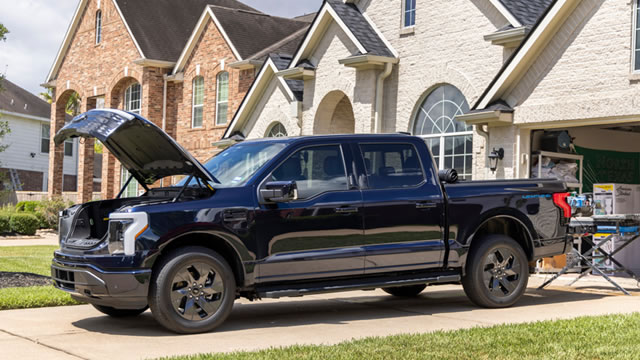
Core Viewpoint - Investors are questioning when electric vehicle (EV) losses for Ford and General Motors will reverse, with Ford's significant losses since 2022 being a focal point [1][2]. Group 1: Financial Performance - Ford has incurred over $16 billion in losses on its EV business since 2022, with a reported loss of $4.8 billion in its Model-e division for the last quarter, showing a slight improvement from the previous year's loss of over $5 billion [2][3]. - The company anticipates further losses in its EV division, expecting to lose between $4 billion and $4.5 billion in 2026 [3]. - Ford's market capitalization stands at $56 billion, with a current stock price of $13.87 and a dividend yield of 5.31% [8]. Group 2: Strategic Outlook - Ford's next significant push in EVs is not expected until 2027, when a new production approach and Universal EV Platform will facilitate the launch of a midsize electric truck priced around $30,000 [7]. - The company does not expect to break even on its EV division until around 2029, as stated by the CFO during a conference call [7]. - The substantial losses in the EV sector highlight the importance of reversing these losses to allocate capital more effectively, potentially for high-return projects or shareholder returns [9]. Group 3: Competitive Landscape - Ford's early investment in EV strategies has been costly, with a $19.5 billion special charge taken to pivot its EV strategy, while General Motors has opted for share buybacks to enhance shareholder value [5][9]. - GM has initiated $10 billion in buybacks in 2023, with additional authorizations of $6 billion for 2024 and 2025, contrasting Ford's approach of returning value primarily through dividends [5].

Ford Looks to Hit $30,000 EV Price Target by Shrinking Battery
Bloomberg Technology· 2026-02-17 17:27
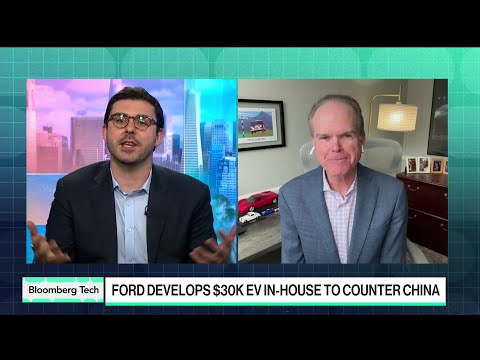
Ford is advancing its electric vehicle strategy with a newly engineered EV platform designed to start at $30,000, significantly below the average new car price in the U.S. Doug Field, Ford Chief EV, Digital and Design Officer, explained that the company took a clean-sheet approach organizationally and in design to reduce costs and improve performance. The new platform, developed primarily in California under the leadership of a former Tesla engineer, achieves a longer range by shrinking the battery size, th ...
Ford CEO says 'the customer has spoken' after its EV business lost nearly $5 billion last year
Business Insider· 2026-02-11 18:18
Core Insights - Ford's electric vehicle (EV) business reported a loss of $4.8 billion in 2025, with a 14% decline in sales of key models like the Mustang Mach-E and F-150 Lightning [1][5] - The company is shifting its strategy towards lower-cost, high-volume EVs and increasing its focus on hybrids, moving away from its initial approach of electrifying premium models [2][6] Sales Performance - In 2025, Ford sold 27,307 F-150 Lightnings, an 18.5% decrease from 2024, and 51,620 Mustang Mach-Es, which remained roughly flat year-over-year [5] - The end of the $7,500 federal tax credit in September 2024 significantly impacted sales, with F-150 Lightning sales dropping from 5,197 units in December 2024 to 1,724 units a year later [5] Strategic Changes - Ford has ceased production of the all-electric F-150 Lightning, planning to reintroduce it as an extended-range electric vehicle (EREV) with improved range and towing capacity [6] - The company is developing a new "universal" EV platform aimed at producing lower-cost, high-volume vehicles, with the first model expected to be a midsize pickup priced around $30,000 by 2027 [7][8] Financial Outlook - Ford anticipates that its EV business will continue to operate at a loss for several more years, targeting break-even around 2029 [9] - The company missed earnings estimates for the quarter, reporting adjusted earnings per share of 13 cents compared to analysts' expectations of 19 cents [9] Market Context - Other major automakers are also planning to launch sub-$50,000 EVs, indicating a broader industry trend towards more affordable electric vehicles [8]

Stellantis shocking announcement leads to huge stock decline
Yahoo Finance· 2026-02-06 21:09
When new Stellantis CEO Antonio Filosa took over the multinational automaker, he knew he was stepping into a giant mess. On Friday, Feb. 6, Stellantis' fourth-quarter and second-half 2025 results showed investors just how far the company still has to go to get back on track. Under former CEO Carlos Tavares’ leadership, Stellantis laid off American factory workers, shuffled its C-suite, and forced its U.S. brands to push products that American customers didn’t like. Filosa, 52, on the other hand, shared ...
Stellantis Shares Are Tumbling to Their Lowest Point in Over 5 Years. Here's Why
Investopedia· 2026-02-06 16:01
Another big automaker is making major changes to its electric vehicle strategy. Investors aren't cheering the move. ...

Honda cuts full-year profit forecast over tariffs and chip shortages
Yahoo Finance· 2025-11-13 10:00
Core Viewpoint - Honda Motor Co. has revised its profit forecast downward for the fiscal year ending March 31, 2026, due to a significant drop in operating profit attributed to one-off expenses related to electric vehicles, semiconductor shortages, and U.S. tariffs [1] Financial Performance - The company has reduced its operating profit forecast for 2026 by 21% to 550 billion yen ($3.65 billion) from 700 billion yen, and has also lowered its 2030 global EV sales target from 30% to 20% [2] - For the six months ending September 30, 2025, Honda reported sales revenue of 10.63 trillion yen ($70.9 billion), marking a modest 1.5% decrease compared to the same period last year [2] - Operating profit for the period fell by 41% to 438.1 billion yen, while profit before income taxes decreased by 28.9% to 527.4 billion yen [3] Electric Vehicle Strategy - The company recorded 237.3 billion yen in combined losses and expenses related to EV model cancellations and manufacturing reductions, indicating significant restructuring costs associated with its revised electric vehicle strategy [3] - Honda has experienced lower EV sales units and higher sales incentives per unit than initially expected due to a slowdown in the electric vehicle market in North America and Europe [4] Market Conditions - The U.S. government's policy changes, including the abolition of tax incentives for EV purchases and the easing of emissions regulations, have prompted Honda to realign its strategy, anticipating a further slowdown in the U.S. EV market [5] - Despite these challenges, Honda remains committed to expanding its production capabilities in the U.S., emphasizing the importance of procuring batteries through a sustainable value chain [6] Production Plans - Honda plans to designate its existing auto plants in Ohio as the Honda EV Hub, which includes retooling existing facilities and constructing a new joint venture EV battery facility with LG Energy Solution [7] - The company is on track to ship 3.34 million vehicles by the end of the fiscal year on March 31, 2026, reflecting a reduction of 110,000 units in the North American region due to semiconductor shortages [7]

General Motors surges nearly 15% on earnings beat, raises full-year guidance
Yahoo Finance· 2025-10-21 15:13
Core Insights - General Motors reported strong third-quarter results for 2025, with revenue slightly decreasing year-over-year, beating consensus estimates for both revenue and earnings per share (EPS) [1] - The company raised its full-year guidance, reflecting confidence in its performance trajectory [1] Financial Performance - Third-quarter revenue was $48.59 billion, a slight decrease from $48.76 billion in the previous year, and adjusted EPS reached $2.80, surpassing the anticipated $2.31 despite a 5% year-over-year decline [1][2] - Net income for the quarter was $1.32 billion, significantly down from $3 billion the previous year, impacted by changes in electric vehicle strategy and production adjustments [2] - Adjusted earnings before interest and taxes (EBIT) totaled $3.38 billion, down from $4.12 billion a year prior [3] Market Position - GM's market share in the U.S. reached 8.3%, the highest since 2017, with quarterly U.S. sales increasing by 8% to 710,347 units [3] Guidance Updates - The company raised its full-year adjusted EBIT guidance to a range of $12 billion to $13 billion, up from $10 billion to $12.5 billion [4] - Adjusted automotive free cash flow is now expected to be between $10 billion and $11 billion, with adjusted diluted EPS projected between $9.75 and $10.50 [4] Tariff Mitigation Strategies - GM expects annual tariff costs for 2025 to be between $3.5 billion and $4.5 billion, a reduction from earlier forecasts of up to $5 billion [5] - The company expressed gratitude for recent tariff relief efforts aimed at domestic manufacturers, which are expected to enhance competitiveness by lowering domestic manufacturing costs [5]

General Motors lifts financial forecast as Trump tariff outlook improves
The Guardian· 2025-10-21 12:55
Core Viewpoint - General Motors has raised its financial outlook for the year while slightly reducing the expected impact from tariffs, amidst a challenging electric vehicle market [1][2]. Financial Outlook - The company now anticipates its annual adjusted core profit to be between $12 billion and $13 billion, an increase from the previous estimate of $10 billion to $12.5 billion [2]. - The updated impact of tariffs on the bottom line is now projected to be between $3.5 billion and $4.5 billion, down from the earlier estimate of $4 billion to $5 billion [2]. Electric Vehicle Strategy - General Motors incurred a $1.6 billion charge due to changes in its electric vehicle strategy, with the removal of a $7,500 tax credit for battery-powered models at the end of September [3]. - CEO Mary Barra indicated that future charges related to electric vehicles are expected, but the company aims to reduce EV losses by addressing overcapacity [3]. Revenue and Sales Performance - Revenue for the quarter ending in September slightly decreased to $48.6 billion compared to the previous year [4]. - Despite tariff uncertainties, US car sales increased by 6% in the third quarter, with consumers opting for more expensive models and features [4]. Tariff Mitigation Efforts - General Motors plans to mitigate 35% of its anticipated tariff impact, aided by a new program allowing credits for US-assembled vehicles [5][6]. - The MSRP offset program is expected to enhance the competitiveness of US-produced vehicles over the next five years [6]. Investment and Market Dynamics - The company is increasing investments in the US to counteract tariffs, with a $4 billion investment announced for three facilities in Michigan, Kansas, and Tennessee [7]. - Other automakers, such as Stellantis, are also planning significant investments in the US, with Stellantis announcing a $13 billion investment over the next four years [8]. Electric Vehicle Market Challenges - Although electric vehicle sales were strong in the third quarter, they still represented less than 10% of General Motors' overall sales [8]. - The company initially planned to offer a program to allow dealers to continue providing tax credits on EV leases but has since retracted this initiative due to political backlash [9].
GM’s Q3 net income tumbles 57%
Yahoo Finance· 2025-10-21 11:54
Core Insights - General Motors (GM) is implementing a multi-faceted strategy to enhance profitability, which includes reducing tariff exposure, improving electric vehicle (EV) profitability, and expanding software services, leading to an increased profit guidance of $12 billion to $13 billion, up from $10 billion to $12.5 billion [3] Software Services - GM's software services, including OnStar and Super Cruise, have generated nearly $2 billion in revenue this year, with OnStar subscribers increasing by 34% year-over-year and Super Cruise customers nearly doubling [4] - The company anticipates robust double-digit revenue growth through the end of the decade, with growth margins around 70% [4] Production Strategy - GM is increasing domestic production to mitigate tariff impacts and to produce more full-sized gas-powered trucks and SUVs for the U.S. market, as the company reassesses its EV strategies in light of potential changes in emissions standards by the EPA [5] - The company expects internal combustion engine (ICE) volumes to remain high for an extended period, with plans to retool its Lake Orion, Michigan plant to produce new Cadillac Escalade and full-size pickup trucks by early 2027 [6] Financial Performance - GM reported a 57% year-over-year decline in Q3 net income, primarily due to $1.1 billion in tariff costs and a revised EV production strategy amid cooling demand [7] - Despite the quarterly setback, GM's CEO expects that actions to improve manufacturing capacity and EV battery production will restore EBIT margins to historical levels of 8% to 10% [7]