Smart Beta

Search documents
Why This International Dividend ETF is Outperforming in 2026
Etftrends· 2026-02-19 21:01
Core Insights - The Franklin International Dividend Booster Index ETF (XIDV) has outperformed the iShares Core MSCI EAFE ETF (IEFA) with a year-to-date return of 8.95% compared to IEFA's 8.75% [1] - XIDV's performance advantage is attributed to its rules-based dividend optimization framework, which focuses on higher-yielding, lower-volatility market segments [1] - The ETF's strategy aims to provide a dividend yield two to three times that of its parent index without using leverage or derivatives [1] Performance and Strategy - XIDV employs a three-stage optimization process to maximize dividend yield while controlling volatility and limiting concentration risk [1] - The ETF has minimal exposure to technology (~0.14%), contrasting with IEFA's significant tech weight, and instead focuses on sectors like European utilities, UK insurers, and Nordic banks [1] - The top holdings of XIDV include high-quality companies known for substantial dividend payouts, such as Carrefour SA (2.61%) and Engie SA (2.70%) [1] Income and Geographic Exposure - XIDV manages approximately $62 million in assets and has an expense ratio of 0.19%, offering a dividend yield around 6.7%, nearly double IEFA's ~3.5% yield [1] - The ETF includes about 7% Canadian exposure, benefiting from strong Canadian financials and energy sectors [1] - The structural edge of XIDV in emphasizing high dividend yield while maintaining volatility discipline is expected to remain relevant in the current market environment [1]


Is WisdomTree Japan Opportunities Fund (OPPJ) a Strong ETF Right Now?
ZACKS· 2026-02-13 12:21
Core Insights - The WisdomTree Japan Opportunities Fund (OPPJ) is a smart beta ETF launched on June 28, 2013, providing broad exposure to the Asia-Pacific (Developed) ETFs category [1] Fund Overview - OPPJ is managed by WisdomTree and has accumulated assets exceeding $202.51 million, positioning it as an average-sized ETF in its category [5] - The fund aims to replicate the performance of the WisdomTree Japan Opportunities Index, which tracks Japanese companies [5] Cost Structure - OPPJ has an annual operating expense ratio of 0.58%, which is competitive within its peer group [6] - The fund offers a 12-month trailing dividend yield of 1.43% [6] Holdings and Sector Exposure - The fund's total assets are entirely in Japanese Yen (JPY), with significant holdings in Marubeni Corp and Sumitomo Corp [7] - The top 10 holdings represent approximately 154.27% of OPPJ's total assets under management, indicating a concentrated investment strategy [8] Performance Metrics - Year-to-date, OPPJ has gained about 24.16%, with a 0% change over the last 12 months as of February 13, 2026 [9] - The fund has traded between $35.34 and $57.61 in the past 52 weeks [9] - OPPJ has a beta of 0.22 and a standard deviation of 0.00% over the trailing three-year period, effectively diversifying company-specific risk with approximately 122 holdings [10] Alternatives in the Market - Other ETFs in the Asia-Pacific (Developed) segment include JPMorgan BetaBuilders Japan ETF (BBJP) with $16.2 billion in assets and iShares MSCI Japan ETF (EWJ) with $18.52 billion [12] - BBJP has a lower expense ratio of 0.19%, while EWJ charges 0.50% [12]


中证指数:截至2025年底全球ETF资产规模达到19.85万亿美元
智通财经网· 2026-02-11 12:18
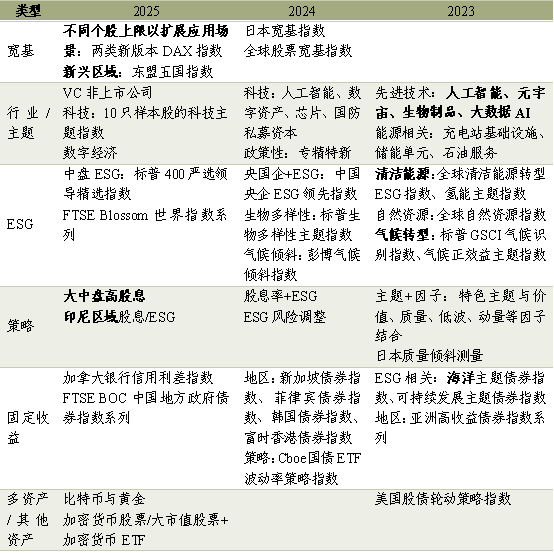
智通财经APP获悉,2月11日,中证指数公司发文称,全球指数化投资规模迭创新高,指数体系日益完善。截至2025年底全球ETF资产规模达到19.85万亿 美元。从产品来看,以Smart Beta为代表的策略ETF引领多样化发展,科技等行业主题ETF关注度显著提升,固定收益等低风险类ETF持续获市场青睐。从 指数布局来看,市场覆盖范围和底层资产类型的多元化以及存量指数优化等成为重点方向,指数应用场景日益丰富。 在政策支持及指数化投资需求持续增强的背景下,境内市场整体呈现"政策驱动、供需两旺、创新加速"的景象。境内指数行业生态持续完善,指数化投资 多向发力提质扩容。指数化投资规模进一步增长,债券指数产品增速尤为亮眼。截至2025年底,境内共有3433只指数型产品,合计规模为7.23万亿元,较 2024年底分别增加858只和增长44.32%。一方面,中证A500等特色宽基指数持续引领市场新热点,境内宽基指数产品规模创新高;另一方面,人工智能等 主题、跨境、红利等策略、固定收益、多资产等指数及指数产品备受市场关注。 展望未来,境内指数化投资将迎来多重发展机遇:一是政策协同驱动,有助于构建指数化投资高质量发展新格局;二是 ...
X @BitMart
BitMart· 2026-02-07 12:17
The gap between academic finance and crypto market structure is closing. 📉📈We’re excited to announce our collaboration with the @HKUST MSc in Financial Mathematics program for their Spring 2026 Capstone. A group of Master’s students will be building institutional-grade Smart Beta and Statistical Arbitrage models using BitMart’s historical market data.Web3 education becomes meaningful when students work with real data and real challenges. As the project progresses, we’ll be sharing key insights and research ...
Is Invesco Global ex-US High Yield Corporate Bond ETF (PGHY) a Strong ETF Right Now?
ZACKS· 2026-02-06 12:21
Core Viewpoint - The Invesco Global ex-US High Yield Corporate Bond ETF (PGHY) is designed to provide broad exposure to the High-Yield/Junk Bond ETFs category, with a focus on non-U.S. issuers and a smart beta strategy [1][5]. Fund Overview - PGHY was launched on June 20, 2013, and has accumulated over $201.3 million in assets, categorizing it as an average-sized ETF in its segment [1][5]. - The fund is managed by Invesco and aims to match the performance of the DB Global Short Maturity High Yield Bond Index [5]. Cost and Expenses - PGHY has an annual operating expense ratio of 0.35%, making it one of the more cost-effective options in the high-yield space [7]. - The ETF offers a 12-month trailing dividend yield of 7.18% [7]. Holdings and Sector Exposure - The ETF's top holdings include Industrial & Commercial Bank Of China Ltd (1.4% of total assets), Samarco Mineracao Sa, and Invesco Government & Agency Portfolio [9]. - The top 10 holdings account for approximately 6.73% of PGHY's total assets under management [9]. Performance Metrics - Year-to-date, PGHY has gained about 0.87% and is up approximately 7.02% over the last 12 months as of February 6, 2026 [11]. - The ETF has traded between $18.92 and $20.26 in the past 52 weeks, with a beta of 0.19 and a standard deviation of 5.22% over the trailing three-year period, indicating a high-risk profile [11]. Alternatives - Other ETFs in the high-yield space include iShares iBoxx $ High Yield Corporate Bond ETF (HYG) and iShares Broad USD High Yield Corporate Bond ETF (USHY), with assets of $17.64 billion and $25.79 billion respectively [13]. - HYG has an expense ratio of 0.49%, while USHY has a lower expense ratio of 0.08% [13].

ETF Prime: Grading 2026 ETF Predictions
Etftrends· 2026-01-21 19:03
Group 1: Industry Consolidation - The industry is expected to see consolidation, highlighted by Goldman Sachs' acquisition of Innovator ETFs, with over 400 unique ETF brands and 4,000 products in the market [1] - Raymond James' acquisition of Clark Capital Management Group indicates a trend, with expectations of three to five meaningful deals in the current year [2] Group 2: Smart Beta ETFs - Predictions suggest inflows for smart beta ETFs will double from $37 billion to $75 billion, with the Invesco S&P 500 Equal Weight ETF (RSP) being the fourth-largest fund by flows this year [3] - The record for smart beta inflows was set at $103 billion in 2022 [3] Group 3: Crypto Index ETFs - Skepticism exists regarding the prediction that crypto index ETFs will triple assets from $1.7 billion to $5 billion, as year-to-date flows have primarily gone to bitcoin and ethereum funds [4] - A survey indicated that 42% of advisors prefer crypto index ETFs over individual tokens [4] Group 4: International Equity and Fixed Income ETFs - Predictions on international equity and fixed income ETFs breaking records are endorsed, with bond ETFs capturing 32% of total flows this year, up from 29% last year [5] - Flows are shifting from short duration to the belly of the curve, approximately six years duration [5] Group 5: Active ETFs - Active ETFs experienced record inflows of $580 billion in 2025, contrasting with active mutual funds that had $640 billion in outflows [6]
Emerging Markets ETFs to Take the Crown Again?
Etftrends· 2026-01-20 16:25
Core Insights - Emerging markets (EMs) were the best-performing major regional indices in 2025, with the MSCI Emerging Markets index rallying over 30% in U.S. dollar terms, surpassing the S&P 500 and other developed market benchmarks [1] - The positive outlook for EMs is expected to continue into 2026, driven by macro developments, attractive valuations, and exposure to artificial intelligence (AI) [1] Investment Trends - Broad EM ETFs reported strong returns, with many achieving approximately 30%+ for 2025; notable funds include iShares Core MSCI Emerging Markets ETF (IEMG) with $18 billion in new inflows and Vanguard FTSE Emerging Markets ETF (VWO) with $8.5 billion [2] - The Avantis Emerging Markets Equity ETF (AVEM) also performed well, bringing in $6 billion in net inflows last year [2] Active Management Strategies - Enhanced strategies like the ALPS Emerging Sector Dividend Dogs ETF (EDOG) have gained traction, returning roughly 29% last year by focusing on high-yielding stocks [3] - The Goldman Sachs ActiveBeta Emerging Markets Equity ETF (GEM) has crossed $1 billion in assets, utilizing a multifactor approach across over 700 holdings to provide a systematic factor overlay [4] Growth Drivers - Key contributors to EM returns include China, South Korea, and Taiwan, with Taiwan stocks rising 26% in local currency and 40% in U.S. dollars, while South Korea saw gains of 75% in local currency and nearly 100% in U.S. dollars [5] - Indian equities underperformed with a 9% return, contrasting with previous years of strong gains, but are expected to rebound as earnings stabilize [5] Market Dynamics - Emerging markets are trading at approximately 15 times forward earnings, making them relatively inexpensive compared to the S&P 500, which trades at around 22 to 23 times forward earnings [5] - Declining interest rates and a weakening dollar are favorable conditions for EMs, potentially enhancing global risk appetite [5] Future Outlook - The case for EMs in 2026 is supported by faster growth, cheaper valuations, and significant exposure to global AI supply chains, positioning EM ETFs as a core allocation opportunity rather than a tactical trade [6]

开年两个“万亿”,ETF“非对称”优势如何突围?
券商中国· 2026-01-19 02:31
Core Viewpoint - The article highlights the significant growth and evolution of ETFs in China, with two major records achieved in early 2026, indicating a robust and competitive market landscape. The focus is on the "Matthew Effect," where leading players like Huaxia and E Fund continue to dominate, while smaller firms carve out niches through differentiated strategies [1][2]. Group 1: ETF Market Overview - As of January 16, the total size of all listed ETFs reached 6.07 trillion yuan, managed by 58 fund companies. Huaxia Fund's ETF surpassed 1 trillion yuan on January 12, later adjusting to 964.82 billion yuan due to market fluctuations [2]. - The top five fund companies account for 53.21% of the total ETF market size, with E Fund and Huatai-PB following Huaxia in scale [2][3]. Group 2: Competitive Dynamics - The article discusses the "liquidity moat" and "institutional allocation preference" as key factors contributing to the scale disparity among ETF managers. Larger ETFs tend to attract more institutional investments due to better liquidity, reinforcing the dominance of leading firms [3][5]. - The analysis indicates that the competition among ETF managers is shifting from simple scale to a more complex ecosystem approach, focusing on product differentiation and comprehensive solutions for investors [8][9]. Group 3: Product Differentiation and Strategy - Smaller fund companies are encouraged to focus on niche markets and innovative strategies to compete effectively against larger firms. The article emphasizes the importance of creating unique products that meet specific investor needs [6][10]. - The future of ETFs is seen as moving towards "solution-oriented competition," where the emphasis is on providing complete investment solutions rather than just tracking indices [8][9]. Group 4: Future Trends and Innovations - The article notes that the global market for actively managed ETFs is expected to grow significantly, with a projected size of 1.84 trillion USD by the end of 2025, indicating a shift in investor preferences towards active management strategies [10]. - Companies like Pengyang Fund are exploring new product categories, such as long-term bond ETFs, to enhance their offerings and meet evolving market demands [6][10].

Invesco's Sleepy ETF Ended Up Ripping 33% While No One Was Watching
247Wallst· 2026-01-15 13:13
Core Viewpoint - The Invesco KBW Bank ETF (KBWB) achieved a 33% return in 2025, largely unnoticed amidst the focus on AI stocks, due to its equal-weight methodology that diversified investments across 24 major U.S. banks [1] Group 1: Investment Strategy - KBWB's equal-weight approach allowed for balanced exposure across 24 banks, preventing any single institution from dominating the portfolio, which contributed to its outperformance compared to market-cap weighted ETFs like KBE and SPY [2][5] - The equal-weight structure smoothed volatility and provided consistent returns by capturing gains from both megabanks and regional banks during the banking sector's rally [5] Group 2: Market Conditions - The steepening yield curve that began in late 2025 significantly enhanced bank profitability, with the spread widening from near-zero to over 70 basis points, leading to expanded profit margins for banks [3] - Analysts predict that the favorable environment for margin expansion will continue into 2026, with a focus on monitoring the 2-10 Treasury spread for potential signals regarding bank profitability [4] Group 3: Monitoring and Rebalancing - Investors are advised to check Invesco's monthly fact sheet for changes in holdings or weightings after quarterly rebalances, as the equal-weight structure can create buying opportunities in undervalued banks [6] - The quarterly rebalancing of KBWB is crucial for understanding which banks are being adjusted in the portfolio, providing insights into market dynamics [8] Group 4: Alternative Strategies - The First Trust Nasdaq Bank ETF (FTXO) employs a smart beta methodology that ranks banks based on liquidity and fundamental metrics, offering a different selection approach compared to KBWB [7]


Is First Trust NASDAQ-100 Select Equal Weight ETF (QQEW) a Strong ETF Right Now?
ZACKS· 2026-01-15 12:21
Core Insights - The First Trust NASDAQ-100 Select Equal Weight ETF (QQEW) debuted on April 19, 2006, and provides broad exposure to the Style Box - Large Cap Growth category of the market [1] Fund Overview - QQEW is sponsored by First Trust Advisors and has accumulated assets over $1.87 billion, positioning it as an average-sized ETF in its category [5] - The ETF aims to match the performance of the NASDAQ-100 Equal Weighted Index, which tracks the 50 companies from the Nasdaq-100 Index with the highest combined Blended Quality and Growth scores [5] Cost Structure - QQEW has an annual operating expense ratio of 0.55%, which is competitive within its peer group [6] - The ETF offers a 12-month trailing dividend yield of 0.41% [6] Sector Exposure and Holdings - The ETF has a significant allocation in the Information Technology sector, comprising approximately 40.3% of the portfolio [7] - Micron Technology, Inc. (MU) represents about 1.4% of the fund's total assets, with its top 10 holdings accounting for roughly 12.97% of QQEW's total assets under management [8] Performance Metrics - Year-to-date, QQEW has experienced a loss of about -0.8%, while it has gained approximately 12.92% over the last 12 months as of January 15, 2026 [10] - The ETF has traded between $106.81 and $146.24 in the past 52 weeks, with a beta of 1.06 and a standard deviation of 17.50% over the trailing three-year period, indicating medium risk [10] Alternatives - Other ETFs in the large-cap growth space include Vanguard Growth ETF (VUG) and Invesco QQQ (QQQ), with VUG having $202.35 billion in assets and an expense ratio of 0.04%, while QQQ has $407.22 billion in assets and an expense ratio of 0.20% [11]