
ETF生态圈

Search documents
电网设备ETF领涨;ETF市场首现万亿机构丨ETF晚报
2 1 Shi Ji Jing Ji Bao Dao· 2026-01-19 09:19
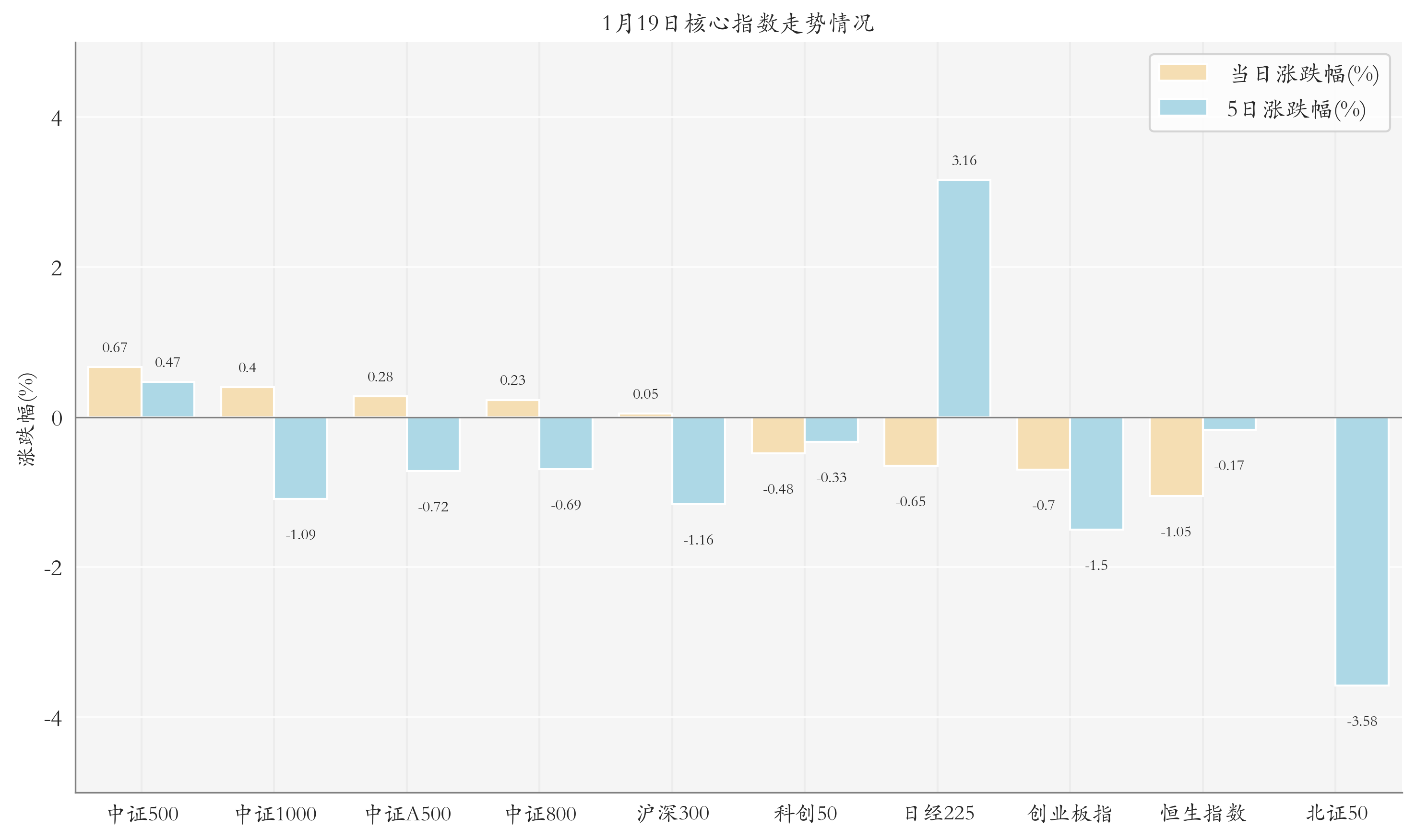
ETF Industry News - The three major indices mostly rose, with several ETFs in the power equipment sector leading the gains. The grid equipment ETF (159326.SZ) rose by 7.76%, the grid ETF (561380.SH) by 7.18%, and another grid ETF (159320.SZ) by 7.03%. In contrast, several ETFs in the pharmaceutical and biotechnology sector declined, with the Sci-Tech Pharmaceutical ETF (588130.SH) down by 2.21% and the Innovative Drug ETF (517110.SH) down by 2.17% [1] ETF Market Highlights - In the first two weeks of 2026, two ETFs reached the "trillion" mark in size, specifically those managed by Huaxia Fund and the cross-border ETF. This indicates a significant scale in the ETF market, which has accumulated over 6 trillion in assets over 20 years with nearly 60 managers. Major players like Huaxia and E-Fund continue to grow due to scale advantages, while smaller firms leverage differentiated strategies [2] - The number of ETFs included in the "ETF Connect" has expanded to 364, with 98 ETFs officially added to the Northbound Stock Connect. This represents a more than 30% increase from the previous total of 273. A total of 29 fund companies had products included, with Huaxia Fund leading with 14 new ETFs [3] - Recent market dynamics show a significant internal shift in ETF funds, with large redemptions in low-risk products like broad-based ETFs, bond ETFs, and money market ETFs. Conversely, commodity ETFs, cross-border ETFs, and narrow-based ETFs have become key areas for fund inflows, reflecting a shift in investor preferences [4] Market Performance Overview - On January 19, the A-share market showed mixed results, with the Shanghai Composite Index rising by 0.29% to 4114.0 points, while the Shenzhen Component Index rose by 0.09% to 14294.05 points. The ChiNext Index fell by 0.7% to 3337.61 points [5] - In terms of sector performance, the basic chemical, oil and petrochemical, and power equipment sectors led the gains with daily increases of 2.7%, 2.08%, and 1.84%, respectively. In contrast, the computer, communication, and banking sectors lagged behind with declines of -1.55%, -0.96%, and -0.6% [8] ETF Market Overview - The average performance of various ETF categories indicates that commodity ETFs performed the best with an average increase of 1.21%, while cross-border ETFs had the worst performance with an average decline of -1.14% [11] Top Performing ETFs - The top five ETFs in different categories include: - Stock ETFs: Grid Equipment ETF (159326.SZ), Grid ETF (561380.SH), and others [14] - Bond ETFs: Convertible Bond ETF (511380.SH), Shanghai Composite Convertible Bond ETF (511180.SH), and others [14] - Commodity ETFs: Gold ETF (159834.SZ), Gold ETF (518850.SH), and others [14] - Cross-border ETFs: Hong Kong Central Enterprise Dividend ETF (520660.SH), Sino-Korean Semiconductor ETF (513310.SH), and others [15] Trading Volume Statistics - The top three stock ETFs by trading volume were A500 ETF (563360.SH) with 14.083 billion, CSI 300 ETF (510300.SH) with 13.793 billion, and A500 ETF Fund (512050.SH) with 12.891 billion [16][17]

开年两个“万亿”,ETF“非对称”优势如何突围?
券商中国· 2026-01-19 02:31
Core Viewpoint - The article highlights the significant growth and evolution of ETFs in China, with two major records achieved in early 2026, indicating a robust and competitive market landscape. The focus is on the "Matthew Effect," where leading players like Huaxia and E Fund continue to dominate, while smaller firms carve out niches through differentiated strategies [1][2]. Group 1: ETF Market Overview - As of January 16, the total size of all listed ETFs reached 6.07 trillion yuan, managed by 58 fund companies. Huaxia Fund's ETF surpassed 1 trillion yuan on January 12, later adjusting to 964.82 billion yuan due to market fluctuations [2]. - The top five fund companies account for 53.21% of the total ETF market size, with E Fund and Huatai-PB following Huaxia in scale [2][3]. Group 2: Competitive Dynamics - The article discusses the "liquidity moat" and "institutional allocation preference" as key factors contributing to the scale disparity among ETF managers. Larger ETFs tend to attract more institutional investments due to better liquidity, reinforcing the dominance of leading firms [3][5]. - The analysis indicates that the competition among ETF managers is shifting from simple scale to a more complex ecosystem approach, focusing on product differentiation and comprehensive solutions for investors [8][9]. Group 3: Product Differentiation and Strategy - Smaller fund companies are encouraged to focus on niche markets and innovative strategies to compete effectively against larger firms. The article emphasizes the importance of creating unique products that meet specific investor needs [6][10]. - The future of ETFs is seen as moving towards "solution-oriented competition," where the emphasis is on providing complete investment solutions rather than just tracking indices [8][9]. Group 4: Future Trends and Innovations - The article notes that the global market for actively managed ETFs is expected to grow significantly, with a projected size of 1.84 trillion USD by the end of 2025, indicating a shift in investor preferences towards active management strategies [10]. - Companies like Pengyang Fund are exploring new product categories, such as long-term bond ETFs, to enhance their offerings and meet evolving market demands [6][10].

银国宏,重磅发声!
中国基金报· 2025-09-27 02:53
Core Viewpoint - Financial Street Securities, formerly known as Hengtai Securities, is entering a new development phase marked by a rebranding and strategic transformation aimed at leveraging its unique advantages in the capital market and technology innovation [2][5][6]. Strategic Positioning - The company aims to capitalize on the dual opportunities presented by the rapid development of the capital market and continuous technological breakthroughs, focusing on enhancing its strategic implementation capabilities [3][14]. - Emphasis will be placed on understanding the characteristics of small and medium-sized brokerages, optimizing light capital businesses, and establishing efficient coordination mechanisms to create a "small yet beautiful, light yet stable" brokerage [3][13]. New Shareholders and Resources - In September 2023, Beijing Financial Street Investment Group became the actual controller of the former Hengtai Securities, marking a new beginning with richer resources and a more solid platform [5][6]. - The integration into the Financial Street Group allows the company to leverage advantages in policy, resources, and reputation, enhancing its ability to serve the real economy and capital markets [6][7]. Business Development Focus - Financial Street Securities will focus on deep integration with the Financial Street Group's resources to create a closed loop of "capital market services + real industry needs," aiming for breakthroughs in wealth management, investment banking, and asset management [7][8]. - The company plans to enhance its service capabilities across customer service systems, product innovation, and information technology investments to provide more professional and personalized financial services [7][8]. Corporate Culture and Risk Management - The importance of corporate culture is highlighted, with a focus on "steady and far-reaching" principles to ensure compliance and risk control, avoiding the pitfalls of aggressive speculation [8][10]. - The company aims to build a sustainable development capability by continuously improving business innovation, risk management, and talent team construction [7][11]. Operational Recovery and Future Goals - Following the entry of new leadership, the company is focused on unifying thoughts, clarifying goals, and solidifying its foundation for a comprehensive recovery [11][12]. - The company has made significant progress in its brokerage business, aiming to enhance trading scale and market share while transitioning towards wealth management [19][20]. Wealth Management Transformation - Financial Street Securities is committed to transforming into a wealth management-focused entity, emphasizing the development of a differentiated advantage in this area [17][19]. - The company plans to implement five key projects in retail brokerage, including talent development, efficiency improvement, and brand building, to achieve industry-leading trading service capabilities [19][20]. Asset Management and Research Development - The asset management business is currently underperforming, and the company is working to improve its competitive position by attracting market-oriented teams and learning from successful peers [22][23]. - A new research institute has been established to support the company's investment strategies and enhance collaboration with public funds, focusing on macroeconomic and industry research [22][23].
多方面布局 券商角逐ETF新赛道
Shang Hai Zheng Quan Bao· 2025-06-25 18:46
Core Viewpoint - The development of ETF-related businesses is a crucial part of the transformation of brokerage wealth management, with leading brokerages dominating the market while some smaller firms achieve "leapfrog" success through differentiation [1][2]. Group 1: Market Overview - As of May 2025, there are 691 ETFs in the Shanghai market with a total market value of 30,018.81 billion, reflecting a growth of 1.33% [1]. - In May, the cumulative trading amount of ETFs in the Shanghai market reached 30,097.61 billion, with an average daily trading amount of 1,584.08 billion [1]. Group 2: Brokerage Performance - China Galaxy Securities leads the market with an ETF holding share of 24.63%, followed by Shenwan Hongyuan Securities at 18.05%, and CITIC Securities and China Merchants Securities in third and fourth places respectively [2]. - In terms of trading volume, Huatai Securities holds the top position with a trading volume share of 10.93% in May, while CITIC Securities ranks second with 9.35% [2]. Group 3: Competitive Landscape - The competition among brokerage firms is intense, with some smaller brokerages showing strong performance in ETF trading, such as Huabao Securities, which ranked first in May with a trading volume share of 3.59% [2][3]. - The "Matthew Effect" is evident in the ETF market, where leading brokerages leverage their brand influence, extensive client base, and professional research capabilities to maintain dominance [3]. Group 4: ETF Market Growth - The total net asset value of ETFs in the market reached 4.20 trillion as of June 24, reflecting a growth of 12.60% since the beginning of the year [3]. - Brokerages are enhancing their mobile apps to include ETF sections and tools, such as grid trading and ETF regular investment, to improve online service experiences [3][4]. Group 5: Educational Initiatives - Brokerages are actively conducting ETF educational activities to help clients understand and experience ETF investments, promoting rational, value, and long-term investment concepts [4]. Group 6: Business Collaboration - The development of ETFs is seen as a way to enhance market variety, improve portfolio efficiency, reduce investment costs, and increase liquidity [6]. - Brokerages are focusing on building a comprehensive service system around ETFs, emphasizing collaboration in research, distribution, and custody services [6].


鹏华基本面投资之美·三全食品深度探访之旅活动顺利举办,多方协同共建ETF生态圈
Xin Lang Ji Jin· 2025-05-07 05:55
Core Insights - The article emphasizes the importance of understanding a company's core competitiveness and industry trends through direct engagement with management and employees, rather than solely relying on data and reports [1][2][3] - Penghua Fund's innovative approach, encapsulated in the concept of "on-site, face-to-face, ecosystem, and aggregation," aims to foster collaboration between capital markets and the real economy [1][3] Group 1: Company Overview - Sanquan Foods is highlighted as the first publicly listed company in China's frozen food industry, known for its extensive market network and commitment to food safety and innovation [2] - The company has adopted a dual growth model driven by product, channel, technology, and management innovations, focusing on both consumer and business markets [2][3] Group 2: Investment Opportunities - Penghua Fund has launched the first ETF focused on the grain industry, tracking the National Grain Industry Index, which includes stocks related to agriculture, food processing, and beverages [3][4] - The fund manager identified potential recovery in the consumer sector in the second half of the year, driven by fiscal policies and consumer stimulus measures, with specific interest in sectors like liquor, dairy, and frozen foods [5] Group 3: Strategic Initiatives - The concept of an "ecosystem" is emphasized, which includes various stakeholders such as exchanges, listed companies, fund companies, media, and investors, to create a more comprehensive understanding of industry trends [4] - Penghua Fund's activities, including the visit to Sanquan Foods, reflect its commitment to integrating its development with national strategies and supporting high-quality economic growth [4][5]
