
美国国债收益率

Search documents
美国联邦政府停摆天数即将刷新纪录,牵动全球投资者神经
Bei Ke Cai Jing· 2025-11-05 06:37
Core Points - The U.S. government is facing an unprecedented shutdown, potentially becoming the longest in history, which began on October 1 [1] - The shutdown is expected to have significant negative impacts on the U.S. economy, particularly in sectors like aviation, food, and healthcare, raising the risk of an economic hard landing [1] - The Congressional Budget Office estimates that the shutdown could reduce the U.S. GDP growth rate by 1-2 percentage points in Q4, with potential losses of $7 billion to $14 billion depending on the duration of the shutdown [2] - Consumer confidence is likely to be directly impacted, with delayed payments to federal employees and contractors exacerbating the situation, especially if the shutdown extends into the holiday season [2] - The shutdown poses a threat to U.S. sovereign credit ratings, with agencies like Scope Ratings downgrading the U.S. rating from "AA" to "AA-" due to deteriorating public finances and rising debt levels [3][4] - The shutdown has created a data vacuum, complicating economic assessments and policy decisions, which could lead to increased market volatility and uncertainty regarding future interest rate paths [5][6] - The liquidity tightening caused by the shutdown has led to a significant reduction in the Federal Reserve's reserve balances, further straining financial conditions and increasing borrowing costs [7]
美国10年期国债收益率跌2.53个基点,报4.0852%
Mei Ri Jing Ji Xin Wen· 2025-11-04 22:11
Group 1 - The core point of the news is the decline in U.S. Treasury yields, with the 10-year yield falling by 2.53 basis points to 4.0852% and the 2-year yield dropping by 2.87 basis points to 3.5758% [1] Group 2 - The 10-year U.S. Treasury yield is reported at 4.0852% after a decrease [1] - The 2-year U.S. Treasury yield is reported at 3.5758% following a decline [1]
美国10年期国债收益率涨2.71个基点,报4.1046%
Mei Ri Jing Ji Xin Wen· 2025-11-03 22:29
Group 1 - The core point of the news is the increase in U.S. Treasury yields, with the 10-year yield rising by 2.71 basis points to 4.1046% [1] - The 2-year Treasury yield also saw an increase of 2.47 basis points, reaching 3.5984% [1] - The 30-year Treasury yield rose by 3.68 basis points, now at 4.6879% [1]
12月降息悬了?美联储内部现六年来罕见分歧,“老债王”格罗斯出手做空美债!
华尔街见闻· 2025-11-01 11:10
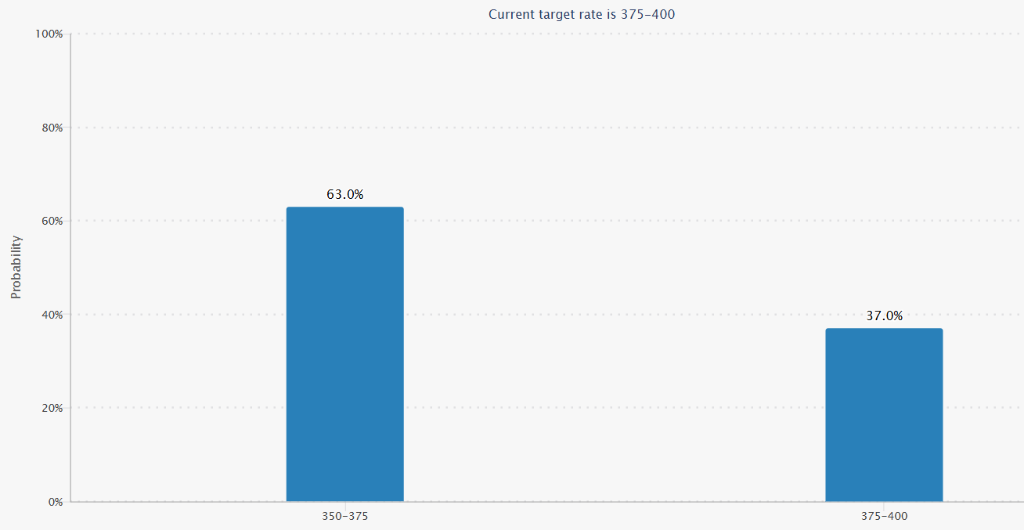
Core Viewpoint - The article discusses the increasing uncertainty in the market due to the Federal Reserve's mixed signals regarding interest rate decisions, highlighted by the divergence among its members and the actions of prominent investors like Bill Gross [2][5][10]. Group 1: Federal Reserve's Policy Divergence - Federal Reserve Chairman Jerome Powell acknowledged strong differing opinions within the FOMC, with two dissenting votes in the recent rate decision [5][6]. - Some officials advocate for a significant rate cut, while others prefer to maintain the current rates, indicating a lack of consensus [5][7]. - The probability of a rate cut in December has dropped from 91.7% to 63% according to the CME FedWatch Tool, reflecting market uncertainty [2][4]. Group 2: Bill Gross's Investment Strategy - Bill Gross, co-founder of PIMCO, has begun selling U.S. Treasury futures, betting on rising yields due to high deficits and excessive debt issuance [4][10]. - Gross expressed a bearish outlook on U.S. Treasuries, citing risks from an expanding deficit and a weakening dollar [11][12]. - He believes that even with a slowdown in economic growth, the supply of U.S. Treasuries is too high, leading to his decision to sell 10-year Treasury futures [12]. Group 3: Market Reactions and Strategies - Analysts suggest that in the current environment, investors should adjust their strategies towards longer-term bonds, which are less affected by short-term policy fluctuations [13]. - High U.S. Treasury yields are supporting the dollar index, making dollar cash holdings more attractive to global investors [14]. - Morgan Stanley's currency team has shifted its outlook on the dollar to neutral after the Fed's October meeting, advising to close short positions on the euro and yen [15].

12月降息悬了?美联储内部现六年来罕见分歧,“老债王”格罗斯出手做空美债
Hua Er Jie Jian Wen· 2025-11-01 06:31
Core Viewpoint - The Federal Reserve is experiencing unprecedented internal dissent regarding interest rate decisions, leading to increased market uncertainty and influencing investment strategies, particularly in U.S. Treasury bonds [1][2][5]. Group 1: Federal Reserve's Internal Dissent - This week, two out of twelve Federal Reserve voting members opposed the interest rate decision, marking the first occurrence of such dissent in six years [1][5]. - Fed Chair Jerome Powell acknowledged strong differing opinions within the Federal Open Market Committee (FOMC), with some members advocating for a larger rate cut while others prefer to maintain current rates [2][5]. - The probability of a rate cut in December has dropped from 91.7% to 63% according to the CME FedWatch Tool, reflecting the growing uncertainty [3][5]. Group 2: Market Reactions and Investment Strategies - Bill Gross, a prominent investor, has begun shorting U.S. Treasury futures, citing concerns over rising deficits and a weakening dollar, which he believes will lead to higher yields [5][6][8]. - Analysts suggest that in the current environment, investors should adjust their strategies towards longer-term bonds, which are less affected by short-term policy fluctuations [8]. - Morgan Stanley's currency team has shifted its outlook on the dollar to neutral, indicating a change in strategy following the Fed's October meeting [9].
12月降息悬了?美联储内部现六年来罕见分歧,“老债王”格罗斯出手做空美债!
Hua Er Jie Jian Wen· 2025-11-01 02:11
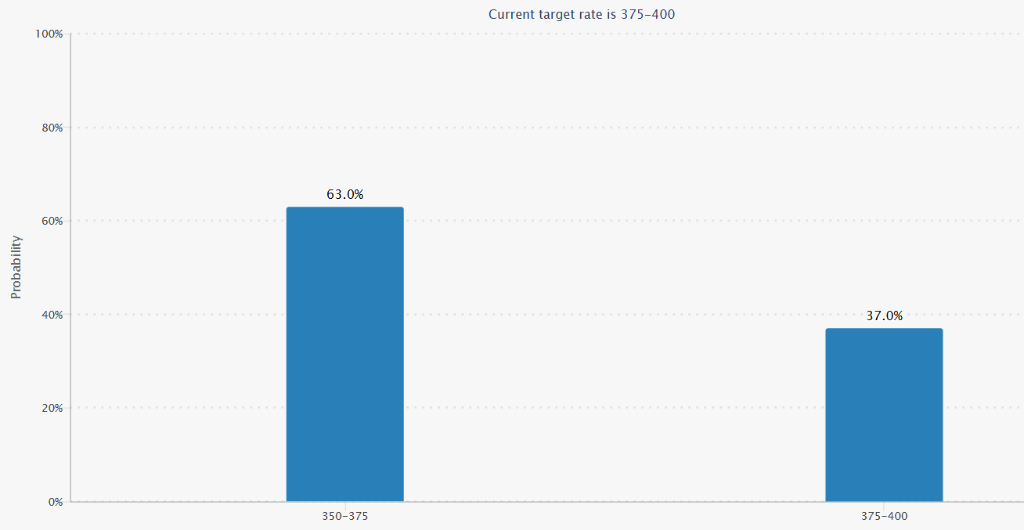
Core Insights - The Federal Reserve's internal divisions and uncertainty regarding interest rate decisions have intensified, with Chairman Powell indicating that a rate cut in December is not guaranteed [1][4] - Bill Gross, a prominent investor, has begun shorting U.S. Treasury futures, betting on rising yields due to high deficits and excessive bond issuance [3][5][6] Group 1: Federal Reserve's Internal Dynamics - The Federal Reserve is experiencing unprecedented internal dissent, with two out of twelve voting members opposing the recent rate decision, highlighting differing views on whether to cut rates or maintain them [4] - Some members, like Jeff Schmid, argue for holding rates steady due to a balanced labor market and persistent inflation, while others, including Governor Waller, advocate for a rate cut based on labor market concerns [4][6] - This level of disagreement is noted as the first of its kind in six years, suggesting potential for ongoing divergence in future policy decisions [4] Group 2: Market Reactions and Investment Strategies - Bill Gross's decision to sell 10-year Treasury futures reflects a bearish outlook on U.S. government bonds, driven by concerns over expanding deficits and a weakening dollar [5][6] - Analysts suggest that in the current environment, investors should consider shifting strategies towards longer-term bonds, which are less sensitive to short-term policy changes [6] - High U.S. Treasury yields are supporting the dollar, making it more attractive for global investors, as expectations for Fed rate cuts have moderated [7]
景顺:料美联储12月再降息一次 持续看好黄金
Zhi Tong Cai Jing· 2025-10-30 08:35
Group 1 - The Federal Open Market Committee (FOMC) decided to lower the target range for the policy interest rate by 25 basis points to 3.75% to 4% during the October meeting, aligning with market expectations, but the decision was not unanimous [1] - The bank anticipates a rate cut in December due to the slowing U.S. economy and rising unemployment, but believes that market expectations for consecutive rate cuts may be overly extreme [1] - The bank projects that the policy interest rate may reach 3% to 3.25% by the end of 2026, emphasizing that the timing of rate cuts is less important than the overall trend [1] Group 2 - The decline in the U.S. dollar, coupled with better economic performance outside the U.S., may support emerging market equities and bonds, which remain more attractive compared to U.S. assets [2] - The bank maintains a positive outlook on gold due to ongoing central bank and retail buying, but anticipates limited price increases for gold next year due to reduced geopolitical risks and stable inflation outlook [2]
美国10年期国债收益率涨0.19个基点,报3.9814%
Mei Ri Jing Ji Xin Wen· 2025-10-28 21:54
Core Viewpoint - The U.S. Treasury yields showed mixed movements on October 28, with the 10-year yield rising slightly while the 30-year yield decreased [1] Group 1: Treasury Yields - The 10-year Treasury yield increased by 0.19 basis points, reaching 3.9814%, trading within a range of 3.9680% to 4.0025% during the day [1] - The 2-year Treasury yield rose by 0.41 basis points, settling at 3.4918% [1] - The 30-year Treasury yield experienced a decline of 0.28 basis points [1]
黄金今日行情走势要点分析(2025.10.28)
Sou Hu Cai Jing· 2025-10-28 00:28
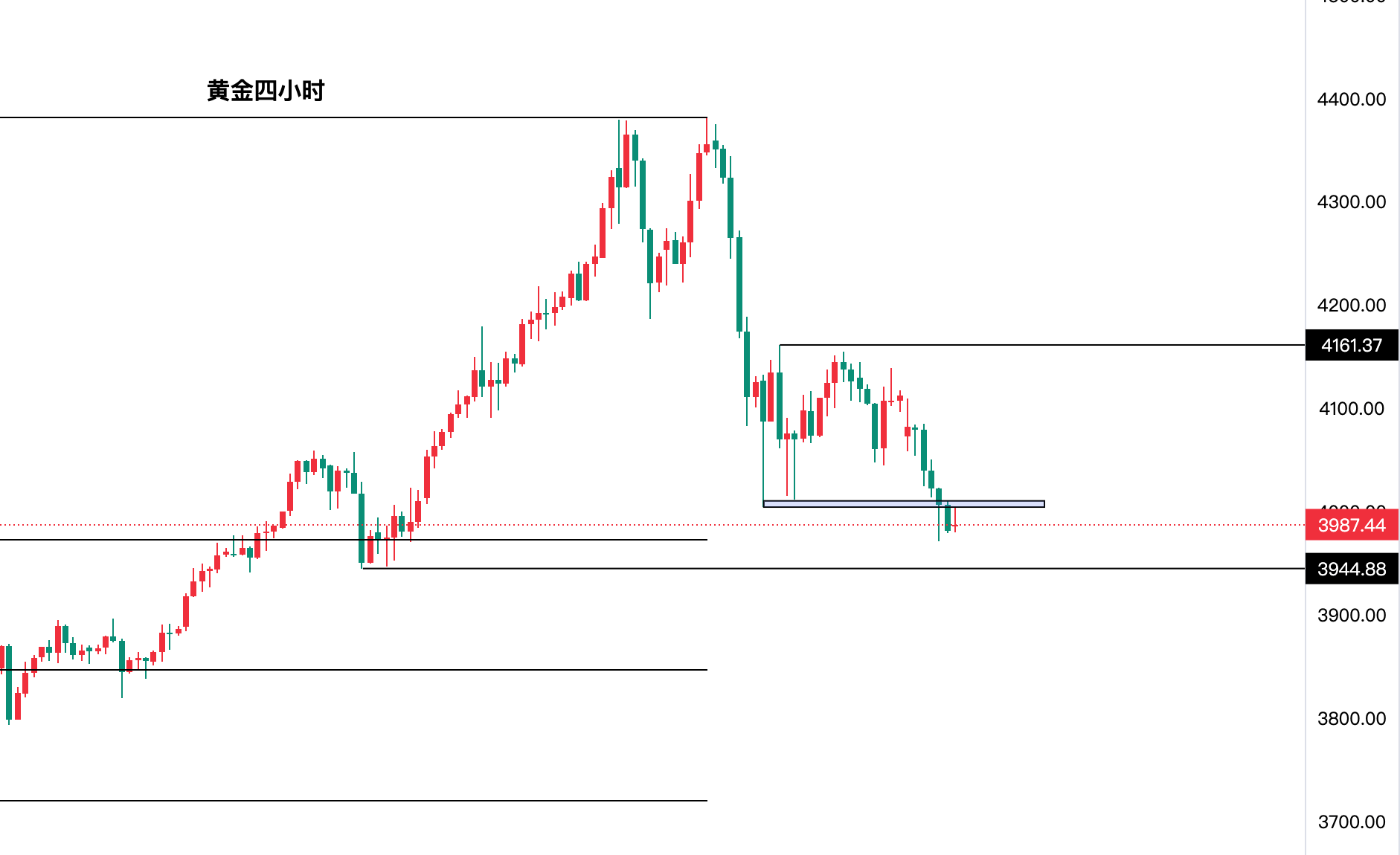
Group 1: Fundamental Analysis - The core reason for the significant drop in gold prices is the progress in China-U.S. trade negotiations, which has led to a reduction in market risk aversion and a shift of investors towards riskier assets [2] - The rapid increase in gold prices prior has resulted in substantial profit-taking by investors, exacerbated by technical selling pressure due to optimistic trade sentiment [3] - Current market conditions show strong expectations for a Federal Reserve interest rate cut, with a 98% probability of a 25 basis point cut, but this expectation has already been priced in, providing limited support for gold prices [4] Group 2: Market and Macro Environment Changes - The U.S. 10-year Treasury yield has slightly increased, reflecting enhanced market risk appetite, while the U.S. dollar index has decreased slightly but failed to support gold prices [5] - Market focus is on the Federal Reserve's interest rate path and U.S. consumer confidence data, which will influence future gold price movements [6] Group 3: Future Price Trends and Investment Suggestions - Short-term factors such as progress in China-U.S. trade talks, strong global stock markets, and rising U.S. Treasury yields are likely to continue suppressing gold prices, leading institutions to lower long-term expectations [7] - Long-term factors such as geopolitical risks, inflation expectations, global central bank gold purchases, and the potential for a long-term decline in the U.S. dollar may still provide support for gold prices [8] Group 4: Technical Analysis - On the daily chart, gold has shifted from a consolidation phase to a bearish trend after breaking below the previous week's low, indicating a short-term market shift towards weakness [9] - Key resistance is identified at around 4070, where the 5-day and 20-day moving averages intersect, while support levels to watch are at 3971 and 3960 [9] - On the four-hour chart, the previous support zone of 4010-4000 has been broken, and the market should monitor whether this area will act as resistance moving forward [11]
美国10年期国债收益率跌0.77个基点,报3.9930%
Mei Ri Jing Ji Xin Wen· 2025-10-27 21:25
Core Viewpoint - The U.S. Treasury yields showed mixed movements on October 27, with the 10-year yield declining while the 2-year yield increased, indicating varying investor sentiment towards different maturities of government debt [1] Group 1: Treasury Yield Movements - The 10-year U.S. Treasury yield fell by 0.77 basis points, closing at 3.9930%, with an intraday trading range of 4.0410% to 3.9891% [1] - The 2-year Treasury yield rose by 2.32 basis points, reaching 3.5032% [1] - The 30-year Treasury yield decreased by 2.84 basis points [1]