
脱贫攻坚

Search documents
下党乡有个“十八栋村”(新发展理念引领高质量发展·一线故事)
Ren Min Ri Bao· 2025-10-22 00:30
Core Viewpoint - The article highlights the transformation of rural areas in Fujian, particularly the development of "Shibadong Village" and "Shibadong Village," showcasing the efforts in poverty alleviation and rural revitalization through infrastructure improvements and tourism development [1][4]. Group 1: Historical Context and Leadership - The article references Xi Jinping's multiple visits to the region, emphasizing his commitment to poverty alleviation and rural development, which laid the groundwork for current initiatives [1][3]. - In 1988, the establishment of the "Wuwu" township marked the beginning of efforts to improve living conditions and infrastructure, with a focus on breaking the cycle of poverty and disease [3][4]. Group 2: Infrastructure Development - The construction of a 2.1-kilometer long, 6.5-meter wide cement road has significantly improved connectivity for the village, facilitating access to markets and resources [5][8]. - The article notes that the journey from the county seat to the village has been reduced from a full day to under an hour, enhancing economic opportunities for residents [8]. Group 3: Economic Transformation - Villagers have converted old houses into guesthouses, generating additional income and promoting rural tourism, with some families reporting earnings of several thousand yuan per year from these ventures [4][6]. - The integration of agriculture and tourism has led to the establishment of various local industries, including the production of specialty crops, contributing to a projected per capita disposable income of 29,243 yuan for 2024 [4][8]. Group 4: Community Engagement and Development - The article discusses the importance of building a strong community leadership and talent pool to drive development, with younger residents returning to contribute to local initiatives [10][11]. - The village has developed a comprehensive plan to enhance its tourism offerings, including outdoor attractions and cultural experiences, aiming for sustainable growth [11].
出发(文思)
Ren Min Ri Bao· 2025-10-21 22:39
Core Points - The article reflects on the author's experiences traveling across China to document stories related to poverty alleviation and the resilience of individuals in challenging environments [1][2][3] Group 1: Poverty Alleviation Efforts - The author participated in a project organized by the China Writers Association to collect inspiring stories about poverty alleviation, traveling extensively across various provinces [1] - The journey included visits to some of the most impoverished areas, highlighting the efforts made by individuals and communities to overcome hardships [1][2] Group 2: Personal Experiences and Reflections - The author shares personal anecdotes from travels, including a challenging experience in the Taklamakan Desert where a sandstorm caused disorientation [1] - The narrative includes reflections on the past, such as the hardships faced by soldiers in Xinjiang during the early years of the People's Republic of China, emphasizing their sacrifices and contributions [2] - The author expresses admiration for the resilience and determination of individuals encountered during the journey, showcasing their commitment to community and environmental stewardship [3] Group 3: Changes in Rural Life - The article notes significant improvements in rural living conditions across China, with mentions of modern infrastructure and increased prosperity among local communities [3] - The author emphasizes the emotional impact of witnessing these changes, reinforcing the idea that life in rural areas has become more meaningful and fulfilling [3]
西海固的秋天
Ren Min Ri Bao· 2025-10-21 00:51
Core Points - The article highlights the transformation of the Xihai Gu region in Ningxia, which has shifted from being labeled as one of the "most unsuitable areas for human survival" to a thriving agricultural and ecological zone, showcasing significant improvements in living conditions and economic development [1][2][3] Group 1: Poverty Alleviation and Economic Development - Since the establishment of New China, the central government has focused on the Xihai Gu region, with over 800,000 impoverished individuals lifted out of poverty and significant investments in infrastructure and resources [3][4][10] - By 2024, the per capita disposable income in Ningxia is projected to reach 16,481 yuan, with growth rates surpassing those of other poverty-stricken areas and farmers in Ningxia [4] - The region has seen a substantial increase in agricultural productivity, with the introduction of modern irrigation techniques and the development of high-standard farmland, leading to a significant rise in potato production and other crops [53] Group 2: Water Management and Agricultural Innovation - The implementation of the Yanghe irrigation project has transformed arid land into fertile fields, contributing over 60% to Ningxia's grain production [23][21] - The region has developed a diverse agricultural base, including the cultivation of peppers, grapes, and other cash crops, which has created numerous job opportunities and increased household incomes [26][47] - The introduction of advanced agricultural practices and technology has enabled local farmers to significantly enhance their productivity and income levels [53][50] Group 3: Ecological Restoration and Sustainable Development - The article emphasizes the importance of ecological restoration efforts, including afforestation and soil conservation, which have led to improved environmental conditions and increased agricultural viability [36][43] - The region has invested heavily in ecological construction, with 117 billion yuan allocated for environmental projects, demonstrating a commitment to sustainable development [43] - The transformation of the Xihai Gu region is presented as a model for ecological and economic integration, showcasing how environmental health can support agricultural productivity and community well-being [40][44]
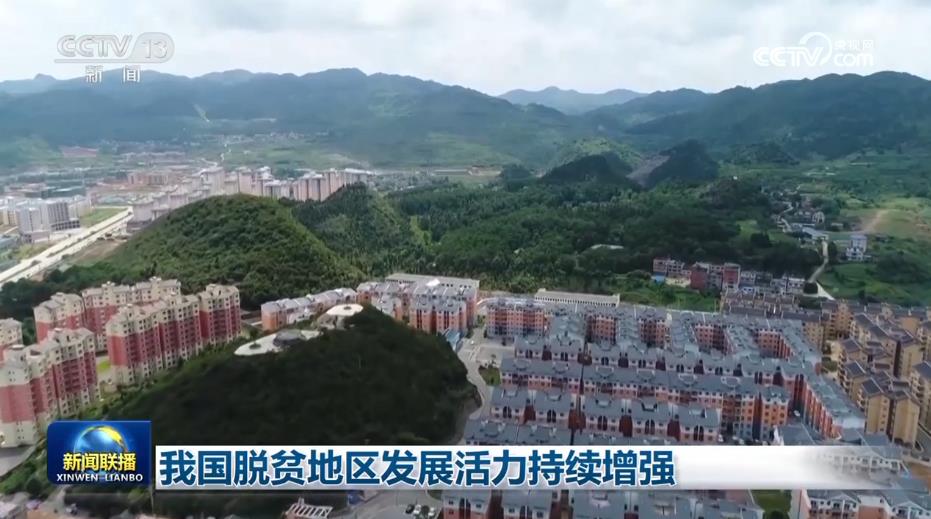
我国脱贫地区发展活力持续增强
Yang Shi Wang· 2025-10-17 12:12
Core Viewpoint - The article highlights China's achievements in poverty alleviation and the ongoing efforts to ensure sustainable development in formerly impoverished areas, emphasizing the importance of transitioning from poverty alleviation to rural revitalization. Group 1: Achievements in Poverty Alleviation - Since the establishment of a five-year transition period after winning the battle against poverty in 2020, China has maintained a firm stance against large-scale poverty recurrence, with the vitality of development in poverty-stricken areas continuously increasing [1]. - Each poverty alleviation county has cultivated 2-3 leading industries with distinct advantages and strong driving capabilities, generating a total output value exceeding 1.7 trillion yuan [3]. - More than 85% of poverty alleviation households and monitored households have implemented at least one industrial support measure, with the scale of employment for the impoverished population remaining stable at over 30 million annually [3]. Group 2: Financial Support and Infrastructure Development - The central government has cumulatively invested over 850 billion yuan in subsidies to promote rural revitalization, focusing on 160 key counties for rural revitalization and 35,000 concentrated resettlement areas [3]. - There has been a significant improvement in infrastructure and public service levels in poverty-stricken areas [3]. Group 3: Mechanisms to Prevent Recurrence of Poverty - A comprehensive monitoring and support mechanism to prevent the recurrence of poverty has been established, continuously enriching the toolbox of support policies to maintain the bottom line against large-scale poverty recurrence [5].

从旱天岭到“撼天岭”
Ren Min Ri Bao· 2025-10-16 22:20
Core Insights - The article highlights the transformation of Hantianling Village in Ningxia, led by Party Secretary Ding Jianhua, who has significantly improved the living conditions and economic prospects of the villagers through various initiatives [1][5]. Infrastructure Development - In 2011, the government initiated a water diversion project, allowing villagers to access Yellow River water, followed by the installation of tap water in 2012, which greatly improved the village's infrastructure [2]. - Roads were hardened, and essential facilities such as schools and health clinics were built, enhancing the overall living conditions in Hantianling Village [2]. Economic Initiatives - Ding Jianhua abandoned a lucrative business to become the village Party Secretary in 2013, focusing on finding suitable industries for income generation, ultimately settling on beef cattle farming [2]. - The village implemented a subsidy program where households could receive 2,000 yuan for purchasing a cow, encouraging villagers to take loans for cattle farming [2]. - Over ten years, Ding has guaranteed loans exceeding 600 million yuan for villagers, helping them overcome financial difficulties [2]. Agricultural Advancements - In 2017, support from China National Nuclear Corporation (CNNC) brought funding and technology to the village, leading to the establishment of a standardized beef cattle breeding park with over 900 cattle [3]. - The village has also adopted innovative technologies such as geothermal heating, significantly reducing energy costs for residents [4]. Income Growth - The average annual income for impoverished households in Hantianling Village reached 16,295 yuan in 2024, a fourfold increase since 2011 [4]. - Villagers are diversifying their income through various means, including livestock farming and crop cultivation, with some families earning around 20,000 yuan from growing peppers [4]. Community Transformation - The overall morale and confidence of the villagers have improved, with better access to education and healthcare, leading to a positive change in their outlook on life [5]. - The village plans to rename itself from Hantianling to "Hantianling," symbolizing the significant changes and the villagers' relentless efforts [5].
红寺堡的“攒劲女子”
Ren Min Ri Bao· 2025-10-12 22:10
Core Points - The article highlights the transformation of women in Hongshibao, Ningxia, who have moved from poverty to empowerment through various entrepreneurial and community efforts [3][38] - It emphasizes the importance of collective growth and support among women, showcasing individual success stories that contribute to the overall development of the community [36][39] Group 1: Women's Empowerment and Entrepreneurship - The "Zan Jin Women" in Hongshibao are actively engaged in various industries, such as winemaking, agriculture, and logistics, demonstrating resilience and determination [3][10][31] - Women like Li Yaomei and Wang Qin have turned their lives around through entrepreneurship, with Li establishing a broom-making workshop and Wang running a successful express delivery service [8][12][13] - The article notes that the average disposable income for rural residents has increased significantly from 500 yuan to 15,258 yuan post-migration [38] Group 2: Community and Support Systems - The article discusses the role of local organizations and government support in facilitating women's entrepreneurship, including access to loans and training programs [19][26] - Community initiatives, such as the "Wu Xiuyong Labor Model Innovation Studio," have been established to train and empower women in various skills [36] - The narrative illustrates how women in Hongshibao have formed a supportive network, sharing experiences and encouraging one another in their pursuits [36][40] Group 3: Economic Development and Impact - The article highlights the economic transformation of Hongshibao, with the region's agricultural output and entrepreneurial activities contributing to local prosperity [23][31] - The establishment of various industries, including a thriving grape wine sector, has positioned Hongshibao as a significant player in the regional economy [31][32] - The overall development has led to improved living conditions, with an increase in public green space and healthcare access for residents [38]
一个新的玉树
Ren Min Ri Bao· 2025-10-09 12:20
Core Points - The article highlights the significant transformation and development of Yushu, Qinghai Province, following the 2010 earthquake, emphasizing the resilience and efforts of the local community and government support [1][2][3] Group 1: Education and Community Development - Since the earthquake, Beijing has invested a total of 270 million yuan in Yushu's education, resulting in a nine-year compulsory education consolidation rate of 97.05% and a multimedia classroom coverage rate of 99.2% [2] - The relocation of 600 impoverished farmers and herders to the "Happy Community" has improved living conditions and community engagement, with residents actively participating in local initiatives [2] Group 2: Poverty Alleviation and Economic Growth - Yushu has successfully lifted six deeply impoverished counties out of poverty, with 104 deeply impoverished villages also exiting poverty [3] - The local cooperative "Lizhong," established for ten years, has distributed 5.36 million yuan in dividends, showcasing the economic benefits of collective efforts [5] Group 3: Environmental and Agricultural Development - The article notes a significant reduction in yak population by 700,000 since the peak, while the average profit per yak has increased by 1,228 yuan, indicating a shift towards sustainable practices [7][8] - The ecological restoration efforts have led to a forest and grass coverage rate exceeding 67.4%, highlighting the importance of environmental conservation in agricultural development [7] Group 4: Cultural and Tourism Development - Yushu has embraced modernity while preserving its cultural heritage, with over 50 coffee shops and a new pedestrian street reflecting the blend of traditional and contemporary influences [9][10] - The establishment of the "Museum Town" plan in 2023 aims to integrate cultural tourism, with 25 museums already built, showcasing local history and culture [10]
报告显示:“十四五”以来我国脱贫攻坚成果持续巩固拓展
Xin Hua She· 2025-10-02 08:31
Core Insights - The report from the National Bureau of Statistics indicates that rural residents' income in poverty alleviation counties has shown stable growth since the start of the 14th Five-Year Plan, with achievements in poverty alleviation being consolidated and expanded [1] Income Growth - The per capita disposable income of rural residents in poverty alleviation counties increased from 12,588 yuan in 2020 to 17,522 yuan in 2024; after adjusting for price factors, the average annual real growth from 2021 to 2024 is 7.8%, which is 0.9 percentage points higher than the national average for rural areas during the same period [1] - By 2024, the per capita disposable income of rural residents in poverty alleviation counties is expected to reach 75.8% of the national rural average, an increase of 2.3 percentage points compared to 2020, indicating a narrowing gap with the national average [1] Consumption Expenditure - The per capita consumption expenditure of rural residents in poverty alleviation counties rose from 10,758 yuan in 2020 to 15,138 yuan in 2024; after adjusting for price factors, the average annual real growth from 2021 to 2024 is 8.1% [1] - In 2024, the per capita consumption expenditure level in poverty alleviation counties is projected to reach 78.5% of the national rural average, reflecting a continuous increase in consumption levels, with stable growth in basic living expenses and rapid growth in development-oriented consumption expenditures such as transportation, communication, education, and cultural entertainment [1]
我在现场·光影流年|天山之下 绿洲新韵
Xin Hua She· 2025-09-28 08:40
Group 1 - Xinjiang Uygur Autonomous Region celebrates its 70th anniversary, showcasing its diverse landscapes and cultural richness [4] - The region has made significant progress in poverty alleviation and rural revitalization, with various ethnic groups working towards a better life [6] - The transformation of living conditions in remote areas, such as the relocation of families from the desert, highlights the impact of government initiatives [8][10] Group 2 - The story of a family moving from a remote village to a new settlement illustrates the changes in daily life and access to modern amenities [10][12] - The establishment of cooperatives in relocated areas has provided new employment opportunities for residents [10] - The experiences of young individuals, such as a Tajik train conductor, reflect the aspirations and growth of youth in Xinjiang [22][24] Group 3 - The modernization of traditional lifestyles among herders is evident, with families adapting to new economic opportunities and educational prospects for their children [35][39] - The development of infrastructure and services in remote regions has improved access to education and healthcare [40][64] - The ongoing efforts in various sectors, including agriculture and tourism, contribute to the overall economic growth of Xinjiang [30][53]

欢庆丰收 共享美好
Jing Ji Ri Bao· 2025-09-23 00:04
Core Insights - The article highlights the importance of agriculture in China, emphasizing the government's commitment to rural development and food security during the "Chinese Farmers' Harvest Festival" [1][2]. Group 1: Agricultural Achievements - China has achieved significant agricultural milestones, including a grain self-sufficiency rate and a stable increase in food production, with summer grain harvests and early rice yields showing positive trends [1]. - The "14th Five-Year Plan" has seen the establishment of over 100 million acres of high-standard farmland, with agricultural modernization levels improving, including a mechanization rate exceeding 75% and a seed coverage rate over 96% [2]. Group 2: Economic and Social Progress - The income of farmers has been growing rapidly, with the urban-rural income ratio decreasing from 2.56:1 in 2020 to 2.34:1 in 2024, indicating a narrowing gap between urban and rural incomes [2]. - The article notes the successful transition from poverty alleviation to rural revitalization, with over 30 million people maintaining stable employment and income growth in poverty-stricken counties outpacing the national average [2]. Group 3: Future Outlook - The article calls for collective efforts to enhance agricultural efficiency, increase farmers' income, and invigorate rural areas, aiming to turn the vision of comprehensive rural revitalization into reality [3].