
GDP

Search documents
中国2025年GDP跨越140万亿元关口,增长5.0%!全国居民人均可支配收入比上年增长5%
Mei Ri Jing Ji Xin Wen· 2026-01-19 02:28
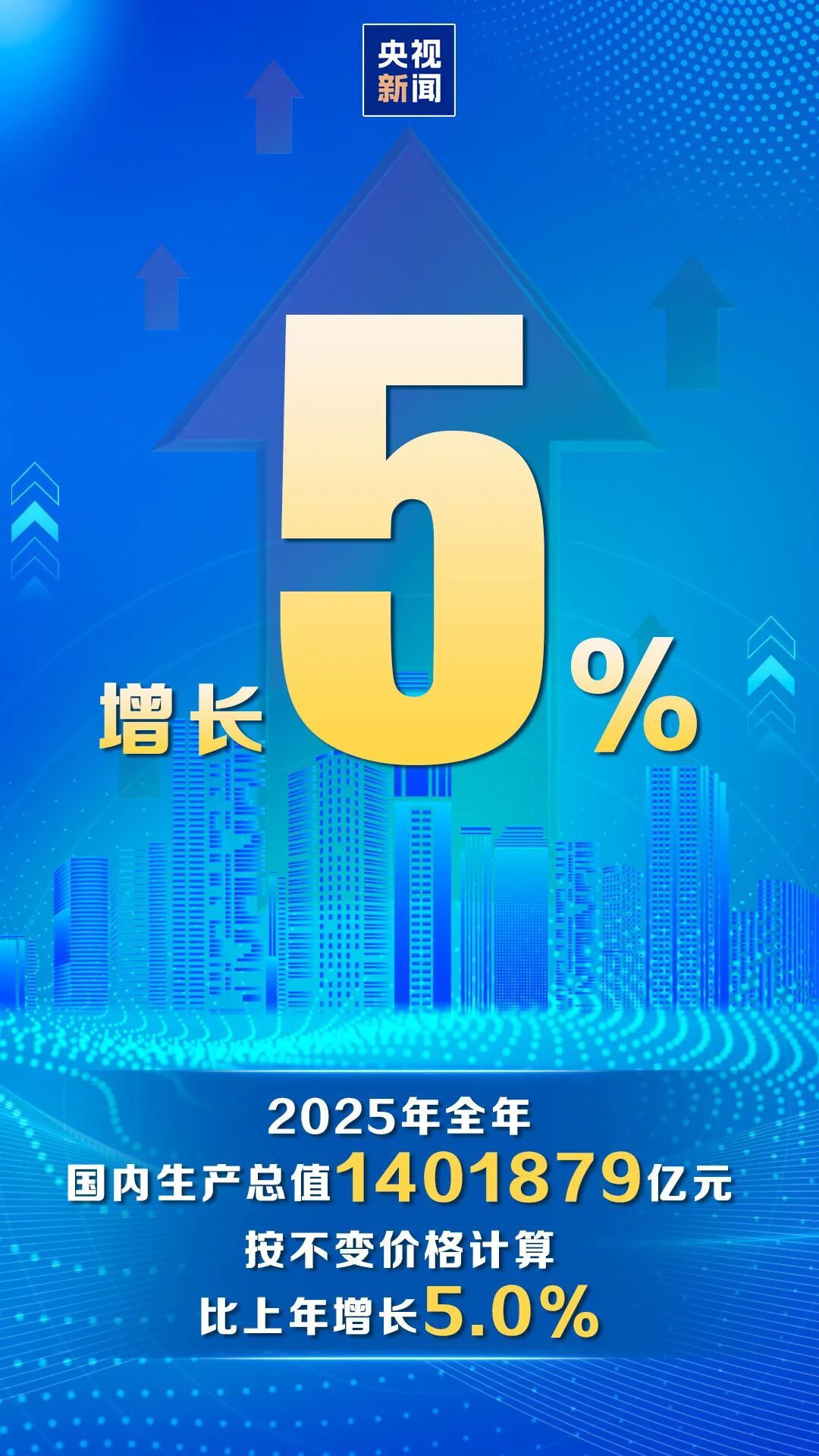
今天上午,国务院新闻办举行新闻发布会,国家统计局局长康义介绍,2025年,国民经济运行顶压前行、向新向优,高质量发展取得新成效,经济社会发 展主要目标任务圆满实现,"十四五"胜利收官。初步核算,全年国内生产总值1401879亿元,按不变价格计算,比上年增长5.0%。 面对国内外经济环境的复杂变化,国民经济运行顶压前行、向新向优,高质量发展取得新成效,经济社会发展主要目标任务圆满实现,"十四五"胜利收 官。"十四五"期间,中国经济总量连续跨越,110万亿元、120万亿元、130万亿元、140万亿元关口。 2025年全国居民人均可支配收入比上年增长5% 国家统计局1月19日发布数据显示,2025年,居民收入持续增长,农村居民收入增速快于城镇。 全年全国居民人均可支配收入43377元,比上年名义增长5.0%,扣除价格因素实际增长5.0%。按常住地分,城镇居民人均可支配收入56502元,比上年名 义增长4.3%,实际增长4.2%;农村居民人均可支配收入24456元,比上年名义增长5.8%,实际增长6.0%。全国居民人均可支配收入中位数36231元,比上 年名义增长4.4%。按全国居民五等份收入分组,低收入组人均可支配 ...

中国第四季度GDP同比4.5%,预期4.4%,高于预期
Ge Long Hui· 2026-01-19 02:27
格隆汇1月19日|中国第四季度GDP同比4.5%,预期4.4%,前值4.8%。 ...
中国四季度GDP同比 4.5%,前值 4.8%
Hua Er Jie Jian Wen· 2026-01-19 02:00
市场有风险,投资需谨慎。本文不构成个人投资建议,也未考虑到个别用户特殊的投资目标、财务状况或需要。用户应考虑本文中的任何 意见、观点或结论是否符合其特定状况。据此投资,责任自负。 风险提示及免责条款 中国四季度GDP同比 4.5%,前值 4.8%。 ...
本周热点前瞻20260119
Qi Huo Ri Bao Wang· 2026-01-19 01:08
Group 1 - The monthly report on residential sales prices in 70 large and medium-sized cities in China will be released on January 19, 2025, at 9:30 AM, by the National Bureau of Statistics, which is expected to impact related commodity futures prices [1] - A press conference on the national economic operation for 2025 will be held on January 19, 2025, at 10:00 AM, where the National Bureau of Statistics will present the economic data, including a projected GDP growth of 4.5% for Q4 2025, down from 4.8% [2] - The expected GDP growth for the entire year of 2025 is 5.1%, with a forecasted retail sales growth of 1.2% in December 2025, slightly down from 1.3% [2] Group 2 - The People's Bank of China will announce the Loan Prime Rate (LPR) on January 20, 2025, with expectations of the 1-year LPR remaining at 3.00% and the 5-year LPR at 3.50%, indicating a neutral impact on commodity futures and stock index futures if unchanged [3] - The International Energy Agency (IEA) will release its monthly oil market report on January 21, 2025, which is anticipated to influence oil and related commodity futures prices [3] Group 3 - The U.S. Department of Commerce will publish the final GDP for Q3 2025 on January 22, 2025, with an expected annualized quarterly growth rate of 4.3%, consistent with the initial estimate [4] - The U.S. Department of Labor will report the initial jobless claims for the week ending January 12, 2025, with an expectation of 200,000 claims, slightly up from 198,000, which may suppress industrial commodity prices excluding precious metals if the data exceeds expectations [5] Group 4 - The EIA will announce the weekly change in crude oil inventories for the week ending January 16, 2025, on January 23, 2025, with a previous increase of 3.391 million barrels, and further increases may hinder oil and related commodity prices [6] - The Eurozone's consumer confidence index for January is expected to be -12.5, an improvement from -13.1, with the announcement scheduled for January 23, 2025 [7] Group 5 - The U.S. S&P Global Manufacturing PMI for January is expected to be 52.0, slightly up from 51.8, with the announcement on January 23, 2025, which may support industrial commodity prices if the data exceeds expectations [8] - The National Bureau of Statistics of China will release important production material market prices for mid-January on January 24, 2025, covering nine categories and 50 products, which may influence market dynamics [8]
Asia-Pacific markets set for lower open as investors assess Greenland developments, await key China data
CNBC· 2026-01-18 23:45
Market Overview - Asia-Pacific markets mostly declined as investors reacted to geopolitical tensions involving the Trump administration's threats toward Greenland and anticipated key economic data from China [1][2] - The Hong Kong Hang Seng index futures were at 26,640, lower than the last close of 26,844.96, while Japan's Nikkei 225 fell by 0.85% and the Topix decreased by 0.46% [3] - South Korea's Kospi bucked the trend with a slight increase of 0.18%, while the small cap Kosdaq dropped by 0.15% [3] - Australia's S&P/ASX 200 started the day 0.19% lower [3] Economic Data - China is set to release its fourth-quarter GDP numbers along with December figures for retail sales, urban investment, and industrial output, which are critical for assessing economic performance [2] Commodity Prices - Both silver and gold prices reached record highs, with silver up over 4.17% to $93.7 per ounce and gold trading 1.8% higher at $4,676.94 per ounce [4] U.S. Market Performance - The S&P 500 ended just below the flatline, marking a losing week, while the Nasdaq Composite inched down by 0.06% and the Dow Jones Industrial Average fell by 0.17% [4] - The major indexes hit session lows following comments from President Trump regarding the potential Fed chair nomination, which affected market sentiment [5]

Trump Speech, Earnings and Other Key Things to Watch this Week
Yahoo Finance· 2026-01-18 18:00
Economic Policy and Market Impact - President Trump's upcoming speech is expected to outline economic priorities and policy initiatives, with a focus on tax policy changes, infrastructure spending, regulatory approaches, and trade policy, particularly regarding China [1][2] - The speech's timing amid earnings season and critical economic data releases creates a complex backdrop for market reactions, as political rhetoric and corporate results will compete for investor attention [1][2] Economic Data Releases - Thursday will see a significant convergence of economic data, including the Q3 GDP revision and the November Core PCE Price Index, both released at 8:30am, which could lead to market volatility as investors assess growth and inflation data simultaneously [4] - The GDP revision will provide insights into consumer spending, business investment, and net exports, while the Core PCE Price Index will be crucial for understanding inflation trends [4] Company Earnings Insights - Netflix's earnings report will be critical for understanding the streaming industry's economics, including subscriber growth sustainability and content investment returns, especially in light of competition from platforms like Disney+ and Amazon Prime Video [5] - Intel's earnings will be a key indicator of its manufacturing transformation and competitive positioning in the semiconductor market, while GE Aerospace's results will provide insights into commercial aviation demand and defense spending trends [7] - Johnson & Johnson's earnings will offer perspectives on pharmaceutical demand and healthcare spending trends, while Procter & Gamble's results will assess consumer resilience in personal care and household products [8]


下周资本市场大事提醒:将公布中国2025年全年GDP数据,沪深北交易所将融资保证金最低比例从80%提高至100%下周起施行,达沃斯论坛将召开
Sou Hu Cai Jing· 2026-01-18 14:06
Economic Data Release - Key economic data for China, including GDP growth rate, total GDP for 2025, December retail sales, and industrial output, will be released on January 19 [1] - The National Bureau of Statistics will hold a press conference on January 19 to discuss the economic performance of 2025 [1] Market Regulations - The minimum margin requirement for financing purchases of securities on the Shanghai, Shenzhen, and Beijing stock exchanges will be increased from 80% to 100%, effective January 19 [1] Upcoming Events - The World Economic Forum will take place from January 19 to 23 in Davos, Switzerland [1] - The third Beijing Commercial Aerospace Industry High-Quality Development Conference will be held from January 23 to 25 [1] Corporate Earnings - Several major U.S. companies, including Netflix, Intel, Johnson & Johnson, and 3M, are set to announce their earnings next week [1] Stock Market Activity - Three new stocks will be issued next week: Zhenstone Co. on the Shanghai main board, Nongda Technology on the Beijing Stock Exchange, and Shiemeng Co. on the Shenzhen main board [1] - A total of 39 companies will have their restricted shares unlocked next week, amounting to 3.447 billion shares with a total market value of 46.499 billion yuan based on the latest closing price [1]
李迅雷:PPI“失去十五年”之谜
Xin Lang Cai Jing· 2026-01-18 09:25
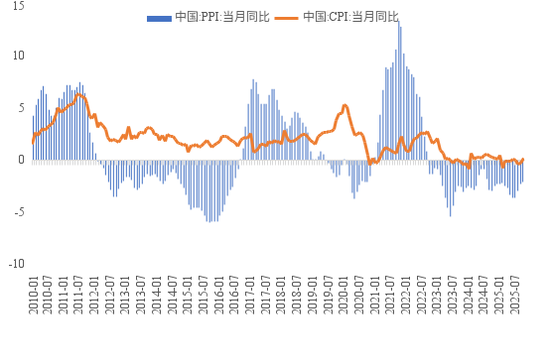
Core Viewpoint - The Producer Price Index (PPI) in China has shown a continuous decline, with a year-on-year decrease of 1.9% reported for December 2025, marking 39 consecutive months of decline since October 2021. This trend raises questions about the underlying reasons for the prolonged weakness in PPI despite significant GDP growth over the same period [1][52]. Group 1: PPI Trends and Historical Context - The PPI has been in negative territory for 111 months from 2012 to 2025, indicating that two-thirds of this period has been characterized by negative growth [1][52]. - From 2010 to 2025, China's GDP increased by 250%, yet the PPI index remained unchanged, suggesting a disconnect between economic growth and producer prices [1][53]. - The decline in PPI began after a significant investment stimulus in response to the 2008 financial crisis, which initially boosted PPI and CPI but later led to a prolonged period of negative PPI starting in March 2012 [2][53]. Group 2: Factors Influencing PPI - The PPI's long-term decline is primarily influenced by the prices of production materials, which have shown significant volatility but an overall cumulative increase of zero over the past 15 years [4][56]. - The prices of living materials have fluctuated less, with a cumulative increase of 4.4%, indicating a divergence in price trends between production and living materials [4][56]. - The divergence between Chinese and U.S. PPI post-2012 is attributed to rapid capacity expansion in China, leading to a significant drop in the export share of total industrial output [8][60]. Group 3: Demand and Supply Dynamics - Weak demand, particularly in the real estate sector, has been a critical factor in the inability of upstream price increases to transmit downstream, resulting in persistent PPI weakness [41][93]. - The real estate market's downturn has been linked to a broader economic slowdown, with real estate investment growth declining significantly since its peak in 2021 [35][88]. - The overall supply-demand imbalance, characterized by excess supply, has hindered price recovery, with industrial value-added growth lagging behind demand growth since 2020 [31][93]. Group 4: Recommendations for Economic Adjustment - To address the persistent weakness in PPI, it is essential to adjust the supply-demand relationship, particularly by expanding effective demand [41][93]. - Increasing the income of middle and low-income groups and promoting consumption are recommended strategies to stimulate demand and support price recovery [103]. - Stabilizing the real estate market is also suggested as a means to alleviate excess capacity and promote consumer spending, although achieving stable housing prices may be challenging [103].
吉2025年GDP总量达1.8万亿索姆
Shang Wu Bu Wang Zhan· 2026-01-15 16:54
Core Insights - The Prime Minister of Kyrgyzstan, Kasymaliev, announced that the GDP is expected to reach 1.8 trillion som (approximately 20.69 billion USD) by 2025, with an economic growth rate exceeding 10% [1] - The national budget has surpassed 1 trillion som (approximately 11.5 billion USD) for the first time in history, with a budget surplus of 34.3 billion som (approximately 3.9 million USD) [1] - There has been a structural change in fiscal spending, with expenditures for economic development surpassing those for social sectors for the first time [1] - A total of 341 infrastructure projects have been put into operation during the reporting period [1]
中国 - 第四季度 GDP 及 12 月经济数据前瞻:工业生产或走强,投资疲软、消费低迷,-China_ Q4 GDP and December activity data preview_ Expecting stronger industrial production, sluggish investment, weaker retail sales and Q4
2026-01-15 02:51
Summary of Key Points from the Conference Call Industry Overview - The report focuses on the Chinese economy, specifically the Q4 GDP and December activity data, including industrial production (IP), fixed asset investment (FAI), and retail sales [1][2]. Core Insights and Arguments 1. **Industrial Production (IP) Growth**: - Expected to rise to **5.4% year-on-year (yoy)** in December from **4.8% yoy** in November, driven by stronger-than-expected manufacturing PMIs and exports [1][2]. - Manufacturing exports projected to increase to **6.6% yoy** in December from **5.9% yoy** in November [2]. - Notable decline in auto output growth to **-4.6% yoy** in December from **+3.0% yoy** in November, and a widening contraction in steel production to **-5.1% yoy** [2][10]. 2. **Fixed Asset Investment (FAI)**: - Year-on-year FAI growth expected to remain depressed at **-8.9%** in December, slightly improving from **-10.7%** in November [1][10]. - Year-to-date FAI growth forecasted at **-3.3% yoy** in December, reflecting both statistical corrections and structural headwinds such as "anti-involution" policies and a prolonged property downturn [10]. 3. **Retail Sales**: - Anticipated to slow further to **0.6% yoy** in December from **1.3% yoy** in November, influenced by declining auto sales and subdued home appliance sales due to funding shortages [1][10]. - Auto retail sales volume growth dropped to **-14% yoy** in December from **-8% yoy** in November [10]. 4. **Real GDP Growth**: - Forecasted to moderate to **4.5% yoy** in Q4 from **4.8% yoy** in Q3, with domestic demand weakening despite resilient exports [1][10]. - The forecast suggests that the full-year real GDP growth for 2025 would be around **5.0%**, aligning with the government's growth target [10]. Additional Important Insights - The report indicates that the forecasts for December IP are modestly above market consensus, while those for retail sales and FAI are below consensus [7][10]. - The services industry output index is expected to remain stable and outperform retail sales growth, indicating a shift in consumption patterns towards services [10]. - The report highlights the potential for revisions in historical estimates of sequential GDP growth when the National Bureau of Statistics (NBS) releases quarterly GDP data [10]. This summary encapsulates the key points and insights from the conference call regarding the Chinese economy's performance and expectations for Q4 and December activity data.