
Geopolitical Risk

Search documents
Oil market is significantly oversupplied, says CIBC's Rebecca Babin
CNBC Television· 2025-12-18 12:40
Market Overview - Crude oil market is experiencing a battle between geopolitical risks and fundamental oversupply [1][3][4] - Geopolitical risks, including those involving Israel, Iran, Russia, Ukraine, and Venezuela, have not resulted in significant supply reductions [2] - The market is significantly oversupplied, with demand growth for 2025 projected at 1 million barrels per day, while non-OPEC supply is growing at 160% million barrels per day [3] - Fundamentals have won the battle for 2025, with crude down over 20% [5] Demand and Supply Dynamics - Demand has outperformed expectations this year, projected to grow by around 1 million barrels per day this year and potentially 120% million barrels per day next year [8] - If geopolitical risks fade and demand weakens due to global growth risks, crude could test $50 WTI, potentially even $40 [8] - US producers are unlikely to cut back dramatically at the current crude strip, with a more significant response expected $5 lower [13] US Shale Producers - For most US shale producers, $55 is the level where some barrels start to become uneconomical, accelerating drastically below $50 [10] - At current price points, a potential 50,000 to 100,000 barrels per day of production might come off [11] - US producers continue to improve efficiency and drive down break-even points [11][12]


Oil market is significantly oversupplied, says CIBC's Rebecca Babin
Youtube· 2025-12-18 12:40
Core Viewpoint - The crude oil market is experiencing a conflict between geopolitical risks and fundamental oversupply, with fundamentals currently dominating the price dynamics, leading to a significant decline in crude prices. Geopolitical Risks - Geopolitical tensions, including conflicts involving Israel, Iran, Russia, Ukraine, and Venezuela, have escalated this year, which typically would suggest potential supply reductions in the oil market [2][5] - Despite these tensions, actual supply disruptions have not materialized, with sanctioned barrels finding buyers [3][4] Supply and Demand Dynamics - The market is oversupplied, with demand projected to grow by 1 million barrels per day in 2025, while non-OPEC supply is increasing at 1.6 million barrels per day [3][4] - OPEC's decision to unwind production cuts has further contributed to the oversupply situation [4] - The current price decline of crude oil, over 20%, indicates that fundamentals are prevailing over supply risks [5] Price Sensitivity and Production Response - If geopolitical tensions were resolved, crude prices could test levels around $50 or even the $40s, prompting a supply response from U.S. producers [8][10] - U.S. shale producers typically find $55 as the breakeven point, with production becoming uneconomical below this threshold [10][11] - Despite expectations of production cuts due to lower prices, U.S. producers have shown resilience and efficiency improvements, which may lower the breakeven point further [11][13]
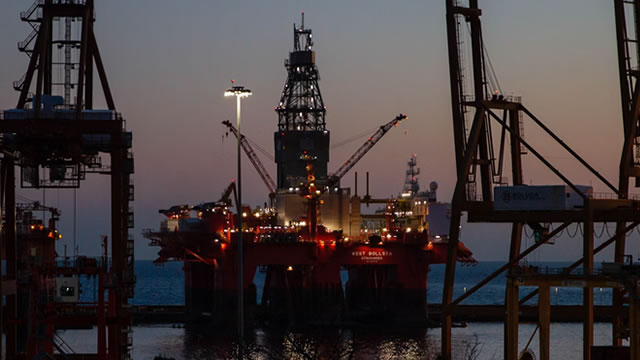
KG on Significance of Oil Tanker Blockade, Medline's IPO & MU Earnings
Youtube· 2025-12-17 16:00
Oil Market Analysis - Crude oil prices have increased by approximately 1.3%, influenced by President Trump's comments regarding a blockade of Venezuelan oil tankers, despite a prevailing supply glut narrative putting downward pressure on prices [2][6] - Venezuela's oil production ranges from 750,000 to 950,000 barrels per day, with around 80% exported to China, indicating that a blockade could significantly impact Chinese imports [4] - The potential for a million barrels of oil to come offline globally raises questions about OPEC's ability to compensate for this loss, suggesting that while there may be short-term price support, a significant price increase to $85 or $90 seems unlikely due to supply fears [5][6] - Geopolitical risks, such as potential retaliation from countries like Iran, could escalate tensions and impact oil prices, but currently, the market does not seem to be reacting strongly to these risks [6][8] - The outlook for oil prices into 2026 suggests a potential recovery in the second half of the year, driven by supply adjustments and seasonal demand increases, despite a weak demand picture in early 2026 [10][8] IPO Market Insights - Medline, a medical products company, has successfully raised over $6.26 billion for its IPO on NASDAQ, reflecting strong demand for IPOs in the current market [12][13] - The company operates in a competitive space with established players like McKesson and Cardinal Health, indicating a challenging environment despite the successful capital raise [13] - Analysts expect continued enthusiasm for IPOs into the next year, which could positively impact financial institutions involved in underwriting these offerings, such as Goldman Sachs [16] Semiconductor Industry Overview - The memory sector remains cyclical and has not benefited from the AI boom as much as other tech sectors, but there is increasing value being recognized in this industry [20] - Micron's performance is closely tied to demand for high bandwidth memory, which is growing but still represents a smaller portion of their business [20][22] - Concerns about memory inflation and the company's capacity to meet demand are critical factors to monitor, as insufficient capacity could hinder revenue realization [23][24]


Brazil Potash (NYSEAM:GRO) Conference Transcript
2025-12-09 19:02
Brazil Potash Conference Summary Company Overview - **Company**: Brazil Potash (NYSEAM:GRO) - **Industry**: Potash and Fertilizer Market - **Market Size**: Approximately $22 billion annually [4] Key Points and Arguments Potash Market Dynamics - Potash is a critical nutrient for food production, with no substitutes available [4] - The global potash market is highly concentrated, with Canada, Russia, and Belarus supplying about 80% of the market [5] - Brazil is the largest importer of potash, accounting for 22% of global imports, and is growing at four times the global rate [5] Project Development - Brazil Potash aims to develop a significant potash basin in Brazil, potentially the second largest in the world, with an initial production target of 2.4 million tons per year [5] - The project is fully permitted for construction, having completed necessary engineering, environmental, and social assessments [5][6] Geopolitical Rationale - The reliance on foreign potash suppliers poses risks, especially with geopolitical tensions involving Russia and Belarus [8] - Domestic production of potash in Brazil would enhance food security and mitigate risks associated with supply disruptions [8][9] Financial and Operational Strategies - Brazil Potash has secured long-term take-or-pay commitments from partners like Keytrade, Amaggi, and Kimia, covering 91% of initial production [12][13] - The company is exploring innovative financing structures, such as the BOOT (Build, Own, Operate, Transfer) model for infrastructure projects, which can significantly reduce capital costs [14][15] Environmental and Social Considerations - The project is located on former cattle farming lands, minimizing impact on primary rainforest areas [21] - Brazil Potash is committed to community engagement, providing training programs for local residents to enhance employment opportunities [22][23] - The project aims to utilize renewable energy sources, significantly reducing emissions compared to traditional energy sources [18][19] Future Milestones - Brazil Potash has 23 years of economic reserves, with potential for further expansion [31] - Upcoming milestones include finalizing agreements for the power line, government exemptions from import duties, and additional funding announcements [32][33] Additional Important Information - The company emphasizes the importance of ESG (Environmental, Social, and Governance) factors in attracting investment [18] - The total construction cost is estimated at $2.5 billion, with plans to minimize equity dilution through asset-level financing [26][27] - The project is expected to take over four years to complete, with a focus on long-term sustainability and community benefits [27][28]
X @Bloomberg
Bloomberg· 2025-12-02 07:40
A Russia-flagged tanker came under attack in the Black Sea, Turkish authorities said, the fourth such incident in a week https://t.co/agdct6q7rA ...
2026 前瞻_能源展望-Year Ahead 2026_ Energy outlook
2025-12-01 00:49
Summary of Key Points from the Energy Outlook Conference Call Industry Overview - The report focuses on the energy sector, particularly oil and gas markets, with projections for 2026 regarding Brent and WTI crude oil prices, refining margins, and natural gas prices. Core Insights and Arguments 1. **Oil Price Projections for 2026** - Brent crude is expected to average $60 per barrel, while WTI is projected at $57 per barrel due to a surplus of 2 million barrels per day (b/d) in the oil market [2][9][20] - Oil demand is anticipated to grow by approximately 1 million b/d, with non-OPEC+ supply increasing by about 800,000 b/d [2][9] 2. **Geopolitical Risks** - Geopolitical tensions, particularly involving Venezuela, Iran, and Russia, pose significant risks to oil supply and prices [2][3] - The potential for a spike in prices exists if geopolitical tensions escalate, but a peaceful resolution in Ukraine could lead to lower fuel prices [3] 3. **Refining Margins** - Refining margins are expected to remain strong in 2026, with ULSD-Brent cracks projected at $32 per barrel and RBOB-Brent cracks at $17 per barrel [4][9] - Limited refining capacity additions and ongoing military tensions are likely to support these margins [4] 4. **Natural Gas Market Outlook** - US natural gas prices are projected to average $4 per MMBtu in 2026, with a potential spike in European TTF prices if cold weather occurs [5][9] - US gas supply is expected to increase by 2.5 Bcf/d, driven by rising LNG exports [5][9] 5. **Economic Growth and Demand** - Global GDP is forecasted to grow by 3.3% in 2026, which should support oil demand growth despite potential economic slowdowns [3][9] - The macroeconomic environment is expected to be supportive for commodities, although energy markets will face challenges from excess supply and geopolitical risks [11][12] Additional Important Insights 1. **Strategic Inventory Accumulation** - China's strategic accumulation of oil inventories is likely to continue, which has kept oil markets tight despite excess supply [28][30] - This accumulation reflects a long-term strategy to mitigate geopolitical risks [28] 2. **Impact of OPEC+** - OPEC+ is expected to manage oil price volatility actively, which may create both a ceiling and floor on crude prices [20] - The organization’s self-interest in maintaining price levels is crucial, especially given rising borrowing requirements [3] 3. **Market Dynamics** - The report highlights that while oil prices are under pressure from excess supply, geopolitical shocks can lead to significant price fluctuations [20] - The balance of supply and demand remains loose, suggesting a bearish outlook for oil prices in the near term [20] 4. **Refining Capacity and Market Conditions** - The refining sector is facing challenges due to geopolitical tensions and limited capacity growth, which could support higher margins [4][9] 5. **Long-term Projections** - The report indicates that while immediate conditions may be challenging, the long-term outlook for energy markets remains influenced by geopolitical developments and strategic stockpiling efforts [11][12] This summary encapsulates the key points discussed in the energy outlook conference call, providing insights into the expected trends and risks in the oil and gas markets for 2026.
2026 前瞻_大宗商品展望-Year Ahead 2026_ Commodity Outlook
2025-12-01 00:49
Commodity Outlook Summary Industry Overview - The report focuses on the commodities sector, highlighting trends and forecasts for various commodities including precious metals, industrial metals, energy, and agricultural products [1][2][3][10]. Key Themes and Forecasts 1. **Strong Performance Expected in 2026** - Commodities are projected to have another strong performance year, with the ICE MLCX TR index up 6% year-to-date, driven by gains in precious and industrial metals [1]. - Global GDP is forecasted to expand by 3.3% in 2026, with inflation expected to remain sticky at 2.9% [1][10]. 2. **Gold and Silver Outlook** - Gold prices could potentially reach $5,000/oz due to central bank and investor buying, supported by fiscal and monetary policy uncertainty [6][10]. - Silver demand may face headwinds from solar PV technology, but overall, both metals are expected to benefit from geopolitical risks and inflation expectations [2][10]. 3. **Industrial Metals Demand** - Industrial metals are expected to remain tight, with copper and aluminum likely to benefit from supply disruptions and stockpiling [2][10]. - The report anticipates a deficit in copper due to limited mine projects and outages at major mines [41]. 4. **Energy Sector Dynamics** - Oil prices are expected to average $60/bbl for Brent and $57/bbl for WTI in 2026, with a surplus in the oil market due to excess supply from OPEC+ [10]. - Geopolitical risks, particularly from Venezuela and the Russia-Ukraine conflict, could tighten the oil market despite the overall bearish outlook [2][10]. 5. **Agricultural Commodities** - A bearish outlook is maintained for wheat and soybean meal, while soybean oil is expected to see substantial upside due to strong demand [2][10]. - Agricultural commodities are influenced by robust supply growth and subdued demand, particularly in the context of ongoing geopolitical tensions [2][10]. Additional Insights - **Strategic Inventory Accumulation** - Strategic inventory accumulation, particularly by China, is expected to continue, supporting both energy and metals markets despite overall demand and balance conditions [52][53]. - The report notes that stockpiling has been influenced more by trade policy than geopolitical strategy in the metals sector [53]. - **Diversification and Inflation Hedging** - Commodities are increasingly viewed as essential for diversification and inflation hedging in investment portfolios, especially under current macroeconomic conditions [3][10]. - The report suggests that commodities could provide a unique hedge to traditional 60/40 portfolios amid rising inflation and geopolitical risks [3][10]. - **Market Risks and Opportunities** - Upside risks for commodities include potential geopolitical shocks and renewed demand from sectors like AI and defense spending, which could support industrial metals [41][10]. - Conversely, downside risks stem from excess supply in energy markets and potential economic slowdowns affecting demand [2][10]. Conclusion - The commodities sector is poised for a strong performance in 2026, driven by various macroeconomic factors, strategic inventory accumulation, and ongoing geopolitical uncertainties. Investors are encouraged to consider commodities for diversification and as a hedge against inflation.
Trump’s Market Mayhem: A Daily Dose of Economic Whiplash
Stock Market News· 2025-11-28 06:00
Market Reactions to Trump's Policies - The stock market remains highly reactive to Donald Trump's policy announcements, often leading to unpredictable fluctuations in various sectors [1][2] - Trump's threats of tariffs have significant impacts, as seen with John Deere, which faced a potential 200% tariff, causing its shares to drop initially but later recover [3] - The pharmaceutical sector reacted positively to Trump's 100% tariff announcement on imported drugs, as U.S. companies with domestic manufacturing were exempt, leading to a rise in their stock prices [4] Sector-Specific Impacts - The entertainment industry faced declines following Trump's announcement of a 100% tariff on foreign films, with major companies like Netflix and Disney seeing their shares drop significantly [5][6] - Healthcare stocks experienced volatility due to Trump's mixed signals regarding the Affordable Care Act, with shares of companies like Molina Healthcare and Centene rising sharply after reports of a potential extension of subsidies [7][8] Geopolitical and Trade Developments - Trump's foreign policy announcements, such as the operation against drug trafficking in Venezuela and tariffs on South African exports, have created uncertainty in global markets, although immediate impacts on oil prices were not evident [9][10] - A potential trade deal with Taiwan aimed at boosting the U.S. semiconductor industry could benefit companies like TSMC, NVIDIA, and Intel, although specific market reactions were not yet reported [11] Communication Channels and Market Sentiment - Trump's use of Truth Social to communicate policy changes and whimsical thoughts has become a significant factor in market sentiment, with some announcements being largely ignored by investors [12] - The overall market environment under Trump's influence is characterized by a blend of economic analysis and the need to interpret often contradictory policy statements, leading to a state of ongoing uncertainty [13]


Silver Bullion in Singapore: In-person review of one of the largest private gold and silver vaults
The Wandering Investor· 2025-11-26 09:06
Group 1: Gold Market Insights - Gold has reached new all-time highs, recorded at over $4,100 per ounce, driven by factors such as geopolitical tensions, central bank accumulation, and market sentiment [1][6] - Historically, a portfolio allocation of 5-15% in precious metals is considered reasonable, indicating a potential shift in investment strategies as Western investors rediscover gold [1] - The emerging markets show a strong preference for gold and silver, with many individuals opting to purchase these metals regularly regardless of price fluctuations [2] Group 2: Precious Metals Storage and Services - Silver Bullion Singapore offers remote buying and selling of gold and silver, with stocks audited by reputable firms, ensuring transparency and security for clients [3][12] - The facility boasts one of the highest capacity vaults for silver, capable of holding about 10,000 tons, which is approximately 30% of annual worldwide silver production [17][19] - Storage costs for precious metals are competitive, with annual fees starting at 35 basis points for gold and 70 basis points for silver, making it an attractive option compared to other markets [21][26] Group 3: Investment and Speculation - The company emphasizes the distinction between investing and speculating in gold and silver mining companies, highlighting the expected volatility in the market [5][6] - The S.T.A.R. Storage Program allows clients to buy and sell precious metals remotely, providing flexibility and ownership of the assets [23][28] - Premiums on physical gold and silver purchases vary, with typical premiums around 2% for gold and potentially higher for coins, indicating a market where premiums can significantly increase during crises [25][26] Group 4: Geopolitical and Economic Context - The geopolitical landscape, particularly the US-China relations, is influencing gold accumulation strategies, with China reducing its US dollar holdings and increasing gold reserves [70][72] - Singapore is positioned as a neutral and secure location for storing precious metals, with a strong defense budget and a reputation for stability, making it an attractive option for global investors [63][65] - The potential for a financial or currency war between the US and China could further elevate the role of gold as a trusted asset, with Singapore serving as a hub for such transactions [78][79]

Nvidia Stock's $5 Trillion Taiwan Risk
Forbes· 2025-11-24 10:05
Core Insights - Nvidia reported third-quarter revenue of $57 billion, reflecting a 62% year-on-year increase [2] - The company is heavily reliant on TSMC for its advanced chips, which poses significant geopolitical risks [5][8] Company Dependency - Nvidia's valuation reached $4.3 trillion, with its key products (H100, H200, Blackwell) dependent on TSMC's facilities in Taiwan [3] - Over 90% of the world's advanced chips are produced in Taiwan, making Nvidia's supply chain vulnerable to geopolitical tensions [4][5] Geopolitical Risks - Tensions in the Taiwan Strait have escalated, with increased military exercises and diplomatic pressure in 2025 [8] - A limited blockade by China could halt TSMC exports, disrupting over 90% of leading-edge chip production globally [8][9] Supply Chain Vulnerability - Nvidia sources 100% of its top-tier GPUs from TSMC, with no alternative sources for advanced production until at least 2027 [7] - The sophisticated packaging required for Nvidia's GPUs is also concentrated in Taiwan, further increasing dependency [7] Market Impact - A disruption lasting six months could halve Nvidia's projected revenue of $300 billion, leading to a $75 billion decrease in earnings [14] - Nvidia shares currently trade at around 43x forward earnings, which could compress significantly in the event of supply chain disruptions [11] Potential Beneficiaries - Companies like Intel and Samsung may benefit from a global re-shoring trend, as every viable fab becomes crucial [15] - ASML and Applied Materials, key suppliers in chip fabrication, will also gain regardless of location due to increased demand for fabrication tools [15]


