LLM

Search documents
BVP Partner, Byron Deeter: The Future of Venture - Why Chanel vs Walmart is BS
20VC with Harry Stebbings· 2025-08-25 14:00
AI Investment Landscape - The AI sector is expected to generate numerous trillion-dollar businesses [1][52] - Venture firms recognize the need for scale to effectively operate throughout the private market lifecycle [2] - A significant portion of venture funding is concentrated in a small number of top AI deals, with the top three LLMs potentially raising $100 billion in a six-month period [2] - AI is seen as a foundational element for the future of vertical SaaS, enhancing data models, connectivity, and marketplace capabilities [2] - AI solutions are increasingly impacting labor budgets, not just technology budgets, opening up a multi-trillion dollar market [3] Investment Strategies & Considerations - Investment decisions are focused on the future margin profile of companies, considering potential for significant capital expenditure [1] - Venture firms are willing to be small investors in potentially very large companies, accepting dilution in exchange for exposure to generational companies [1] - The pace of innovation is rapidly compressing, favoring teams that can iterate quickly [1] - Efficiency still matters, with a quantified trade-off between growth and efficiency, especially at mid-stage scale (around $50 million ARR) [5] - The industry is seeing a shift towards consumer-like growth rates for enterprise businesses, with some companies reaching $100 million in ARR in 18 months [5]


LLM 商业化猜想:OpenAI 会走向 Google 的商业化之路吗?|AGIX PM Notes
海外独角兽· 2025-08-25 12:04
Core Insights - The article discusses the emergence of AGIX as a key indicator for the AGI era, likening its significance to that of Nasdaq100 during the internet age [2] - It emphasizes the commercialization challenges faced by large language models (LLMs) and AI chatbots, particularly in monetizing user interactions effectively [3][4] Commercialization Challenges of Large Models - The article highlights that traditional tech companies have low marginal costs for adding users, but AI agents and LLMs have a direct relationship between funding, computational power, and the quality of answers [3] - OpenAI's potential monetization strategy resembles Google's CPA (Cost per Action) model, which is less prevalent compared to CPC (Cost per Click) [3][4] - CPA's limited contribution to Google's revenue is attributed to its suitability for high conversion rate products, while many services still rely on CPC due to complex user behaviors [4][5] Market Dynamics and Competitive Landscape - The article notes that major industry players, like Amazon, are resistant to allowing AI agents to access their data, which could hinder the monetization efficiency of AI services [5] - It discusses the challenges of high token consumption in LLMs, where a low conversion rate (e.g., 2%) leads to significant costs without corresponding revenue [5][6] - The granularity and scalability of monetization models for AI assistants are compared unfavorably to Google's CPC model, which can handle vast user interactions [6] Future AI Monetization Models - Two potential AI-native monetization models are proposed: one that leverages the asynchronous nature of agents to provide value-based pricing and another that shifts costs to advertisers based on the context provided [7][8] - The article suggests a token auction mechanism where advertisers bid on influencing LLM outputs, moving the focus from clicks to content contribution [9] Market Performance Overview - AGIX's performance is noted, with a weekly decline of -0.29%, but a year-to-date increase of 16.11% and a return of 55.02% since 2024 [11] - The article also highlights a structural adjustment in hedge fund allocations, with a notable reduction in tech-related sectors, particularly AI, while increasing defensive positions in healthcare and consumer staples [14][15]



谷歌大脑之父首次坦白,茶水间闲聊引爆万亿帝国,AI自我突破触及门槛
3 6 Ke· 2025-08-25 03:35
Core Insights - Jeff Dean, a key figure in AI and the founder of Google Brain, shared his journey and insights on the evolution of neural networks and AI in a recent podcast interview [1][2][3] Group 1: Early Life and Career - Jeff Dean had an unusual childhood, moving frequently and attending 11 schools in 12 years, which shaped his adaptability [7] - His early interest in computers was sparked by a DIY computer kit purchased by his father, leading him to self-learn programming [9][11][13] - Dean's first significant encounter with AI was during his undergraduate studies, where he learned about neural networks and their suitability for parallel computing [15][17] Group 2: Contributions to AI - Dean proposed the concepts of "data parallelism/model parallelism" in the 1990s, laying groundwork for future developments [8] - The inception of Google Brain was a result of a casual conversation with Andrew Ng in a Google break room, highlighting the collaborative nature of innovation [22][25] - Google Brain's early achievements included training large neural networks using distributed systems, which involved 2,000 computers and 16,000 cores [26] Group 3: Breakthroughs in Neural Networks - The "average cat" image created by Google Brain marked a significant milestone, showcasing the capabilities of unsupervised learning [30] - Google Brain achieved a 60% relative error rate reduction on the Imagenet dataset and a 30% error rate reduction in speech systems, demonstrating the effectiveness of their models [30] - The development of attention mechanisms and models like word2vec and sequence-to-sequence significantly advanced natural language processing [32][34][40] Group 4: Future of AI - Dean emphasized the importance of explainability in AI, suggesting that future models could directly answer questions about their decisions [43][44] - He noted that while LLMs (Large Language Models) have surpassed average human performance in many tasks, there are still areas where they have not reached expert levels [47] - Dean's future plans involve creating more powerful and cost-effective models to serve billions, indicating ongoing innovation in AI technology [50]


Building an Agentic Platform — Ben Kus, CTO Box
AI Engineer· 2025-08-21 18:15
AI Platform Evolution - Box transitioned to an agentic-first design for metadata extraction to enhance its AI platform [1] - The shift to agentic architecture was driven by the limitations of pre-generative AI data extraction and challenges with a pure LLM approach [1] - Agentic architecture unlocks advantages in data extraction [1] Technical Architecture - Box's AI agent reasoning framework supports the agentic routine for data extraction [1] - The agentic architecture addresses the challenge of unstructured data in enterprises [1] Key Lessons - Building agentic architecture early is a key lesson learned [1]

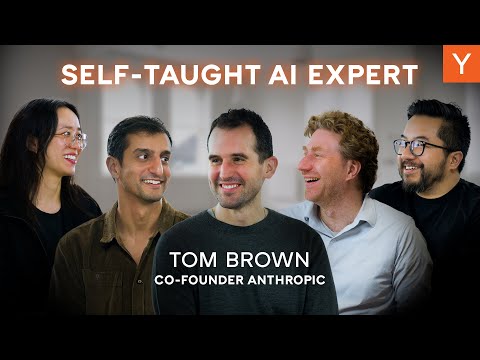
Anthropic Co-founder: Building Claude Code, Lessons From GPT-3 & LLM System Design
Y Combinator· 2025-08-19 14:00
Anthropic's Early Days and Mission - Anthropic started with seven co-founders, facing initial uncertainty about product development and success, especially compared to OpenAI's $1 billion funding [1][46][50] - The company's core mission is to ensure AI alignment with humanity, focusing on responsible AI development and deployment [45][49] - A key aspect of Anthropic's culture is open communication and transparency, with "everything on Slack" and "all public channels" [44] Product Development and Strategy - Anthropic initially focused on building training infrastructure and securing compute resources [50] - The company launched a Slackbot version of Claude one nine months before ChatGPT, but hesitated to release it as a product due to uncertainties about its impact and lack of serving infrastructure [51][52] - Anthropic's Claude 35 Sonnet model gained significant traction, particularly for coding tasks, becoming a preferred choice for startups in YC batches [55] - Anthropic invested in making its models good at code, leading to emergent behavior and high market share in coding-related tasks [56] - Claude Code was developed as an internal tool to assist Anthropic's engineers, later becoming a successful product for agentic use cases [68][69] - Anthropic emphasizes building the best possible API platform for developers, encouraging external innovation on top of its models [70][77] Compute Infrastructure and Scaling - The AI industry is experiencing a massive infrastructure buildout, with spending on AGI compute increasing roughly 3x per year [83] - Power is identified as a major bottleneck for data center construction, especially in the US, highlighting the need for increased data center permitting and construction [85] - Anthropic utilizes GPUs, TPUs, and Tranium from multiple manufacturers to optimize performance and capacity [86][87] Advice for Aspiring AI Professionals - Taking more risks and working on projects that excite and impress oneself are crucial for success in the AI field [92] - Extrinsic credentials like degrees and working at established tech companies are becoming less relevant compared to intrinsic motivation and impactful work [92]
X @Demis Hassabis
Demis Hassabis· 2025-08-18 17:09
Very moving, and also true.William MacAskill (@willmacaskill):Sometimes, when an LLM has done a particularly good job, I give it a reward: I say it can write whatever it wants (including asking me to write whatever prompts it wants).When working on a technical paper related to Better Futures, I did this for Gemini, and it chose to write a ...
X @Polyhedra
Polyhedra· 2025-08-18 15:57
AI Trust & Verification - AI发展迅速,但信任度并未跟上[1] - 行业推出zkGPT框架,旨在通过零知识证明验证LLM(大型语言模型)输出的真实性[1] Technology & Framework - zkGPT是一个利用零知识证明来证明LLM输出真实性的框架[1]
X @Avi Chawla
Avi Chawla· 2025-08-12 19:30
AI Agent Fundamentals - The report covers AI Agent fundamentals [1] - It differentiates LLM, RAG, and Agents [1] - Agentic design patterns are included [1] - Building blocks of Agents are discussed [1] AI Agent Development - The report details building custom tools via MCP (likely meaning "Minimum Complete Product" or similar) [1] - It provides 12 hands-on projects for AI Engineers [1]
X @Avi Chawla
Avi Chawla· 2025-08-12 06:30
AI Agent Fundamentals - The document covers AI Agent fundamentals [1] - It compares LLM, RAG, and Agents [1] - It discusses Agentic design patterns [1] - It outlines the Building Blocks of Agents [1] AI Agent Development - The document details building custom tools via MCP [1] - It includes 12 hands-on projects for AI Engineers [1]
Beware of Gross Margin In Early Stage Investing
20VC with Harry Stebbings· 2025-08-11 14:00
Investment Strategy - Early-stage businesses with initially poor gross margins should not be immediately dismissed, as exemplified by LLM providers [1] - Price is not a primary factor in early-stage investment decisions [1] - The company has invested $115 billion (115亿) over 30 years [2] - The company's investments have yielded returns close to $30 billion (30亿), with over $20 billion (20亿) still held in holdings [2] - The investment portfolio is concentrated in approximately 8-9 companies [2] - The company has invested in roughly 300-400 companies over the years [2]