
构建人类命运共同体

Search documents
(上合天津峰会)多国人士关注全球治理倡议:推动完善治理体系 增进各国人民福祉
Zhong Guo Xin Wen Wang· 2025-09-02 05:01
Group 1 - The core viewpoint of the news is the global governance initiative proposed by Chinese President Xi Jinping, which aims to improve the global governance system and enhance the well-being of people in various countries [1][2] - The initiative emphasizes the importance of "sovereign equality," ensuring that both large and small countries are treated with respect, which is particularly significant for nations like Nepal [1][2] - The Shanghai Cooperation Organization (SCO) is highlighted as a model for peace, stability, mutual trust, and development, aligning with the principles of the global governance initiative [1] Group 2 - The initiative advocates a people-centered approach, focusing on poverty reduction, public health, and cultural education, which directly impacts people's lives [2] - Experts express hope that under the global governance initiative, China will contribute more global public goods, thereby enhancing the global governance system and benefiting people worldwide [2] - The SCO is recognized for providing opportunities for economic diversification in countries like Cambodia while maintaining regional stability and promoting sustainable development [2]
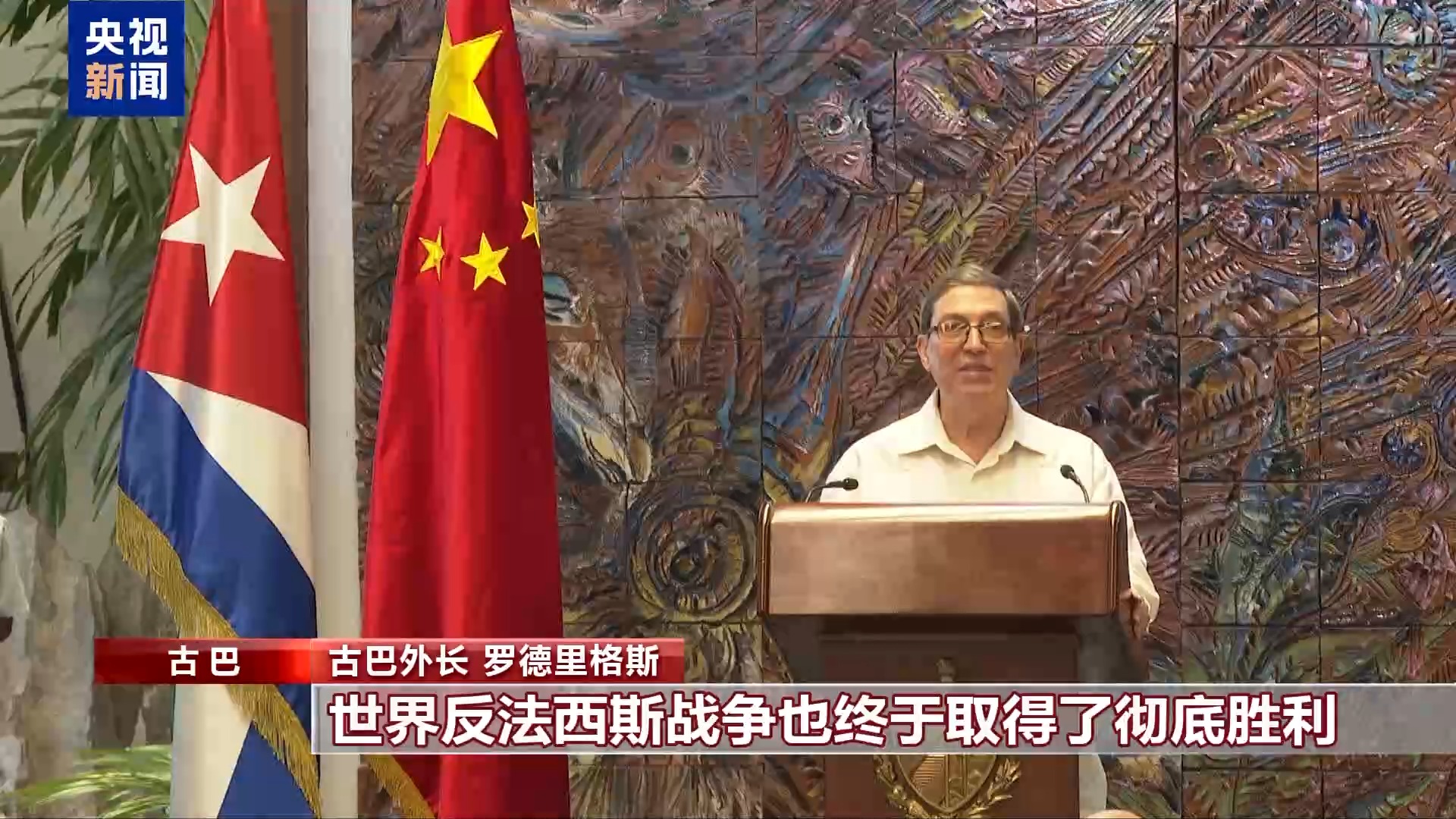
国际人士:中国为世界反法西斯战争胜利作出巨大贡献
Yang Shi Xin Wen Ke Hu Duan· 2025-09-02 00:33
Core Viewpoint - This year marks the 80th anniversary of the victory in the Chinese People's War of Resistance against Japanese Aggression and the World Anti-Fascist War, highlighting China's significant contributions to the victory in the Eastern Front of the World Anti-Fascist War through 14 years of struggle [1][3][4]. Group 1 - The Chinese people endured immense sacrifices during World War II, with over 35 million casualties, which is a testament to their commitment to peace [7]. - The commemorative activities in China serve to remind the world of this historical struggle and its importance in shaping the current global order [6][7]. - The resistance against Japanese imperialism was crucial in preventing Japan from launching military offensives against the Soviet Union, showcasing China's strategic role in the war [6]. Group 2 - The significance of the commemorative events, such as the one held on September 3, is emphasized, advocating for the promotion of a community with a shared future for humanity and the importance of mutual benefit and peaceful development in international relations [4]. - The acknowledgment of the brutal nature of Japanese aggression, including events like the Nanjing Massacre, underscores the moral imperative of remembering this history [1].

上合组织天津峰会丨新华社快讯:习近平:推动上海合作组织行稳致远,朝着构建人类命运共同体的美好未来坚定前行
Xin Hua She· 2025-09-01 03:19
Core Viewpoint - The statement emphasizes the importance of maintaining original intentions and missions while actively taking responsibility to ensure the Shanghai Cooperation Organization (SCO) progresses steadily towards building a community with a shared future for mankind [1] Group 1 - The call for a more vigorous and pragmatic approach to advance the SCO's objectives [1] - The focus on collective efforts to achieve long-term stability and development within the SCO framework [1] - The aspiration to contribute positively to the global community and enhance international cooperation [1]
搭建人文交流之桥 共谱和合共生之歌(弘扬“上海精神”:上合组织在行动)
Ren Min Ri Bao· 2025-08-30 23:20
Core Viewpoint - The Shanghai Cooperation Organization (SCO) emphasizes cultural exchange and mutual understanding among member states, fostering a sense of community and shared values among the peoples of the region [1]. Group 1: Tourism and Cultural Exchange - The Xinjiang Jimunai Port sees a significant increase in cross-border travel, with many tourists from Kazakhstan visiting China's Altay region, highlighting the ease of travel between the two countries [2]. - The establishment of direct flights and visa exemptions between Uzbekistan and China has led to a noticeable rise in travel and business exchanges, enhancing people-to-people connections [2]. - Qingdao has been designated as the "2024-2025 SCO Tourism and Cultural Capital," attracting a growing number of foreign tourists, with a reported 37.91% increase in foreign passenger traffic through Qingdao Jiaodong International Airport in the first half of the year [2]. Group 2: Educational and Health Initiatives - The "Health Express International Brightness Action" has successfully performed over 2,000 cataract surgeries for patients from SCO member states, showcasing the collaborative healthcare efforts [4]. - The establishment of "Luban Workshops" in eight SCO countries, including Russia and Kazakhstan, provides quality vocational education opportunities for youth, enhancing their skills and career prospects [5]. - The success stories of students from the Luban Workshop illustrate the positive impact of educational initiatives on youth development and cross-cultural exchange [5]. Group 3: Film and Cultural Cooperation - The 2025 SCO Film Festival showcases advancements in film technology and promotes collaboration among filmmakers from member states, creating opportunities for storytelling and cultural exchange [6]. - Numerous co-produced films, such as the documentary "Here is China," highlight the rich cultural narratives and collaborative efforts between SCO countries [6]. - The Chinese National Radio and Television Administration has supported the translation and broadcasting of over a hundred audiovisual works in multiple languages across SCO countries, enhancing cultural understanding and appreciation [7].
8月30日晚间央视新闻联播要闻集锦
Yang Shi Xin Wen Ke Hu Duan· 2025-08-30 14:38
Group 1 - The 2025 Shanghai Cooperation Organization (SCO) Summit will be held from August 31 to September 1 in Tianjin, where President Xi Jinping will meet with over 20 foreign leaders and 10 international organization heads to summarize SCO's successful experiences and outline its development blueprint [1][8] - The summit aims to strengthen cooperation and build a closer community with a shared future among SCO member states, emphasizing the importance of multilateralism and economic globalization [8] Group 2 - The exhibition titled "For National Liberation and World Peace" has attracted over 600,000 visitors, highlighting the public interest in historical events related to the Chinese People's War of Resistance Against Japanese Aggression and the global anti-fascist war [11] - During the 14th Five-Year Plan period, China has added over 281,700 square kilometers of land for soil erosion control, indicating a significant commitment to environmental protection and sustainable development [12] - The tourism market has seen a surge this summer, driven by various travel trends such as family trips and experiential tourism, contributing to ongoing consumer growth [13]
焦点访谈|历史照耀今天 正义必胜和平必胜人民必胜
Yang Shi Wang· 2025-08-30 14:15
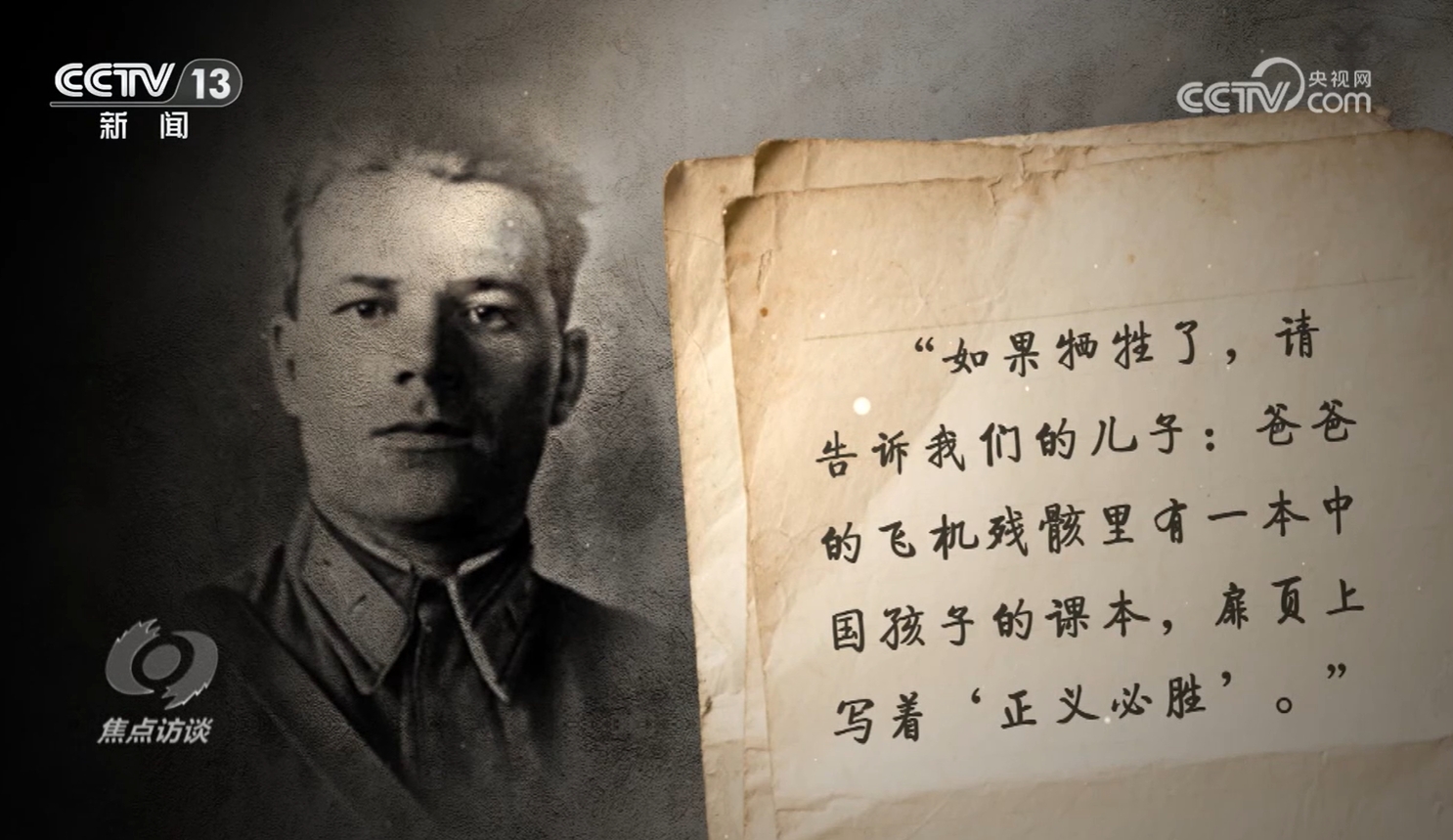
Core Points - The article highlights the international support for China's anti-Japanese war, emphasizing the contributions of overseas Chinese and foreign allies, particularly the Soviet Union and the American Volunteer Group, known as the Flying Tigers [1][5][7] - It underscores the sacrifices made by foreign volunteers, including over 200 Soviet pilots and more than 2,000 members of the Flying Tigers, who played crucial roles in the conflict [3][7][9] - The narrative illustrates the shared values of justice and solidarity among nations fighting against fascism, showcasing the historical significance of these alliances in the broader context of World War II [13][20] Group 1: International Support - The Soviet Union sent over 2,000 personnel as part of the aviation volunteer team to assist China during the war [1][5] - The Flying Tigers, an American volunteer group, shot down over 2,600 enemy aircraft and were instrumental in establishing the "Hump" airlift route for transporting supplies to China [7][9] - The article mentions the emotional connection and mutual respect between Chinese citizens and foreign volunteers, as exemplified by the funeral of Soviet pilot Kuryshenko [3][5] Group 2: Historical Context - The article references the formation of the international anti-fascist united front, which included China, the U.S., the U.K., and the Soviet Union, formalized with the signing of the United Nations Declaration in 1942 [17][20] - It discusses the significance of the anti-Japanese war within the larger framework of the global struggle against fascism, highlighting China's role in advocating for a united front against aggressors [15][17] - The narrative concludes with reflections on the lessons learned from World War II, emphasizing the importance of international cooperation and the rejection of unilateralism and hegemony in contemporary global affairs [19][23]
通讯|在光影里,聆听历史的低语——纪念抗战胜利80周年图片展在圣彼得堡举办
Xin Hua Wang· 2025-08-30 01:57
Core Viewpoint - The exhibition commemorates the 80th anniversary of the victory in the Chinese People's Anti-Japanese War and the World Anti-Fascist War, highlighting the historical contributions of the Chinese and Soviet peoples in fighting against fascism [1][2]. Group 1: Exhibition Overview - The exhibition titled "Remembering History, Creating the Future" features nearly 60 historical images that capture the struggles of the Chinese people during the war and the solidarity between China and the Soviet Union [1]. - The images are displayed in sections, showcasing the bravery of Chinese soldiers, the support from the Soviet Red Army, and the post-war reconstruction efforts by both nations [1][2]. Group 2: Historical Significance - Officials emphasized the importance of remembering history to foster future cooperation, noting that the shared experiences of sacrifice during the war have forged a lasting bond between the two nations [4]. - The exhibition serves as a reminder of the significant contributions made by the Chinese people to the victory in the World Anti-Fascist War, as highlighted by Russian officials [2]. Group 3: Cultural Exchange and Legacy - The exhibition not only reflects on the past but also encourages dialogue about the importance of historical memory in contemporary relations between China and Russia [2][3]. - Participants expressed the need to educate younger generations about the shared history to ensure that the legacy of cooperation and friendship continues [3][4].
坚守初心,始终高举“上海精神”旗帜
Ren Min Ri Bao· 2025-08-29 22:01
Core Viewpoint - The Shanghai Cooperation Organization (SCO) has established itself as a model for building new international relations, guided by the "Shanghai Spirit" which emphasizes mutual trust, mutual benefit, equality, consultation, respect for diverse civilizations, and common development [1][2]. Group 1: Foundation and Growth - The SCO originated from the "Shanghai Five" mechanism, focusing on enhancing political trust and friendly cooperation among member states through key agreements [2]. - The organization has expanded from 6 founding member countries to 10 member states, 2 observer countries, and 14 dialogue partners, covering Asia, Europe, and Africa, with a combined economic output accounting for approximately 25% of the global total [2]. - Over 24 years, the SCO has continuously strengthened political trust and cooperation, creating favorable conditions for bilateral and multilateral collaboration [2]. Group 2: Cooperation and Dialogue - The SCO promotes a model of cooperation based on mutual trust and mutual benefit, avoiding alliances and confrontations, and fostering dialogue among member states [3]. - Security cooperation is prioritized, with initiatives including joint anti-terrorism exercises and the establishment of various meeting mechanisms to enhance collective security [3]. - Member states emphasize unity and mutual support, opposing interference in each other's core interests and respecting diverse development paths [3][4]. Group 3: Principles of Equality and Consultation - The "Shanghai Spirit" aligns with the principles of peaceful coexistence, advocating for equal treatment of all member states and a consensus-based approach to decision-making [5][6]. - The SCO aims to build an open and inclusive "big family" rather than a closed circle, enhancing its appeal and influence in the international community [6]. - The upcoming Tianjin summit is expected to be the largest in SCO history, showcasing the organization's commitment to inclusivity and cooperation [6]. Group 4: Cultural Respect and Inclusion - The SCO promotes respect for diverse civilizations, advocating for peaceful coexistence and mutual learning among different cultures [7][8]. - The organization recognizes the importance of cultural diversity as a valuable asset, fostering harmonious relations and mutual benefits among member states [8][9]. - Initiatives such as cultural exchanges and collaborative projects in various fields aim to enhance people-to-people connections and shared prosperity [9][10]. Group 5: Common Development and Prosperity - The "Shanghai Spirit" emphasizes collective development, advocating for shared growth and mutual benefits among member states [11][12]. - China has played a pivotal role in promoting regional cooperation through initiatives like the Belt and Road Initiative, aligning with the development strategies of neighboring countries [11]. - The SCO is set to announce new measures to support high-quality development and comprehensive cooperation at the upcoming Tianjin summit, aiming to enhance the well-being of its member states [12].
坚持和平发展 推动构建人类命运共同体
Ren Min Ri Bao· 2025-08-29 22:01
Core Viewpoint - The concept of building a community with a shared future for mankind, proposed by President Xi Jinping, addresses critical global questions and aims to guide world peace and development while fostering a strong consensus for human progress [1][2]. Group 1: Global Initiatives - Since 2021, President Xi has introduced three global initiatives: the Global Development Initiative, the Global Security Initiative, and the Global Civilization Initiative, which provide a solid foundation for constructing a community with a shared future [2]. - Over 100 countries and international organizations support the Global Development Initiative, with 80 countries joining the "Friends of the Global Development Initiative" group [2]. - The Global Security Initiative has received backing from over 130 countries and is included in more than 140 bilateral and multilateral documents [2]. - The Global Civilization Initiative is increasingly recognized globally, being referenced in various UN resolutions and designated June 10 as "International Day for Civilizational Dialogue" [2]. Group 2: Diplomatic Engagement - Xi Jinping's "head-of-state diplomacy" has been pivotal in China's foreign relations, with 55 outbound visits and interactions with over 230 foreign heads of state since the 18th National Congress of the Communist Party [2]. - China aims to foster a stable and balanced relationship with major powers, emphasizing mutual respect and cooperation, particularly in its relations with Russia and the European Union [3]. Group 3: Regional Cooperation - China is committed to building a community of shared destiny with neighboring countries, promoting principles of mutual benefit and cooperation [3]. - The country emphasizes its role as a member of the Global South, advocating for strategic trust and practical cooperation with developing nations [3]. Group 4: Support for the United Nations - China advocates for the strengthening of the United Nations' role in international affairs, aligning with the principles of the UN Charter and supporting multilateralism [4]. - The country has made significant contributions to addressing global challenges, including political resolutions of hotspot issues and climate change [4][6]. Group 5: Climate Action - As a key player in the Paris Agreement, China is advancing its "dual carbon" goals and engaging in international climate cooperation under the guidance of Xi Jinping's ecological civilization thought [5][6].
外交部:中国将持续深化同全球南方国家战略互信和务实合作
Zhong Guo Xin Wen Wang· 2025-08-29 13:12
Core Viewpoint - China emphasizes the importance of deepening strategic trust and practical cooperation with global South countries, aiming to support their development paths and contribute to building a community with a shared future for mankind [1][2] Group 1: China's Commitment to Global South - China has been focusing on the global South for over a decade, collaborating with numerous countries to publish action plans and joint statements aimed at building a community of shared destiny [2] - The economic contribution of the global South has grown significantly, accounting for over 40% of the world's total economic output and contributing 80% to global economic growth [1] Group 2: Collaborative Initiatives - China has actively participated in multilateral platforms such as the United Nations and G20, enhancing cooperation with global South countries [2] - Notable projects include the Jakarta-Bandung High-Speed Railway in Indonesia and the introduction of hybrid rice to Africa, showcasing successful South-South cooperation [2]