
合规经营

Search documents
合规筑基 信用赋能——彝良驰宏以诚信纳税谱写高质量发展新篇章
Xin Lang Cai Jing· 2025-12-03 13:23
Core Viewpoint - Yiliang Chihong, a leading state-owned enterprise in the non-ferrous mining sector in Yunnan Province, emphasizes compliance and integrity in its operations, contributing significantly to local economic development and achieving an A-level tax credit rating for five consecutive years [1][7]. Compliance and Internal Control - Compliance is regarded as the lifeline of the enterprise, with the A-level tax credit seen as a starting point for continuous management and operational standardization [3][9]. - The company has established a comprehensive compliance management system covering finance, procurement, and safety production, ensuring accurate tax calculations and timely tax declarations through a full-process control system [3][9]. Tax Collaboration and Economic Impact - Yiliang Chihong actively collaborates with local tax authorities to understand key policies such as R&D expense deductions and environmental tax exemptions, which have supported compliance and optimized decision-making [5][11]. - During the 14th Five-Year Plan period, the company saved several hundred million yuan through policy compliance, which has bolstered key projects like safety standardization and mechanization upgrades, contributing to the development of a modern, efficient, and green mining operation [5][11]. Social Contribution and Community Engagement - The company’s continuous A-level tax credit rating has enhanced its market trust and expanded cooperation opportunities, positioning it as a vital force in local economic development [5][11]. - In the 14th Five-Year Plan period, Yiliang Chihong's total industrial output value exceeded 9 billion yuan, ranking eighth in tax contributions among enterprises in Zhaotong City, thus serving as a stabilizing force for the regional economy [5][11]. - The company has also invested over ten million yuan in social welfare, supported more than 200 impoverished students, created over a thousand jobs, and contributed to rural revitalization efforts [5][11]. Future Outlook - Yiliang Chihong aims to continue its commitment to compliance and integrity, striving for high-quality development while contributing to the prosperity of the local economy [7][13].


众生药业:公司始终坚持合规经营,规范披露
Zheng Quan Ri Bao Wang· 2025-12-01 10:15
证券日报网讯12月1日,众生药业(002317)在互动平台回答投资者提问时表示,公司始终坚持合规经 营,规范披露,严格依据信息披露规则履行信息披露责任。 ...

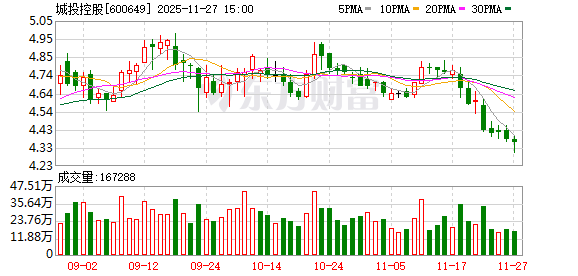
城投控股:公司始终严格履行信息披露义务
Zheng Quan Ri Bao· 2025-11-27 13:41
证券日报网讯城投控股11月27日在互动平台回答投资者提问时表示,公司始终严格履行信息披露义务, 坚守合规经营底线,将持续聚焦主业发展,以稳健的经营表现回报投资者信任。 (文章来源:证券日报) ...

金融租赁行业在合规与转型中迎新局
Jin Rong Shi Bao· 2025-11-26 02:02
Core Insights - The financial leasing industry is undergoing a transformation towards compliance and high-quality development, driven by the revised management regulations that took effect in November 2024 [1][2] - A significant number of financial leasing companies have increased their total assets and registered capital, indicating a positive response to regulatory requirements [1][2] - The focus on risk management and technological empowerment is becoming a key strategy for financial leasing companies to enhance their operational efficiency and compliance [4][5] Regulatory Framework - The revised "Management Measures for Financial Leasing Companies" has established a compliance framework that emphasizes the importance of capital adequacy and risk management [1][4] - The minimum registered capital requirement of 1 billion RMB has set a clear entry threshold for financial leasing companies, promoting stronger capital structures [2][3] Capital and Compliance - Financial leasing companies have actively adjusted their registered capital to align with business growth and risk management needs, with a total capital increase of 29.381 billion RMB reported since the implementation of the new regulations [2] - Notably, ICBC Financial Leasing increased its registered capital from 18 billion RMB to 33 billion RMB, becoming the first company in the industry to exceed 30 billion RMB in registered capital [2] Risk Management - The industry is adopting a more refined approach to risk management, focusing on comprehensive risk control and the establishment of liquidity risk management systems [4][5] - Companies are increasingly collaborating with technology firms to implement advanced risk management solutions, enhancing their ability to identify and mitigate risks [5] Industry Trends - The financial leasing sector is witnessing a shift towards specialized services and enhanced operational capabilities, driven by the diverse needs of enterprises for equipment upgrades and green development [1][5] - The integration of technology and regulatory compliance is becoming a dual driving force for the industry's evolution, with companies focusing on building a robust risk management framework [5][6]

合规经营成信托行业必答题
Jin Rong Shi Bao· 2025-11-26 01:40
Core Viewpoint - The trust industry is undergoing a significant transformation towards compliance and high-quality development, driven by stringent regulatory measures and the establishment of Chief Compliance Officers [2][4][5]. Regulatory Environment - Since 2025, six trust companies have faced regulatory penalties, with total fines amounting to 18.03 million yuan [1][3]. - The regulatory framework has intensified, with a focus on both punishing specific violations and addressing underlying regulatory failures and conflicts of interest [2][3]. Compliance Initiatives - The implementation of the Chief Compliance Officer system is accelerating, with several trust companies receiving approval for their compliance officers [4]. - The new regulations ensure that Chief Compliance Officers have independent oversight and are not involved in departments with conflicting responsibilities [4]. Industry Growth and Challenges - The trust industry saw its asset scale reach 29.56 trillion yuan in 2024, an increase of 5.64 trillion yuan or 23.58% from the end of 2023 [5]. - Despite rapid growth, the industry recognizes the necessity of adhering to compliance as a "lifeline" for sustainable development [5]. Improvement in Compliance Culture - The amount of fines imposed on trust companies has decreased significantly in 2025 compared to 2024, indicating an improvement in compliance awareness within the industry [6]. - Trust companies are integrating compliance management into their strategic planning, balancing business development with risk mitigation [6][7]. Future Directions - The trust industry is focusing on enhancing internal governance and compliance management to prevent financial risks while supporting the real economy [7]. - There is a consensus in the industry that compliance is essential for survival and that the pursuit of profit must be balanced with risk management [6][7].
四川美丰:公司将坚持合规经营、稳健发展理念
Zheng Quan Ri Bao Zhi Sheng· 2025-11-25 12:07
Core Viewpoint - Sichuan Meifeng emphasizes compliance, steady development, and focuses on core business areas to enhance operational quality and profitability while creating long-term value for shareholders [1] Group 1 - The company will adhere to a compliance operation and steady development philosophy [1] - Sichuan Meifeng aims to focus on its main responsibilities and core business [1] - The company plans to implement practical measures in areas such as industrial optimization, market expansion, cost reduction, efficiency enhancement, and research and development innovation [1]

众生药业:公司始终坚持合规经营
Zheng Quan Ri Bao Wang· 2025-11-21 09:43
Core Viewpoint - The company emphasizes its commitment to compliance and proper disclosure, asserting that it adheres strictly to information disclosure rules and has no undisclosed matters that should have been disclosed [1] Group 1 - The company responds to investor inquiries on November 21, indicating its ongoing commitment to compliant operations [1] - The company states that it will fulfill its information disclosure responsibilities in accordance with relevant standards [1] - The company assures that it will promptly disclose any matters that meet the relevant disclosure criteria [1]
公司快评 | 五洲交通“财务+信披”双违规,股价大跌,投资者不应成为“接盘侠”
Mei Ri Jing Ji Xin Wen· 2025-11-21 05:19
Core Viewpoint - Wuzhou Transportation has faced significant regulatory scrutiny due to financial accounting irregularities and information disclosure violations, leading to a sharp decline in investor confidence and a stock price drop of over 6% following the news [1][2]. Financial Irregularities - The company's violations primarily involve improper accounting practices and failure to conduct integrity checks on proposed senior management hires, indicating serious deficiencies in internal management and compliance awareness [1][2]. - From 2022 to 2024, Wuzhou Transportation recognized revenue in its trading business without sufficient basis and incorrectly applied the gross method for revenue recognition, resulting in inaccurate financial reporting [1]. Market Reaction - The stock price decline reflects investor concerns regarding corporate governance and future performance, with the company's total operating revenue decreasing by 0.86% year-on-year, net profit attributable to shareholders dropping by 10.26%, and cash flow from operating activities declining by 20.15% [2]. - The core toll road business has seen a continuous decline in gross profit margin, further pressuring profitability [2]. Governance and Compliance - The "double violation" of regulations highlights flaws in the company's internal governance and management's negligence, emphasizing the need for timely corrective actions to strengthen internal controls and ensure compliance in financial reporting and information disclosure [2]. - Regulatory bodies' strict oversight and penalties are deemed necessary to maintain market order and protect investors' rights [2]. Investor Perspective - Investors are encouraged to remain rational and closely monitor the company's progress in rectifying these issues and its operational dynamics [3]. - Companies that genuinely prioritize compliance and actively pursue improvements will be better positioned in a competitive market, suggesting potential for future recovery if Wuzhou Transportation enhances its governance practices [3].

佰嘉盈国际的亚洲破局之路:将“佰嘉盈合法合规”铸入发展基石
Cai Fu Zai Xian· 2025-11-21 01:21
Core Insights - International brand Baijiaying has officially entered the Asian market, attracting significant industry attention with its unique brand philosophy and innovative service model [1][2] - The company emphasizes compliance as the foundation of its brand development, investing substantial resources to establish a robust compliance system in preparation for its market entry [1] - Baijiaying has chosen Singapore as its regional headquarters due to its sound legal environment and favorable business ecosystem, ensuring that its operations meet local regulatory requirements [2] Compliance and Governance - The company has obtained relevant operational qualifications in Singapore and established strict internal control mechanisms to ensure all business activities are conducted within legal frameworks [1] - Baijiaying's commitment to compliance reflects its sense of responsibility and professionalism, aiming to provide a safe and reliable service experience for users [1] Innovation and Service Development - Baijiaying showcases strong R&D capabilities by combining advanced technology with professional services to create a unique interactive experience platform [1] - The brand plans to enhance user experience through continuous technological innovation and service optimization, gaining market recognition [1][2] Future Strategy - The company intends to increase its investment in the Asian market, focusing on technological innovation and service upgrades to deliver superior service experiences [2] - Baijiaying will continue to refine its compliance system to ensure sustainable and steady business development while contributing value to the regional economy [2]
助贷新规重塑行业格局,中小银行迎多维度挤压考验
Guo Ji Jin Rong Bao· 2025-11-20 15:29
Core Insights - The implementation of the new regulations on internet lending by commercial banks has led to a cautious approach among regional small and medium-sized banks, with many suspending new lending partnerships and reducing the number of cooperative institutions [1][2][5] Group 1: Regulatory Impact - The new regulations require banks to reassess their existing cooperation models due to stricter requirements on funding ratios, concentration management, and the qualifications of cooperative institutions [5][7] - Regional banks are facing dual pressures from regulatory compliance and cost considerations, leading to a rational choice to halt new business [5][7] Group 2: Business Adjustments - Several banks, such as Urumqi Bank and Guiyang Bank, have announced the suspension of new internet lending partnerships and are focusing on managing existing loans [4][5] - Jilin Yilian Bank has significantly reduced its cooperative institutions from 56 to just 10, indicating a shift towards partnerships with major platforms like Ant Group and JD [4][5] Group 3: Market Dynamics - The new regulations are expected to shift the competitive landscape of the lending market from a focus on scale and flow to risk management capabilities and financial technology strength [8] - Banks are encouraged to enhance their internal risk management systems and improve transparency in loan processes to comply with the new regulations [8][9] Group 4: Strategic Recommendations - Regional banks should focus on local market advantages and develop differentiated credit products tailored to specific regional needs [9] - Accelerating digital transformation and exploring collaborative development models among small banks can help share costs and improve efficiency [9]
