
智能化生产

Search documents
华鼎股份举办投资者交流活动 未来工厂引领锦纶行业数字化变革
Zheng Quan Shi Bao Wang· 2025-05-09 05:56
Core Viewpoint - Huading Co., Ltd. is focusing on high-quality, differentiated nylon products and has established itself as a leader in intelligent manufacturing within the industry [1][3] Group 1: Company Overview - Huading Co., Ltd. was founded in 2002 and is a core enterprise under the Zhenai Group, specializing in high-quality, differentiated nylon products [1] - The company has developed a nylon filament matrix consisting of PA6 and PA66, with products featuring antibacterial, anti-mite, and far-infrared functions [1] - The products are widely used in various fields, including sun-protective clothing, maternal and infant products, underwear, socks, yoga wear, T-shirts, sportswear, medical products, and outdoor goods [1] Group 2: Technological Advancements - The company has built the largest and most intelligent nylon future factory globally, which has been recognized as a "future factory" in Zhejiang Province [1] - The factory incorporates advanced foreign equipment and integrates cutting-edge technologies such as nylon MES intelligent manufacturing, leading to fully automated production processes [1][2] Group 3: Research and Development - The company is focusing on forward-looking product development, collaborating with brand clients to create differentiated functional products, and upgrading existing products with key customers [2] - Huading Co., Ltd. is implementing an Integrated Product Development (IPD) system to enhance R&D efficiency and market responsiveness [2] Group 4: Production Capacity and Sustainability - The company is steadily advancing two ongoing projects for PA6 and PA66, with a PA6 project expected to be completed by 2026 and a PA66 project by 2029 [2] - The company currently has a production capacity of approximately 14,000 tons for recycled products, certified by the Global Recycle Standard (GRS), and is increasing the proportion of green, low-carbon, and recycled nylon products [2] Group 5: Market Strategy - The company is addressing market competition through cost leadership, product differentiation, and technological innovation, while reducing reliance on a single market [3] - With its differentiated nylon products, enhanced R&D capabilities, intelligent future factory, and clear market strategy, the company is poised for significant growth and market share expansion in the nylon industry [3]

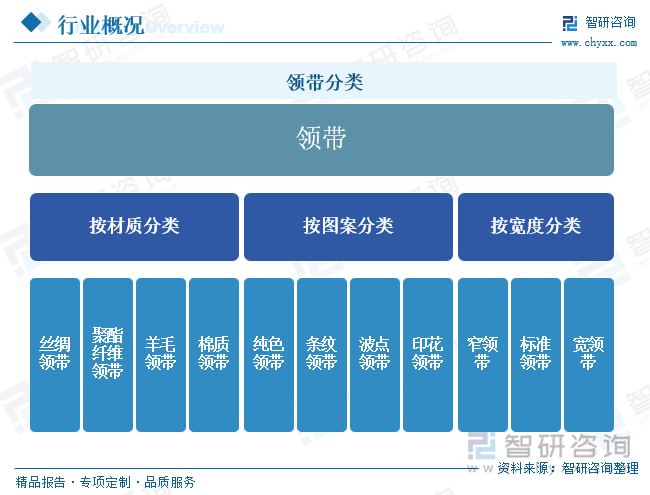
研判2025!中国领带行业产业链图谱、发展现状、进出口总额及发展趋势分析:中国领带及领结产业具有明显的成本优势,在国际上具有较强竞争力 [图]
Chan Ye Xin Xi Wang· 2025-05-07 00:52
Industry Overview - China is a significant global producer and exporter of textiles, with the import and export amounts of ties and bow ties reflecting domestic and international market demand and industry competitiveness [1][11] - In 2024, the import amount of ties is projected to be $13.13 million, while the export amount is expected to reach $189.74 million, indicating a strong export market [1][11] - A substantial portion of imported ties comes from internationally renowned brands, which leverage high-end design, quality materials, and craftsmanship to target premium consumer markets [1][11] Industry Definition and Classification - Ties are accessories worn at the collar of shirts, serving decorative and aesthetic purposes, primarily used in formal or semi-formal settings [2] - They are typically made from materials such as silk and polyester, with variations in length and width based on style and trends [2] Industry Chain Analysis - The tie industry chain consists of tightly connected upstream, midstream, and downstream operations [4] - Upstream includes raw material supply, such as silk and polyester fibers, which directly impact tie quality [4] - Midstream focuses on manufacturing, including design, cutting, sewing, and finishing, while branding and marketing shape market image [4] - Downstream sales channels include offline department stores, specialty shops, menswear stores, and online platforms, catering to various consumer needs [4] Development History - The Chinese tie industry has evolved through three stages: initiation, rapid development, and transformation [6][7] - The initiation phase began in the late 1970s, coinciding with economic reforms that spurred textile industry growth [6] - The rapid development phase saw increased domestic and international demand, leading to the establishment of industrial clusters and brand building [7] - The current transformation phase emphasizes technological investment, design innovation, and market expansion to achieve high-quality development [7] Upstream Analysis - China has become the world's largest producer of polyester fibers, with production exceeding 60 million tons in 2024, accounting for over 80% of global output [9] - The stable growth of polyester fiber production provides a reliable raw material supply for the tie industry, reducing supply chain risks [9] Current Industry Status - The import and export amounts of ties and bow ties have shown fluctuations due to domestic textile industry upgrades and changes in international trade environments [11] - China's tie industry benefits from cost advantages in raw material procurement and labor compared to foreign competitors [11] Consumer Demographics - Males constitute 85% of tie consumers, driven by traditional business etiquette and workplace dress codes [13] - The female consumer segment, currently at 15%, is expected to grow as fashion trends evolve and women's workplace status rises [13] Key Companies Analysis - The competitive landscape of the tie industry is characterized by diversification and differentiation among brands [15] - High-end brands like Goldlion and Baobei Tie dominate the business formal sector, focusing on quality and brand positioning [15] - Companies like Youngor and Romon leverage their menswear brand strengths to expand their tie product lines [15] - Hailan Home targets the mass market with affordable, stylish designs, appealing to a broad consumer base [15] Future Development Trends - Product innovation and design diversification are emerging trends, with brands incorporating cultural elements and artistic patterns into tie designs [21] - The female tie market presents significant growth potential, with brands encouraged to develop collections tailored to women's preferences [22][23] - Smart manufacturing is a key path for industry transformation, enhancing production efficiency and sustainability through automation and digitalization [24]


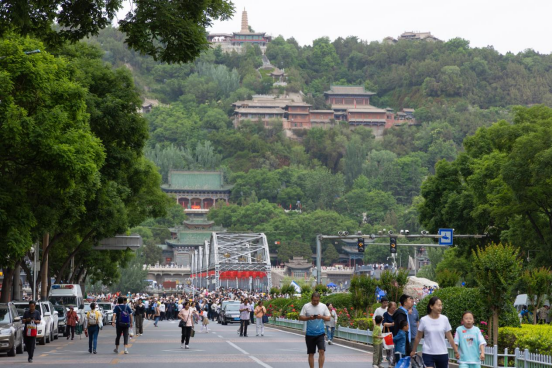
黄河水畔“满格电” “拉面之乡”焕新颜
Zhong Guo Neng Yuan Wang· 2025-05-06 09:27
Core Viewpoint - The article highlights the modernization and innovation in the production of Lanzhou beef noodles, showcasing the integration of traditional culinary practices with advanced electric power services provided by the State Grid Lanzhou Power Supply Company, which supports the growth of the local beef noodle industry. Group 1: Industry Development - Lanzhou has over 3,000 beef noodle restaurants, ranging from street vendors to chain stores, reflecting a diverse culinary landscape [4] - The local government aims to establish over 10 large-scale enterprises in the beef noodle sector by the end of 2026, targeting a revenue of over 10 billion and a total industry sales revenue of 40 billion [5] - The State Grid Lanzhou Power Supply Company has implemented a comprehensive service model to enhance the operational efficiency of beef noodle restaurants, contributing to a favorable business environment [5][6] Group 2: Technological Integration - The introduction of "all-electric kitchens" has revolutionized the cooking process, allowing for precise temperature control and improved cooking quality [5][8] - Smart cooking equipment, such as temperature-controlled boiling pots and fermentation boxes, ensures optimal conditions for noodle preparation, enhancing the overall product quality [8] - The company has established a service system for the catering industry, providing tailored solutions for energy efficiency and reliability [6][8] Group 3: Customer Service Innovations - The State Grid has launched an app for customers to manage their electricity needs conveniently, streamlining the application process for new power connections [4][5] - The company has reduced customer electricity connection costs by 477 million since 2022, demonstrating its commitment to improving the business climate [5] - A "green channel" for new restaurant openings has been created to facilitate quick and efficient electricity access, encouraging online applications [6]
交行嘉兴分行助食用菌企业“蘑”力全开
Zheng Quan Ri Bao Zhi Sheng· 2025-05-05 23:46
Group 1 - The core viewpoint of the article highlights the successful implementation of an automated edible mushroom production project by Zhejiang Huashi Biotechnology Co., Ltd., a subsidiary of Jiangsu Hualv Biotechnology Group, which aims to enhance modern agricultural development [1][2] - The project has a total investment of approximately 200 million yuan and is designed to produce 25,000 tons of edible mushrooms annually, covering an area of about 90 acres with six mushroom greenhouses and four supporting facilities [1] - The project utilizes automated production equipment, intelligent environmental control systems, and standardized production management, ensuring that the growth parameters of the golden needle mushrooms meet uniform standards [2] Group 2 - The Agricultural Bank of China’s Jiaxing branch has tailored financial service solutions to meet the funding needs of the project, including a comprehensive review of the company's qualifications and compliance [1] - The bank has successfully completed fixed asset financing of nearly 150 million yuan, with over 100 million yuan already disbursed, facilitated by cross-regional collaboration with the Suqian branch of the bank [1]

联发股份(002394) - 002394联发股份投资者关系管理信息20250428
2025-04-28 10:40
Group 1: Financial Performance - The company achieved an operating profit of 22,988.65 million CNY, representing a year-on-year growth of 16.29% [2] - The net profit reached 20,527.05 million CNY, with a year-on-year increase of 39.11% [2] Group 2: Competitive Advantages - The company possesses a complete industrial chain, significant synergy effects, advanced production equipment, mature management advantages, and leading research and technology innovation levels [1] - Strategic goals include creating a century-old enterprise, becoming an excellent supplier, building smart factories, and constructing a happy home [1] Group 3: Research and Development Strategy - The company emphasizes technological innovation to support product transformation and upgrades, aiming to reserve a batch of domestically and internationally leading new processes and technologies [2] - Plans to adjust product structure to enhance product added value [2] Group 4: Supply Chain Management - The company has established long-term stable supplier relationships and a procurement management system to ensure quality and delivery timelines [2] - Raw materials are primarily sourced through competitive bidding and a strict supplier evaluation system to reduce procurement costs [2] Group 5: Production and Inventory Management - The company adopts a sales-driven production model, producing based on sales plans or customer orders, adhering to the principle of appropriate inventory [2] - This approach helps mitigate risks of overcapacity or inventory backlog [2] Group 6: Digital Transformation - The company is advancing digital transformation through automation upgrades, MES system applications, and ERP improvements to enhance production efficiency [3] - Focus on intelligent and digital transformation of processes to improve equipment levels [3] Group 7: Market Outlook and Strategy - The textile industry is transitioning from rapid growth to high-quality development, with a focus on technology, fashion, green, and health [3] - The company plans to expand its marketing management system and explore new markets along the "Belt and Road" initiative [4]

安丘鼎正:灌装技术国家标准“制定者”与产业链延伸的“奋进者”
Zhong Guo Shi Pin Wang· 2025-04-28 09:49
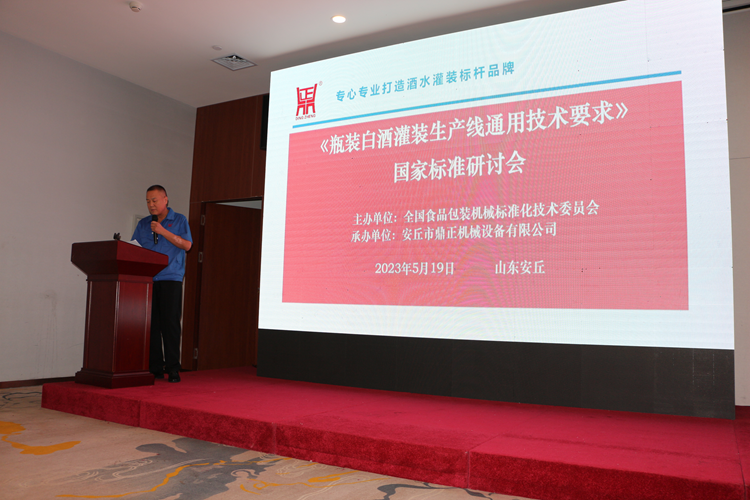
Core Viewpoint - The implementation of the national standard "General Technical Requirements for Bottled Liquor Filling Production Lines" on May 1, 2025, will promote the upgrade, digital transformation, and precision production of the liquor industry, leading to standardization and technological innovation, thereby driving high-quality development in the industry [1]. Group 1: National Standard and Company Involvement - The national standard GB/T 44832-2024 was developed with significant participation from various well-known liquor packaging equipment manufacturers, liquor producers, universities, research institutes, and industry associations [3]. - Anqiu Dingzheng Machinery Equipment Co., Ltd. was the primary drafting unit for this standard, highlighting its current industry position and capabilities [1][3]. Group 2: Company Achievements and Innovations - Anqiu Dingzheng Machinery has been a leader in production technology and innovation since its establishment in 2004, developing the first mechanical single-capacity filling machine and the first variable-speed intelligent sensing filling machine in China [6]. - As of 2024, the company holds 11 national invention patents and over 100 utility model patents, with its equipment covering the entire process from bottle washing to filling and capping [8]. - The new generation of automated and intelligent filling production lines can achieve a production efficiency of 36,000 bottles per hour through "vision + robotics" technology [8]. Group 3: Research and Development Investment - The company invests over 6% of its annual revenue in research and development, with 8 million yuan allocated in 2023, and has established six research platforms [10]. - Anqiu Dingzheng Machinery has built the largest production base for liquor filling equipment in the country, solidifying its industry position [10]. Group 4: Industry Expansion and Future Plans - The company plans to extend its operations into the food and pharmaceutical industries while continuing to strengthen its liquor filling machinery [12]. - The demand for high-speed filling equipment in the beverage and food sectors is increasing, and the company’s technology can meet the stringent requirements for sterile filling and sealing in these industries [12][14]. - The flexibility of the company’s filling lines allows for seamless switching between various bottle types and specifications, catering to the diverse production needs of the food and pharmaceutical sectors [14]. Group 5: Future Technological Integration - Anqiu Dingzheng Machinery is focusing on modular machine frame structures and plans to integrate AI and data analysis technologies for refined control and predictive maintenance to adapt to diverse production demands [16].
“疆字号”特色乳品何以“火出圈”
Zhong Guo Jing Ji Wang· 2025-03-11 00:46
Core Insights - The dairy products market in Xinjiang is experiencing a surge in demand, with a variety of products like fresh milk curds and flavored cheese gaining popularity among consumers [1][2] - Xinjiang's unique geographical advantages, including being located in the "golden milk source belt" and having 860 million acres of quality grassland, provide a strong foundation for the development of the dairy industry [2] - The Xinjiang Dairy Industry Revitalization Action Plan (2019-2025) aims to cultivate local dairy brands and expand market reach beyond Xinjiang, targeting significant growth in consumption [2][4] Industry Overview - As of February 2025, there are over 33,000 dairy-related enterprises in Xinjiang, including 74 dairy processing companies [3] - The industry is expected to form a dairy cluster with an output value exceeding 50 billion yuan and another exceeding 100 billion yuan by 2025, with a total industry chain output value reaching 30 billion yuan [4] Company Developments - Xinjiang Tianrun Dairy Co., Ltd. has opened 14 factory stores, enhancing customer experience through self-service milk machines and offering a variety of fresh dairy products [6][8] - The company has successfully launched popular products like "Sandy Milk Beer" and "Lunch Box Yogurt," which have gained significant traction online [9][10] - Tianrun Dairy has upgraded its own milk source base and achieved over 90% self-sourced milk ratio, with 26 farms and approximately 70,000 cattle [12][11] Market Dynamics - Xinjiang Xiyuchun Dairy Co., Ltd. has increased its production capacity by 50% through a 13 million yuan investment in new equipment, achieving a daily processing capacity of 700 tons [14][16] - The market has shifted from a localized structure to a more competitive landscape with multiple brands, with Xiyuchun holding over 45% of the market share [16] Innovations and Trends - The camel milk industry in Keping County has been recognized for its potential, with camel milk production reaching over 5,500 tons last year, creating over 1,300 jobs [19] - The introduction of a smart production line by Wangyuan Biotechnology Group is set to enhance processing capabilities, with an expected daily processing capacity of 100 tons and annual capacity of 30,000 tons [20][23]