
生猪产能调控

Search documents
牧原股份:调减能繁母猪存栏规模,有序淘汰低产低效母猪,预计年底将降到330万头
Cai Jing Wang· 2025-08-21 04:42
Group 1 - The company is adjusting its breeding sow inventory by reducing it to 3.3 million heads by the end of the year, and it does not plan to increase the number of breeding sows in the short term due to current capacity control measures [1] - The company is managing the average weight of pigs for sale, aiming to reduce it to 120 kg by the end of the month [1] - The company has stopped selling fattening pigs to secondary fattening customers and is working with relevant departments to ensure all fattening pigs are directed to slaughterhouses, promoting stable pig prices and healthy industry development [1] Group 2 - The company has established an overseas business team and is actively exploring international markets, identifying growth opportunities to replicate its domestic technology and cost advantages [2] - The company is building local teams to thoroughly research market conditions in various regions and plans to adopt multiple strategies for international business, including light asset models and potential new capacity construction or targeted mergers and acquisitions [2]

净利大增超11倍,牧原股份称将积极调控产能,机构看好猪价温和回升
第一财经网· 2025-08-21 03:13
Group 1 - The pork price is expected to enter a mild recovery phase, accelerating the industry's profit recovery pace [1][4][5] - Leading company Muyuan Foods reported a revenue of 76.463 billion yuan for the first half of the year, a year-on-year increase of 34.46%, and a net profit of 10.53 billion yuan, up 1169.77% [2][3] - The average price of live pigs in China as of August 18 was 13.55 yuan per kilogram, showing a slight decline of 0.21 yuan from the previous week [3] Group 2 - The company plans to reduce the number of breeding sows to 3.3 million by the end of the year to balance market supply and demand [3] - Short-term industry output is accelerating, and pig prices are under pressure, but the long-term outlook suggests a prolonged profit cycle with reduced volatility [3][4] - The third quarter is expected to see weak demand, but the fourth quarter may experience a seasonal increase in demand, leading to a mild recovery in pig prices [4][5]

7月生猪数据及产业情况解读
2025-08-14 14:48
Summary of Key Points from the Conference Call Industry Overview - The conference call primarily discusses the **pig farming industry** in China, focusing on the current state of pig prices, production capacity, and market dynamics related to breeding sows and piglets [1][2][3]. Core Insights and Arguments - **Pig Prices**: Pig prices have fallen below 14 RMB/kg, currently around 13.8 RMB/kg, due to unmet market expectations, concentrated slaughtering by major companies, and weak consumer demand. A rebound is anticipated, but prices are not expected to remain below 14 RMB for long [1][8][10]. - **Breeding Sow Sales**: Sales of breeding sows have shown a significant year-on-year decline of 24% in July, indicating a potential reduction in the number of sows among small-scale farmers, while larger farms maintain a slight increase [1][3]. - **Production Capacity**: The overall production capacity remains stable, with a slight decrease compared to the previous year. Small farms (under 5,000 sows) have seen a 1.1% decrease in capacity, while medium and large farms have experienced slight increases of 0.5% and 0.6%, respectively [1][7][14]. - **Government Policies**: The government aims to stabilize production capacity, with a target to maintain the breeding sow population around 39.5 million. A reduction of 1 million sows is planned, but the timeline is not yet defined [1][20][21]. Additional Important Content - **Export and Domestic Use**: Combined exports and domestic use of pigs have decreased by 20% year-on-year in July, reflecting a 7% decline from January to July compared to the previous year [5]. - **Cost and Profitability**: The current monitoring cost is approximately 14 RMB/kg, with most farms still profitable. However, if prices drop below 13.8 RMB/kg, some farms may start incurring losses [27][29]. - **Environmental Regulations**: Stricter environmental regulations are impacting the industry, requiring better waste management and potentially increasing production costs [22][24]. - **Future Supply and Demand**: Predictions indicate a slight increase in piglet numbers from October to January, but overall supply is expected to match demand. The price range for the upcoming months is projected to be between 14 and 16 RMB/kg [11][12]. - **Market Dynamics**: The market is experiencing a shift towards larger farms, with smaller farms struggling to maintain capacity. The trend indicates a consolidation in the industry, with larger players gaining market share [2][7][23]. Conclusion - The pig farming industry is currently facing challenges with falling prices and stricter regulations, but there are signs of potential recovery and consolidation among larger farms. The government's intervention and market dynamics will play crucial roles in shaping the future landscape of the industry [32].
多家养殖上市公司前7个月出栏总量同比增加
Zheng Quan Ri Bao Zhi Sheng· 2025-08-13 16:44
Group 1 - The core viewpoint of the articles indicates that several A-share listed companies engaged in pig farming have reported significant year-on-year increases in pig sales for the first seven months of the year [1][2] - For instance, Wens Foodstuff Group reported cumulative pig sales of 21.10 million heads in the first seven months of this year, compared to 16.70 million heads in the same period last year [1] - Muyuan Foods announced cumulative sales of 44.75 million heads this year, up from 38.55 million heads last year [1] Group 2 - Despite facing considerable pressure, the pig farming sector still maintains a certain level of profitability, with self-breeding profits reported at 89.01 yuan per head in the first week of August [2] - The Ministry of Agriculture and Rural Affairs highlighted challenges in the pig industry, including high production capacity and significant price fluctuations, necessitating strict capacity control measures [2] - As of June 2025, the national breeding sow inventory stood at 40.43 million heads, which is 3.7% above the normal holding standard of 39 million heads, indicating difficulties in capacity optimization [2] Group 3 - Companies are advised to enhance innovation and cost control to achieve sustainable development, with larger firms benefiting from cost advantages amid price fluctuations [3] - The current pig market is characterized by slow quantity reduction, rapid efficiency improvement, and evident structural contradictions [3] - Policies aimed at controlling the weight of pigs at market release and avoiding excessive breeding are expected to stabilize prices and improve overall industry profitability [3]


农林牧渔行业报告(2025.8.4-2025.8.10):猪价创年内新低
China Post Securities· 2025-08-12 09:17
Investment Rating - The industry investment rating is "Outperform the Market" and is maintained [2][38] Core Views - The agricultural sector has shown resilience, with the agricultural index rising by 2.52%, outperforming the broader market indices [12] - The pig price has reached a new low for the year, with the average price at 13.54 CNY/kg as of August 11, 2025, indicating a supply-demand imbalance [5][18] - The "anti-involution" policy is expected to support pig prices in the coming year, with significant supply pressures anticipated in the second half of 2025 [6][21] - The white feather chicken sector is experiencing a price increase for chicks due to supply constraints, with chick prices rising to 3.50 CNY per chick [31] Summary by Sections Market Review - The agricultural sector index outperformed the market, ranking 10th among 31 sectors [12] - The pig price has dropped below the breakeven point, reflecting strong supply and weak demand [18] Livestock Industry Tracking - **Pigs**: The average pig price is at a yearly low, with a significant supply pressure expected in the latter half of 2025 [5][18] - **White Feather Chicken**: Chick prices have increased due to supply shortages, with a notable decline in the number of breeding chicks updated in the first half of 2025 [31] Planting Industry Tracking - Sugar prices have continued to decline, while soybean prices have shown a slight increase [33]
农业农村部引导调减约100万头能繁母猪,畜牧ETF(159867)冲击3连涨
Xin Lang Cai Jing· 2025-08-12 01:59
Core Viewpoint - The Chinese livestock industry is experiencing a phase of high pig production capacity, prompting the Ministry of Agriculture and Rural Affairs to implement comprehensive production capacity regulation to mitigate risks of price volatility and overproduction [1][2]. Group 1: Market Performance - As of August 12, 2025, the CSI Livestock Breeding Index (930707) increased by 0.68%, with notable gains from companies such as Xiaoming Co. (300967) up 6.50%, Minhe Co. (002234) up 6.19%, and Yisheng Co. (002458) up 3.28% [1]. - The Livestock ETF (159867) rose by 0.46%, marking its third consecutive increase, with the latest price at 0.65 yuan [1]. Group 2: Policy and Regulation - The Ministry of Agriculture and Rural Affairs has announced plans to guide the reduction of approximately 1 million breeding sows to prevent production fluctuations and price instability [1]. - A meeting held on July 23 emphasized strict implementation of production capacity regulation measures, including the rational elimination of breeding sows and control of new production capacity [1]. Group 3: Industry Outlook - Recent policies are expected to accelerate the elimination of inefficient production capacity in the industry, potentially leading to a long-term increase in pig prices, benefiting low-cost and high-quality pig enterprises [1]. - The top ten weighted stocks in the CSI Livestock Breeding Index account for 64.83% of the index, indicating a concentrated market structure [2].


农业农村部提示生猪产能阶段性偏高,券商:猪价中枢或上行
Huan Qiu Wang· 2025-08-11 01:33
Core Viewpoint - The Ministry of Agriculture and Rural Affairs of China has announced a comprehensive adjustment of pig production capacity to prevent significant fluctuations in production and prices, aiming to reduce the breeding sow population by approximately 1 million heads [1] Group 1: Current Market Conditions - China's pig production capacity is currently at a phase of being excessively high, prompting the need for regulatory measures [1] - Short-term pig prices are under pressure due to factors such as high temperatures, concentrated market supply from individual farmers, and panic selling [1] Group 2: Future Outlook - As temperatures are expected to cool in late August, there may be a marginal improvement in demand, while supply tightens due to previous overselling of pigs, potentially leading to a higher price center for pigs [1] - The third quarter of 2025 is anticipated to be a critical period for policy-driven price increases and adjustments in breeding sows, with ongoing supportive policies expected to strengthen the pig sector [4]
官方引导调减百万头能繁母猪 猪价重心有望上移(附概念股)
Zhi Tong Cai Jing· 2025-08-11 00:17
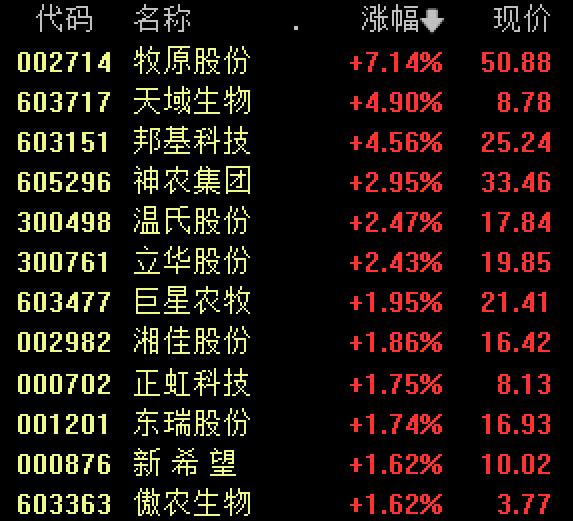
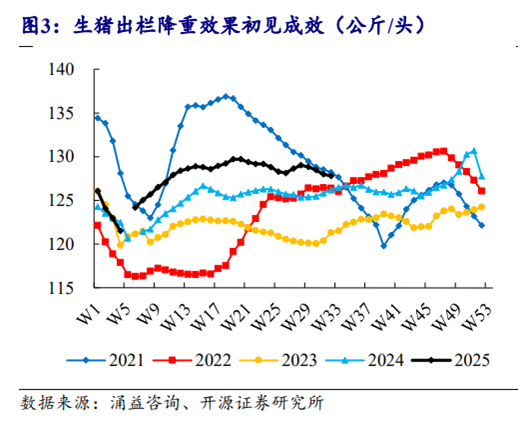
牧原股份(002714)董事长秦英林在官方会议上已经透露了其落实产能调控的主要做法。一是减少能繁 母猪存栏。在已经减少17万头的基础上,计划再减少13万头,到年底前减到330万头。二是下调肥猪出栏均 重。目前头均重125公斤,比5月末下降5公斤,计划7月底降至123公斤,8月底降至120公斤。三是控制二次 育肥。从6月初起,全面停止向二次育肥客户销售肥猪。 新希望在6月份也曾表示,公司严控销售流程,对商品猪只开屠宰类检疫票,不对二次育肥客户渠道销售商 品猪。 生猪行业去产能大幕拉开。农业农村部最新调度显示,当前,我国生猪产能阶段性偏高,为防范生产大 起大落、价格大涨大跌风险,将实施生猪产能综合调控,引导调减约100万头能繁母猪。 能繁母猪存栏是生猪供应的"总开关",直接决定10个月后的商品猪出栏规模,若调减能繁母猪存量,10 个月后生猪出栏量将相应减少。这意味着,下半年和明年春节后生猪出栏将明显增加,由于生猪的自然 生长周期,从现在开始调减能繁母猪产能,调控效果将于10个月后落地。 在国内猪肉弱需求、强供给的背景下,年内生猪价格持续走低,尤其是进入7月猪肉消费淡季以来,消 费不振使得猪价进一步走低。中国养猪网 ...
生猪市场:价格下跌,产能充裕待调控
Sou Hu Cai Jing· 2025-08-10 23:45
Core Insights - The current trend shows a slight decline in live pig spot prices, with the national average price at 13.94 yuan/kg, down 0.08 yuan/kg from last week, reflecting a 0.57% week-on-week decrease and a 31.13% year-on-year decrease [1] - The decline in prices is attributed to weak terminal consumption and an oversupply situation, although policy measures for capacity control may limit further price drops [1] Supply and Demand Dynamics - The breeding sow inventory reached 40.43 million heads as of June 2025, which is 103.7% of the normal holding capacity, indicating a potentially high supply of live pigs in the future [1] - The average pigs per sow (PSY) has increased from 24 to over 26, with some leading enterprises nearing 29, suggesting improved production efficiency [1] - The mid-term outlook indicates that the supply of live pigs will remain ample, with an expected increase in slaughter volume in the second half of the year, unless there is a significant rise in pork consumption [1] Policy Measures - On July 23, the Ministry of Agriculture and Rural Affairs proposed several measures for the development of the pig industry, focusing on strict implementation of capacity control, reasonable culling of breeding sows, and limiting new production capacity [1] - Long-term improvements in market supply-demand relationships and price stabilization are anticipated if the breeding sow inventory is reduced to 39.5 million heads [1]
港股概念追踪 | 官方引导调减百万头能繁母猪 猪价重心有望上移(附概念股)
智通财经网· 2025-08-10 23:27
Core Viewpoint - The Chinese government is implementing comprehensive regulation to reduce the breeding sow population by approximately 1 million heads to stabilize the pig supply and prevent price volatility in the pork market [1][2][4]. Industry Overview - The current pig production capacity in China is deemed excessively high, leading to a significant decline in pork prices, with prices dropping to 13.77 yuan per kilogram as of August 10, marking a 13.9% decrease since the beginning of the year [1]. - The reduction in breeding sows is expected to impact pig supply significantly in the coming months, with effects anticipated to materialize in about 10 months due to the natural growth cycle of pigs [1]. Policy and Regulatory Actions - Multiple policies have been introduced throughout the year to encourage the reduction of breeding sows, control secondary fattening, and lower the average weight of pigs at slaughter [2]. - A meeting held on July 23 emphasized the need for strict implementation of capacity control measures and the rational elimination of breeding sows [2]. Company Actions - Major companies like Muyuan Foods and New Hope have begun to implement measures to reduce their breeding sow populations and control the weight of pigs being sold [3]. - Muyuan Foods plans to reduce its breeding sow population by an additional 130,000 heads by the end of the year, while also lowering the average weight of pigs at slaughter [3]. - New Hope has restricted sales to slaughterhouses only, ceasing sales to secondary fattening customers [3]. Market Implications - Analysts suggest that the current focus on reducing breeding sow numbers aims to stabilize prices and alleviate debt pressures faced by many pig farming companies, which have high asset-liability ratios [4]. - The expectation is that the supply of pigs will increase in the latter half of the year, leading to potential short-term price pressures [3][4]. Related Company Performance - Dekang Agriculture reported sales of 780,200 pigs in July 2025, with a revenue of 1.427 billion yuan, indicating a slight decrease in average selling price [5]. - COFCO Joycome announced a total of 2.898 million pigs sold in the current year, with a significant portion of revenue coming from fresh pork sales [6]. - WH Group's projected core net profits for 2025 and 2026 are expected to show low double-digit growth, reflecting market expectations [6].