量化私募

Search documents
歼20飞跃日韩海峡,全球为何静悄悄?| 0810 张博划重点
Hu Xiu· 2025-08-10 14:37
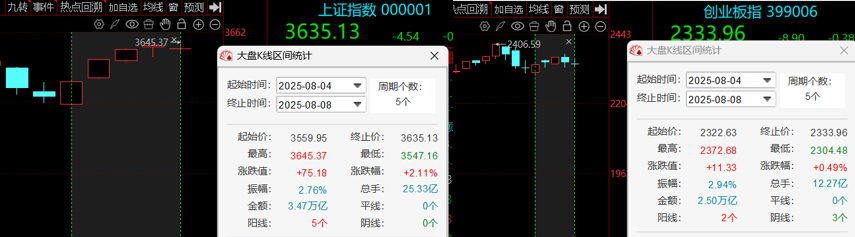
Market Overview - The Shanghai Composite Index increased by 75.18 points, or 2.11%, reaching a closing price of 3635.13, with a high of 3645.37 and a low of 3547.16, indicating a volatility of 2.76% and a total trading volume of 3.47 trillion yuan [1] - The ChiNext Index rose by 11.33 points, or 0.49%, closing at 2333.96, with a high of 2372.68 and a low of 2304.48, showing a volatility of 2.94% and a total trading volume of 2.50 trillion yuan [1] Private Equity and Fund Management - In July, 676 private equity firms registered 1298 products, marking an 18% month-on-month increase and the highest number in nearly 27 months [3] - Among the newly registered products, 13 firms launched more than 10 products each, with 11 of the 44 billion-yuan quantitative private equity firms adding a total of 286 new funds [3] - The average return of quantitative private equity products reached 28.54% by the end of July 2025, outperforming the average return of subjective long-only products [3] Financing Trends - The financing heat in small-cap stocks is significantly higher than in large-cap stocks, with the overall financing transaction volume in the A-share market accounting for 21.9% of total trading volume [4] - The financing balance as a percentage of free float market value shows similar trends, with the CSI 1000 and CSI 2000 indices exceeding their 2015 peaks [4]

8月私募“雷”盘点:私募大佬们不盯K线改盯片场?靖奇投资“内斗”升级!幻方量化“返佣门”持续发酵,均成资产违规承诺保本| 私募透视镜
Sou Hu Cai Jing· 2025-08-10 07:27
Group 1: Internal Conflicts at Jingqi Investment - Jingqi Investment's fund manager Fan Siqi announced his resignation and fund liquidation, revealing internal conflicts within the company [1] - Fan accused the company of an unceremonious dismissal and claimed that shareholder actions were not compliant [1] - Jingqi Investment countered by stating that the dismissal was compliant and accused Fan of unauthorized actions, including data deletion [1] Group 2: Financial Irregularities - Fan Siqi released a statement denying rumors of "data deletion and running away," and disclosed financial irregularities, alleging that shareholder Tang's commission income was not recorded and used for personal expenses [1] Group 3: DeepSeek and Huansheng Quantitative's Rebate Scandal - The "rebate scandal" involving Huansheng Quantitative continues to unfold, with connections to serious violations by key personnel [4] - Investigations revealed that from 2018 to 2023, key individuals fabricated broker identities to siphon off 118 million yuan in performance bonuses [4] - The scandal has led to legal actions against involved parties, including the market director of Huansheng Quantitative [4] Group 4: Industry Trends and Notable Movements - The private equity sector is witnessing a trend of firms diversifying into entertainment, with three private equity firms collaborating on a drama series [6][7] - The drama, set against the backdrop of the futures market, reflects the evolving interests of private equity firms beyond traditional finance [6] Group 5: Market Insights from Notable Investors - Investor Duan Yongping has increased his stake in Berkshire Hathaway, anticipating a price rebound after a significant drop following CEO Warren Buffett's retirement announcement [8] - Legendary investor Jim Rogers has divested from most U.S. stocks, focusing on Chinese equities and precious metals, citing concerns over the U.S. economy [9] - Gao Yi Asset's Feng Liu has reduced holdings in Hikvision while increasing stakes in Taiji Group, indicating a strategic shift amid market fluctuations [10] Group 6: Regulatory Developments - Six new securities private equity firms have been registered with the Asset Management Association of China, indicating growth in the sector [11] - Changes in leadership at financial institutions, such as the appointment of a new general manager at Caitong Securities, reflect ongoing shifts within the industry [14] Group 7: Compliance Issues - The Guangdong Securities Regulatory Bureau issued a warning to Hengqin Junchen Asset Management for failing to prevent employees from promising capital protection to investors [16][17] - The firm, which manages over 3 billion yuan, faced scrutiny for inadequate internal controls and compliance failures [17]
基金大事件|多家公募机构高管出现变动;公募REITs持续上新受热捧
Sou Hu Cai Jing· 2025-08-09 09:33
Group 1 - Star fund manager Zhai Xiangdong officially announced his resignation from China Merchants Fund on August 9 due to personal reasons, with speculation that he may join a private equity fund next [1] - Dongwu Fund appointed Xue Zhen as the new chairman, succeeding Ma Zhenya, who transitioned to a senior supervisory role [2] Group 2 - The first two public REITs focused on data centers were listed on August 8, both experiencing a 30% surge on their debut, with total trading volume nearing 700 million yuan [3] - The public REITs market has shown strong performance this year, with the CSI REITs total return index and CSI REITs index rising by 13.37% and 9.91% respectively, outperforming major indices [3] Group 3 - Guangfa Asset Management withdrew its application for public fund management qualifications, indicating a tightening of public fund license approvals in the industry [4] - The trend of fund managers publicly sharing their real-time trading performance is growing, with many achieving positive returns, signaling a shift towards more transparent investment practices [5] Group 4 - The China Europe Digital Economy Mixed Fund announced a suspension of large subscriptions over 1 million yuan due to its impressive performance, ranking 8th out of 4349 in its category with over 150% returns in the past year [6] - The A-share market showed slight declines on August 8, with the Shanghai Composite Index down 0.12% and total trading volume at 173.65 billion yuan [7] Group 5 - Convertible bond funds have performed exceptionally well, with over ten thematic funds achieving net value growth rates exceeding 15%, and the highest reaching nearly 25% [10] - Huaxia Fund reported a significant increase in revenue and profit for the first half of 2025, with total assets under management surpassing 2.85 trillion yuan [11] Group 6 - North Trust Fund's general manager Liu Xiaoling announced her resignation amid internal conflicts, with Xuan Xuezhong appointed as the new general manager [12] - The bond ETF market welcomed a new product surpassing 10 billion yuan in scale, contributing to a total market size of nearly 520 billion yuan [13] Group 7 - The public REITs market continues to expand with new products being approved, including the CICC Vipshop Outlets REIT and the AVIC Jingneng Solar REIT [15][16] - The recent leadership changes in major fund companies, such as the appointment of Ye Cai as chairman of Invesco Great Wall Fund, reflect ongoing shifts in the industry [17] Group 8 - The Hong Kong stock market has seen strong performance this year, with the Hang Seng Index and Hang Seng Tech Index rising by 22.17% and 20.80% respectively, although recent volatility has raised concerns [18] - Quantitative private equity funds have shown remarkable performance, with several firms surpassing 10 billion yuan in scale, indicating a robust market for these investment strategies [19] Group 9 - The China Interbank Market Dealers Association issued self-regulatory penalties to three private equity firms for non-compliant practices related to non-market-based issuance [20]
知名量化私募陷“内斗风波”,招商证券被卷入其中
Di Yi Cai Jing Zi Xun· 2025-08-08 15:57
Core Viewpoint - The recent internal conflict at Jingqi Investment has escalated, involving allegations of financial misconduct and mismanagement, with the company’s founder and fund manager Fan Siqi at the center of the controversy [2][3][4]. Group 1: Company Operations and Allegations - Jingqi Investment's basic account experienced a significant abnormal fund transfer on July 2, which has severely impacted the company's financial operations [3]. - The company claims that there have been illegal uses of forged corporate seals and unauthorized actions regarding fund establishment and liquidation, implicating its custodian, China Merchants Securities, for failing to fulfill its due diligence obligations [4]. - Jingqi Investment has filed formal complaints with the China Securities Regulatory Commission and the Asset Management Association of China regarding these allegations [4]. Group 2: Management Disputes - The company is currently undergoing a change in its legal representative, with Fan Siqi allegedly using his authority to alter the management of the company's WeChat account during this transition [6]. - There are conflicting narratives between the founders, with Fan Siqi asserting that he was unfairly removed from his positions and that his actions were in defense of the company [5][6]. - The other founder, Tang Jingren, claims that Fan Siqi has not been involved in the company's daily operations for nearly three years and has been living in Japan, which has contributed to the management issues [7][8]. Group 3: Financial Management and Structure - Jingqi Investment was established on March 9, 2015, and currently manages between 1 billion to 2 billion yuan, with 56 funds under management [5]. - The company has faced scrutiny over its operational practices, particularly regarding the management of its funds and the legitimacy of its financial transactions [4][5].


量化私募靖奇投资两大创始人内斗 牵出招商证券被投诉举报
经济观察报· 2025-08-08 12:33
Core Viewpoint - The article discusses a governance crisis at Shanghai Jingqi Investment Management Co., Ltd. (Jingqi Investment), highlighting internal conflicts and allegations of unauthorized actions involving the use of forged legal seals and signatures, which have implications for its custodian, China Merchants Securities [2][5][10]. Group 1: Company Background - Jingqi Investment was established in 2015, managing assets between 1 billion to 2 billion yuan [4]. - The company has two founders: Fan Siqi, who holds a 36.36% stake, and Tang Jingren, who holds a 27.27% stake [4]. - Fan Siqi serves multiple roles including legal representative, chairman, and fund manager, while Tang Jingren is the risk control officer [4]. Group 2: Recent Developments - On June 10, 2025, Fan Siqi announced his resignation as fund manager, citing significant pressure and loss of enthusiasm due to management responsibilities [5]. - Following his resignation, Jingqi Investment stated that the funds managed by Fan Siqi were a small portion of the total assets under management and that all other products were operating normally [5]. - On July 2, 2025, Jingqi Investment reported a large abnormal transfer from its main account, leading to the freezing of online operations [7]. Group 3: Allegations and Complaints - The risk warning issued on August 7, 2025, indicated unauthorized actions by personnel, including the illegal use of forged seals, and accused China Merchants Securities of failing to fulfill its basic verification obligations [2][10]. - Fan Siqi claimed that there were instances where company funds were used for personal expenses by a shareholder, raising concerns about financial management [10]. - The article also mentions ongoing investigations into potential commission kickbacks involving brokerage firms, which are prohibited by regulatory authorities [10][12].

幻方量化员工“亿元返佣”背后:券商与量化私募的隐秘关联被揭开一角
Xin Lang Cai Jing· 2025-08-08 12:00
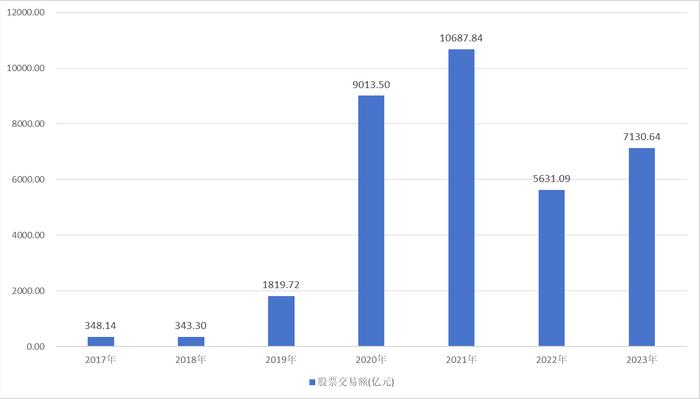
Core Viewpoint - The article reveals details about the "rebate incident" involving Li Cheng, the market director of Huanfang Quantitative, and the brokerage firm China Merchants Securities, highlighting the intricate relationships and interests between quantitative private equity firms and their cooperating brokerages [1][2]. Group 1: Incident Details - The key figure in the rebate incident is Meng Pengfei, who served as the general manager of the Shenzhen Nand East Road branch of China Merchants Securities from June 2018 to February 2023 [1]. - During his tenure, Meng arranged for his relatives to act as exclusive brokers for Huanfang Quantitative, receiving a total of 1.18 billion yuan in performance bonuses, with over 200 million yuan going to Li Cheng and 100 million yuan to Liu Huan [1]. - Meng attempted to secure his position by offering 3 million yuan in gold to his superior, Gao Xiang, who later returned the gold and was investigated in March of this year [1]. Group 2: Huanfang Quantitative's Growth - Huanfang Quantitative's management scale grew significantly, reaching approximately 30 billion yuan by the end of 2017, doubling in 2018, and surpassing 100 billion yuan in 2019, eventually becoming the first quantitative private equity firm in China to exceed 1 trillion yuan in 2021 [2]. - The timing of Huanfang Quantitative's trading activities at China Merchants Securities coincided with its rising industry profile and impending growth [2]. Group 3: Trading Volume and Rankings - From 2017 to 2023, the trading volume at the Shenzhen Nand East Road branch of China Merchants Securities increased dramatically, with trading volumes of 1,819.72 billion yuan in 2019, 9,013.5 billion yuan in 2020, and 10,687.84 billion yuan in 2021, leading to significant improvements in its ranking among all brokerage branches [2]. - Despite a decline in trading volume in 2022 and 2023, the branch maintained high trading volumes of 5,631.09 billion yuan and 7,130.64 billion yuan, ranking 18th and 8th respectively [3]. Group 4: Industry Trends and Competition - The quantitative private equity industry in China has rapidly developed, with an estimated total scale of approximately 837 billion yuan by the end of 2024, including around 768 billion yuan in stock holdings [5]. - As of July 25 this year, there are 44 quantitative private equity firms in China with assets exceeding 10 billion yuan, indicating a competitive landscape among brokerages to attract these influential firms [6]. Group 5: Broker-Private Equity Relationships - The collaboration between private equity firms and brokerages typically involves brokerage services, distribution, custody services, and other financial services, with brokerages earning commissions from these activities [7]. - The choice of brokerage by leading quantitative private equity firms often depends on the performance of trading systems and fee structures, with a typical trading fee around 0.12% [7]. - Relationships and personal connections play a significant role in these collaborations, which can lead to potential issues when large financial interests are involved [7]. Group 6: Custody and Regulatory Aspects - Huanfang Quantitative has a high percentage of its products (58.06%) under the custody of China Merchants Securities, indicating a deep partnership [8][9]. - Legal experts highlight that while private equity firms may negotiate commissions with brokerages, any undisclosed or improper financial arrangements could lead to regulatory scrutiny and penalties [11][13].
靖奇投资范思奇主动卸任!量化大厂频现高管变更 行业迎来“全方位较量时刻”
Shang Hai Zheng Quan Bao· 2025-08-08 07:17
量化私募之间的竞争,正从业绩比拼向综合实力较量转变。 上海证券报记者采访获悉,知名量化私募上海靖奇投资管理有限公司(简称"靖奇投资")法定代表人、 基金经理范思奇将于6月卸任靖奇投资基金经理职务,该私募表示将妥善安排股权变更事宜。 无独有偶,不久前,百亿级量化私募——佳期投资的实际控制人也发生变更,公司创始人季强不再是实 控人,原投资总监吴霄霄成为新的实控人。在业内人士看来,随着量化私募的快速发展,管理规模增长 对各家私募的掌门人提出了更高要求,有些创始人选择不断提升管理能力,有些则"让更合适的人统筹 公司"。 量化行业频现核心人员变更 除了靖奇投资,今年以来多家量化私募出现核心岗位的人员变动。 中基协备案信息显示,佳期投资的实际控制人近日由季强变更为吴霄霄。 平方和投资高管团队也发生变化。记者采访获悉,国际知名量化巨头世坤投资原高级执行研究总监兼中 国区副总经理方壮熙,今年加盟平方和投资。 "方壮熙加入后,一方面公司在投研上实现了重要进阶,另一方面,我可以留出更多精力来加强公司治 理。以前的我是总经理+投资总监,现在我是总经理,方壮熙是投资总监,相信未来不管是在策略迭代 上还是公司治理上,我们都会更加从容。 ...
私募靖奇投资内斗再燃战火,招商证券牵涉其中
Sou Hu Cai Jing· 2025-08-08 04:50
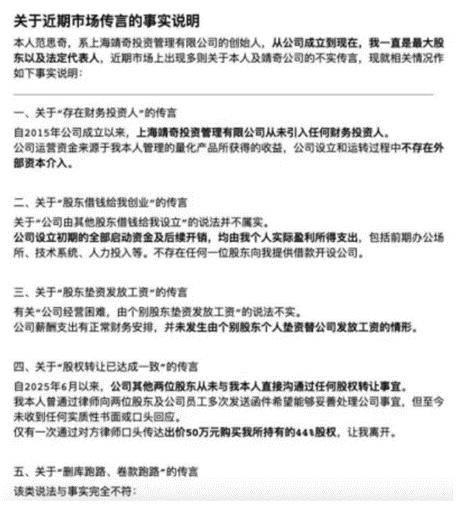
Core Viewpoint - The company is facing internal power struggles and financial irregularities, leading to significant operational disruptions and potential reputational damage [6][7]. Group 1: Financial Irregularities - On July 2, 2025, a large sum of 5 million yuan was transferred from the company's main account within hours, leaving only 2,600 yuan remaining [7][13]. - The transfers included over 100,000 yuan as a "year-end bonus" to a shareholder and over 700,000 yuan paid to an unrelated account for "information technology services" [7][13]. - The company has frozen online transactions to safeguard its assets, with only offline transactions being processed [3]. Group 2: Internal Conflicts - The founder, Fan Siqi, announced his resignation as fund manager on June 10, 2025, citing personal stress and loss of interest in the industry [6]. - Following his resignation, Fan Siqi accused the company of a sudden and unjustified removal from all positions, describing it as a "complete betrayal" [6]. - There have been allegations of a lack of communication and cooperation from other shareholders regarding the management of the company [3][11]. Group 3: Clarifications on Rumors - The company has denied rumors regarding the involvement of financial investors, stating that all operational funds have come from the founder's personal earnings [8][9]. - Claims that shareholders provided loans for the company's establishment or that they have been covering salary payments are also refuted [9][10]. - The company asserts that there has been no agreement on share transfers with other shareholders since June 2025 [11].
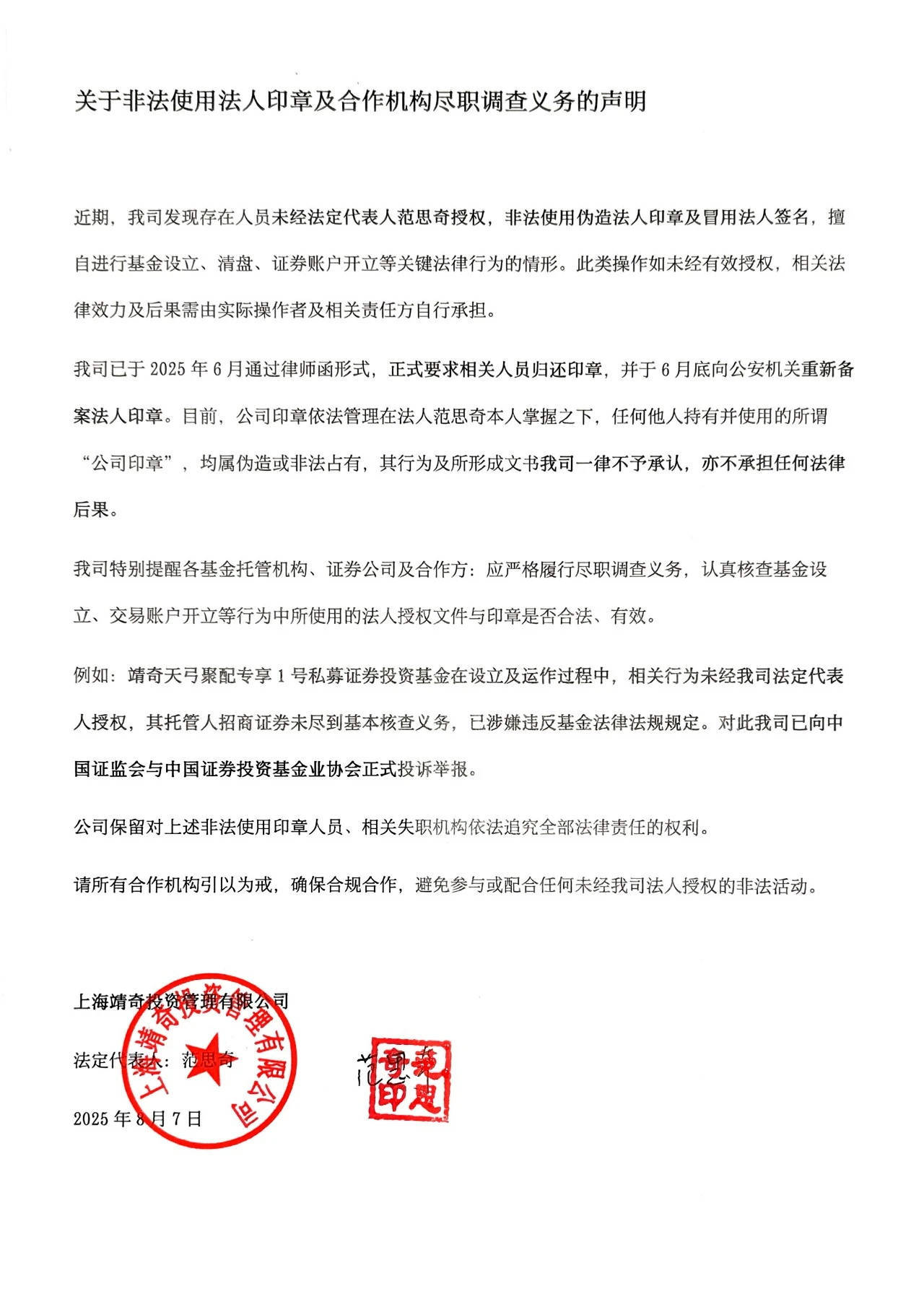
内斗升级,知名私募靖奇投资紧急声明!
Zhong Guo Jing Ji Wang· 2025-08-08 01:20
Core Viewpoint - The recent internal conflict within Jingqi Investment has escalated, with allegations of unauthorized use of the company's legal seal and signature, leading to potential legal ramifications for those involved [1][7]. Group 1: Company Allegations and Legal Actions - Jingqi Investment has discovered that individuals have illegally used a forged legal seal and signature without authorization from the legal representative, Fan Siqi, to conduct critical legal actions such as fund establishment and account opening [2][7]. - The company has formally requested the return of the seal through a lawyer's letter and has re-registered the legal seal with the police [2][8]. - Jingqi Investment emphasizes that any documents created using unauthorized seals will not be recognized, and the company will not bear any legal consequences for such actions [2][3]. Group 2: Compliance and Due Diligence - The company has urged all fund custodians, securities firms, and partners to strictly fulfill their due diligence obligations and verify the legality and validity of the authorization documents and seals used in fund establishment and account opening [2][4]. - The company has filed a formal complaint with the China Securities Regulatory Commission and the Asset Management Association of China regarding the alleged negligence of the custodian, China Merchants Securities, in failing to verify the authorization [2][7]. Group 3: Internal Conflict and Management Changes - Fan Siqi, the legal representative, announced his resignation from the fund manager position in June, leading to a conflict over the management and operation of the company [9][10]. - The company is currently facing a split between its partners, with accusations of unauthorized actions and mismanagement being exchanged [9][10]. - The company has stated that all asset management products are operating normally and that the recent conflicts have not materially affected the company's overall operations [9].
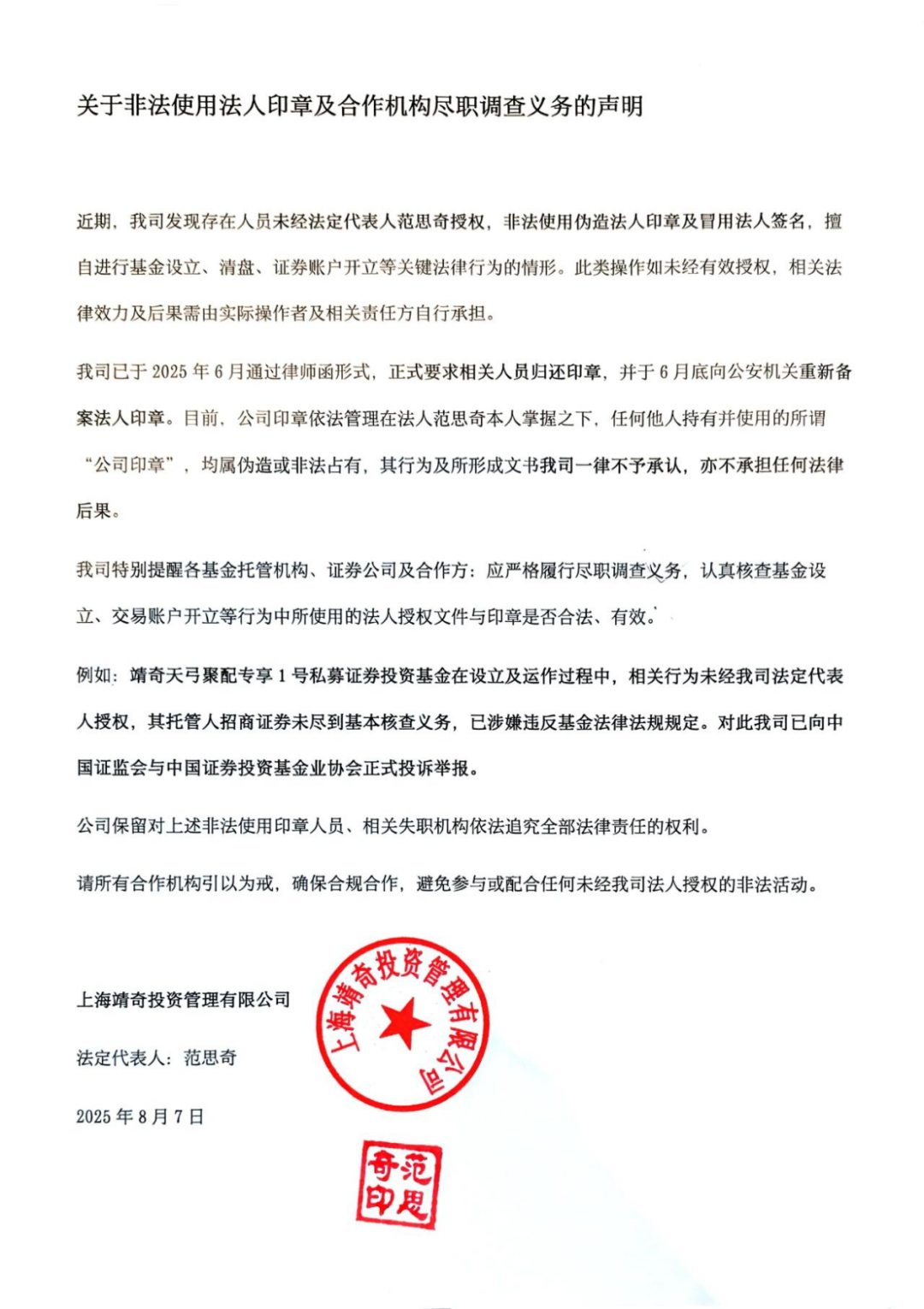
招商证券深陷DeepSeek母公司利益输送漩涡
阿尔法工场研究院· 2025-08-08 00:07
Core Viewpoint - The investigation involving a prominent quantitative institution and a leading brokerage firm highlights significant issues related to illegal commission practices in the financial industry, exposing a gray area of interests between quantitative private equity and brokerage firms [2][3][4] Group 1: Incident Overview - A recent investigation has emerged regarding the involvement of a quantitative private equity firm, Huanfang Quantitative, and China Merchants Securities in a commission-related scandal, leading to the transfer of implicated personnel to judicial authorities [2] - The market director of Huanfang Quantitative, Li Cheng, holds considerable influence within the company, particularly in selecting brokerage firms for trading, which may have contributed to the unfolding events [2] - Multiple personnel from China Merchants Securities are implicated, including Gao Xiang, the general manager of the institutional business department, who is under investigation for serious violations of discipline and law [2] Group 2: Details of Violations - Meng Pengfei, the former general manager of the Shenzhen Nanshan East Road branch of China Merchants Securities, engaged in a series of violations from 2018 to 2023, including arranging for relatives to serve as exclusive brokers for Huanfang Quantitative and facilitating the transfer of benefits to Li Cheng [3] - The total amount involved in these violations exceeds one hundred million yuan, indicating the scale of the misconduct [3] - Regulatory frameworks established in 2002 and 2012 explicitly prohibit improper commission practices, yet the actual implementation has seen increasingly covert methods, complicating regulatory oversight [3][4] Group 3: Industry Implications - The case serves as a wake-up call for the financial industry, revealing the long-standing gray interest chains between quantitative private equity firms and brokerage houses [4] - The incident raises concerns about the need for enhanced regulatory measures to ensure market order and prevent similar occurrences in the future, drawing attention from various market participants [4]