Cloud Infrastructure

Search documents
Oracle Briefly Joined the Trillion-Dollar Club. But Investors Should Watch These 3 Red Flags.
Yahoo Finance· 2025-09-22 09:00
Group 1 - Oracle has crossed the trillion-dollar market cap mark before slightly pulling back, currently trading at $877 billion [1] - The company is repositioning itself as an AI and cloud infrastructure provider, supported by a $455 billion backlog and growth in Oracle Cloud Infrastructure [1] - Investors should be cautious about the underlying financial dynamics despite the AI narrative [2] Group 2 - Oracle is planning capital expenditures of around $35 billion in fiscal 2026, which is significantly higher than many companies' annual R&D budgets [4] - The company's operating cash flow for fiscal 2025 was $20.8 billion, which is below the expected capex for fiscal 2026, indicating potential strain on free cash flow [5] - The shortfall in cash flow may require Oracle to rely on balance sheet cash or external funding, potentially impacting shareholder returns [6] Group 3 - Oracle's aggressive spending on cloud and AI infrastructure has led to high leverage and thin liquidity, making it financially vulnerable [9] - The company carries a debt load exceeding $90 billion, with total liabilities of $156 billion, which is more than six times its equity of $25 billion [10] - The current ratio is below 1, indicating that short-term obligations exceed liquid assets [10]

Prediction: This "Ten Titans" Growth Stock Will Join Nvidia, Microsoft, Apple, Alphabet, Amazon, Broadcom, and Meta Platforms in the $2 Trillion Club by 2030
Yahoo Finance· 2025-09-15 09:11
Core Viewpoint - Oracle's market capitalization surged by 36% to $922 billion, with potential to exceed $2 trillion by 2030, reflecting significant growth prospects in the cloud sector [1][2]. Group 1: Market Position and Growth Potential - Oracle is positioned to join the $2 trillion market cap club alongside major tech companies like Nvidia, Microsoft, and Apple, with Broadcom and Meta Platforms close behind [2]. - The "Ten Titans," including Oracle, represent 39% of the S&P 500, indicating their substantial influence on the market [3]. Group 2: Financial Projections - Oracle projects its Cloud Infrastructure (OCI) revenue to grow from $18 billion in the current fiscal year to $144 billion by fiscal 2030, showcasing aggressive growth expectations [5][6]. - Comparatively, major competitors like Google Cloud, Microsoft, and Amazon Web Services generated $33.1 billion, $105.4 billion, and $108 billion in revenue respectively, highlighting the ambitious nature of Oracle's forecasts [7][8]. Group 3: Infrastructure Development - Oracle plans to add 37 multi-cloud data centers to its existing infrastructure, increasing its total to 71, which is expected to support its revenue growth and fulfill a significant order backlog [9]. - The company is also constructing standalone data centers specifically for OCI services, indicating a strategic focus on enhancing its cloud capabilities [9].
2 no-brainer stocks to buy for end of 2025
Finbold· 2025-09-14 18:52
Group 1: Eli Lilly (NYSE: LLY) - Eli Lilly is positioned as a key player in the weight-loss and diabetes treatment market, with significant sales growth driven by its drugs Mounjaro and Zepbound [2] - The company benefits from a defensive sector positioning, as healthcare spending remains resilient during economic downturns [3] - Despite its potential, Eli Lilly's stock has shown volatility in 2025, dropping 3% year-to-date to trade at $755 [3] Group 2: Broadcom (NASDAQ: AVGO) - Broadcom is a major player in the artificial intelligence and cloud infrastructure sectors, with its chips powering essential networking and wireless systems [5] - The stock has gained 55% year-to-date, trading at $359, reflecting its resilience in 2025 [5] - Broadcom's $69 billion acquisition of VMware diversifies its revenue streams and enhances its cash flow, appealing to income-seeking investors [7] - Long-term demand drivers from AI and data centers provide Broadcom with a solid growth outlook for 2025 and beyond, despite integration risks and semiconductor cyclicality [8]


Prediction: This Artificial Intelligence (AI) Company Will Reshape Cloud Infrastructure by 2030
The Motley Fool· 2025-09-14 17:01
Core Insights - The cloud and AI focus has driven unprecedented growth for the company [1] - The demand for cloud infrastructure services has surged due to advancements in AI, particularly large language models [2] - Oracle is positioned to potentially disrupt the cloud infrastructure market, traditionally dominated by AWS, Microsoft Azure, and Google Cloud [3] Company Performance - Oracle's total revenue for fiscal Q1 2026 reached $14.9 billion, reflecting an 11% year-over-year growth, with adjusted EPS of $1.47, up 6% [7] - The company's remaining performance obligation (RPO) surged 359% year-over-year to $455 billion, with $317 billion in contracts signed in the first quarter alone [8][9] - Oracle's cloud revenue projections show significant growth, with fiscal 2026 expected at $18 billion (up 77%), fiscal 2027 at $32 billion (up 78%), fiscal 2028 at $73 billion (up 128%), fiscal 2029 at $114 billion (up 56%), and fiscal 2030 at $144 billion (up 26%) [14] Market Position - As of the end of the second quarter, AWS, Microsoft Azure, and Google Cloud held 30%, 20%, and 13% of the market, respectively, while Oracle held a distant 3% [6] - The potential for Oracle to challenge the Big Three is indicated by its RPO and the expectation of signing additional multi-billion-dollar customers [9][11] - Current revenue figures for the Big Three include AWS at $225 billion, Azure at $241 billion, and Google Cloud at $157 billion, compared to Oracle's projected $144 billion by fiscal 2030 [15] Valuation Metrics - Oracle's stock is currently valued at 38 times next year's earnings, but the forward PEG ratio is 0.8, indicating potential undervaluation [13]
Why the Oracle-OpenAI deal caught Wall Street by surprise
TechCrunch· 2025-09-12 20:01
Core Insights - OpenAI and Oracle have entered a surprising $300 billion, five-year agreement, highlighting Oracle's significant role in AI infrastructure despite its legacy status [1] - OpenAI's willingness to invest heavily in compute resources indicates its strong growth ambitions, although details on payment and energy sourcing remain unclear [2][10] - The partnership allows OpenAI to diversify its infrastructure and mitigate risks by collaborating with multiple cloud providers, enhancing its competitive edge [3] Company Developments - OpenAI has committed to spending approximately $60 billion annually for compute from Oracle and an additional $10 billion for custom AI chips with Broadcom [8] - OpenAI reported an increase in annual recurring revenue to $10 billion, up from $5.5 billion the previous year, driven by its consumer products and ChatGPT business [9] - The company is facing significant cash burn, raising concerns about its long-term financial sustainability [10] Industry Trends - The energy demands of data centers are projected to consume 14% of all electricity in the U.S. by 2040, indicating a growing need for sustainable energy solutions [11] - Tech companies are increasingly investing in renewable energy sources, such as solar and nuclear, to meet their power needs, although OpenAI has been less active in this area compared to competitors [13] - The compute constraints faced by AI companies have led to significant investments in hardware, with firms like Andreessen Horowitz acquiring thousands of GPUs to ensure access to necessary computing power [12]


FuelCell Energy Is Growing Its Backlog Despite Trump’s Clean Energy Cuts. Should You Buy FCEL Stock Here?
Yahoo Finance· 2025-09-12 16:30
Core Insights - The share prices of FuelCell (FCEL) and Oracle (ORCL) have both increased following positive quarterly results, with both companies experiencing significant growth in their order backlogs [1] - Despite the similarities in stock performance, the two companies are fundamentally different, with Oracle being a profitable giant with a market cap close to a trillion dollars, while FuelCell is an unprofitable penny stock with a market cap of approximately $129.91 million [2] - FuelCell's recent financial performance shows a substantial increase in revenue, nearly doubling to $46.7 million from $23.7 million year-over-year, but the loss per share has also widened significantly to $3.78 from $1.99 [6] Company Overview - FuelCell, founded in 1969, specializes in designing, building, operating, and servicing fuel cell power plants and related clean energy technologies, including utility-scale power generation, hydrogen production, carbon capture, and energy storage [4] - The company's stock has seen a year-to-date decline of 32.5%, but it surged by 50.6% in less than a week due to better-than-expected results, particularly in its order book [5] Financial Performance - FuelCell's operating losses have increased sharply to $95.4 million in Q3 2024 from $33.6 million in the previous year, marking the second consecutive quarter of bottom-line misses [6]

China Merchants Securities Begins Coverage on Microsoft (MSFT) Stock
Yahoo Finance· 2025-09-12 10:50
Group 1 - Microsoft Corporation (NASDAQ:MSFT) is recognized as one of the best stocks to invest in for the next five years, with a "Buy" rating and a price objective of $585.00 from China Merchants Securities [1][2] - The company's strong position in cloud infrastructure and AI capabilities are highlighted as key factors for further penetration into the SaaS market [1][2] - Microsoft’s flagship products, such as Windows and Office, are deeply embedded in global businesses, supporting a significant customer base for cloud migration [2] Group 2 - Microsoft Cloud revenue reached $46.7 billion for FY 2025, reflecting a 27% year-over-year increase [2] - The company demonstrated strong performance across all business segments, particularly in core and AI-related Azure services, with a positive management outlook for Azure driven by rising customer demand for AI solutions [3] - Despite the positive outlook for Microsoft, some analysts suggest that certain AI stocks may offer greater upside potential and less downside risk [3]

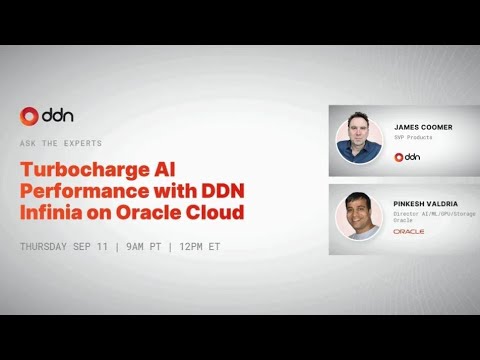
Ask the Experts: Turbocharge Performance with DDN Infinia on Oracle Cloud
DDN· 2025-09-11 15:32
The fastest AI isn’t just about GPUs. It’s about removing I/O bottlenecks that slow your business objectives down. Discover how DDN Infinia and Oracle Cloud Infrastructure (OCI) are redefining AI performance. Join this Ask the Experts session to learn how Infinia’s high-performance, S3-compatible storage along Oracle’s powerful and scalable Cloud Infrastructure deliver ultra-low latency, massive throughput, and linear scalability for the most demanding AI workloads. What you’ll learn: - The biggest challeng ...
Alibaba to raise US$3.2 billion via convertible notes to fund cloud and e-commerce push
Yahoo Finance· 2025-09-11 09:30
Core Viewpoint - Alibaba Group Holding plans to raise US$3.2 billion through the sale of zero-coupon convertible senior notes to fund its cloud and international e-commerce operations [1][3]. Financing Details - The zero-coupon convertible senior notes will mature on September 15, 2032, and will be offered privately to non-US investors [1]. - These notes will not pay interest but can be converted into US-listed shares of Alibaba, with the option for Alibaba to pay in shares, cash, or a combination of both [2]. Conversion and Pricing - The conversion rate is set at 5.1773 American depositary shares (ADSs) for every US$1,000 principal amount, equating to US$193.15 per ADS or HK$188.08 per ordinary share [3]. Allocation of Proceeds - Approximately 80% of the proceeds will be allocated to enhancing cloud infrastructure, including scaling up data centers and upgrading technology [4]. - The remaining 20% will focus on expanding international commerce operations to improve market presence and efficiency [4]. Credit Rating - S&P Global Ratings assigned an A+ rating to the notes, reflecting the low subordination due to Alibaba's significant net cash position [4][5]. - As of June 30, Alibaba's cash and liquid investments were reported at 586 billion yuan (US$82 billion) [5].

Behind $100 Billion Spike — How Oracle Co-Founder Larry Ellison Became World's Richest Man
NDTV Profit· 2025-09-10 18:07
Company Overview - Oracle Corp. co-founder Larry Ellison became the world's richest man after Oracle shares surged by 41% [1] - Oracle was founded in 1977 by Ellison and two partners, and went public on March 12, 1986, just after Microsoft's IPO [3] Personal Background of Co-founder - Ellison was raised in Chicago by his adopted family and dropped out of both the University of Illinois and the University of Chicago [2] - He began his career in programming at Ampex, where he worked on the database for the CIA [2] Business Growth and Strategy - Oracle has invested billions to become a leading provider of cloud infrastructure, focusing on computing power and storage [4] - The company has benefited from the rise of artificial intelligence, as demand for cloud capacity increases among startups and established firms [4] Recent Developments - Oracle's shares have tripled since the public release of ChatGPT in November [5] - In July, Oracle signed a contract with OpenAI for 4.5 gigawatts of data center capacity and counts major companies like Nvidia and TikTok as cloud customers [5]