Embodied Intelligence

Search documents
大厂战投,重现江湖
3 6 Ke· 2025-08-11 04:10
Group 1 - Major internet companies are reinvigorating their strategic investments in the AI sector, viewing it as a key competitive strategy in the evolving landscape of AI technology [1][3] - Alibaba has made significant investments in various stages of the AI industry chain, including energy supply for AI data centers and foundational AI infrastructure [3][5] - JD, Meituan, and Ant Group have also been actively investing in embodied intelligence projects, with JD making multiple announcements in a short period, indicating a shift in its investment strategy [3][7] Group 2 - Alibaba's investment strategy has evolved, focusing on a full-chain approach that includes upstream energy solutions and downstream applications, creating a closed-loop capability in AI [6][7] - Ant Group's investments are concentrated in the embodied intelligence sector, with a dedicated subsidiary established to develop robotic products for various applications [7][8] - JD's recent aggressive investments in embodied intelligence projects highlight its renewed focus on integrating these technologies with its existing data and cloud services [9] Group 3 - ByteDance has adopted a cautious approach to strategic investments, focusing on internal business alignment rather than aggressive external investments, while still maintaining an ambitious AI strategy [10][12] - Tencent's investment activity has been relatively subdued, with a focus on diverse sectors rather than a concentrated effort in AI, reflecting its traditional strategy of waiting for market maturity before making significant moves [13][14] - The differing investment strategies among these major companies illustrate their unique corporate structures, resource endowments, and risk appetites, all aiming to secure a competitive edge in the AI landscape [14]

看见机器人更多新可能
2 1 Shi Ji Jing Ji Bao Dao· 2025-08-09 00:41
Core Insights - The 2025 World Robot Conference opened in Beijing, focusing on making robots smarter and more intelligent, with over 200 domestic and international robot companies participating, marking a record number of humanoid robot exhibitors [1] - Since the first conference in 2015, China's robotics industry has achieved significant technological breakthroughs, with 2024 seeing China accounting for two-thirds of global robot patent applications [1] - In 2024, China's industrial robot market sales reached 302,000 units, maintaining its position as the largest industrial robot market globally for 12 consecutive years [1] Industry Transformation - The robotics sector is undergoing a profound paradigm shift, driven by rapid advancements in AI capabilities, which enhance robot intelligence [2] - The importance of real-world application scenarios and manufacturing capabilities is becoming increasingly significant, as robots must perform effectively in unpredictable environments [2] - China's vast market demand and diverse application scenarios provide a rich testing ground for robotics, positioning it advantageously in the global race for embodied intelligence [2] Technological Advancements - In high-end manufacturing, robots are evolving from simple tasks to high-precision assembly and inspection, necessitating breakthroughs in vision and force control technologies [3] - The logistics sector is experiencing a surge in demand for automated solutions, from sorting to delivery, driven by the volume of packages [3] - The aging population and household labor needs present clear commercial pathways for humanoid robots to integrate into daily life, showcasing the technology's demand-driven evolution [3] Competitive Edge - China is the world's largest robot producer, with industrial robot production increasing from 33,000 units in 2015 to 556,000 units in 2024, and service robot production reaching 10.519 million units, a 34.3% year-on-year increase [3] - The country possesses a complete industrial chain, supporting the complex structure of humanoid robots, which enhances the speed of product development from design to market [3] - The dual advantages of diverse application scenarios and a comprehensive industrial chain enable China to take a leading position in the humanoid robot sector [4] Future Challenges - Despite its advantages, the path to embodied intelligence remains long, requiring continuous technological foundation building and tackling critical challenges in core components [4] - There is a need to develop autonomous core software and algorithms, focusing on creating a robust ecosystem for robotics [4] - The industry must emphasize application-driven development to create impactful solutions rather than merely showcasing advanced technologies [4] Strategic Opportunities - The 2025 World Robot Conference highlights new possibilities for robots, emphasizing both form and application innovations [5] - For China, this represents a strategic opportunity to advance in the global technology innovation chain while also posing significant challenges [5] - Strengthening the technological foundation and deepening application implementation is essential for transforming market advantages into new productive forces for high-quality economic and social development [5]

21社论丨看见机器人更多新可能
21世纪经济报道· 2025-08-09 00:35
Core Viewpoint - The 2025 World Robot Conference highlights the rapid advancements in the robotics industry, particularly in China, which is leading in both production and application of robots, driven by a strong market demand and diverse use cases [1][2][3]. Group 1: Industry Developments - The conference attracted over 200 domestic and international robot companies, marking a record number of humanoid robot exhibitors [1]. - China's robot patent applications accounted for two-thirds of the global total in 2024, showcasing the country's innovation capabilities [1]. - The industrial robot market in China reached sales of 302,000 units in 2024, maintaining its position as the largest industrial robot market globally for 12 consecutive years [1]. Group 2: Technological Advancements - The robotics sector is undergoing a paradigm shift, with AI capabilities rapidly evolving, making robots smarter and more capable of handling complex tasks in real-world environments [2]. - In high-end manufacturing, robots are transitioning from simple tasks to high-precision assembly and inspection, driving advancements in vision and force control technologies [3]. - The production of industrial robots in China increased from 33,000 units in 2015 to 556,000 units in 2024, while service robot production reached 10.519 million units, growing by 34.3% [3]. Group 3: Market Opportunities - The diverse application scenarios in China provide a rich testing ground for robots, enhancing their development and integration into various sectors, including logistics and elder care [2][3]. - The complete industrial chain in China supports the production of complex humanoid robots, ensuring cost control and stable supply [3]. Group 4: Future Challenges - Despite its advantages, the path to achieving "embodied intelligence" remains challenging, necessitating continuous investment in core technologies and overcoming critical bottlenecks [4]. - There is a need to develop autonomous core software and algorithms, particularly in robot operating systems and specialized AI models [4]. Group 5: Strategic Importance - The 2025 World Robot Conference emphasizes the need for a collaborative innovation ecosystem involving government, enterprises, and educational institutions to foster talent with AI, software, and hardware skills [5]. - The advancements in robotics present both a strategic opportunity for China and a challenge to ascend to the top of the global technology innovation chain [5].

顶级城区的竞争力?宝安以“温度”作答
Nan Fang Du Shi Bao· 2025-08-06 13:58
Core Insights - The report highlights the high-quality economic development of urban areas in China, with a focus on Shenzhen's Bao'an district, which ranked fourth in the national top 100 districts for three consecutive years, emphasizing the importance of "temperature" in urban vitality and attractiveness [1] Group 1: Industrial Collaboration - Bao'an has over 50,000 manufacturing enterprises and more than 7,400 national high-tech companies, creating a symbiotic ecosystem that enhances collaborative efficiency [3] - The district's robot industry exemplifies this collaboration, where companies can find top suppliers for essential components nearby, such as TuoBang Co. for controllers and ZhaoWei for motors, showcasing a complete supply chain [3][4] - The establishment of the first national embodied intelligence industry innovation center in collaboration with Huawei Cloud enhances the synergy between software capabilities and local manufacturing, driving technological and market collaboration [4] Group 2: Business Environment - Bao'an's service environment has evolved from merely solving problems to anticipating needs, exemplified by the introduction of five service packages to support enterprise growth [5] - The district has implemented measures to reduce operational costs for businesses, such as facilitating the relocation of noisy enterprises and providing digital tools for efficient communication [5] - A comprehensive financial service system has been established, offering 96 credit products from 25 banks, and facilitating 1,170 financing transactions totaling approximately 12.126 billion yuan [6] Group 3: Quality of Life - The report emphasizes that high-quality development ultimately focuses on people, with various service circles established to ensure community welfare, such as a 5-minute emergency response and a 15-minute employment service [7] - The competitive edge of urban areas is now measured by a comprehensive ecosystem that integrates industry, services, and quality of life, fostering a self-reinforcing cycle that attracts talent and enterprises [7]

宇树科技“上新”!世界机器人大会即将开幕 能否开启上升行情?
Xin Hua Cai Jing· 2025-08-06 02:50
Core Viewpoint - The humanoid robot sector is experiencing significant growth, with a notable increase in stock prices and market interest, driven by technological advancements, policy support, and rising demand [1][7]. Group 1: Industry Developments - The humanoid robot concept has risen by 33.92% year-to-date as of August 5 [1]. - The 2025 World Robot Conference is set to take place from August 8 to 12, showcasing over 1,500 exhibits from more than 200 domestic and international robot companies, with expectations for new product launches [7]. - Multiple brokerage reports indicate that the combination of policy support, technological maturity, surging demand, and competitive supply is propelling the industry forward [7]. Group 2: Company Innovations - Unitree Technology has launched the new quadruped robot dog, Unitree A2, which weighs approximately 37 kg, has a maximum running speed of 5 m/s, and can climb heights of up to 1 meter [2]. - The Unitree A2 is designed for industry applications, capable of carrying a load of 100 kg and maintaining stability on rough terrain [2]. - Unitree Technology's humanoid robot, Unitree R1, was introduced at a starting price of 39,900 yuan, featuring a lightweight design and advanced capabilities such as voice and image recognition [4]. Group 3: Strategic Partnerships - Unitree Technology has entered into strategic partnerships with various companies, including a collaboration with Star Legend for the development of consumer-grade robots [4]. - The company has also partnered with Taotao Automotive to leverage resources for market expansion in North America and product commercialization [4]. Group 4: Market Position and Future Outlook - Unitree Technology is recognized as a leading player in the global quadruped robot market, holding nearly 70% market share in 2023 [5]. - The company is preparing for an IPO, which could enhance its funding capabilities for research and development in advanced technologies [5][6]. - Analysts predict that the successful IPO of Unitree Technology could stimulate investment interest in the humanoid robot sector and promote collaboration within the industry [6].
带货能力最强的一届?我在WAIC激情消费了啥?
Hu Xiu· 2025-08-06 02:46
Group 1 - The recent WAIC2025 event highlighted a significant trend towards AI hardware, particularly those integrated with large models, indicating their increasing maturity and quality [1] - Many vendors at the event were actively selling AI hardware, showcasing a growing market interest and consumer engagement in this sector [1] - Attendees, including industry professionals, were enthusiastic about purchasing AI hardware products, reflecting a strong demand and excitement around these technologies [1]
“让机器人让具身体更智能”,人形机器人赛道持续火热
Huan Qiu Wang Zi Xun· 2025-08-06 01:56
Group 1 - The 2025 World Robot Conference will be held in Beijing, focusing on "making robots smarter with physical bodies," featuring over 100 new products [1] - Embodied intelligence combines a thinking brain with a physical body, allowing AI to operate in the real world, enhancing its practical applications [1] - The future development directions for the next 3-5 years include embodied intelligence, low-cost high intelligence, and multi-scenario penetration, with Chinese companies achieving higher precision and intelligence in technologies like motion control and dexterous hands [1] Group 2 - The humanoid robot sector in China has seen significant activity, with 39 financing events in the first half of the year, totaling nearly 4.2 billion yuan [3]
具身智能数采方案:全身动捕工作一览
具身智能之心· 2025-08-06 00:19
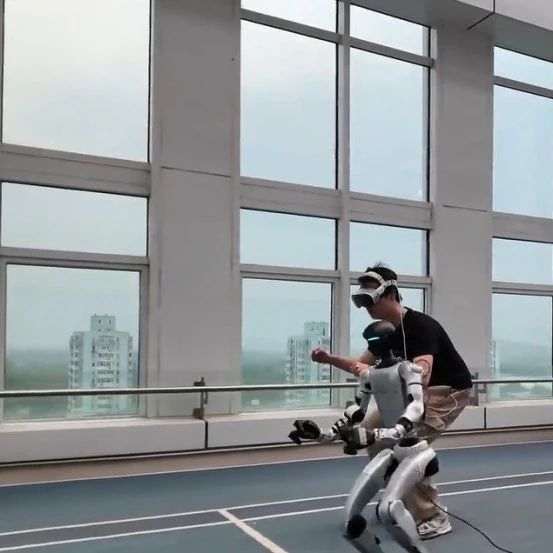
Core Viewpoint - The article discusses various advanced full-body motion capture solutions, highlighting their technical complexities and potential applications in robotics and teleoperation [1][3]. Group 1: OpenWBC Project - OpenWBC enables full-body control of the Unitree G1 robot using Apple Vision Pro for upper body teleoperation and OpenHomie algorithm for lower body movement, supporting full-body data collection [3][5]. Group 2: TWIST Project - TWIST, developed by Stanford University, represents a significant advancement in humanoid robot teleoperation, utilizing full-body motion imitation to achieve coordinated actions through a single neural network controller [6][11]. Group 3: AMO Project - The Adaptive Motion Optimization (AMO) framework from UC San Diego combines reinforcement learning and trajectory optimization for real-time adaptive full-body control, demonstrating superior stability and expanded workspace [9][11]. Group 4: R²S² Framework - The Real-world-Ready Skill Space (R²S²) framework focuses on developing a skill library for humanoid robots, ensuring optimal performance and robust transferability from simulation to real-world tasks [16]. Group 5: CLONE Project - The CLONE system from Beijing Institute of Technology addresses the challenges of humanoid robot teleoperation by implementing a closed-loop correction system, achieving high fidelity in full-body operations with minimal drift [20]. Group 6: Community and Resources - The article promotes the "Embodied Intelligence Knowledge Planet," a community for sharing cutting-edge academic content, open-source projects, and job opportunities in the field of embodied intelligence [23][25][32].
CAAI具身智能专委会主任蒋树强:世界模型是智能体进行决策的重要依据
机器人圈· 2025-08-04 11:38
Core Viewpoint - The core discussion revolves around the concept of embodied intelligence, emphasizing the intricate relationship between body, environment, and intelligence, and how these elements collectively contribute to the realization of intelligent systems [4]. Group 1: Embodied Intelligence - Embodied intelligence is defined by three key elements: body, environment, and intelligence, which interact in complex ways to enable intelligent behavior [4]. - The structure and sensory capabilities of the body significantly influence how an intelligent agent perceives and interacts with the world, highlighting the importance of physical attributes such as height and limb structure [4]. Group 2: Large Models in Embodied Intelligence - The training of embodied large models requires the integration of visual, linguistic, and behavioral data, necessitating a unified approach to data, computing power, and algorithms [4]. - The complexity of data in training embodied large models is heightened as it must encompass multimodal information, including behavior, physical parameters, and tactile data [4]. - Challenges remain in the generalization capabilities of embodied large models in real physical spaces, particularly concerning data complexity and sensor differences [4]. Group 3: World Models - World models serve as abstract representations of the real world, encompassing three-dimensional space, dynamic changes, object relationships, and memory, which are crucial for understanding and predicting environmental states [5]. - The relationship between world models and large models, as well as their connection to three-dimensional spaces, presents areas for further exploration [5]. - Current research often relies on simulators to generate data, but aligning virtual environments with real-world physical parameters remains a significant challenge [5].

宇树科技王兴兴,有新身份
21世纪经济报道· 2025-08-03 23:57
Core Viewpoint - The establishment of the Hangzhou Embodied Intelligence Application Pilot Base aims to accelerate the integrated development of "data-computing-power-model" in the artificial intelligence industry, supported by policies and platforms to seize the high ground in the AI sector [1][2]. Group 1: Pilot Base and Policy Support - The Hangzhou Embodied Intelligence Application Pilot Base will be built by Hangzhou Embodied Intelligence Pilot Base Technology Co., focusing on creating a capability supply center, model training center, scenario verification center, and testing certification center [2]. - The Hangzhou High-tech Zone will provide substantial policy support, including up to 50% subsidies on annual infrastructure usage fees and an annual allocation of 50 million yuan in "data vouchers" to encourage AI model development [2]. - In terms of computing power, the zone will allocate up to 100 million yuan in "computing power vouchers" annually, offering up to 60% subsidies on computing power usage fees [2]. Group 2: Industry Growth and Trends - The robotics industry in China is experiencing exponential growth, with an average growth rate of 50% to 100% reported in the first half of the year across both complete machine manufacturers and component suppliers [4]. - From 2024 onwards, it is expected that a new robot product will be launched daily, with a significant portion of market offerings being Chinese brands [4]. Group 3: AI Programming Advancements - AI programming has seen significant improvements, with the success rate of AI-generated code increasing dramatically compared to the previous year, allowing for efficient software and app development through natural language instructions [4]. - The advancements in AI programming are noted to be more favorable for female programmers, potentially addressing the gender disparity in the programming field [4]. Group 4: Company IPO and Market Position - Yushu Technology is likely to list on the Sci-Tech Innovation Board, with a current valuation exceeding 12 billion yuan, positioning it as a potential new market leader [9]. - The company is in a capital-intensive sector, raising concerns about future financing pressures; however, industry experts believe that as long as the company operates normally, subsequent financing will not be an issue [9]. - Yushu Technology has engaged top-tier institutions for its IPO, including CITIC Securities, which is recognized as a leading underwriter in the industry [9][10].