Oncology

Search documents
Gilead Sciences Rallies 27.2% in Six Months: Buy or Sell the Stock?
ZACKS· 2025-07-08 14:56
Core Viewpoint - Gilead Sciences, Inc. (GILD) has demonstrated strong stock performance, gaining 27.2% over the past six months, significantly outperforming the industry and broader market indices [1][7]. Gilead's HIV Portfolio - The recent FDA approval of lenacapavir, branded as Yeztugo, introduces the first and only twice-yearly injectable option for HIV prevention in the U.S., enhancing Gilead's market-leading HIV treatment portfolio [2][4]. - Gilead's flagship drug, Biktarvy, holds over 51% market share in the U.S. treatment market, while Descovy maintains over 40% market share in the PrEP market [3][4]. - Yeztugo addresses barriers to PrEP adoption, such as adherence and healthcare access, and is expected to increase uptake among underserved populations [5][4]. Financial Performance and Growth - Gilead's stock has outperformed the industry, sector, and S&P 500 index, supported by the FDA approval of Yeztugo and rising earnings estimates [6][7]. - Earnings estimates for Gilead have increased, with the 2025 bottom-line estimate rising to $7.92 from $7.91, and the 2026 estimate improving to $8.48 from $8.39 [15]. Liver Disease Portfolio - Gilead's liver disease portfolio has been strengthened by the FDA approval of seladelpar for primary biliary cholangitis (PBC), which has shown encouraging initial uptake [9][10]. Oncology Business Challenges - Gilead's oncology portfolio faces challenges, particularly in the Cell Therapy franchise due to competitive pressures, but positive results from the ASCENT-03 study on Trodelvy may bolster future growth [11][12]. Strategic Positioning - Gilead's strategic collaborations and acquisitions, including a partnership with Merck for HIV treatment, position the company for continued growth despite competitive pressures from other firms like GSK [17][18]. - The company maintains a strong cash position of $7.9 billion, supporting its attractive dividend yield of 2.83%, which is sustainable [19].



Exelixis Surges 35.2% in Three Months: Buy or Sell the Stock?
ZACKS· 2025-07-07 14:26
Core Viewpoint - Exelixis (EXEL) has demonstrated strong performance in the biotech sector, with a 35.2% increase in stock price over the past three months, significantly outperforming the industry growth of 11.8% [1][7]. Pipeline and Study Updates - The stock received a boost from positive results in the late-stage STELLAR-303 study for zanzalintinib, a promising pipeline candidate [2][3]. - The STELLAR-303 study involved 901 patients with previously non-microsatellite instability-high metastatic colorectal cancer, comparing zanzalintinib in combination with Tecentriq against the standard drug regorafenib [4][5]. - Zanzalintinib is a third-generation oral TKI that targets various receptor tyrosine kinases involved in cancer progression [5]. - The study met one of its primary endpoints, showing a statistically significant improvement in overall survival for the treatment group [5][6]. - Exelixis plans to continue the trial for further analysis of the second primary endpoint related to patients without liver metastases [6]. Product Performance and Revenue Guidance - Exelixis' lead drug, Cabometyx, remains a top TKI for renal cell carcinoma, with strong sales driven by label expansions and high demand [10][11]. - The company raised its 2024 revenue guidance by $100 million, supported by Cabometyx's momentum and pipeline advancements [8][11]. - Recent label expansions for Cabometyx are expected to further enhance sales, particularly in treating neuroendocrine tumors [12][13]. Collaborative Efforts - Exelixis is collaborating with Merck to evaluate zanzalintinib in combination with Keytruda for head and neck squamous cell carcinoma in a late-stage study [9]. Pipeline Expansion - The company is making significant progress in expanding its oncology portfolio beyond Cabometyx, with plans to submit an investigational new drug application for XB371 to the FDA in 2025 [14][15]. Valuation and Estimates - Exelixis shares are currently trading at a price/sales ratio of 5.03x forward sales, higher than the biotech industry's average of 1.57x [16]. - The bottom-line estimate for 2025 has increased to $2.64 per share, with a positive trend in earnings estimates over the past 60 days [18][19]. Investment Outlook - Exelixis is viewed as a strong investment opportunity due to its robust fundamentals, growth prospects, and efforts to enhance shareholder value [20].


ABBV to Boost Immunology Pipeline With Capstan Buyout for $2.1B
ZACKS· 2025-07-01 15:05
Core Viewpoint - AbbVie has entered into a definitive agreement to acquire Capstan Therapeutics for up to $2.1 billion in cash, aiming to enhance its immunology pipeline with innovative therapies [1][7]. Acquisition Details - The acquisition will incorporate Capstan's lead asset, CPTX2309, which is a potential first-in-class in vivo tLNP anti-CD19 CAR-T therapy currently in phase I development for treating B-cell-mediated autoimmune diseases [2][3]. - Capstan's proprietary tLNP platform technology, CellSeeker, will also be added, facilitating RNA delivery to engineer specific cell types within the body [2][7]. - The acquisition is subject to customary closing conditions, including regulatory approvals [3]. AbbVie's Acquisition Strategy - AbbVie has been actively pursuing acquisitions to strengthen its pipeline, particularly in the immunology sector, while also exploring early-stage deals in oncology and neuroscience [4]. - Since the beginning of 2024, AbbVie has signed over 20 early-stage deals, focusing on promising technologies that can enhance care standards in immunology, oncology, and neuroscience [4]. Recent Acquisitions - Earlier in 2024, AbbVie acquired rights to develop GUB014295 (ABBV-295), a long-acting amylin analog for obesity treatment, marking its entry into the obesity market [5]. - In January 2025, AbbVie completed the acquisition of Nimble Therapeutics, adding an investigational oral peptide IL23R inhibitor for psoriasis treatment and a proprietary peptide synthesis platform for autoimmune diseases [8].


Aethlon Medical(AEMD) - 2025 Q4 - Earnings Call Transcript
2025-06-26 21:30
Financial Data and Key Metrics Changes - As of March 31, 2025, the company had a cash balance of approximately $5.5 million [16] - Operating expenses for the year were approximately $9.3 million, a reduction of about $3.3 million or 26% compared to the prior year [17] - A noncash charge of $4.6 million was recognized related to a warrant inducement offer made in March 2025 [17] - The company recorded approximately $324,000 in other income related to the employee retention tax credit under the CARES Act [18] Business Line Data and Key Metrics Changes - The company treated the first three patients in its oncology trial using the Hemopurifier at clinical sites in Australia [6] - Regulatory approval was received in India to initiate a similar oncology study [12] - The trial protocol was expanded to align with evolving standards of care in immunotherapy [6] Market Data and Key Metrics Changes - The collaboration with UCSF on long COVID research is ongoing, with findings to be presented at the upcoming Keystone Symposium [14] - The economic burden of long COVID is estimated to impact 44 to 48 million people in the US [15] Company Strategy and Development Direction - The primary focus remains on oncology, with ongoing trials in Australia and India [22] - The company aims to streamline operations and reduce costs while focusing resources on areas with the greatest clinical and regulatory impact [15] - Future exploration of the Hemopurifier in addressing long COVID is being considered, but oncology remains the main priority [24] Management's Comments on Operating Environment and Future Outlook - Management expressed optimism about the progress made in clinical and laboratory settings, noting it as the most significant advancement since joining the company [16] - The company is preparing for potential partnerships and government grants to support ongoing research and development [57] Other Important Information - The company plans to file its annual report on Form 10-K following the call and will hold its next earnings call in August 2025 [19] Q&A Session Summary Question: What are the focus areas for the company? - The focus remains primarily on oncology, with the upcoming trial in India being parallel to the Australian trial [22][24] Question: What is the expected timeline for delivering more robust data from the Australian trial? - Preliminary data from the first cohort is expected in about three months, with a data safety monitoring board meeting set for July [28][29] Question: Are there any nonrecurring costs expected in the future? - Management does not anticipate additional nonrecurring expenses following the termination of senior executives [32][33] Question: How quickly can patient recruitment be expected in India? - Recruitment in India may proceed faster than one patient per month, depending on oncologists' comfort levels [66][68] Question: What is the landscape for grant approvals currently? - The company is familiar with the grant process and is open to pursuing grants that align with its goals, though the current environment may present challenges [72][74] Question: What is the current expense run rate? - The company is operating at a level that is necessary to continue operations, with potential increases in expenses as clinical activities ramp up [76][78]

Will AbbVie's Growing Oncology Portfolio Aid Top-line Growth?
ZACKS· 2025-06-24 13:25
Core Insights - AbbVie has established a significant oncology franchise, expanding from blood cancer drugs to include therapies for solid tumors, with five oncology products now available [1][7] - The oncology segment contributed over 12% to AbbVie's total revenues in Q1 2025, with expectations for Emrelis, its first internally developed lung cancer drug, to start contributing in Q3 2025 [1][2][7] Company Strategy - AbbVie is pursuing both organic and inorganic growth strategies, with recent additions to its oncology portfolio coming from acquisitions and collaborations, while Emrelis represents an internal development [2] - The company has a diverse pipeline of promising therapies, including etentamig for multiple myeloma and Temab-A for colorectal and gastroesophageal cancers, indicating a strong focus on expanding its oncology offerings [3][7] Competitive Landscape - Major competitors in the oncology space include AstraZeneca, Merck, and Pfizer, with AstraZeneca's oncology sales accounting for nearly 41% of its total revenues and growing by 13% in Q1 2025 [4] - Merck's Keytruda accounted for over 46% of its total revenues in Q1 2025, while Pfizer's oncology revenues grew by 7%, making up over 27% of its total revenues [5] Financial Performance - AbbVie shares have outperformed the industry year to date, although the company's valuation is not considered cheap, trading at a P/E ratio of 13.99 compared to the industry average of 14.81 [6][9] - The Zacks Consensus Estimate for AbbVie's earnings has increased for both 2025 and 2026, indicating positive market sentiment [10]

Pfizer vs BMY: Which Oncology Drugmaker Is a Better Choice for Now?
ZACKS· 2025-06-20 15:06
Core Insights - Pfizer (PFE) and Bristol Myers (BMY) hold a dominant position in the oncology market, which is expected to grow due to an increase in cancer patients globally [1][2] - Oncology sales represent approximately 25% of Pfizer's total revenues, while Bristol Myers focuses on immuno-oncology and has a strong pipeline of drugs [2][9] Pfizer's Position - Pfizer has a diverse oncology product portfolio, including antibody-drug conjugates (ADCs), small molecules, and immunotherapies targeting various cancers [4] - Key approved drugs in Pfizer's portfolio include Ibrance, Xtandi, and others, with Ibrance being a significant revenue generator [5] - The acquisition of Seagen in December 2023 enhanced Pfizer's oncology offerings, adding four ADCs and boosting sales for 2024 and early 2025 [6] - Pfizer is also advancing a pipeline of oncology candidates, expecting to have eight or more blockbuster oncology medicines by 2030 [7] - In addition to oncology, Pfizer's portfolio includes drugs for COVID-19, inflammation, rare diseases, and migraines [8] Bristol Myers' Strategy - Bristol Myers aims to strengthen its leadership in immuno-oncology, with key drugs like Opdivo and Yervoy driving its oncology franchise [9][10] - Recent FDA approvals for Opdivo and other drugs are expected to enhance its market presence [11] - Bristol Myers has expanded its oncology pipeline through acquisitions, including Mirati and RayzeBio, which add significant assets to its portfolio [12][14] - The company is also developing drugs across various therapeutic areas, including hematology and immunology [16] Financial Estimates and Performance - The Zacks Consensus Estimate for Pfizer's 2025 sales indicates a slight decline of 0.6%, while earnings per share (EPS) are expected to decrease by 1.61% [17] - In contrast, Bristol Myers' 2025 sales are projected to decrease by 4.13%, but its EPS is expected to increase significantly due to low figures in 2024 [20] - Year-to-date, Pfizer's stock has declined by 6.8%, while Bristol Myers has seen a larger drop of 15.4% [21] - From a valuation perspective, Pfizer's shares trade at a forward P/E ratio of 7.77, slightly higher than Bristol Myers' 7.22 [22] Dividend Yield and Investment Considerations - Pfizer offers a higher dividend yield of 7.2% compared to Bristol Myers' 5.29%, making it more attractive for income-focused investors [23] - Both companies are currently rated with a Zacks Rank 3 (Hold), indicating a complex decision for investors when choosing between the two [24] - Despite challenges, Pfizer's diverse portfolio and higher dividend yield position it as a preferable choice at present [26]



Pfizer Boasts Strong Oncology Portfolio: Can it Sustain Growth?
ZACKS· 2025-06-19 14:51
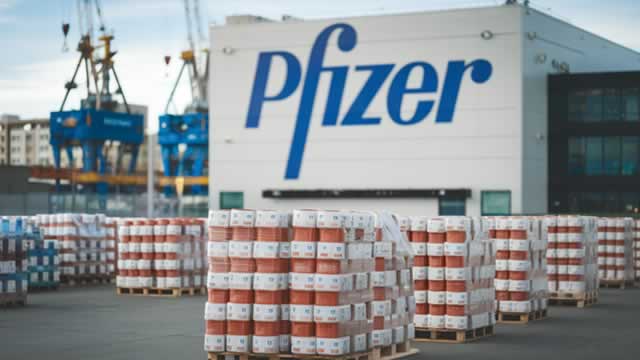
Core Insights - Pfizer is a leading player in oncology with a strong portfolio of approved cancer medicines and a robust pipeline focusing on various modalities, including small molecules and antibody-drug conjugates [1] - The acquisition of Seagen in 2023 enhanced Pfizer's oncology position by adding four ADCs, contributing significantly to revenues in 2024 and Q1 2025, with oncology revenues growing 7% operationally in Q1 2025 [2][8] - Pfizer is expanding its oncology pipeline with several late-stage candidates and has entered the biosimilars market, marketing six cancer biosimilars [3][4] Company Developments - The Seagen acquisition added four ADCs: Adcetris, Padcev, Tukysa, and Tivdak, which have positively impacted Pfizer's revenue [2] - Pfizer has advanced its oncology clinical pipeline with candidates like sasanlimab, vepdegestrant, and sigvotatug vedotin, and has secured an exclusive licensing deal with 3SBio for a dual PD-1 and VEGF inhibitor [3] - The company is also working on expanding the labels of existing oncology products, indicating a proactive approach to enhance its market offerings [4] Competitive Landscape - Major competitors in the oncology space include AstraZeneca, Merck, and Bristol-Myers, with AstraZeneca's oncology sales comprising about 41% of total revenues and growing 13% in Q1 2025 [5] - Merck's Keytruda accounts for approximately 50% of its pharmaceutical sales, while Bristol-Myers' Opdivo represents around 20% of its total revenues [6] Financial Performance - Pfizer's stock has declined 6.8% year-to-date, contrasting with a 0.2% increase in the industry [7] - The company's oncology revenues rose 7% in Q1 2025, driven by key drugs such as Xtandi, Lorbrena, and Padcev [8] - Pfizer's 2025 EPS estimate has increased to $3.06, with a forward P/E ratio of 7.77, which is below the industry average of 15.05 [10][12] Valuation Insights - From a valuation perspective, Pfizer appears attractive, trading below its 5-year mean P/E of 10.90 [10] - The Zacks Consensus Estimate for 2025 earnings has risen from $2.98 to $3.06 per share over the past 60 days, indicating positive sentiment [12]
Moderna, Inc. (MRNA) Presents at Barclays Speaking the Science Call Series Transcript
Seeking Alpha· 2025-06-16 20:44
Core Insights - Moderna is focusing on its oncology pipeline as a key area of interest for investors moving forward [3][4]. Company Overview - The conference call is part of Barclays' 8th annual speaking science conference series, aimed at discussing scientific concepts, clinical program progress, and company strategy [1][2]. Oncology Pipeline - Rose Loughlin, EVP of Research, is presenting a comprehensive slide deck regarding Moderna's oncology pipeline, indicating its importance in the company's future development [3][5]. - The oncology space is highlighted as a significant focus for Moderna, with expectations of substantial investor interest [3].


Moderna (MRNA) Update / Briefing Transcript
2025-06-16 15:00
Summary of Moderna (MRNA) Update / Briefing June 16, 2025 Company Overview - **Company**: Moderna (MRNA) - **Focus**: Oncology pipeline and commercial strategy Key Points on Oncology Pipeline 1. **Oncology as a Key Focus**: The company emphasizes the importance of oncology in its future development, with a focus on individualized therapies and cancer antigen therapies [3][4] 2. **Lead Program - Intisiran Auto Gene (INT)**: This individualized neoantigen therapy has shown a 49% reduction in the risk of recurrence or death in a Phase 2 study for adjuvant melanoma, with pivotal study data expected in 2026 [7][39] 3. **Expansion of INT**: The company is exploring INT in various cancer settings, including combinations with pembrolizumab and as a monotherapy [7][8] 4. **Off-the-Shelf Cancer Antigen Therapies**: These therapies are designed for broader patient use and are currently in development, with lead programs mRNA-4106 and mRNA-4359 targeting specific tumor antigens and training the immune system [10][11] 5. **T Cell Engagers**: The company is developing multiplexed T cell engagers that can target multiple proteins on cancer cells, enhancing the immune response [16][17] 6. **In Vivo Cell Therapies**: Moderna is pursuing innovative approaches to enhance the efficacy of cell therapies, including engineered T cells that can be modified within the patient's body [20][24] Clinical Development and Data 1. **Phase 2 and Phase 3 Studies**: The company is preparing for Phase 3 trials based on encouraging Phase 2 data, with a focus on event-driven trial designs [34][40] 2. **Control Arm Performance**: The performance of the pembrolizumab control arm in Phase 2 is reported to be in line with historical data, addressing investor concerns about patient allocation [32][36] 3. **Safety and Tolerability**: The safety profile of mRNA-4359 and INT is favorable, with low-grade adverse events and no dose-limiting toxicities reported [15][62] Market and Competitive Landscape 1. **Partnerships and Collaborations**: Moderna is closely monitoring competitive developments, including BioNTech's recent acquisition of CareVac and their oncology programs [78] 2. **Regulatory Environment**: The company is navigating a changing political landscape that affects vaccine development and approval processes, particularly in the context of COVID-19 and RSV vaccines [82][86] Financial Guidance and Market Outlook 1. **Revenue Guidance**: Moderna has provided a broad revenue guidance range of $1.5 billion to $2.5 billion for the year, considering potential declines in vaccination rates and other market factors [96] 2. **Future Approvals**: The company is optimistic about upcoming FDA approvals and the potential for expanded indications for its vaccines, particularly for high-risk populations [85][89] Additional Insights 1. **Combination Therapies**: The company is exploring combination therapies with checkpoint inhibitors and other agents, aiming to enhance overall response rates and progression-free survival (PFS) [65][66] 2. **Clinical Trial Design**: The design of clinical trials is being carefully considered, with a focus on achieving statistically significant outcomes that can support regulatory filings [50][52] This summary captures the essential points discussed during the call, highlighting Moderna's strategic focus on oncology, clinical development progress, market positioning, and financial outlook.
PFE's New & Acquired Drugs Hold Key to Revenue Growth Amid Headwinds
ZACKS· 2025-06-12 15:26
Core Insights - Pfizer's COVID product sales have declined post-pandemic, but non-COVID operational revenues have improved in 2024 and early 2025, driven by key products and acquisitions [1][4][8] Group 1: Product Performance - Pfizer had a record year in 2023 with nine new drug approvals contributing to revenue growth [2] - The acquisition of Seagen in December 2023 added four antibody-drug conjugates (ADCs) to Pfizer's oncology portfolio, significantly boosting revenues in 2024 and early 2025 [3][8] Group 2: Competitive Landscape - Major competitors in the oncology space include AstraZeneca, Merck, and Bristol-Myers, with AstraZeneca's oncology sales comprising about 41% of total revenues and growing by 13% in Q1 2025 [5] - Merck's Keytruda accounts for approximately 50% of its pharmaceutical sales, while Bristol-Myers' Opdivo represents around 20% of its total revenues [6] Group 3: Financial Performance and Valuation - Pfizer's stock has declined by 4.4% in 2023, contrasting with a 3.1% increase in the industry [7] - The company's shares are trading at a forward P/E of 7.97, below the industry average of 15.54 and its 5-year historical mean of 10.91 [8][9] - Zacks Consensus Estimate for 2025 earnings has increased from $2.98 to $3.06 per share over the past 60 days [11]