Epkinly

Search documents
Will AbbVie's Oncology Drugs Aid Top Line in 2026?
ZACKS· 2026-03-31 14:32
Core Insights - AbbVie has established a strong presence in the oncology market, primarily driven by blood cancer drugs Imbruvica and Venclexta, while also diversifying its portfolio with newer drugs like Epkinly, Elahere, and Emrelis, which are expected to contribute significantly to future revenues [1][2]. Sales Performance - In 2025, AbbVie's oncology segment generated $6.66 billion, representing approximately 11% of total revenues, with a year-over-year increase of 1.4%, mainly due to rising sales of Venclexta, Epkinly, and Elahere [2]. - A projected decline in oncology sales to $6.5 billion in 2026 is attributed to lower pricing for Imbruvica, although this decrease is expected to be partially offset by increasing sales of other drugs in the portfolio [3][10]. Portfolio Development - AbbVie is enhancing its oncology portfolio by focusing on antibody-drug conjugates (ADCs), which are seen as a disruptive innovation in cancer treatment, allowing for more targeted therapies [4]. - The company currently has two ADCs in its commercial portfolio and is awaiting FDA review for a third ADC therapy, pivekimab sunirine, while also developing another investigational ADC, Temab-A, for various cancers [5][6]. Competitive Landscape - Major competitors in the oncology space include AstraZeneca, Merck, and Pfizer, with AstraZeneca's oncology sales accounting for 44% of total revenues and experiencing a 14% year-over-year growth in 2025 [7]. - Merck's Keytruda, a PD-L1 inhibitor, represented about 49% of its total revenues in 2025, while Pfizer's oncology revenues grew by 8%, driven by several key drugs [8]. Valuation and Market Position - AbbVie shares are currently trading at a P/E ratio of 14.23, which is below the industry average of 16.73, indicating a discount relative to peers [12].


Genmab (GMAB) Fuels Confidence Based on Upcoming Epkinly and Petosemtamab Readouts
Yahoo Finance· 2026-03-26 05:55
Core Insights - Genmab A/S (NASDAQ:GMAB) is identified as one of the 15 large cap stocks under $30 with significant upside potential, with a projected median 1-year price target of $39.25, indicating an upside of almost 53% from current levels [1] - Wells Fargo initiated coverage on Genmab A/S with an Overweight rating and a target price of $40, suggesting an upside potential of nearly 56% [2] - The company is expected to have pivotal developments in 2026, particularly regarding the upcoming readouts for Epkinly and petosemtamab, which are considered substantially de-risked [3] Analyst Ratings - Consensus sentiment for Genmab A/S remains strongly bullish, with 9 analysts covering the stock, 7 of whom have assigned Buy ratings and 2 Hold ratings, with no Sell ratings present [1] - Guggenheim analyst Michael Schmidt reduced the target price from $45 to $40 while maintaining a Buy rating, citing a deflated outlook for Epkinly in the near term [4] Company Overview - Genmab A/S is a biotechnology company based in Denmark, focused on developing antibodies and related products for cancer and other diseases, with marketed products including EPKINLY, TEPKINLY, and Tivdak [5]

AbbVie Slips Below 50-Day SMA: Buy, Sell or Hold the Stock?
ZACKS· 2026-03-17 16:45
Core Insights - AbbVie (ABBV) stock has recently slipped below its 50-day simple moving average (SMA), indicating short-term weakness, but remains above its 200-day SMA, suggesting a strong long-term uptrend due to solid fundamentals [1][8][30] Group 1: Drug Performance and Growth - AbbVie has successfully launched new immunology drugs, Skyrizi and Rinvoq, which generated combined sales of $26 billion in 2025, with expectations to exceed $31 billion in 2026, reflecting over 40% year-over-year growth [5][6][8] - The strong performance of Skyrizi and Rinvoq is driven by market share gains, new indications, and anticipated approvals for additional indications, potentially adding $2 billion to peak-year sales for Rinvoq [6][8] - AbbVie's neuroscience portfolio also contributed to growth, with sales increasing nearly 20% to $10.8 billion in 2025, driven by products like Botox Therapeutic and newer migraine treatments [9][10] Group 2: Challenges and Erosion - AbbVie faces challenges from the erosion of Humira sales, which declined around 50% in 2025 due to biosimilar competition, and is expected to continue declining in 2026 [16][28] - The aesthetics segment is also struggling, with global sales declining 5.9% in 2025, and expectations for flat growth in 2026 due to ongoing macro challenges [17][18] Group 3: Future Outlook and Investments - AbbVie anticipates total revenue growth of approximately 9.5% in 2026, driven by strong sales from Skyrizi, Rinvoq, and Vyalev, while facing headwinds from Humira erosion [28][29] - The company is on an acquisition spree, investing over $5 billion in innovative pipeline candidates to bolster long-term growth, particularly in immunology, oncology, and neuroscience [14][15] - AbbVie expects high single-digit revenue growth through 2029, with no significant loss of exclusivity events anticipated, allowing for increased R&D investments [29]
Netflix upgraded, Pinterest downgraded: Wall Street's top analyst calls
Yahoo Finance· 2026-03-02 14:53
Core Viewpoint - Several financial institutions have initiated coverage on various companies with differing ratings and price targets, reflecting a mix of optimism and caution regarding their future performance. Group 1: Netflix (NFLX) - Barclays reinstated coverage with an Equal Weight rating and a price target of $115, suggesting that the stock's valuation may benefit from potential estimates upside as the company divests from Warner Bros. assets, but concerns about the rationale behind the bidding remain [1]. Group 2: Beachbody Company (BODI) - Craig-Hallum initiated coverage with a Buy rating and a price target of $15, highlighting the company's effective cost management during its turnaround and multiple growth initiatives, including the retail launch of Shakeology, P90X, and Insanity products, as well as a new P90X program after 20 years and a fitness program targeting 180 million inactive Americans [1]. Group 3: Forgent Power Solutions (FPS) - Goldman Sachs initiated coverage with a Buy rating and a price target of $48, noting that Forgent is among the few companies capable of providing a complete powertrain to data centers, positioning it to benefit as a marginal supplier of capacity. Other firms like KeyBanc, JPMorgan, and TD Cowen also started coverage with Buy-equivalent ratings, while Morgan Stanley and Baird opted for Neutral-equivalent ratings [1]. Group 4: Bob's Discount Furniture (BOBS) - KeyBanc initiated coverage with an Overweight rating and a price target of $28, indicating a 32% upside potential. The firm views Bob's as a compelling small-cap growth story, with several other institutions also starting coverage with Buy-equivalent ratings, while Goldman Sachs and Baird provided Neutral-equivalent ratings [1]. Group 5: Genmab (GMAB) - Wells Fargo initiated coverage with an Overweight rating and a price target of $40, expressing confidence that the upcoming readouts for Epkinly and petosemtamab are largely de-risked based on Phase 2 data [1].


Genmab(GMAB) - 2025 Q4 - Earnings Call Transcript
2026-02-17 18:02
Financial Data and Key Metrics Changes - Total revenue increased by 19% to $3.7 billion in 2025, driven by strong execution across the royalty portfolio and commercialized medicines [25][26] - Operating profit expanded to $1.26 billion, reflecting strong execution and increasing operating leverage as the business scales [26][30] - Sales of proprietary medicines totaled $632 million, up 54% year-over-year, accounting for approximately 28% of total revenue growth [16][25] Business Line Data and Key Metrics Changes - Epkinly achieved $468 million in sales for 2025, representing a 67% year-over-year increase, driven by its dual indication in diffuse large B-cell lymphoma and follicular lymphoma [17][19] - Tivdak generated $164 million in sales, a 26% year-over-year increase, maintaining market leadership in recurrent or metastatic cervical cancer [20][21] Market Data and Key Metrics Changes - Epkinly closed 2025 with regulatory approvals in over 65 countries, nearly all featuring the dual indication [17] - The U.S. market saw increased uptake for Epkinly, particularly in community settings, with a majority of health systems ordering from multiple sites [18] Company Strategy and Development Direction - The company aims to accelerate the development of its late-stage pipeline and maximize the potential of its commercialized medicines, with a focus on sustainable growth into the 2030s [5][6] - The acquisition of Merus is expected to enhance the late-stage portfolio with petosemtamab, providing multiple value-creating catalysts in 2026 and beyond [8][26] Management's Comments on Operating Environment and Future Outlook - Management expressed confidence in the ability to execute on key data readouts in 2026 and subsequent high-impact launches in 2027, emphasizing a disciplined approach to capital allocation [31] - The company anticipates continued momentum in Epkinly and its royalty portfolio, with a revenue growth guidance of 14% for 2026 [27][30] Other Important Information - The company has five combined breakthrough therapy designations for its late-stage programs, which have multi-billion dollar potential [9] - The company is committed to deleveraging, targeting gross leverage below 3x by the end of 2027 [30] Q&A Session Summary Question: Next steps for Epkinly following EPCORE DLBCL-1 study results? - Management confirmed that the study showed positive progression-free survival but missed overall survival, and discussions with regulatory agencies are ongoing regarding the next steps [34][36] Question: Update on outpatient data for Epkinly? - Management indicated that the outpatient study is crucial for modifying the label and facilitating administration in the community [43][46] Question: Expectations for Rina-S pivotal phase two readout? - Management stated that the study is designed to support accelerated approval based on overall response rate and duration of response [51][54] Question: Expectations for EPCORE DLBCL 4 trial? - Management expressed optimism that the trial will lead to registration in second-line and third-line settings, differentiating it from other studies [58][60] Question: Thoughts on pembro approval in PROC and implications for Rina-S? - Management acknowledged the approval as a good option for patients but believes Rina-S can be more transformative for a broader population [62][64] Question: Confirmation on interim results for Epkinly frontline DLBCL trial? - Management reiterated that the readout for the study is expected to happen in 2026 [55][68]
Genmab(GMAB) - 2025 Q4 - Earnings Call Transcript
2026-02-17 18:00
Financial Data and Key Metrics Changes - Total revenue increased by 19% to $3.7 billion in 2025, driven by strong execution across the royalty portfolio and commercialized medicines [24][25] - Operating profit expanded to $1.26 billion, reflecting strong execution and increasing operating leverage as the business scales [25][27] - Sales of proprietary medicines totaled $632 million, up 54% year over year, accounting for approximately 28% of total revenue growth [14][24] Business Line Data and Key Metrics Changes - Epkinly achieved $468 million in sales for the year, representing a 67% year-over-year increase, driven by its dual indication in diffuse large B-cell lymphoma and follicular lymphoma [15][24] - Tivdak generated $164 million in sales, representing a 26% year-over-year increase, maintaining market leadership in recurrent or metastatic cervical cancer [19][20] Market Data and Key Metrics Changes - Epkinly closed 2025 with regulatory approvals in more than 65 countries, nearly all featuring the dual indication [15] - The U.S. market saw increased uptake for Epkinly, particularly following its approval in second-line follicular lymphoma [17][18] - Tivdak's launch in Germany showed strong uptake, with positive physician feedback [20] Company Strategy and Development Direction - The company aims to accelerate the development of its late-stage pipeline and maximize the potential of its commercialized medicines [5][24] - The acquisition of Merus is expected to enhance the late-stage portfolio with petosemtamab, contributing to sustainable growth [6][25] - The focus for 2026 includes advancing proprietary portfolio impact, expanding market footprint, and preparing for multiple product launches [22][28] Management's Comments on Operating Environment and Future Outlook - Management expressed confidence in the ability to execute on key data readouts in 2026 and subsequent high-impact launches in 2027 [29] - The company anticipates continued revenue growth driven by Epkinly and its royalty portfolio, with a guidance of 14% total revenue growth for 2026 [26][28] - Management highlighted the importance of maintaining substantial profitability while investing in growth opportunities [27][28] Other Important Information - The company has five combined breakthrough therapy designations for its late-stage programs, indicating multi-billion dollar potential [7] - The anticipated data readouts in 2026 are expected to set the stage for multiple important product launches and line extensions in 2027 [8][10] Q&A Session Summary Question: Next steps for Epkinly following EPCORE DLBCL-1 study results - Management confirmed that the study showed positive progression-free survival but missed overall survival, with ongoing discussions with regulatory agencies about the data [31][33] Question: Update on outpatient data for Epkinly - Management indicated that the outpatient study is crucial for modifying the label and facilitating administration in the community [40][42] Question: Expectations for Rina-S pivotal phase two readout - Management stated that the study is designed to support accelerated approval based on overall response rate and duration of response [47][49] Question: Expectations for EPCORE DLBCL-4 trial outcomes - Management expressed optimism that the trial will lead to registration in second-line and third-line settings, differentiating it from other studies [53][55] Question: Thoughts on pembro approval in PROC and implications for Rina-S - Management acknowledged the approval as a good option for patients but believes Rina-S can be more transformative for a broader population [57][59] Question: Clarification on phase 3 for petosemtamab - Management confirmed that the phase 3 studies have dual endpoints of overall response rate and overall survival, which are standard in areas of unmet medical need [75]
AbbVie Down Since Q4 Earnings Report: How to Play the Stock
ZACKS· 2026-02-17 15:01
Core Insights - AbbVie reported better-than-expected fourth-quarter results but faced stock price pressure due to declining oncology drug sales and market caution regarding growth sustainability [1] - The company has successfully launched new drugs, Skyrizi and Rinvoq, to offset the decline from Humira, which lost patent protection [2][3] - AbbVie expects continued revenue growth driven by strong performance in immunology and neuroscience, despite challenges in aesthetics and oncology segments [9][23] Group 1: Financial Performance - AbbVie achieved combined sales of Skyrizi and Rinvoq of $26 billion in 2025, representing over 40% year-over-year growth, with projections of over $31 billion for 2026 [3][9] - The company anticipates a revenue growth of approximately 9.5% in 2026, driven by Skyrizi, Rinvoq, and Vyalev, while facing headwinds from Humira erosion [23][24] - AbbVie's neuroscience drugs generated nearly $10.8 billion in sales in 2025, marking a 20% increase, supported by products like Botox Therapeutic and Vraylar [6] Group 2: Product Pipeline and Growth Drivers - AbbVie is focusing on expanding its immunology portfolio with potential new indications for Rinvoq, which could add approximately $2 billion to peak-year sales [4] - The oncology segment generated $6.6 billion in 2025, with new drugs like Elahere and Epkinly contributing to revenue despite a decline in Imbruvica sales [8][10] - AbbVie has been actively acquiring innovative pipeline candidates, investing over $5 billion in 2025 to enhance its early-stage pipeline [11] Group 3: Challenges and Market Conditions - Humira sales are declining significantly due to biosimilar competition, with a projected 50% drop in 2025 and continued erosion expected in 2026 [12] - The aesthetics segment is facing challenges, with global sales declining 5.9% in 2025, and expectations for flat growth in 2026 [13][14] - AbbVie is navigating competitive pressures in its oncology portfolio, but remains optimistic about its pipeline and future product approvals [10][23] Group 4: Stock Valuation and Market Position - AbbVie stock has risen 17.9% over the past year, slightly underperforming the industry average of 19.5% [15][16] - The stock is trading at a price/earnings ratio of 15.75, which is lower than the industry average of 18.83, indicating reasonable valuation [18] - The Zacks Consensus Estimate for 2026 earnings has increased slightly from $14.45 to $14.49 per share, reflecting positive sentiment [20]
艾伯维2025年Q4财报超预期,上调2026年盈利指引
Jing Ji Guan Cha Wang· 2026-02-13 19:36
Financial Performance - In early February 2026, AbbVie reported Q4 2025 sales of $16.6 billion, exceeding market expectations of $16.4 billion; adjusted EPS was $2.71, above the analyst average estimate of $2.65. The company raised its 2026 adjusted EPS guidance to a range of $14.37 to $14.57, higher than the market expectation of $14.22, reflecting confidence in this year's performance [1]. Business Developments - In Q4, Botox sales reached $717 million, marking the first growth since Q3 2024 and surpassing market expectations. The company implemented new marketing strategies, such as the "Naturally You" campaign, to revive its aesthetic business. However, Botox is included in the U.S. federal Medicare price negotiation list, which may lead to price adjustments starting in 2028 [2]. - The neuroscience segment generated $10.767 billion in revenue for 2025, a 19% year-over-year increase, making it the fastest-growing segment. AbbVie plans to strengthen its pipeline through internal R&D and external collaborations, including the acquisition of Cerevel Therapeutics, with a focus on Parkinson's disease therapies like Tavapadon, which has been submitted for approval [3]. - The oncology segment reported $6.655 billion in revenue for 2025, showing a slowdown in growth. However, new drugs performed well, with the global first c-Met ADC drug Teliso-V approved in May 2025, and sales of CD3×CD20 bispecific antibody Epkinly and FRα ADC drug Elahere increasing by 85.5% and 44%, respectively. The company completed over 10 transactions in 2025, totaling over $13 billion, and secured exclusive licensing for PD-1/VEGF bispecific antibody RC148 with Rongchang Bio in January 2026, further expanding its oncology pipeline [4]. - The immunology segment achieved $30.4 billion in revenue for 2025, a 14% year-over-year increase. Despite a decline in Humira sales due to patent expiration, new drugs Skyrizi and Rinvoq showed strong demand, with Q4 sales of $5 billion and $2.4 billion, respectively, supporting the business transition [5].
Here's What Will Drive AbbVie's Top-line Growth in 2026
ZACKS· 2026-02-10 14:35
Core Insights - AbbVie experienced a sales growth of approximately 8.5% year over year in 2025, despite facing biosimilar erosion of its flagship drug Humira, which lost exclusivity in early 2023 [2] - For 2026, AbbVie projects revenues to reach $67 billion, indicating a growth of about 9.5% over 2025, primarily driven by newer immunology drugs Rinvoq and Skyrizi [3][10] Immunology Segment - AbbVie expects to generate over $31 billion from sales of Skyrizi and Rinvoq in 2026, with both drugs anticipated to grow more than 20% year over year [4][5][10] - Skyrizi is projected to achieve sales of approximately $21.5 billion, while Rinvoq is expected to reach around $10.1 billion [5] Neuroscience Segment - The neuroscience franchise is expected to contribute $12.5 billion in sales for 2026, reflecting a 16% growth over 2025 [7][10] - AbbVie anticipates Vyalev, a new Parkinson's disease therapy, to surpass $1 billion in global sales [7][10] - The company is also seeking FDA approval for a new oral therapy for Parkinson's disease, tavapadon, which could further enhance its neuroscience portfolio [8] Oncology Segment - AbbVie faces near-term challenges in its oncology segment, particularly with the J&J-partnered Imbruvica, which is expected to see sales decline to $2.2 billion, a drop of over 23% from 2025 [11][12][10] - Despite this decline, other oncology drugs are expected to partially offset the impact, including Venclexta, Epkinly, Elahere, and Emrelis [12] Valuation and Market Performance - AbbVie shares have underperformed the industry over the past year and are currently trading at a P/E ratio of 15.25, below the industry average of 18.75 [13][14] - The bottom-line estimate per share for 2026 and 2027 has seen a decline in the past 30 days [16]
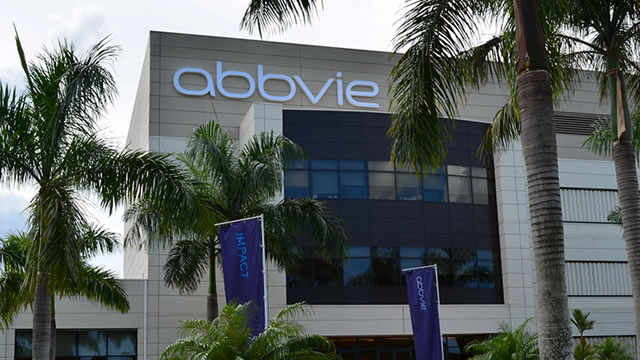
AbbVie Beats on Q4 Earnings, Stock Down Despite Upbeat '26 View
ZACKS· 2026-02-04 18:31
Core Insights - AbbVie Inc. reported fourth-quarter 2025 adjusted EPS of $2.71, surpassing the Zacks Consensus Estimate of $2.66 and the company's prior guidance of $2.61-$2.65, with earnings increasing over 25% year over year [1][10] - The company's revenues reached $16.62 billion, exceeding the Zacks Consensus Estimate of $16.36 billion, with a year-over-year growth of 10.0% on a reported basis and 9.5% operationally [2][10] Revenue Performance - Key drugs driving revenue included Rinvoq, Skyrizi, Venclexta, and Vraylar, alongside contributions from newer drugs like Ubrelvy, Qulipta, Elahere, and Vyalev, while sales of Humira and Imbruvica declined [3] - Immunology drug Rinvoq generated $2.37 billion in net revenues, up nearly 29%, although it missed the Zacks Consensus Estimate of $2.39 billion [4] - Skyrizi's sales reached $5.01 billion, reflecting a 32% increase and surpassing the Zacks Consensus Estimate of $4.91 billion [5] - Humira's sales fell 26% to $1.25 billion, with U.S. sales down 28% to $897 million, attributed to loss of exclusivity since January 2023, yet it exceeded the Zacks Consensus Estimate of $949 million [6] - Neuroscience portfolio sales rose over 17% to $2.96 billion, driven by Botox Therapeutic and Vraylar, but missed the Zacks Consensus Estimate of $3.00 billion [7] - Oncology franchise sales decreased 2.5% to $1.66 billion, primarily due to declining Imbruvica sales, missing the Zacks Consensus Estimate of $1.72 billion [9] Cost and Financial Outlook - Adjusted SG&A expenses increased 4% year over year to $3.71 billion, while adjusted R&D expenses rose approximately 13% to $2.56 billion [15] - For the full year 2025, AbbVie reported sales growth of 8.6% to $61.16 billion, exceeding the Zacks Consensus Estimate of $60.93 billion, with adjusted EPS of $10.00, down 1% year over year but beating estimates [16] - AbbVie provided guidance for 2026 adjusted EPS in the range of $14.37-$14.57, excluding impacts from proposed acquisitions, with the Zacks Consensus Estimate at $14.32 [17] Market Reaction and Strategic Focus - Despite strong results, AbbVie's shares traded lower in pre-market trading, likely due to underperformance in Rinvoq and oncology drugs [19] - The company is focusing on inorganic growth to strengthen its early-stage pipeline across multiple therapeutic areas, with recent acquisitions impacting near-term earnings [21][22]