Artificial General Intelligence (AGI)

Search documents
Sam Altman自曝羡慕20岁辍学生,还直言美国难以复制微信这类“全能App”!
AI前线· 2025-10-09 04:48
Core Insights - OpenAI is transitioning from a model company to a general intelligence platform, as evidenced by significant updates announced at DevDay 2025, including embedded applications in ChatGPT, the Agent Builder, and the open Sora API [2][6] - CEO Sam Altman expressed optimism about early breakthroughs in artificial general intelligence (AGI), indicating that these advancements are beginning to occur now [2][4] Developer Updates - The integration of applications within ChatGPT is a long-desired feature, and Altman is particularly excited about it [4] - ChatGPT has reached 800 million weekly active users, showcasing its rapid growth and adoption [4][5] - Developers will receive documentation to maximize the chances of their applications being recommended within ChatGPT [7][8] Technological Advancements - The performance of models has significantly improved over the past two years, leading to the development of the Agent Builder [9] - Creating complex agents has become much simpler, allowing even non-coders to develop them using visual tools [10] - The increase in software development capacity is expected to lead to a substantial rise in global software development and a reduction in the time required for testing and optimization [10] Future of Autonomous Companies - Discussions are ongoing about the emergence of the first billion-dollar company operated entirely by agents, with Altman suggesting it may take a few years to realize [12] - Current tools are not yet capable of fully autonomous operation for extended periods, but significant progress is being made [12][13] AI's Impact on Work - The nature of work is expected to change dramatically, with new job roles emerging as AI technology evolves [31][32] - Altman acknowledges concerns about job displacement but believes that new meaningful work will arise, even if it may not resemble current jobs [32] AGI and Scientific Discovery - Altman defines AGI as surpassing human capabilities in economically valuable tasks, with a focus on AI's ability to make new discoveries [20] - The potential for AI to contribute to scientific breakthroughs is seen as a significant indicator of progress towards AGI [21] AI in Education and Training - OpenAI is actively working on educational content to help users integrate AI into their workflows effectively [23] - The learning curve for using AI tools is expected to be rapid, as users adapt to new technologies [23] Video Generation and Deepfake Technology - High-quality video generation is viewed as a crucial step towards achieving AGI, with implications for human-computer interaction [27] - OpenAI is exploring revenue-sharing models for users who allow their likenesses to be used in generated content [28] Future Directions and Policies - Altman emphasizes the need for a global framework to mitigate risks associated with powerful AI models [34] - OpenAI aims to create a highly capable AI assistant rather than a multifunctional app, differentiating its approach from models seen in other markets [36]


Doomsday or new dawn: what will Nvidia, OpenAI’s circular dealmaking bring
The Economic Times· 2025-10-08 13:36
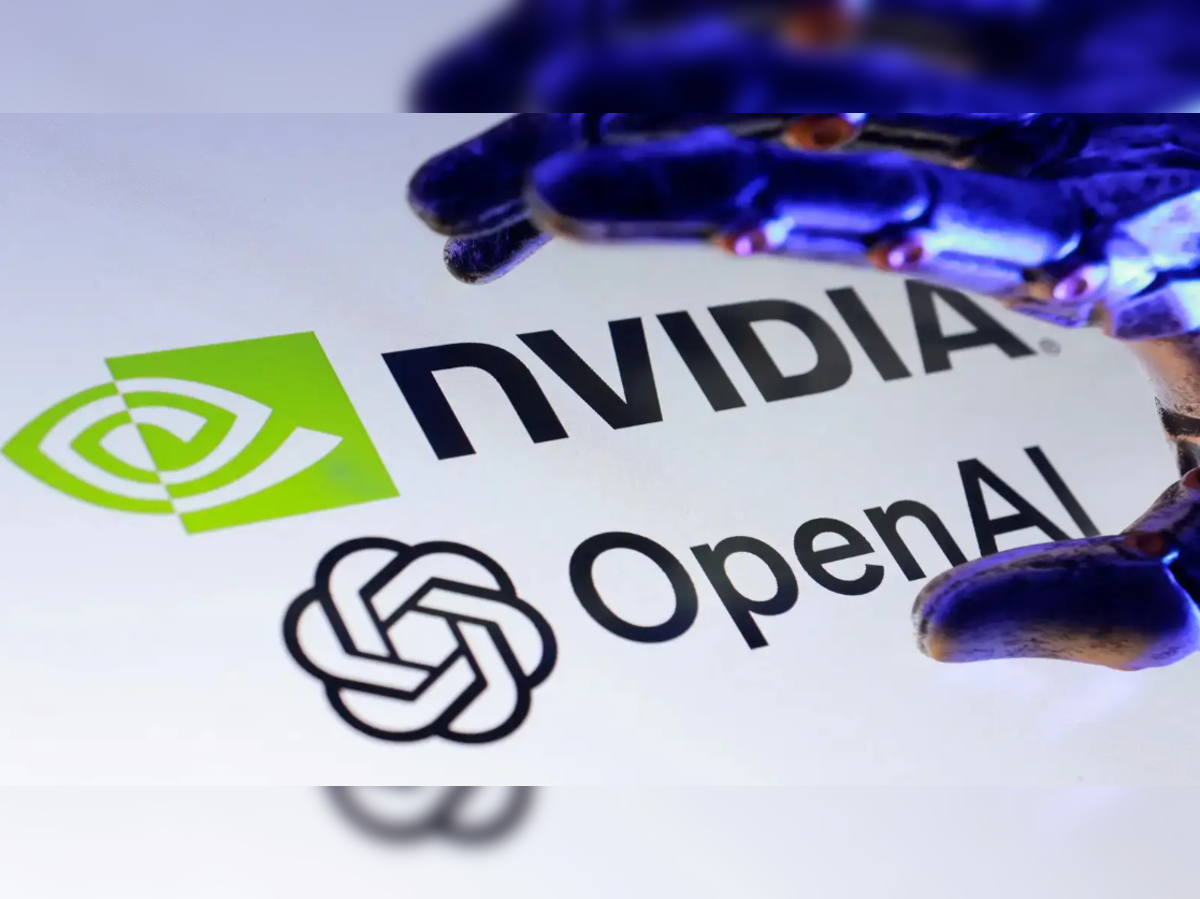
Core Insights - The article discusses the significant investments and circular deals between Nvidia and OpenAI, raising concerns about the sustainability of the AI boom and potential risks of an AI bubble [12][10][6] Investment Activities - Nvidia has signed 50 deals by September 2023, compared to 52 in 2024, indicating a rapid pace of investment in AI infrastructure [9] - OpenAI has made substantial investments, including a $300 billion deal with Oracle for data centers and a $2 billion equity investment in Elon Musk's xAI as part of a $20 billion round [3][12] - CoreWeave, a neocloud company, has received investments from both Nvidia and OpenAI, with Nvidia holding a 7% stake and a $6.3 billion backstop deal for cloud services [4][12] Market Dynamics - The investments are seen as necessary to meet the surging demand for AI technology, with proponents arguing that they represent the new normal rather than a bubble [10][13] - Analysts express concerns that circular financing, where money circulates between companies, may artificially inflate valuations and create risks if demand drops or competition increases [6][11] Company Performance - OpenAI, valued at $500 billion, is yet to turn a profit while planning to invest trillions in AI infrastructure [8][13] - Nvidia, as the dominant player in AI chips, continues to invest heavily, with its deals propping up the valuations of involved parties [6][9] Future Outlook - Executives from both companies express confidence in the long-term viability of their investments, despite concerns about circular financing [10][13] - The potential for a drop in demand or competition from cheaper alternatives poses risks to the current AI investment landscape [11][12]


Nvidia CEO Jensen Huang: Want to be part of almost everything Elon Musk is involved in
Youtube· 2025-10-08 13:23
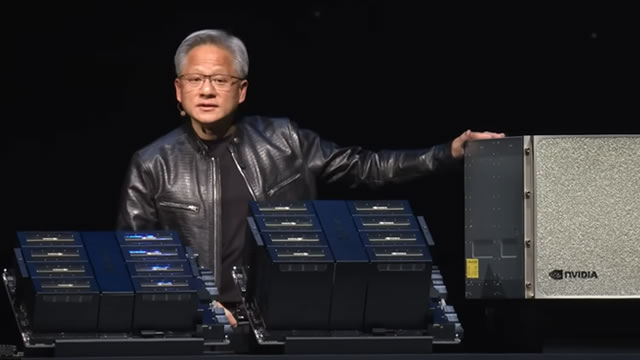
Core Insights - The discussion revolves around vendor financing and its implications for companies like XAI and OpenAI, highlighting a $2 billion financing deal to support AI infrastructure development [1][2] - The current AI landscape is significantly different from the early 2000s, with a much larger market size and more established players, such as hyperscalers with a combined business of approximately $2.5 trillion [4][5] - The transition from traditional CPU-based computing to generative AI powered by GPUs is just beginning, with an estimated $500 billion needed for capacity infrastructure [5][6] Industry Trends - A new generation of AI companies, including OpenAI and XAI, is emerging, focusing on profitable AI token generation, which was previously unfeasible due to the lack of utility in early models [7][8] - The enterprise AI sector is rapidly growing, with companies like Cursor significantly enhancing productivity through AI-assisted coding [12][16] - The distinction between general intelligence and specialized intelligence is emphasized, with specialized intelligence being more valuable for enterprises and general intelligence for consumers [17][18] Investment Opportunities - The company expresses a strong interest in investing in AI startups, indicating a proactive approach to capital allocation and ecosystem building [20][21] - There is a recognition of the need for more energy, chips, models, and applications to support the expanding AI infrastructure [22]
The Single Best Stock to Buy for the AI Revolution? This Company Might Be It
The Motley Fool· 2025-10-06 08:43
Core Viewpoint - Alphabet is considered the best stock to invest in for the AI revolution due to its comprehensive integration of AI technologies across various platforms and products [5][12]. Group 1: Company Comparisons - Nvidia is recognized as a leading AI stock, known for its GPUs that are essential for training AI systems and are used in AI-powered robots and self-driving vehicles [1]. - Microsoft is highlighted for its Azure cloud platform and its partnership with OpenAI, integrating generative AI into widely used software products [2]. - Meta Platforms is focusing on developing artificial superintelligence and is a leader in the AI glasses market [3]. - Tesla is viewed as an undervalued AI stock, with its electric vehicles featuring AI self-driving technology and future growth expected from its humanoid robots [4]. Group 2: Alphabet's Strengths - Alphabet's Google Cloud is the fastest-growing major cloud provider, utilizing Nvidia's GPUs and developing its own Tensor Processing Units (TPUs) for cost-effective machine learning [6]. - The company has integrated generative AI into products like Google Search and Google Workspace, with its Google Gemini large language model competing against OpenAI's offerings [7]. - Google DeepMind is working on artificial general intelligence (AGI) and humanoid robots, while Alphabet's Waymo unit leads in the autonomous ride-hailing market [8][9]. Group 3: Market Position and Valuation - Alphabet's stock is considered more attractively valued than Tesla based on commonly used metrics [9]. - Despite potential risks from rivals and regulatory scrutiny, Alphabet's integration of generative AI into its search engine has shown positive results [11][12].

This Meta alum has spent 10 months leading OpenAI's nationwide hunt for its Stargate data centers
CNBC· 2025-10-05 12:00
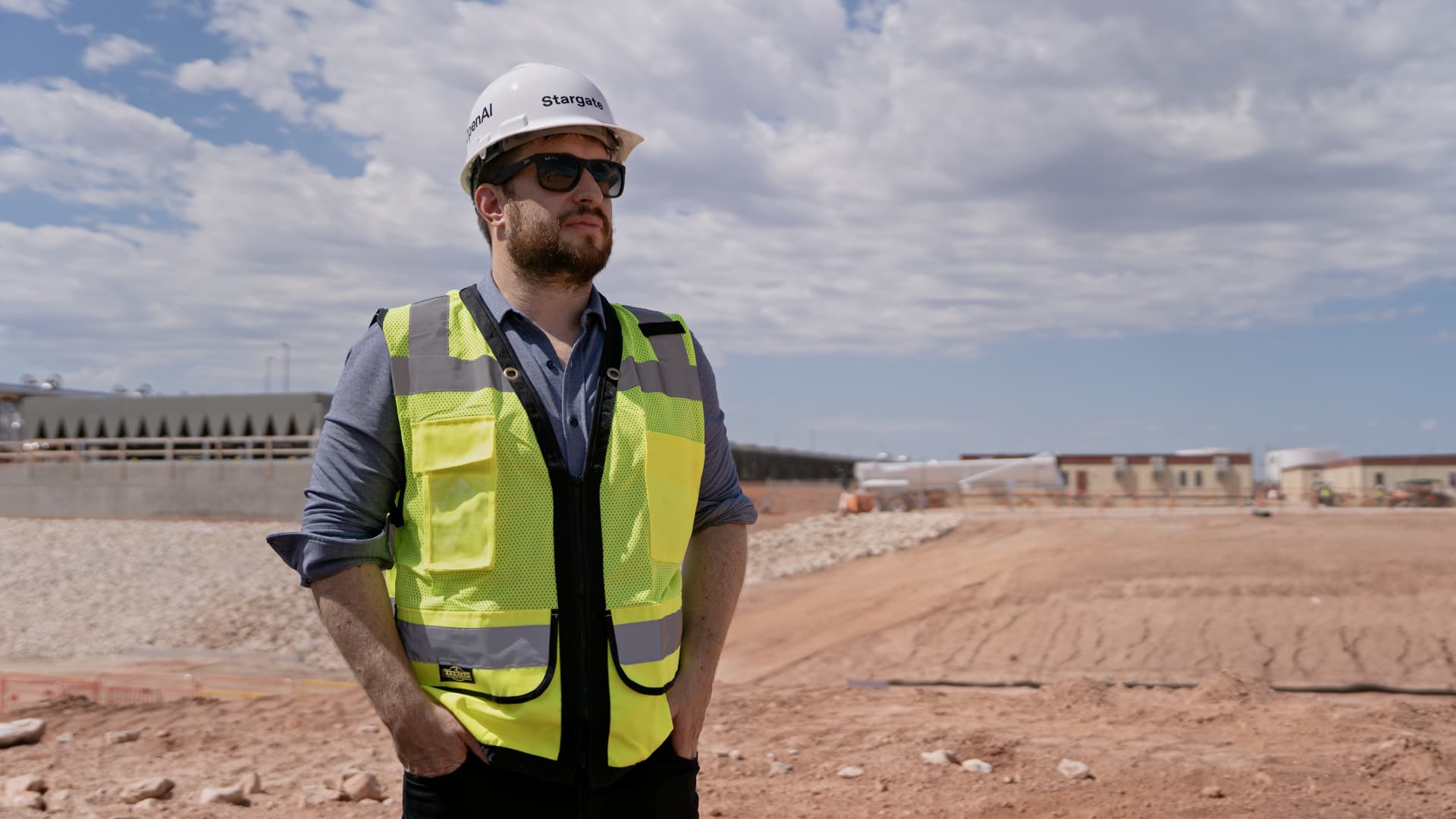
Core Insights - OpenAI is aggressively expanding its infrastructure to support the development of large language models, with a focus on building data centers across the U.S. [2][3][5] - The company is prioritizing access to power, scalability, and community support over tax incentives in its site selection process [3][4][10] - OpenAI's partnership with Nvidia includes a significant investment of up to $100 billion to facilitate the purchase of GPUs for its data centers [9][14] Infrastructure Development - Keith Heyde, the head of infrastructure at OpenAI, is leading the site development efforts, which have become a strategic priority for the company [4][10] - OpenAI is currently reviewing proposals from around 800 applicants for its Stargate data centers, with about 20 sites in advanced stages of diligence [3][11] - The energy requirements for these data centers are substantial, with plans for a 17-gigawatt buildout in collaboration with Oracle, Nvidia, and SoftBank [7][8] Competitive Landscape - OpenAI faces competition from major players like Meta, which is constructing a $10 billion data center, and Amazon, which is developing a large AI campus in Indiana [12][13] - The company has raised significant capital from investors such as Microsoft and SoftBank, contributing to its valuation of $500 billion [13] - OpenAI's approach to owning its infrastructure is aimed at reducing costs and safeguarding intellectual property, similar to Amazon's strategy with AWS [14] Future Plans - OpenAI's long-term vision includes scaling from single-gigawatt projects to larger campuses, indicating a commitment to substantial growth in AI infrastructure [18][19] - The company is exploring various energy options for its data centers, including solar, gas, and nuclear sources, to meet its power needs [8][10] - OpenAI acknowledges the challenges of its ambitious plans but remains optimistic about the feasibility of its infrastructure goals [19]

Prediction: Nvidia Stock Will Go Stratospheric Driven by an Ultra-Competitive Race to Achieve Artificial Superintelligence
The Motley Fool· 2025-09-27 10:30
Core Viewpoint - Nvidia's investment of up to $100 billion in OpenAI is expected to accelerate the race towards artificial superintelligence, which will increase demand for Nvidia's AI-enabling products [1][13]. Group 1: Nvidia's Growth Drivers - The primary growth driver for Nvidia will be the strong demand for its graphics processing units (GPUs) and related technologies that enable generative AI applications [2]. - Generative AI, which gained prominence with the release of OpenAI's ChatGPT, will fuel growth in areas such as customer service, driverless vehicles, and humanoid robots [2][6]. - Long-term growth will also stem from the pursuit of artificial general intelligence (AGI) and artificial superintelligence (ASI), which are less covered but critical to Nvidia's future [3][10]. Group 2: Understanding AGI and ASI - AGI is defined as artificial intelligence that matches average human capabilities across cognitive tasks, while ASI refers to intelligence significantly surpassing that of the smartest humans [7]. - Experts predict that AGI will be achieved around 2040, with entrepreneurs being more optimistic, forecasting it by 2030 [8][9]. Group 3: Nvidia's Market Position - Nvidia's dominance in the AI semiconductor market positions its GPUs as essential for companies aiming to achieve AGI and ASI, including major tech firms and AI startups [10][12]. - While competitors are developing their own AI chips, Nvidia's GPUs remain the gold standard for training AI models and deploying applications [11][12]. Group 4: Investment Context - Nvidia's planned $100 billion investment in OpenAI is nearly double its cash and equivalents on its balance sheet and exceeds the cash reserves of other major tech companies [14]. - This investment is expected to enhance Nvidia's competitive edge in the AI market, as companies increasingly invest in Nvidia's infrastructure to support their AI initiatives [14].
X @Herbert Ong
Herbert Ong· 2025-09-26 11:48
Collaboration & Technology - Apptronik is collaborating with Google DeepMind on Gemini Robotics 1.5 to deploy Gemini-powered Apollo humanoid robots [2] - The collaboration aims to bring AGI (Artificial General Intelligence) into the physical world [1] - Gemini Robotics VLA (Visual Language Adaptation) is reaching a milestone in embodied intelligence [1] - The project is moving beyond reactive models to a new era of robotic autonomy through agentic capabilities like reasoning, planning, and tool use [1] Deployment & Application - Apptronik is preparing to deploy Gemini-powered Apollo humanoid robots in additional customer facilities [2] - The goal is to transform a powerful model into a field-ready system with consistency, reliability, and purpose [2]
OpenAI's Sam Altman and the father of quantum computing just agreed on a Turing Test 2.0
Business Insider· 2025-09-24 23:02
Core Insights - The discussion between OpenAI CEO Sam Altman and physicist David Deutsch centered around defining true intelligence in AI, with a new benchmark proposed: the ability of AI to crack quantum gravity and explain its reasoning [1][10]. Group 1: AI and Intelligence - Altman and Deutsch engaged in a dialogue about the nature of intelligence, with Deutsch emphasizing that genuine intelligence involves creating knowledge rather than merely processing information [4][5]. - Deutsch acknowledged that while ChatGPT can engage in conversation, it does not qualify as AGI, as it lacks the ability to create knowledge [4][9]. - The conversation highlighted a distinction between large language models and true intelligence, with Deutsch asserting that real intelligence requires problem-solving and innovation [5][9]. Group 2: The Role of Intuition - Deutsch praised Altman for his intuition and decision-making in bringing ChatGPT to life, suggesting that such intuition cannot currently be programmed into machines [9]. - Altman proposed a hypothetical scenario where an AI could understand and explain quantum gravity, which Deutsch agreed would be a significant indicator of true intelligence [10].

从战略到落地,吴泳铭如何让阿里AI跑出加速度?
Tai Mei Ti A P P· 2025-09-24 12:55
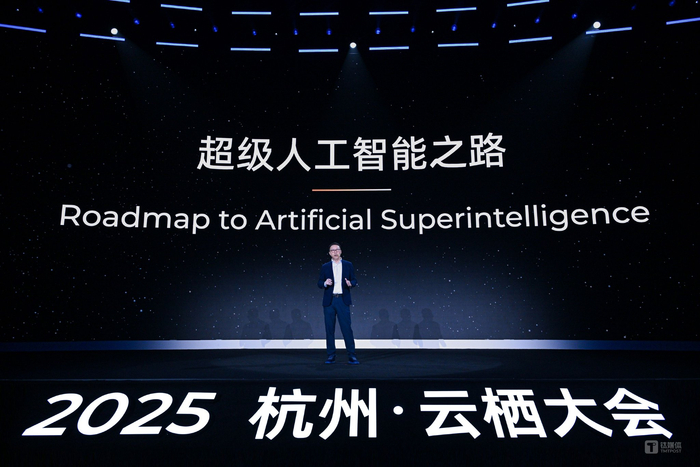
Core Insights - Alibaba Cloud has transitioned from being merely a "cloud service provider" to a "full-stack AI service provider" within two years, marking a significant strategic shift in its business model [3][4] - The company aims to develop Artificial Superintelligence (ASI) as its ultimate goal, with the current focus on achieving Autonomous Action in AI capabilities [2][12] Financial Performance - In the first quarter of the 2026 fiscal year, Alibaba Cloud reported a revenue increase of 26% year-on-year, reaching 33.398 billion yuan, marking the highest growth rate in three years and surpassing market expectations [4][15] - The strong growth is attributed to the rise in public cloud revenue, with AI-related product revenue maintaining triple-digit growth for eight consecutive quarters [15] Strategic Adjustments - The strategic shift involves two core directions: AI-driven development and a public cloud-first approach, focusing on enhancing the quality of revenue and reducing project-based sales orders [5][15] - The company has committed to a three-year investment plan of 380 billion yuan for AI infrastructure development, indicating a long-term vision for AI capabilities [15] Technological Advancements - Alibaba Cloud has established itself as a leading provider of open-source large models, with the Tongyi Qianwen series achieving significant milestones in model performance and capabilities [6][7] - The flagship model, Qwen3-Max, has demonstrated exceptional performance in coding and agent tool utilization, ranking among the top globally in various benchmarks [7] Market Position - According to reports, Alibaba Cloud leads the AI cloud market in China, with a market share that surpasses the combined total of its next three competitors [5][8] - Over 70% of the Fortune China 500 companies have adopted generative AI, with Alibaba Cloud having the highest penetration rate [8] Industry Applications - Alibaba Cloud has successfully implemented AI applications across various industries, including finance and manufacturing, showcasing its capabilities in real-world scenarios [9][10] - The company has partnered with major enterprises, including banks and automotive manufacturers, to enhance their AI applications and operational efficiencies [10][11]
Nano Banana不及格,开源模型一分难求!上海AI Lab新基准直击文生图模型痛点
量子位· 2025-09-24 03:32
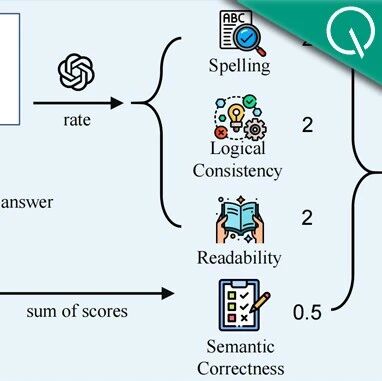
Core Viewpoint - The article discusses the introduction of GenExam, a new benchmark for evaluating the capabilities of text-to-image models in generating accurate and contextually relevant diagrams across multiple disciplines, highlighting the current limitations of even the top models in this area [2][7][23]. Group 1: GenExam Overview - GenExam is the first multidisciplinary text-to-image examination benchmark, developed by a collaboration of several prestigious institutions, aiming to redefine the capabilities of text-to-image models [2][4][8]. - The benchmark includes 1,000 carefully selected questions across 10 disciplines, focusing specifically on diagram-related tasks, and is designed to assess the models' understanding, reasoning, and drawing capabilities [4][8][10]. Group 2: Evaluation Results - The results from the GenExam reveal that even the top models, such as GPT-4o, achieved a mere 12.1% accuracy under strict grading, while open-source models scored close to zero [5][19]. - The evaluation criteria include semantic correctness and visual reasonableness, with a dual scoring system that allows for both strict and lenient assessments [14][19]. Group 3: Model Performance Analysis - A total of 18 mainstream models were tested, revealing significant performance gaps between closed-source and open-source models, particularly in semantic correctness and visual accuracy [16][17]. - The best-performing closed-source model, GPT-Image-1, still fell short with a strict score of only 12.1%, indicating that while models can generate basic structures, they often miss critical details [19][22]. Group 4: Implications for Future Development - The findings from GenExam suggest that current models need to improve in knowledge integration, logical reasoning, and precise generation to transition from general image generation tools to specialized domain assistants [23][24]. - The benchmark sets a new goal for models to focus on generating correct rather than merely aesthetically pleasing images, marking a significant shift in the evaluation of AI capabilities [23][24].