中华民族共同体意识

Search documents
省委统战部举办“统战理论大讲堂”
Liao Ning Ri Bao· 2025-10-17 01:05
Core Points - The event focused on "Chinese Civilization and the Chinese National Community" and was attended by provincial, municipal, and county-level United Front Work cadres [1] - The meeting emphasized the importance of Xi Jinping's thoughts on strengthening and improving ethnic work, which reveals the internal laws of the development of the Chinese nation and provides fundamental guidance for the Party's ethnic work in the new era [1] Summary by Categories Policy and Guidance - The meeting highlighted the need for provincial United Front cadres to deeply study and implement Xi Jinping's important thoughts on the United Front work in the new era [1] - It stressed the importance of consolidating the awareness of the Chinese national community as the main line of work [1] Actions and Initiatives - Continuous deepening of the creation of ethnic unity and progress is essential, along with the implementation of actions to enrich border areas and benefit the people [1] - The meeting called for promoting extensive exchanges and integration among various ethnic groups to build a shared spiritual home for the Chinese nation [1] Leadership and Collaboration - The meeting underscored the necessity of maintaining and strengthening the Party's comprehensive leadership over ethnic work [1] - It emphasized the role of various levels of Party committees and the United Front Work leadership group in advancing the construction of the Chinese national community [1]
陈刚在梧州出席纪念中共广西组织成立100周年座谈会并讲话
Guang Xi Ri Bao· 2025-10-16 01:54
Core Viewpoint - The meeting commemorating the 100th anniversary of the establishment of the Communist Party of China in Guangxi emphasized the importance of upholding the great spirit of party building and uniting efforts to advance the modernization of Guangxi in the context of Chinese-style modernization [1][2]. Group 1: Historical Context and Significance - The history of the Guangxi party organization is an integral part of the glorious history of the Communist Party of China, characterized by self-reliance, struggle, and exploration [2]. - The centennial journey of the Guangxi party organization reflects loyalty to the party, unwavering faith, and the spirit of hard work and unity among various ethnic groups [2][3]. Group 2: Current Development and Future Directions - Guangxi is at a critical stage of development, and party organizations must draw wisdom from the past to implement the significant missions assigned by the central leadership [3]. - The focus should be on high-quality development, practical actions, and enhancing the sense of gain, happiness, and security among the people [3][4]. Group 3: Party Leadership and Governance - Strengthening party leadership is crucial for the success of Guangxi's initiatives, with an emphasis on strict governance and the implementation of the party's organizational principles [4]. - The importance of a robust political and natural ecological environment is highlighted, along with the need for continuous improvement in party organization and education [4]. Group 4: Youth Engagement and Legacy - The youth are seen as the driving force behind Guangxi's modernization, encouraged to draw inspiration from the party's history and contribute actively to the modernization efforts [5]. - The meeting included visits to historical sites to deepen understanding of the development of the Communist Party in Guangxi [5].
最是文化润人心
Ren Min Ri Bao· 2025-10-14 02:00
Core Viewpoint - The article emphasizes the importance of cultural heritage and unity among ethnic groups in Xinjiang, highlighting the region's historical significance and the ongoing efforts to promote cultural identity and cohesion among its diverse populations [1][4]. Group 1: Historical Significance - Xinjiang has a rich history, evidenced by archaeological findings such as Han and Tang inscriptions, silk, and coins, which demonstrate the effective governance of the central authority over the region [2]. - The preservation of historical sites, like the stone inscriptions from 1800 years ago, is seen as a collective responsibility among various ethnic groups to safeguard the shared history of the Chinese nation [2]. Group 2: Cultural Integration - Cultural activities, such as art exhibitions and traditional performances, have been organized to engage local communities, fostering a sense of cultural identity and pride among the people [3]. - The integration of traditional arts into modern expressions has led to the emergence of new cultural landmarks, enhancing the cultural tourism experience in Xinjiang and promoting a shared spiritual home for all ethnic groups [3][4]. Group 3: Community Engagement - The active participation of local communities in cultural events and the promotion of traditional practices, such as the Kuqa dance, have strengthened cultural ties and fostered a sense of belonging among the residents [3]. - The emphasis on cultural education and heritage preservation is seen as a means to enhance mutual understanding and solidarity among the diverse ethnic groups in Xinjiang [4].
最是文化润人心(现场评论·天山南北气象新)
Ren Min Ri Bao· 2025-10-12 22:10
Core Viewpoint - The article emphasizes the importance of cultural heritage and unity among ethnic groups in Xinjiang, highlighting the region's historical significance and the ongoing efforts to promote cultural identity and cohesion among its diverse populations [1][4]. Group 1: Historical Significance - Xinjiang has a rich history, evidenced by archaeological findings such as Han and Tang inscriptions, silk, and coins, which demonstrate the effective governance of the central authority over the region [2]. - The preservation of historical sites, like the "Liu Ping Guo Zhi Guan Cheng" stone inscription, serves as a testament to the collaborative development of the region by various ethnic groups [2]. Group 2: Cultural Integration - Cultural activities, such as the creation of over 100 paintings by local artists inspired by the Kizil Grottoes, have fostered community engagement and pride in cultural heritage [3]. - The integration of traditional arts into modern expressions, such as the evolution of the Samawer dance, showcases the dynamic nature of cultural practices and their role in promoting tourism and cultural exchange [3]. Group 3: Community Cohesion - Cultural initiatives have enriched the material and spiritual lives of the people in Xinjiang, reinforcing the idea that the history of Xinjiang is an integral part of Chinese history [4]. - The emphasis on cultural unity, as articulated by President Xi Jinping, aims to strengthen the collective identity of various ethnic groups, likening their unity to pomegranate seeds tightly held together [4].
油画里的大美新疆
Ren Min Ri Bao· 2025-10-11 21:53
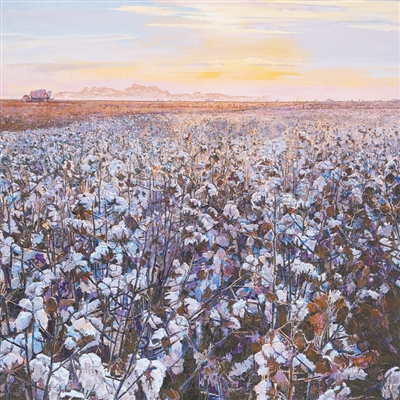
Core Perspective - The evolution of Xinjiang oil painting reflects a dual exploration of contemporary relevance and regional identity, transitioning from static depictions of ethnic customs to dynamic narratives that capture the region's socio-economic transformations [2][5]. Group 1: Artistic Development - Xinjiang oil painters have shifted focus from merely recording ethnic customs to becoming witnesses of historical changes and builders of cultural identity, using their art to narrate the profound transformations in Xinjiang [2]. - Contemporary works emphasize dynamic development, showcasing the vibrant changes in Xinjiang through industrial themes and agricultural advancements, as seen in works like Fu Jianfeng's "Backlight - National Heavy Equipment Series" and Ma Yong's "Xinjiang Cotton - Fertile Fields" [2][3]. Group 2: Micro-Narratives - Newer artworks capture the warmth of everyday life, with artists drawing inspiration from domestic scenes and daily objects to reflect significant societal changes, such as Liu Jianxin's "Sweet Tea" series, which connects past and present living conditions [3]. - The use of traditional colors and modern themes in works like Mai Erdan's "Proposal" illustrates the continuity of cultural practices in contemporary settings, linking traditional customs with modern life [3]. Group 3: Cultural Integration - The expression of Xinjiang's "multi-ethnic unity" has evolved from mere symbolic representation to a deeper cultural dialogue, as seen in Zhang Leizhen's "Kizil Stories" and Nurmaimaiti's "Work Team," which blend policy practices with the daily lives of various ethnic groups [4]. - This artistic approach emphasizes the natural flow of cultural traits through daily interactions, highlighting the essence of China's multi-ethnic culture without focusing solely on regional characteristics [4]. Group 4: Historical Documentation - Xinjiang oil paintings serve as living historical records, documenting significant developments such as high-speed railways and renewable energy projects, while also acting as cultural bridges that convey the beauty and vitality of the region to a broader audience [5]. - The transformation of Xinjiang oil painting represents a broader artistic revolution, where artists aim to depict the aspirations and progress of the local populace under the leadership of the Party, showcasing the vibrant expression of China's multi-ethnic unity in the contemporary era [5].

省政府党组(扩大)会议召开刘小涛主持
Xin Hua Ri Bao· 2025-10-10 23:35
Group 1 - The meeting emphasized the importance of implementing the significant tasks assigned to Jiangsu by General Secretary Xi Jinping, focusing on practical governance and effective execution of government work [1][2][3] - The government aims to enhance its capabilities in modern governance of religious affairs and deepen the "team-based" aid model for Xinjiang, aligning with local needs and leveraging Jiangsu's strengths [1][2] - There is a commitment to advancing ecological civilization reforms, promoting green and low-carbon production and lifestyle, and enhancing the quality of education and research in higher institutions [2][3] Group 2 - The government is dedicated to strengthening its internal construction by adhering to principles of loyalty, serving the people, pragmatism, and integrity, while maintaining alignment with the central leadership [3] - A focus on practical results and addressing public concerns is highlighted, with an emphasis on implementing reforms and development tasks effectively [3] - The meeting underscored the importance of strict governance and integrity within the political ecosystem of the government, ensuring compliance with party regulations and laws [3]
省长王凯主持召开省政府常务会议
He Nan Ri Bao· 2025-10-10 02:29
Group 1 - The provincial government is focusing on air pollution prevention, land comprehensive remediation, and mineral resource development, emphasizing the need for a holistic approach to economic and social development [1][2] - The meeting highlighted the importance of implementing Xi Jinping's ecological civilization thought, with a focus on key industries and areas to ensure continuous improvement in air quality and achieve the "14th Five-Year Plan" goals [2] - The government is committed to enhancing land use efficiency by optimizing rural construction land layout and urban development boundaries, while ensuring the protection of arable land [2] Group 2 - The meeting discussed the need for strict enforcement of mineral resource safety strategies, promoting resource integration, and accelerating the construction of green mines to enhance resource security [2] - The government is prioritizing the improvement of public petition work, emphasizing the importance of addressing the root causes of conflicts and protecting citizens' rights [2] - The meeting also reviewed the "Education Strong Province Construction Plan Outline (2025-2035)" to enhance educational development in the province [3]
新思想引领新征程丨坚持铸牢中华民族共同体意识 让各民族像石榴籽一样紧紧抱在一起
Yang Guang Wang· 2025-10-08 03:16
Core Points - The article emphasizes the importance of national unity among the 56 ethnic groups in China, likening them to pomegranate seeds that are tightly held together, forming a strong Chinese national community [1][5] - The "14th Five-Year Plan" period focuses on strengthening the awareness of the Chinese national community and promoting the modernization of all ethnic groups towards socialist development [1] - The integration of cultural and tourism industries is highlighted as a significant opportunity for ethnic regions, enhancing local employment and entrepreneurship [1][2] Summary by Sections National Unity and Cultural Integration - Xi Jinping stresses that the unity of the 56 ethnic groups is essential for the development of the Chinese nation, creating a shared identity and common goals [1][5] - The article discusses the successful implementation of cultural tourism in regions like Guizhou, where local traditions are preserved while also providing economic benefits [1][2] Economic Development and Employment - The article notes that from 2020 to 2024, the total GDP of five autonomous regions is projected to increase from 60,129 billion to 83,766 billion, with an average annual growth rate of 5.6% [3] - The development of rural tourism is cited as a key strategy for empowering local economies and providing job opportunities for residents [3][4] Cultural Heritage and Community Building - The preservation and promotion of intangible cultural heritage, such as the Dong people's songs, are seen as vital for cultural identity and economic growth [2][4] - The article highlights the role of cultural exchanges among ethnic groups in fostering a unified national spirit and enhancing mutual understanding [4][5]
【同心共祝·锦绣中华】孙维国:这条历史文脉一目了然,新疆自古就是中国神圣领土
Guan Cha Zhe Wang· 2025-10-04 02:20
Core Viewpoint - The article emphasizes the historical significance and the transformation of Xinjiang over the past 70 years, highlighting the importance of national unity and the need to combat external forces attempting to disrupt this harmony [1][2]. Historical Context - Xinjiang has been an integral part of China since the Han Dynasty, with various central governments implementing different governance strategies over the centuries to maintain control and promote development in the region [5][6]. - The governance of Xinjiang has evolved through different dynasties, with significant administrative structures established during the Han, Wei, Jin, and Tang dynasties, reflecting a continuous effort to integrate the region into the broader Chinese state [8][14]. Cultural Integration - The spread of Confucian culture and the establishment of educational institutions in Xinjiang during the Han and subsequent dynasties facilitated cultural exchange and integration with the central plains [11][13]. - The governance practices in Xinjiang, including the use of the Chinese language in official documents and the promotion of Chinese cultural texts, further solidified the region's connection to the broader Chinese civilization [16][18]. Modern Developments - The establishment of the Xinjiang Uyghur Autonomous Region in 1955 marked a significant milestone in the region's governance, leading to substantial social and economic reforms under the leadership of the Communist Party [26][27]. - The article concludes by asserting that the historical governance of Xinjiang reflects the continuity, innovation, and inclusiveness of Chinese civilization, reinforcing the collective identity of all ethnic groups within the nation [27][28].
文化中国行∣西藏:“见证与守望”主题展讲述各民族交流交往交融故事
Xin Hua She· 2025-10-03 02:02
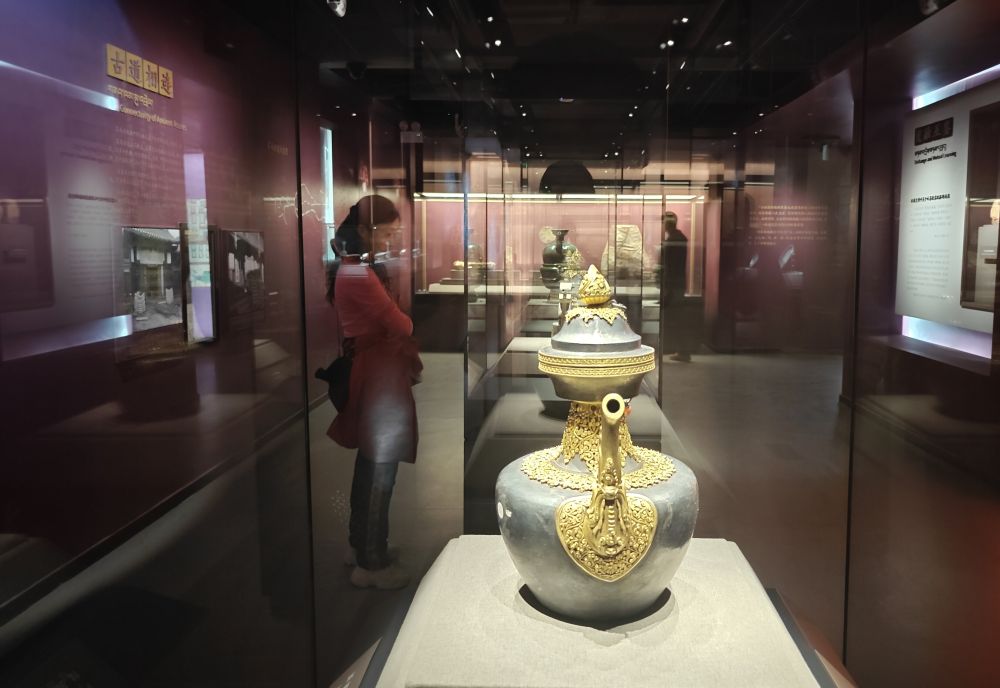
Core Insights - The exhibition "Witness and Guard: Forge a Strong Sense of Community among the Chinese Nation" showcases over 300 cultural relics that reflect ethnic unity, with more than 100 items being exhibited for the first time [2][4] - The exhibition has been in preparation for three years and officially opened on December 31, 2024, attracting over 500,000 visitors, averaging more than 2,000 visitors daily [2] Group 1 - The exhibition features a variety of artifacts including Thangka paintings, sculptures, porcelain, and ancient texts, highlighting the historical connection between Tibet and the central government [2] - A notable artifact is the Ming Dynasty's gilt bronze statue of Shakyamuni Buddha, which illustrates the close relationship between Tibet and the Ming central government [2][4] - The exhibition also includes historical tea packages and plaques related to the Tea Horse Road, showcasing the cultural exchange and trade between different ethnic groups [4] Group 2 - The exhibition balances "cultural relic protection" with "display innovation," utilizing low-oxygen, temperature-controlled display cases to safeguard artifacts while employing advanced technology for an immersive viewing experience [4] - Technologies such as 3D digital displays and interactive touch walls provide insights into the architectural aesthetics of Tibetan ancient buildings and the preservation of precious ancient texts [4] - The exhibition serves as a testament to the shared history of various ethnic groups in China and aims to foster a vision for the future of the Chinese nation [4]