去中心化金融(DeFi)

Search documents
a16z深度解析:银行、资管与金融科技公司的“区块链转型指南”(美版)
Hua Er Jie Jian Wen· 2025-08-17 11:27
Group 1: Core Insights - Traditional financial institutions are accelerating the integration of blockchain technology into their core infrastructure to enhance competitiveness and unlock new growth sources [1][2] - Major banks like JPMorgan and Citibank are implementing blockchain in payment and settlement processes through projects like tokenized deposits, indicating a shift from speculative asset trading to a foundational technology for financial services [1][2] - Asset management firms are leveraging blockchain to create new distribution channels, with companies like BlackRock and Franklin Templeton issuing tokenized funds that directly reach digital-native investors [1][5] Group 2: Banking Sector Innovations - Blockchain is becoming a key tool for banks to modernize outdated backend systems, which often rely on legacy programming languages like COBOL [2] - The choice of blockchain platforms is critical for banks, with recent regulatory guidance opening up opportunities for public blockchain adoption [2] - Tokenized deposits from JPMorgan and Citibank allow for significant reductions in settlement times and operational costs, enhancing capital efficiency [2] Group 3: Asset Management Trends - Tokenization is expanding product distribution and liquidity for asset management companies, particularly in U.S. Treasury and money market funds [5][6] - The integration of traditional asset management products with DeFi protocols is creating new leverage and yield strategies, indicating a shift towards direct user engagement [6] - Asset management firms are adopting a multi-chain strategy to enhance distribution, as seen with Franklin Templeton's BENJI token being issued across eight different blockchains [6] Group 4: Fintech Developments - Fintech companies are utilizing blockchain to leapfrog existing financial systems, particularly in cross-border payments and embedded finance [7] - Establishing Layer 2 networks on top of Layer 1 blockchains like Ethereum is seen as a balanced approach for fintech firms to optimize specific use cases [7][8] - Companies like Stripe and PayPal are integrating stablecoin payments to facilitate instant global settlements and reduce transaction costs [8]

特朗普家族靠它狂揽320亿,操盘手竟是赵长鹏?
3 6 Ke· 2025-08-14 02:50
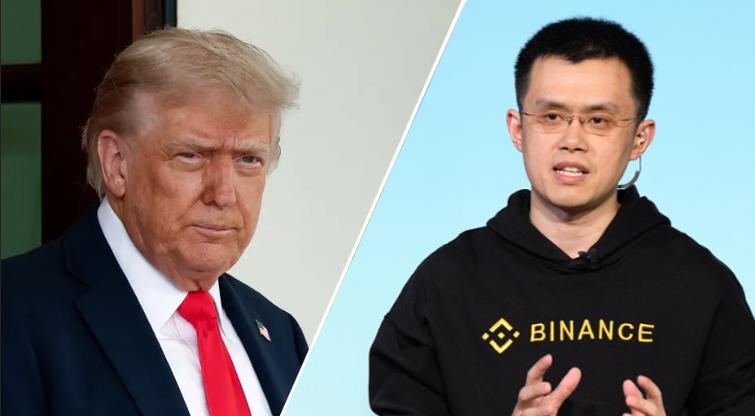
在特朗普家族的加密货币商业帝国中,一个鲜为人知的故事正在浮出水面,这背后竟是币安赵长鹏的身 影。 8月12日,据《华尔街日报》报道,特朗普家族的加密货币业务正以前所未有的速度创造财富,自大选以来 已创造超过45亿美元(约320亿元人民币)的财富,超过特朗普商业帝国的任何其他板块。 这一成功背后与全球最大的加密货币交易所币安存在着一条未曾公开的利益链条,其中的关键角色是—— 交易平台PancakeSwap。 今年6月,特朗普家族的加密公司World Liberty Financial与PancakeSwap宣布合作,旨在提升其发行的稳定 币USD1的采用率。此后,USD1的交易量在PancakeSwap上出现爆炸式增长,成为推动World Liberty Financial利润增长的核心引擎。 然而,合作公告中并未披露一个关键事实:据熟悉公司情况的人士称,PancakeSwap实际上是由币安的内 部员工创建并持续监管的。这一信息将特朗普家族的商业利益与币安更紧密地联系在一起。 与此同时,去年因公司洗钱等问题而入狱四个月、并同意支付43亿美元巨额罚款的币安创始人赵长鹏,正 加大力度游说白宫,以期获得总统特赦。 特 ...

稳定币市值破2700亿美元XBIT呈现最新动态,USDC以太坊超越USDT
Sou Hu Cai Jing· 2025-08-13 13:01
Core Insights - The digital currency sector is experiencing a significant increase in activity, with stablecoins and Bitcoin showing new trends [1][3] - The market capitalization of stablecoins has risen to $271.1 billion, surpassing the $270 billion mark, indicating a robust market performance [1][3] - The competitive landscape between USDC and USDT is shifting, with USDC surpassing USDT on the Ethereum network, while USDT maintains dominance on the TRON network [1][3] Stablecoin Market Dynamics - The total transfer volume of ERC20 stablecoins on the Ethereum network is expected to reach a substantial level by early 2025, with USDC establishing a leading position [3] - USDC's market performance is attributed to its integration in decentralized finance (DeFi), regulatory support in the U.S., and strategic focus on the Ethereum network [3] - USDT is shifting its market focus towards TRON and BSC networks, with a notable increase in USDT-TRC20 deposit transactions driven by major exchanges like Binance [3] New Market Entrants - The newly launched USD1 stablecoin is gradually gaining market visibility under a strict regulatory framework, despite its current market size being significantly smaller than USDT and USDC [3] - USD1 is showing a steady increase in market capitalization and trading volume, providing a new option for investors seeking alternatives in the stablecoin market [3] XBIT Decentralized Exchange Platform - XBIT is positioned as a reliable platform for investors, offering timely market information and trading support without relying on third-party trust mechanisms [1][5] - The platform allows users complete control over their assets, with transactions executed through smart contracts, ensuring transparency and security [5] - XBIT provides a range of investment analysis tools and risk assessment features, helping investors make informed decisions in a rapidly evolving market [5] Market Challenges and Opportunities - The evolving stablecoin market and the emergence of new players like USD1 present both opportunities and challenges for investors [7] - Investors are encouraged to share insights on the future development of USDC, USDT, and the potential for USD1 to expand its market share [7]
特朗普家族靠它狂揽320亿 操盘手竟是赵长鹏?
Hua Er Jie Jian Wen· 2025-08-13 10:32
这一成功背后与全球最大的加密货币交易所币安存在着一条未曾公开的利益链条,其中的关键角色是 ——交易平台PancakeSwap。 今年6月,特朗普家族的加密公司World Liberty Financial与PancakeSwap宣布合作,旨在提升其发行的稳 定币USD1的采用率。此后,USD1的交易量在PancakeSwap上出现爆炸式增长,成为推动World Liberty Financial利润增长的核心引擎。 在特朗普家族的加密货币商业帝国中,一个鲜为人知的故事正在浮出水面,这背后竟是币安赵长鹏的身 影。 8月12日,据《华尔街日报》报道,特朗普家族的加密货币业务正以前所未有的速度创造财富,自大选 以来已创造超过45亿美元(约320亿元人民币)的财富,超过特朗普商业帝国的任何其他板块。 据估算,以目前超过20亿美元的流通量计算,USD1每年可为World Liberty带来约8000万美元的收入, 而特朗普家族持有该公司40%的股份。根据周一公布的一份披露文件,特朗普家族在该加密货币中拥有 的股份价值为45亿美元。 然而,合作公告中并未披露一个关键事实:据熟悉公司情况的人士称,PancakeSwap实际 ...

特朗普家族靠它狂揽320亿!操盘手竟是赵长鹏?
华尔街见闻· 2025-08-13 10:11
Core Viewpoint - The Trump family's cryptocurrency business has generated over $4.5 billion in wealth since the election, surpassing any other sector of Trump's business empire [2] Group 1: Business Operations - The Trump family's crypto company, World Liberty Financial, partnered with PancakeSwap to enhance the adoption of its stablecoin USD1, leading to explosive growth in trading volume [4] - PancakeSwap, which presents itself as a decentralized platform, is actually created and monitored by Binance employees, linking Trump's business interests more closely with Binance [4][8] - USD1, a stablecoin pegged to the US dollar, is projected to generate approximately $80 million annually for World Liberty Financial based on its current circulation of over $2 billion [9] Group 2: Market Dynamics - PancakeSwap initiated a "Liquidity Drive" campaign, offering up to $1 million in rewards to the most active USD1 traders, which significantly increased USD1's daily trading volume from tens of millions to over $1 billion [9] - Binance holds $2 billion worth of USD1, ensuring that World Liberty can continue to profit from its reserve investments [10] Group 3: Political Connections - Binance founder Zhao Changpeng, who faced legal issues and a $4.3 billion fine, is lobbying for a presidential pardon, employing a lobbyist with close ties to Donald Trump [5][6][12] - The intertwining of Zhao's political ambitions and business operations raises concerns about potential conflicts of interest [6][13]
华尔街日报:特朗普家族狂揽45亿!背后神秘加密货币平台曝光,操盘手竟是币安赵长鹏?
美股IPO· 2025-08-13 09:26
Core Viewpoint - The Trump family's cryptocurrency business has generated over $4.5 billion in wealth, primarily driven by the explosive growth of the stablecoin USD1, which is reportedly manipulated by Binance through the platform PancakeSwap [1][3]. Group 1: Trump Family Cryptocurrency Business - The Trump family's cryptocurrency venture, World Liberty Financial, has created more wealth since the election than any other segment of the Trump business empire, exceeding $4.5 billion [3]. - The partnership with PancakeSwap aimed to enhance the adoption of USD1, leading to a significant increase in trading volume on the platform [3][8]. - USD1 is a stablecoin pegged to the US dollar, and its issuance generates substantial revenue for World Liberty Financial, estimated at around $80 million annually based on a circulation of over $2 billion [8]. Group 2: Binance's Role - Binance has been revealed to have a hidden influence over PancakeSwap, which was created and is monitored by Binance employees, linking the Trump family's business interests more closely to Binance [3][7]. - Binance holds approximately $2 billion worth of USD1, which helps ensure that World Liberty can profit from its reserve investments [9]. - The platform PancakeSwap has significantly boosted USD1's market demand through initiatives like a "Liquidity Drive" that incentivizes trading with substantial rewards [8][9]. Group 3: Political Implications - Binance founder Zhao Changpeng, who is seeking a presidential pardon after serving time for money laundering, is reportedly leveraging connections with the Trump family to advocate for his release [4][9]. - The White House has dismissed claims of conflicts of interest regarding the Trump family's involvement in cryptocurrency, emphasizing that there will be no participation in any conflicts [6].
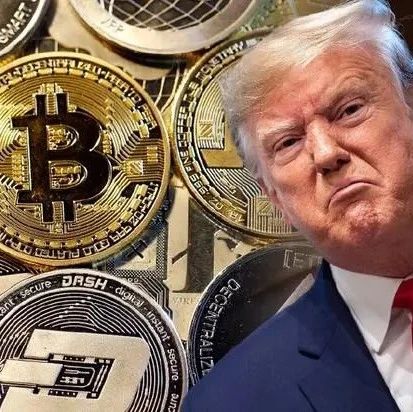
特朗普家族狂揽45亿!背后神秘加密货币平台曝光,操盘手竟是币安赵长鹏?
Hua Er Jie Jian Wen· 2025-08-13 07:16
Core Insights - The Trump family's cryptocurrency business has generated over $4.5 billion in wealth since the election, surpassing any other segment of Trump's business empire [1] - Binance's involvement is revealed through its connection to PancakeSwap, which is crucial for the success of the USD1 stablecoin issued by World Liberty Financial [1][3] Group 1: Business Operations - World Liberty Financial partnered with PancakeSwap to increase the adoption of its stablecoin USD1, leading to a significant surge in trading volume [1] - USD1 is pegged to the US dollar and is expected to generate approximately $80 million annually for World Liberty, given its current circulation of over $2 billion [4] - PancakeSwap initiated a "Liquidity Drive" campaign, incentivizing users with up to $1 million in rewards, which resulted in daily trading volumes for USD1 skyrocketing from tens of millions to over $1 billion [4] Group 2: Binance's Role - PancakeSwap was internally incubated by Binance in 2020 and has remained under its supervision, providing essential infrastructure for USD1's success [3] - Binance holds $2 billion worth of USD1, ensuring that World Liberty can continue to profit from its reserve investments [5] - Binance's "Binance Alpha" program promotes new token projects that trade with USD1, further expanding its use cases [5] Group 3: Political Connections - Binance founder Changpeng Zhao is seeking a presidential pardon after serving four months in prison and paying a $4.3 billion fine for money laundering issues [2][5] - Zhao has hired a lobbyist closely associated with Donald Trump to assist in his efforts for a pardon [2] - The intertwining of business operations and political lobbying raises concerns about potential conflicts of interest [2] Group 4: Chinese Connections - The Trump family's cryptocurrency operations are closely linked to entities and individuals with Chinese backgrounds, including significant investments from Chinese billionaire Sun Yuchen [6] - PancakeSwap's website was initially registered in Shanghai, and the Telegram group promoting USD1 primarily consists of Chinese users [6] - Eric Trump, co-founder of World Liberty, plans to attend a Bitcoin conference in Hong Kong, indicating ongoing exploration of partnerships in the region [6]
“Solana第一财库”DFDV绩后大涨,囤币数量和质押业务显著增长
Hua Er Jie Jian Wen· 2025-08-13 00:43
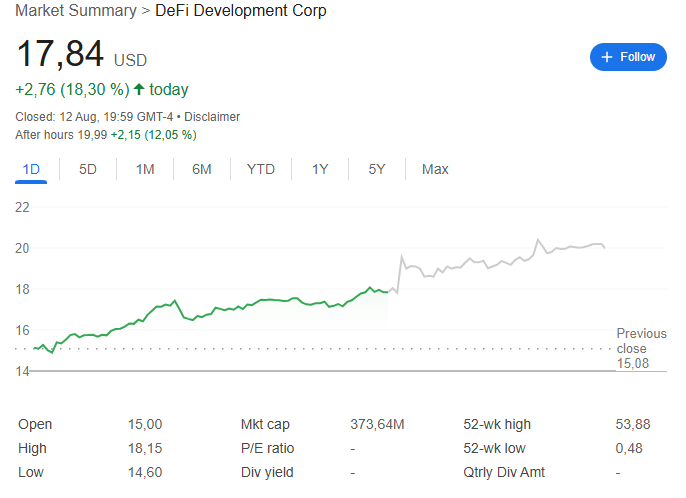
Core Viewpoint - DeFi Development (DFDV), the first publicly traded company focused on Solana, is gaining market recognition through its aggressive SOL accumulation strategy and strong staking yields [1][3]. Financial Performance - In Q2, DFDV reported earnings per share of $0.84 and revenue of $1.97 million [1]. - As of August 11, DFDV holds over 1.3 million SOL tokens, valued at nearly $250 million, with staking operations expected to generate approximately $63,000 in SOL-denominated revenue daily [1][4]. - The "Shares Per SOL" (SPS) metric increased significantly by 47% from June 30, reaching 0.0619, with a long-term target of 0.165 by June 2026 and 1.000 by December 2028, representing a 167% increase from current levels [1][3]. Capital Raising and Growth Strategy - In July, DFDV raised $165 million in net capital and completed a $122.5 million convertible bond financing led by Cantor Fitzgerald, with a conversion price of approximately $23.11 per share [3]. - The SPS metric saw a month-over-month increase of 34% in July, marking one of the fastest growth periods in the company's history [3]. Asset Management and Yield Metrics - As of August 11, DFDV's SOL holdings reached 1.3017 million tokens, with over 4,500 SOL added in the first two weeks of August [4]. - The company introduced the "Annualized Organic Yield" (AOY) metric to track the performance of staked assets, expecting it to remain around 10% over the next 12 months, despite potential fluctuations due to network dynamics [4]. Differentiated Positioning - Since launching its new strategy in April 2025, DFDV aims to create a differentiated path from traditional Bitcoin treasury models, focusing on non-Bitcoin crypto assets [5]. - The company emphasizes deep integration with the Solana ecosystem, operating its own validator infrastructure, participating in DeFi protocols, and launching a tokenized version of its equity, DFDVx, for 24/7 trading [5]. - DFDV's management highlights a commitment to transparent and sustainable growth, avoiding excessive leverage and highly speculative assets [5].
盘前大涨超14%!争夺以太坊“财库”头把交椅:Bitmine“火箭蹿升”,Sharplink“不甘示弱”
美股IPO· 2025-08-12 12:25
Core Viewpoint - The competition between Bitmine Immersion Technologies and SharpLink Gaming to hold the largest amount of Ethereum has intensified, with both companies viewing Ethereum as a core reserve asset rather than a speculative tool, leading to a significant shift in corporate financial strategies [2][3][11]. Group 1: Company Actions and Strategies - Bitmine has become the largest corporate holder of Ethereum, owning approximately 300,657 ETH valued at around $1.13 billion, and aims to control up to 5% of Ethereum's total circulating supply [10][11]. - SharpLink Gaming has raised $400 million through a direct issuance to five global institutional investors, intending to increase its Ethereum holdings to a total value exceeding $3 billion [3][7]. - SharpLink currently holds about 280,706 ETH, valued at slightly over $1 billion, and plans to utilize the raised funds along with $200 million in unutilized ATM issuance proceeds to bolster its Ethereum reserves [7][11]. Group 2: Market Impact and Trends - The competition between these companies has contributed to a nearly 45% increase in Ethereum's price over the past month, reaching approximately $4,299 [5]. - The trend of companies integrating Ethereum into their core financial strategies is becoming more pronounced, with many publicly traded companies accumulating more ETH than the Ethereum Foundation itself [11]. - Other companies exploring Ethereum as a primary financial asset include The Ether Machine, Bit Digital, BTCS Inc., and Gamesquare Holdings, indicating a growing market force [11].
DEX交易平台最新技术创新加速落地,XBIT重塑数字资产交易新范式
Sou Hu Cai Jing· 2025-08-12 09:39
BOSS Wallet 8月12日讯,全球资产管理巨头贝莱德宣布斥资120.65亿美元大规模增持以太坊,这一重磅消息为去 中心化交易所(DEX)市场注入强劲动力。与此同时,美联储降息预期持续升温,为数字资产市场创造更加宽松 的投资环境。 贝莱德重金布局以太坊,机构资金加速入场 图片来源:BOSS Wallet 美联储政策转向助推加密市场,DEX交易量创新高 BOSS Wallet报道,摩根大通资产管理公司警告美联储可能采取"危险逻辑"实施先发制人的降息政策。尽管这种做 法可能加剧通胀风险,但对于数字资产市场而言,宽松的货币政策环境通常意味着更多流动性注入。 据BOSS钱包APP数据显示,贝莱德此次120.65亿美元的以太坊配置决策,标志着传统金融机构对去中心化生态系 统信心的显著提升。这一举措不仅推动以太坊价格稳定在4322美元水平,更为整个dex交易平台生态带来前所未有 的发展机遇。 专业分析人士指出,贝莱德作为全球最大的资产管理公司,其投资决策往往具有风向标意义。此次大手笔布局以 太坊,反映出机构投资者对去中心化金融(DeFi)基础设施长期价值的深度认可。 XBIT去中心化交易所平台凭借其无需身份验证、无 ...