多层次医疗保障体系

Search documents
好消息!医保又有大动作,看病更省钱!两种保险同步结算,更方便
Sou Hu Cai Jing· 2025-09-06 08:25
Core Points - The reform of medical insurance and commercial insurance payment systems aims to simplify the process for 1.4 billion insured individuals, transforming the way medical expenses are paid in China [1][3] - The integration of medical insurance and commercial insurance allows for real-time settlement, significantly reducing the time and complexity involved in claims processing [3][4] - The reform addresses the dual challenges of "underfunded medical insurance" and "stagnant commercial insurance development," enhancing the efficiency and effectiveness of both systems [4][9] Summary by Category Changes in Payment Process - The new system enables simultaneous settlement of medical insurance and commercial insurance, eliminating the previous lengthy claims process [3] - Patients can now see the breakdown of reimbursements from both insurance types at the time of hospital settlement, leading to a significant reduction in out-of-pocket expenses [6][10] Impact on Patients - Chronic disease patients benefit from reduced personal expenses, with some insurance products lowering annual out-of-pocket costs from 6,000 yuan to 1,800 yuan [6] - Cancer patients experience improved reimbursement rates, with some seeing their out-of-pocket costs drop from 40% to 10% after combining insurance reimbursements [6] - Individuals with pre-existing conditions can now access more affordable insurance options, with premiums for certain plans decreasing from 3,000 yuan to 800 yuan annually [6] Challenges and Solutions - Hospitals face the challenge of upgrading their information systems to support the new payment model, with 57% of hospitals needing significant investment for system modifications [7] - The establishment of a unified "Medical Insurance and Commercial Insurance Settlement Cloud Platform" aims to streamline the integration process for hospitals [7] - Insurance companies must adapt to a new model that emphasizes proactive health management rather than reactive claims processing [7][9] Data Security and Privacy - The reform incorporates measures to protect patient data, ensuring that only necessary information is shared while maintaining privacy [9] - The acceptance of data sharing among patients has increased significantly, indicating growing trust in the system [9] Overall Effectiveness - Initial results show that the reform has led to a 22% average decrease in patient out-of-pocket expenses and a 70% improvement in hospital settlement efficiency [10] - The number of commercial insurance products available for individuals with pre-existing conditions has increased significantly, reflecting a more inclusive insurance market [10] - The reform is expected to enhance the overall medical insurance level in China by 15-20 percentage points while controlling the growth rate of medical insurance fund expenditures [9]


2025版“威你保”正式上线
Qi Lu Wan Bao· 2025-09-02 23:44
Core Insights - The "Weini Bao 2025" is a customized commercial health insurance product launched by Weihai City to enhance the multi-tiered medical security system and reduce the medical burden on citizens [1][2] Group 1: Product Overview - "Weini Bao" was first introduced in September 2021, providing additional coverage for medical expenses not fully reimbursed by basic health insurance, including out-of-pocket costs for non-covered items [1] - The product has undergone four iterations, with a total of 1.58 million policies sold, alleviating over 110 million yuan in medical expenses for the insured [1] - The new version continues to be government-led, with no restrictions based on age, health status, or pre-existing conditions, emphasizing a non-profit approach [2][3] Group 2: Coverage and Benefits - The premium rates remain unchanged, with specific annual costs set at 39 yuan for individuals aged 22 and under, 89 yuan for those aged 22 to 60, 139 yuan for those aged 60 and above, and 150 yuan for individuals with pre-existing conditions [3] - Coverage includes hospitalization costs after basic insurance reimbursement, outpatient drug expenses, and special drug costs, with a focus on severe illnesses [3] - The product promotes a dual protection model, offering health services such as online consultations and discounts on medications, regardless of whether medical expenses are incurred [3] Group 3: Service Enhancements - The 2025 version introduces improved benefits for long-term policyholders, increasing the payout ratio by 2% for those insured for five years or more and adding "no co-payment care services" for hospitalization [4] - New value-added services include discounts on medications, eye examinations, free children's photography, and health check discounts, available to all policyholders [4] - A charity fund has been established to support low-income groups, continuing the policy of halving the deductible for medical assistance recipients [4] Group 4: Accessibility and Claims Process - The insurance product has expanded its application channels, allowing online purchases via WeChat and in-person applications through insurance company representatives [5] - The claims process has been optimized for efficiency, enabling "one-stop" settlement for claims within Weihai, and automatic claims processing for out-of-area medical services [6] - The Weihai Medical Insurance Bureau will continue to enhance guidance on "Weini Bao," aiming to reduce the medical burden on citizens and improve their sense of security and happiness [6]
2025版“威你保”正式上线,产品保障待遇全面升级
Qi Lu Wan Bao Wang· 2025-09-02 07:14
Core Viewpoint - The article discusses the launch of the upgraded "Weini Bao 2025," a customized commercial health insurance product in Weihai City, aimed at enhancing the multi-tiered medical security system and reducing the financial burden on citizens [2][3]. Group 1: Product Overview - "Weini Bao" was first introduced in September 2021, providing additional coverage for medical expenses not fully reimbursed by basic health insurance, including out-of-pocket costs for non-covered items [2]. - The product has undergone four iterations, with a total of 1.58 million policies sold, resulting in over 110 million yuan in reduced medical expenses for the insured [2]. - The 2025 version maintains its government-supported positioning within the multi-tiered medical security system, emphasizing a non-profit approach and no restrictions based on age, health status, or pre-existing conditions [3][4]. Group 2: Coverage and Benefits - The premium rates remain unchanged, with specific rates set for different age groups, ensuring affordability for all participants [4]. - The coverage includes hospitalization costs after basic insurance reimbursements, outpatient drug expenses, and special drug costs, with a focus on severe illnesses [4]. - The 2025 version introduces enhanced benefits, such as a 2% increase in compensation for those who have held policies for over five years and new services like "no co-payment care" for hospitalization [5]. Group 3: Service Enhancements - The product now offers a wider range of value-added services, including discounts on medications, eye exams, and free children's photography, available to all policyholders regardless of claims [5]. - The application process has been simplified, allowing for online enrollment and payment through various methods, including personal health insurance accounts [6][7]. - The claims process has been optimized for efficiency, enabling automatic reimbursement for medical expenses incurred both within and outside the province, reducing the need for upfront payments by policyholders [7].
友邦人寿推出“智选逸生”医疗险产品,以定制化方案助力构筑多层次医疗保障体系
Qi Lu Wan Bao· 2025-09-01 03:33
Core Insights - AIA Life Insurance has launched a new medical insurance product called "Smart Choice Medical Insurance," which aims to provide customized healthcare solutions to meet the diverse and high-quality medical protection needs of families [1][2]. Product Features - The "Smart Choice" product features a flexible combination of "core protection + personalized configuration," allowing customers to tailor their medical insurance plans according to their needs [1][2]. - The core coverage includes general and critical illness hospitalization, proton and heavy ion medical treatments, outpatient expenses for CAR-T therapy, and special hospitalization allowances, with a cumulative payout limit of 5 million yuan and an annual deductible of only 5,000 yuan [2][3]. - Optional coverage includes high-quality medical resources and outpatient drug/device protection, with zero deductible for outpatient general drugs and specific drugs, covering over 300 special drugs and three types of special devices, each with a cumulative limit of 4 million yuan [3]. Market Context - The launch aligns with the increasing demand for multi-layered and diversified medical protection as living standards and healthcare levels improve [1]. - Government policies, such as the "National Ten Articles" and the "Healthy China 2030" plan, emphasize the importance of commercial health insurance in building a multi-tiered medical protection system, which opens new opportunities for insurance companies [1][4]. Customer-Centric Approach - AIA Life Insurance emphasizes a customer-driven approach in its business innovation, allowing customers to define their protection needs through a modular design [4]. - The product integrates comprehensive health services covering pre-diagnosis, diagnosis, and post-diagnosis support, enhancing the overall healthcare experience for customers [3].

【高端访谈】平安集团付欣:商业健康保险大有可为 积极支持完善医疗生态圈建设
Zhong Guo Jin Rong Xin Xi Wang· 2025-08-29 03:05
Core Viewpoint - China Ping An's new business value in life and health insurance reached 22.335 billion yuan in the first half of 2025, marking a year-on-year growth of 39.8%, indicating significant growth potential in commercial health insurance due to rapid economic development in China [1][5]. Industry Insights - The Chinese government is placing high importance on the construction of a multi-level security system, emphasizing the necessity for collaboration between basic medical insurance and commercial health insurance [3][4]. - Policies supporting the high-quality development of commercial health insurance have been introduced this year, presenting historic opportunities for the sector [3][4]. - The basic medical insurance system covers 1.326 billion people with a participation rate of 95%, but the overall funding level is low, necessitating a focus on basic coverage [4]. Company Strategy - China Ping An is optimistic about the future of commercial health insurance, noting that the sector has maintained double-digit growth in premiums over recent years [5][6]. - The company plans to enhance the development of "insurance + medical" products to support the construction of a comprehensive medical ecosystem, focusing on differentiated and advantageous services [6][7]. - Ping An aims to deepen collaboration in the pharmaceutical insurance sector and actively participate in the construction of a drug directory to promote standardization and professional development within the industry [7].


医保竟有“二次报销”?多数人都不知道,白白“损失”一笔钱
Sou Hu Cai Jing· 2025-08-29 01:13
Core Insights - The article highlights the importance of secondary reimbursement in China's medical insurance system, which is often overlooked by insured individuals, leading to significant financial losses [3][6]. Group 1: Current Status of Secondary Reimbursement - As of the first quarter of 2025, only 27.3% of eligible medical expenses were actually claimed for secondary reimbursement, indicating a lack of awareness among insured individuals [3]. - The secondary reimbursement system is part of a multi-tiered medical insurance framework, including major illness insurance, medical assistance, supplementary medical insurance, and employee personal accounts [4][5]. Group 2: Mechanisms of Secondary Reimbursement - Major illness insurance allows for reimbursement of 50% of medical expenses exceeding 50% of the local per capita disposable income, with no cap on the reimbursement amount [4]. - Medical assistance provided 873 billion yuan in funding in 2024, benefiting nearly 39.67 million people, with additional support for low-income households [4]. - Supplementary medical insurance has been established in 27 provinces, increasing reimbursement rates from 50% to an average of 70% for outpatient services [4]. Group 3: Challenges in Awareness and Application - A survey indicated that only 36% of insured individuals had a basic understanding of secondary reimbursement policies, and only 22% were aware of the specific application process [6]. - The complexity of the application process, requiring various documents and differing policies across regions, contributes to the low application rates [6]. Group 4: Efforts to Simplify Processes - The National Medical Insurance Administration has implemented a one-stop settlement reform, with 219 cities achieving this by June 2025, allowing for automatic calculation and settlement of various insurance claims [7]. Group 5: Maximizing Secondary Reimbursement Benefits - Insured individuals are encouraged to actively seek information about policies, retain all medical receipts, and inquire about eligibility for secondary reimbursement during hospital visits [9]. - Special provisions exist for certain demographics, such as higher reimbursement rates for individuals under 25 and additional benefits for seniors over 65 [9]. Group 6: Future Outlook and Policy Optimization - The 2025 work plan aims to increase the reimbursement rate for major illness insurance, lower the threshold for claims, and simplify application procedures, with a target of raising the application rate to over 50% [11]. - The total scale of the national medical insurance fund reached 3.2 trillion yuan in 2024, with 6.3% allocated for secondary reimbursement, indicating a focus on improving fund efficiency [11].

商业健康险,为何缺席“医保法”?
Hu Xiu· 2025-08-21 04:05
Core Viewpoint - The draft of the Medical Security Law does not clearly reflect a multi-tiered medical security system, raising concerns among scholars about the future role of commercial health insurance in China's healthcare framework [1][2][11]. Legislative Context - The Medical Security Law draft was publicly released on June 27, 2023, and the public consultation period ended on July 27, 2023, after four years of legislative progress [2][3]. - The draft has passed preliminary review, but the specific implementation timeline is yet to be determined by the National People's Congress [3]. Commercial Health Insurance Concerns - The absence of commercial health insurance in the main body of the draft has led to worries about its development and future positioning within the multi-tiered medical security system [2][4]. - Commercial health insurance is only mentioned in the appendix of the draft, indicating its role as a supplementary rather than a core component of the medical security framework [5][6]. Multi-Tiered Medical Security System - The draft includes references to a multi-tiered medical security system, but it primarily focuses on basic medical insurance, supplementary medical insurance, and medical assistance, excluding commercial health insurance [7][9]. - The National Healthcare Security Administration has emphasized the importance of a "1+3+N" multi-tiered medical security system, where "N" represents various supplementary forms, including commercial health insurance [10]. Legislative Implications - Scholars argue that the lack of clear definitions and responsibilities for the multi-tiered medical security system in the draft could hinder its effectiveness [11][13]. - The draft's current positioning as a basic social security law suggests a strict separation between statutory medical insurance and commercial insurance [12][14]. Regional Legislative Initiatives - Various regions, such as Zhejiang and Shanghai, have already implemented local regulations that encourage the development of commercial health insurance, indicating a growing recognition of its role in the multi-tiered system [18][23]. - The Zhejiang Provincial Medical Security Regulation, enacted in 2021, has successfully integrated commercial health insurance into its healthcare framework, achieving a participation rate of over 50% for supplementary insurance [22]. Recommendations for Future Legislation - Experts suggest that the National Healthcare Security Administration should collaborate with financial regulatory authorities to create a top-level design for commercial health insurance, clarifying roles and responsibilities [25].
“天价抗癌药”冲关医保双目录
Bei Jing Shang Bao· 2025-08-13 16:31
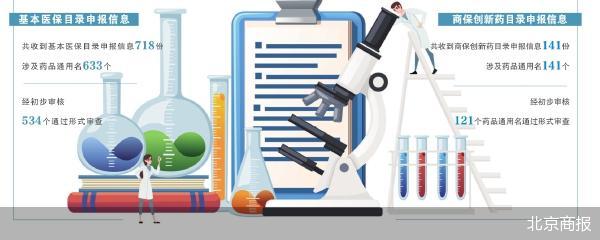
Core Insights - The adjustment of the medical insurance drug catalog in 2025 has seen a significant increase in the number of drugs passing the formal review, with a new commercial insurance innovative drug catalog attracting industry attention [1][3] - The parallel submission of the basic medical insurance catalog and the commercial insurance innovative drug catalog aims to provide comprehensive coverage for different patient groups based on their payment capabilities, enhancing drug accessibility and market competitiveness [1][8] Summary by Sections Basic Medical Insurance Catalog - A total of 718 submissions were received for the basic medical insurance catalog, involving 633 drug generic names, with 534 passing the formal review [3] - The number of drugs passing the formal review from the catalog outside the basic insurance has increased significantly, with 310 out of 472 submissions approved, compared to 249 in 2024 [3] - The approved drugs cover various fields, including oncology, chronic diseases, and rare diseases, with notable entries like monoclonal antibodies and a popular weight-loss drug [3][4] Commercial Insurance Innovative Drug Catalog - The newly established commercial insurance innovative drug catalog received 141 submissions, with 121 passing the initial review, resulting in a pass rate of approximately 85.82% [5] - This catalog also includes drugs for oncology, chronic diseases, and rare diseases, primarily focusing on Western medicine, along with a few traditional Chinese medicines [5][6] - The establishment of this catalog reflects the government's commitment to building a multi-tiered medical insurance system, providing supplementary coverage for high-value drugs not included in the basic insurance [6][8] Dual Submission and Market Strategy - Several drugs have successfully passed the formal review for both the basic medical insurance catalog and the commercial insurance innovative drug catalog, indicating a strategic approach by pharmaceutical companies to expand market coverage [7][8] - The dual submission allows companies to target both broad patient groups through basic insurance and high-value innovative drugs through commercial insurance, enhancing drug accessibility and competitiveness [8]
初审名单公布!商保创新药目录121个:百万元一针的抗癌药,五款CAR-T通过...
13个精算师· 2025-08-13 16:00
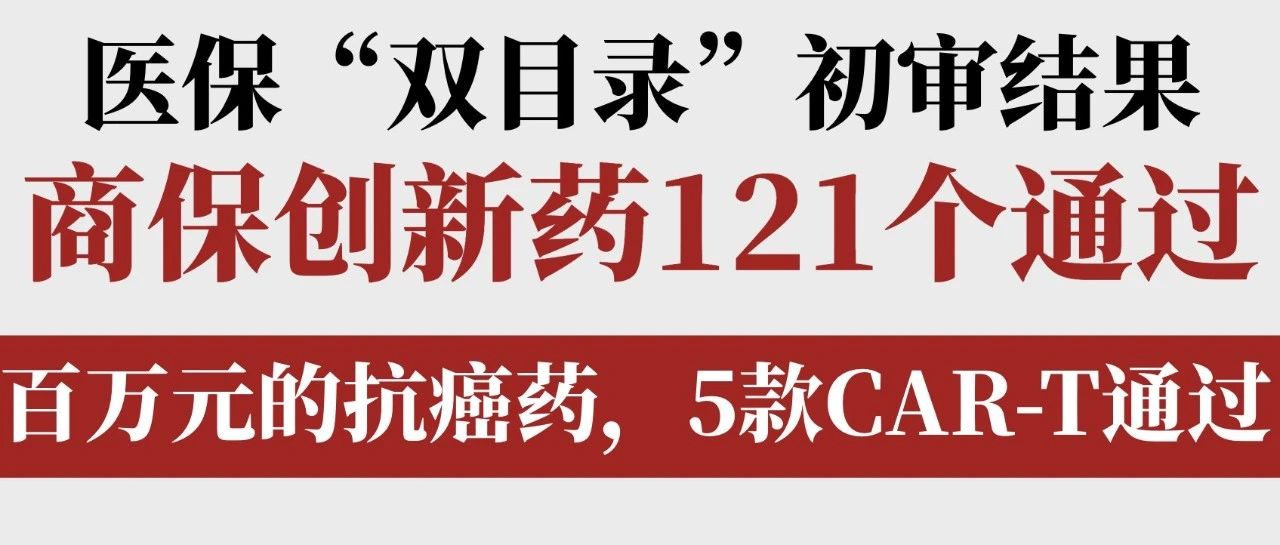
Core Viewpoint - The article discusses the introduction of a "dual directory" system for medical insurance and commercial health insurance in China, with the preliminary results for 2025 announced, highlighting the inclusion of 121 innovative drugs in the commercial health insurance directory [2][3][6]. Group 1: Dual Directory System - The "dual directory" system for medical insurance and commercial health insurance is officially established, marking a significant shift in the healthcare payment landscape [6][10]. - The preliminary review results for the 2025 medical insurance and commercial health insurance innovative drug directories have been released, with 121 drugs approved for the commercial health insurance directory [11][12]. Group 2: Innovative Drug Directory - The commercial health insurance innovative drug directory includes 121 drugs, focusing on high-value medications that are not covered by basic medical insurance, particularly targeting cancer and rare diseases [14][24]. - Among the approved drugs, five CAR-T therapies, which are high-cost cancer treatments, have been included, reflecting the directory's emphasis on addressing the needs for innovative therapies [24][26]. Group 3: Impact on Healthcare - The introduction of the commercial health insurance innovative drug directory aims to bridge the gap in coverage for innovative drugs, allowing patients to access high-cost treatments through commercial insurance [14][31]. - The integration of data between medical insurance and commercial health insurance is expected to facilitate synchronized billing and improve patient access to necessary medications [33][34]. Group 4: Market Trends - The rapid development of commercial health insurance products, such as million-dollar medical insurance plans, indicates a growing market for innovative drug coverage [23][30]. - The article highlights the significant increase in claims for innovative drugs, with companies like Ping An Health reporting a 70% year-on-year growth in special drug expenses [36].
多款“明星药”亮相!医保“双目录”初审名单公布,“天价抗癌药”等双赛道冲关
Bei Jing Shang Bao· 2025-08-13 11:53
Core Insights - The adjustment of the medical insurance drug catalog for 2025 has seen a significant increase in the number of drugs passing the formal review, with a new commercial insurance innovative drug catalog introduced, attracting high industry attention [1][3][5] Summary by Sections Medical Insurance Drug Catalog - The National Healthcare Security Administration (NHSA) received 718 applications for the basic medical insurance catalog, with 534 passing the initial review, including 472 applications from outside the catalog, marking a notable increase from 249 in 2024 [3] - The approved drugs cover various fields such as oncology, chronic diseases, and rare diseases, with a significant number of monoclonal antibody injections passing the review [3][4] Commercial Insurance Innovative Drug Catalog - The newly established commercial insurance innovative drug catalog received 141 applications, with 121 passing the initial review, resulting in a pass rate of approximately 85.82% [5] - This catalog also includes drugs for oncology, chronic diseases, and rare diseases, primarily focusing on Western medicine, with some traditional Chinese medicine included [5][6] Dual Track Submission - Several drugs have simultaneously passed the reviews for both the basic medical insurance catalog and the commercial insurance innovative drug catalog, indicating a strategy to cater to different patient payment capabilities [7][8] - The dual submission approach allows for broader market coverage and addresses the needs of high-value innovative drugs that may not be included in the basic insurance catalog [8] Industry Implications - The increase in the number of drugs passing the reviews reflects the growing investment in innovative drug research and development in China, with a focus on enhancing patient access to essential medications [4][6] - The establishment of the commercial insurance innovative drug catalog signifies the government's commitment to building a multi-tiered medical security system, providing supplementary coverage for high-value drugs not included in the basic insurance [6][8]