智慧养老

Search documents
莫道桑榆晚 为霞正满天
Bei Jing Wan Bao· 2025-10-29 09:46
Core Insights - The 11th Beijing International Aging Industry Expo (referred to as "Aging Expo") has commenced, emphasizing the importance of elderly care as a universal concern and a personal life stage that everyone will face [1] - The theme of this year's expo is "Smart Enjoyment of Silver Age, Nourishing All Directions," focusing on integrating humanistic care with technological innovation in the lives of the elderly [1] Group 1: Aging Services - The expo showcases a comprehensive panorama of aging services, featuring various well-known aging institutions, including state-owned enterprises and innovative private brands, allowing attendees to compare diverse service options from affordable to high-end [1] - A special "Travel and Health Care" section has been created, offering tailored travel routes for seniors, emphasizing that the joy of exploration is not exclusive to the young [2] Group 2: Financial Services - The "Aging Finance" section brings together quality banks, insurance, and fund institutions to offer financial products tailored to the needs of the elderly, focusing on financial planning to ensure a worry-free retirement [2] Group 3: Technological Innovations - The Smart Aging section allows attendees to experience how technology enhances elderly living, featuring smart wearables, exoskeleton robots, and remote medical consultation systems [2] - The Aging-Friendly section highlights innovations in creating accessible environments and smart communities, contributing to a more elder-friendly society [2] Group 4: Health and Wellness - The Health and Wellness section promotes the deep integration of medical and elderly care services, showcasing a full industry chain from rehabilitation care to chronic disease management [3] - The expo has introduced an official publication to extend the event's impact beyond the exhibition, fostering continuous communication in the aging industry [3]
“老博会”在重阳节开幕,智慧养老设备受关注
Xin Jing Bao· 2025-10-29 08:16
Core Insights - The 2025 11th Beijing International Aging Industry Expo (referred to as "Aging Expo") opened on October 29, coinciding with the Double Ninth Festival, showcasing various elderly products and services [1] - The theme of the expo is "Smart Enjoyment of Silver Age, Care for All," focusing on the quality of life for the elderly in the new era [1] - The exhibition area covers 11,000 square meters, significantly larger than previous years, attracting over 200 leading industry companies [1] Group 1 - The expo features advanced elderly care technologies such as exoskeleton robots, stair-climbing electric wheelchairs, and walking assistance robots, which have become popular among attendees [1][2] - The event includes a comprehensive exhibition of six core areas: travel and health care projects, smart elderly care technology, age-friendly facilities, elderly products, elderly services, and medical care services [1] - High-profile forums and activities are organized to promote the efficient transformation of cutting-edge concepts and practical experiences in the industry [1][3] Group 2 - The expo addresses practical issues faced by the elderly, offering experiences in smart home technology and health monitoring to bridge the "digital divide" [3] - Activities such as health consultations, public lectures, and a "Silver Age Market" directly respond to the elderly's needs in healthcare, legal, and financial matters [3] - The event has adopted a "full management" model since August, enhancing the brand, scale, and service experience of the expo through integrated digital platforms and improved accessibility [3]
民生一件事|“智慧”养老更好保障老有所养、老有所乐、老有所医
Yang Shi Wang· 2025-10-29 03:21
Core Insights - The article highlights the increasing elderly population in China, projected to reach 310 million by the end of 2024, emphasizing the importance of elder care services as a significant social issue [1] - Technological advancements, particularly AI, are playing a crucial role in enhancing the quality of life for the elderly, enabling them to engage in learning and health recovery [2][4] Group 1: Elderly Population and Care Services - By the end of 2024, the elderly population (aged 60 and above) in China is expected to reach 310 million [1] - The government has implemented multiple policies to create a more elder-friendly society, ensuring better care and enjoyment for the elderly [1] Group 2: Technological Integration in Elderly Care - AI technology is being utilized to improve elderly education and health, allowing seniors to engage in activities like recitation and recovery training [2][4] - As of the end of 2024, there are 68,000 grassroots elderly education learning points established across urban and rural communities, facilitated by AI [5] Group 3: Smart Elderly Care Platforms - During the 14th Five-Year Plan period, China is enhancing its three-tier elderly care service system through smart platforms that integrate institutional, community, and home care services [8] - In Dalian, a smart elderly care platform connects over 400 nursing homes and home care service providers, allowing seniors to access various services via mobile apps [8][10] Group 4: Personalized Services and Support - The smart elderly care system in Changzhou utilizes big data and cloud technology to match elderly needs with available services, creating a more intelligent care ecosystem [11] - The system includes features like emergency calls and remote monitoring, ensuring a 24-hour responsive "smart housekeeper" service for the elderly [11] - It also connects seniors with local dining options and personalized services, addressing individual needs such as medical appointments [13][14]

从“老有所养”到“老有所享” 智慧养老、文化养老“加码”幸福夕阳红
Yang Shi Wang· 2025-10-29 02:56
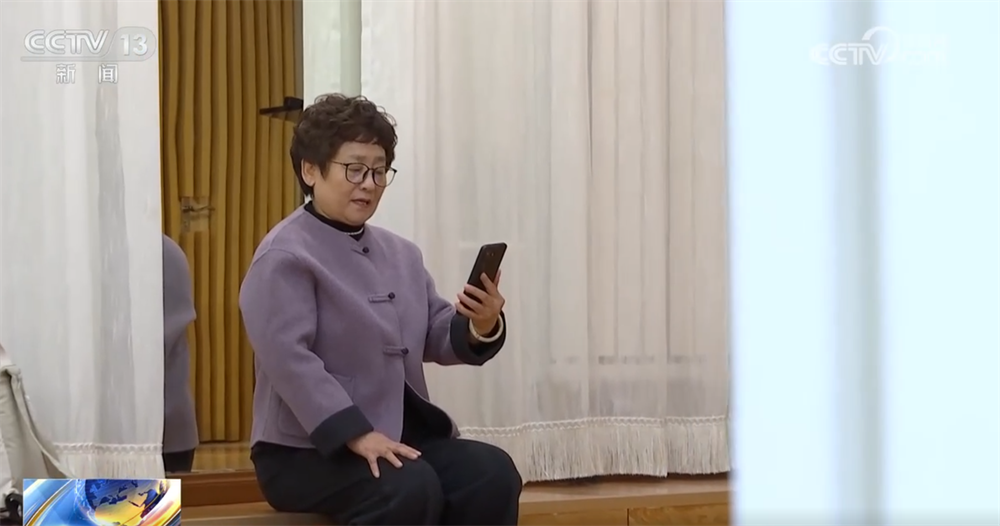
Core Viewpoint - The article discusses the increasing trend of elderly care in Beijing, highlighting the shift towards home-based care and the integration of smart technology to enhance safety and convenience for seniors [1][3][8]. Group 1: Home-Based Elderly Care - Over 5 million elderly residents live in Beijing, accounting for 23.5% of the city's population, with most opting for home-based care [1]. - Communities are providing smart elderly care devices, such as fall detection alarms and smoke detectors, to enhance safety for seniors living at home [3][5]. - A specific initiative has equipped 162 households of vulnerable elderly individuals with seven types of smart devices, ensuring 100% safety coverage for these residents [3]. Group 2: Community Support and Services - Community services operate 24/7, allowing elderly individuals to request assistance quickly, with response times typically within 10 minutes for emergencies [7]. - The demand for community-based elderly care services is rising, with many seniors choosing local care facilities due to their proximity and familiarity [10][11]. Group 3: Institutional Elderly Care - There is a noticeable increase in occupancy rates at community elderly care facilities, reflecting a shift in preferences among seniors [8]. - By September 2025, Beijing plans to establish 120 street-level elderly service centers, covering 2.07 million seniors, which will represent 40% of the city's elderly population [11]. Group 4: Cultural and Recreational Activities - In addition to basic care, some elderly care institutions are focusing on "cultural elderly care," providing activities that enhance the quality of life for seniors [13]. - Programs such as art classes and organized short trips are being introduced to engage seniors in cultural experiences and leisure activities [16][19].

深圳商报记者重阳前夕走访养老机构 轮候是常态 高端有市场
Shen Zhen Shang Bao· 2025-10-29 01:59
深圳商报记者 周良成 文/图 深圳地铁、公交对60岁以上长者免费乘坐的政策,这让许多长者称赞深圳为"老年人友好型城市"。重阳 节前夕,深圳商报记者走访深圳全市多家养老机构发现,南山、福田、罗湖等多个区出现一床难求现 象,不少养老机构正在扩张规模。 养老成本曝光 2000元-13600元 在南山区某养老机构的餐厅,记者看到,糖尿病、痛风的长者有专门提供的食品,桌上会贴不同颜色的 标签以作区别。一位80多岁的长者告诉记者:"我在这里算年轻的,我们这里以90多岁的老人为主,还 有一位100多岁的。因为是集体食堂,众口难调,口感比家里会稍差一点,但只要吃习惯了就觉得很 好。" 福田区、南山区、罗湖区作为深圳核心区域,养老成本相对较高。位于留仙洞附近的南山区社会福利中 心二期,生活能自理的长者每月费用在7000元-8000元。记者探访时,老人们正在弹钢琴、合唱,排练 重阳节节目。该机构设有棋牌室、手工室、按摩椅室和老年大学,文化氛围浓厚。正在建设的3期大楼 预计2026年2月完工,规模比1期、2期总和还大。 同样位于南山的深圳市养老护理院在塘朗山龙珠门附近,拥有730张床位,目前已全部住满,需要排 队。该院分为6个护理 ...
北京养老服务网访问量破6400万
Xin Jing Bao· 2025-10-28 08:49
Core Insights - The "Beijing Elderly Care Service Network" has achieved over 64 million visits since its launch on June 28, 2023, providing access to nearly 1,500 community service stations, over 620 care institutions, and more than 3,000 meal service points [1][2][3] Group 1: Service Integration and Accessibility - The platform offers a one-stop service for elderly care, allowing users to find services, meal options, institutions, and policies all in one place, significantly improving the convenience of elderly care in Beijing [2][3] - The website integrates various resources, including home care, regional service centers, institutional care, meal services, policy consultation, and resource matching, creating a multi-layered and diversified service system [3][4] Group 2: User Engagement and Service Features - The platform has processed over 18 million meal service orders and features more than 5,500 meal options, addressing the "dining difficulties" faced by the elderly [6][7] - The "Elderly Care Classroom" section offers over 330 free learning resources, with nearly 26,000 participants, enhancing the skills of caregivers and elderly individuals [7] Group 3: Technological Integration and Future Plans - The website employs a digital integration model that connects online resources with offline services, improving service efficiency and quality for elderly users [9][10] - Plans for 2025 include the establishment of 50 additional regional elderly care service centers, aiming to enhance service quality and accessibility for the aging population [10]
“智慧+”养老、高龄津贴“免申即享” 多维行动托起幸福“夕阳红”
Yang Shi Wang· 2025-10-28 06:13
Group 1 - The core idea of the news is the launch of Beijing's first "Age-Friendly Smart Experience Center" coinciding with the Double Ninth Festival, which aims to create a comprehensive smart elderly care system [1] - The experience center features over a hundred home care innovations, including a handrail that doubles as a night light and an automatic fall prevention warning system, designed to enhance safety and comfort for elderly residents [6] - The center serves as a combination of a science popularization museum, experience center, and workstation, focusing on improving the quality of life for seniors through smart products [6] Group 2 - In Hebei's Handan, a city-wide implementation of the "No Application Required" high-age subsidy program has been launched, allowing 189,000 elderly individuals to receive benefits without leaving their homes [7] - The program was initiated by the Handan civil affairs department in March, collaborating with multiple departments to ensure that eligible seniors are identified and receive their subsidies without missing out [11] - The approach includes community staff visiting homes to verify eligibility, thus preventing any potential misuse of the subsidy while ensuring that no eligible senior is overlooked [11]
又到一年重阳节 尊老敬老向“新”向“智”拓展新空间
Yang Shi Wang· 2025-10-28 04:02
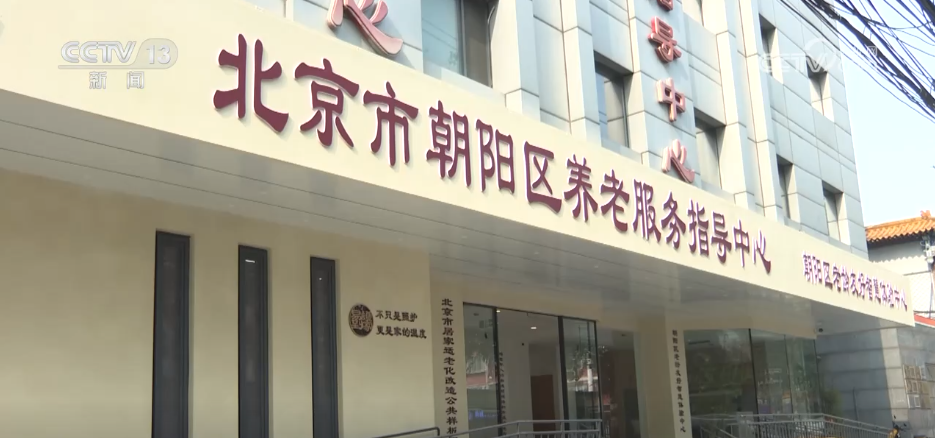
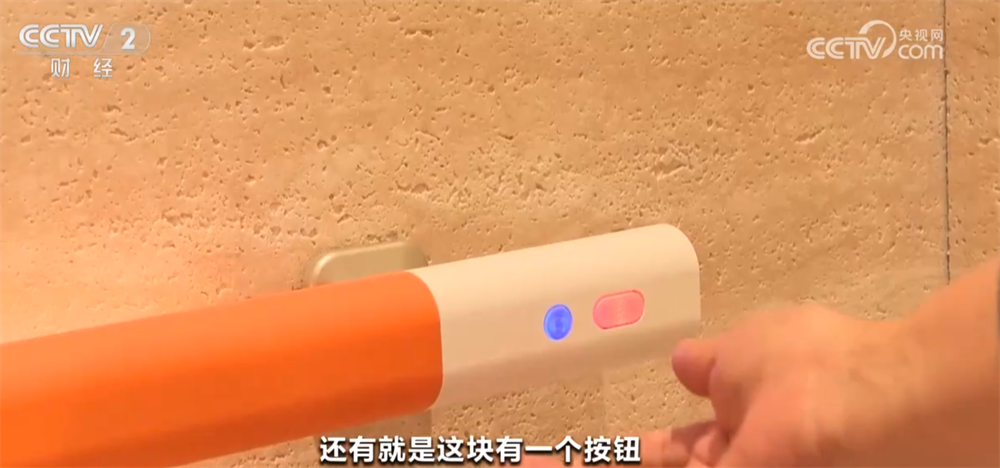
具有柔和紫外线功能的全光谱照明,可升降带扶手的洗漱台,防老人摔倒的自动预警系统等等,这个体验中心融汇了超百种居家养老小妙 招,集科普馆、体验馆、工作站于一体,每一个细节都精心为居家养老的安全和舒适度考虑周全。 央视网消息:10月29日是重阳节。在重阳节到来之际,北京市首个"老龄友好智慧体验中心",同时也是"居家适老化改造公共样板间"启 用。这里全场景打造了智慧养老体系。 走进北京市居家适老化改造公共样板间,就被这里科技感十足的氛围所吸引。 北京市居家适老化改造公共样板间负责人任爱民称:"这个扶手,首先它是一个小夜灯,还有就是这块它有一个按钮,这个按钮一按是连 接到远端的,可以发送预警信息。" 任爱民称:"希望能够通过这些智慧产品给老年人带来生活的乐趣,也能够帮助老年人实现更多的健康、安全方面的一些期望。" 山东泰安:重阳节将至 孝善大集热闹开市 在重阳节即将到来之际,山东泰安岱岳区举办了一场孝善大集,精彩演出、健康义诊、重阳宴会等上百项活动同时展开,吸引着当地四邻 八乡的老人们前来逛大集、吃宴席。 在欢快喜庆的大鼓声中,孝善大集热闹开市,精彩的活动吸引了不少周边村镇的老人。在书画展台前,书画爱好者现场挥毫,为 ...
“夕阳”生活更红火
Ren Min Ri Bao Hai Wai Ban· 2025-10-27 23:10
Core Viewpoint - The article highlights the advancements in elderly care and services across various regions in China, emphasizing the importance of policy innovation, financial investment, and community engagement to enhance the quality of life for senior citizens [22]. Group 1: Policy and Institutional Innovations - Various regions have increased efforts in institutional innovation and policy supply to improve elderly care, including the establishment of senior universities and the introduction of "silver tourism" trains [22]. - Legal frameworks are being updated to include provisions related to elderly care, reflecting a growing recognition of the needs of the aging population [22]. Group 2: Community Engagement and Activities - Community initiatives such as volunteer services, cultural events, and educational programs are being organized to enrich the lives of the elderly, allowing them to engage in social and recreational activities [22]. - The article mentions specific examples, such as elderly students performing at cultural festivals and community volunteers providing services like haircuts and companionship [18][20]. Group 3: Technological Integration - There is a notable trend of elderly individuals actively engaging with smart wearable devices, showcasing the integration of technology into daily life to enhance convenience and accessibility for seniors [20]. - The promotion of intelligent devices and services is part of a broader strategy to modernize elderly care and improve the overall experience for senior citizens [20].

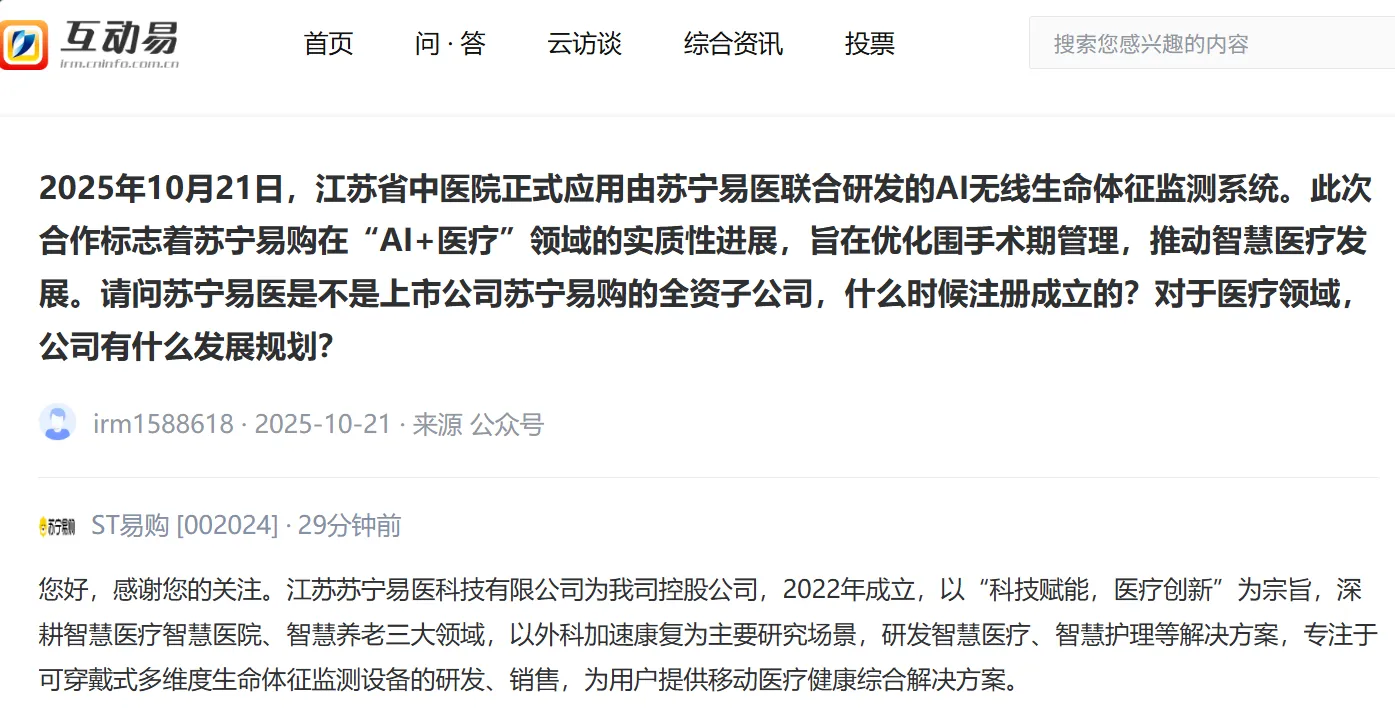
ST易购:苏宁易医2022年成立,深耕智慧医疗智慧医院、智慧养老领域
Cai Jing Wang· 2025-10-27 10:07
Core Insights - ST Yigou (also known as Suning Yigou) is focusing on the development of smart healthcare and elderly care solutions through its subsidiary, Suning Yiyi, which was established in 2022 [1][3] - The company is expanding its business into the silver economy with the launch of the "Suning Private Home" brand, targeting the needs of elderly consumers [3][4] Company Overview - ST Yigou was founded in 1990 and has over 30 years of experience in the retail sector, particularly in home appliances and 3C products [2] - The company was listed on the Shenzhen Stock Exchange in July 2004 and is headquartered in Nanjing [2] Financial Performance - In the first half of 2025, ST Yigou reported revenue of 25.895 billion yuan, a year-on-year increase of 0.44% [2] - The company achieved a net profit attributable to shareholders of 49 million yuan, a significant year-on-year increase of 230.03% [2] - However, the net profit after deducting non-recurring gains and losses was negative 865 million yuan, with a year-on-year loss increase of 63.24% [2] Subsidiary and Shareholding Structure - Suning Yiyi was established in November 2022 with a registered capital of 10 million yuan, and ST Yigou holds a 1% stake in it, translating to an indirect holding of 69.3% through Jiangsu Biying Technology Co., Ltd. [3] - Jiangsu Biying Technology Co., Ltd. owns 99% of Suning Yiyi, while ST Yigou holds 70% of Jiangsu Biying [3] Product and Service Innovations - The "Suning Private Home" brand focuses on home safety and health needs for the elderly, integrating various high-frequency scenarios such as bathroom safety and sleep health [3][4] - The company is adopting an innovative one-stop "design-installation" model, with plans to expand its service network to include various store formats and leverage national subsidies for elderly care renovations [4]