
中华民族共同体意识

Search documents
天天学习|籽籽同心
Yang Shi Wang· 2025-10-02 13:00
Core Points - The article emphasizes the historical inevitability of the formation and development of the Chinese national community, highlighting aspects such as shared bloodlines, common beliefs, cultural connections, economic interdependence, and emotional ties [1] - The concept of "Chinese national community awareness" was introduced by General Secretary Xi Jinping in 2014, advocating for mutual understanding, respect, tolerance, appreciation, learning, and assistance among ethnic groups, likening them to pomegranate seeds tightly held together [1] - The metaphor of "pomegranate seeds" has become a vivid representation of national unity and is deeply embedded in the collective consciousness and value pursuit of the people [1] Economic Development - Since the beginning of the new era, China has been consolidating the ideological foundation of the Chinese national community awareness and advancing actions to enrich border areas, resulting in significant economic achievements [2] - From 2020 to 2024, the total GDP of five autonomous regions in China increased from 60,129 billion to 83,766 billion, with an average annual growth rate of 5.6%, and specific annual growth rates for Tibet and Xinjiang at 6.1% and 6.0% respectively, showcasing robust development vitality [2] - The unity among ethnic groups is likened to pomegranate seeds, emphasizing mutual support and cooperation, which is expected to yield even more fruitful results in the future [2]
团中央井冈山中心开展主题交流活动
Zhong Guo Qing Nian Bao· 2025-10-01 19:12
Core Points - The event "Forging a Common Community, Passing on the Flame" was held by the Central Youth League at Jinggangshan, showcasing the unity of youth from various ethnic groups in China, emphasizing the importance of inheriting the red gene and striving for modernization [1][2] - Over 500 participants attended, including members from various youth training programs and representatives from institutions like Jiangxi Cadre Academy and Jinggangshan Revolutionary Museum [1] - The atmosphere of the event was vibrant and motivating, featuring performances such as poetry recitations, situational dramas, and songs that highlighted the spirit of unity and the revolutionary history of China [2][3] Summary by Sections Event Overview - The event aimed to promote the idea of unity among youth from different ethnic backgrounds, likening them to "pomegranate seeds" tightly held together [1] - Various forms of artistic expression were used to convey messages of patriotism and collective effort towards modernization [2] Performances and Themes - Performances included poetry like "The Great China" and "Hero," situational dramas depicting revolutionary stories, and songs that inspired a sense of national pride and collective ambition [2] - The closing of the event featured a collective singing of songs that reinforced themes of unity and shared dreams [2] Participant Reactions - Participants expressed feelings of pride and belonging, with reflections on the importance of maintaining a spirit of hard work and responsibility among the youth [3] - The event was described as a dialogue across time, encouraging the youth to continue the legacy of the revolutionary spirit and contribute to national development [3]
传达学习总书记重要讲话和重要指示精神 久久为功做好对口援疆各项工作 市委常委会会议举行
Jie Fang Ri Bao· 2025-10-01 01:57
Group 1 - The meeting emphasized the importance of implementing Xi Jinping's speeches regarding religious work, promoting the integration of religion with traditional Chinese culture and socialist society [1] - The meeting highlighted the need for Shanghai to contribute to Xinjiang's stability and development through targeted assistance in education and healthcare, while enhancing local industries to stimulate internal growth [2] - The meeting called for a comprehensive safety and operational guarantee plan for the National Day and Mid-Autumn Festival, focusing on risk assessment and management in key areas [3] Group 2 - The meeting discussed the importance of fostering national unity and enhancing communication among different ethnic groups to ensure a harmonious living environment in Shanghai [2] - The meeting underscored the role of technological innovation in agriculture, aiming to develop new agricultural productivity and promote rural consumption [2] - The meeting addressed the need for a positive festive atmosphere to enhance public welfare, stimulate consumption, and ensure a safe holiday experience for citizens [3]
王沪宁主持召开全国政协主席会议 易会满被免职
Xin Hua She· 2025-09-30 12:06
Core Points - The meeting of the 41st Chairman Meeting of the 14th National Committee of the Chinese People's Political Consultative Conference (CPPCC) was held on September 30, 2023, chaired by Wang Huning [1] - The meeting emphasized the importance of studying and implementing Xi Jinping's recent important speeches and directives, particularly regarding patriotism and anti-Japanese war spirit [2] - The meeting also discussed the need for ongoing education on the Central Eight Regulations and the promotion of achievements in Tibet and Xinjiang under the leadership of the Communist Party of China [2] - A decision was made to hold the 14th Standing Committee Meeting of the 14th CPPCC in late October in Beijing [3] - The meeting included discussions on global climate change and its responses, with a report from the head of the China Meteorological Administration [3] Summary by Categories Meeting Overview - The 41st Chairman Meeting of the 14th CPPCC was convened to discuss various important topics and directives from the central leadership [1] Key Directives - Emphasis on the need to promote patriotism and the spirit of the anti-Japanese war as articulated by Xi Jinping [2] - Importance of adhering to the Central Eight Regulations and enhancing understanding of work style construction [2] - Focus on the historical achievements in Tibet and Xinjiang, promoting the comprehensive implementation of the Party's strategies in these regions [2] Future Plans - The 14th Standing Committee Meeting of the CPPCC is scheduled for late October in Beijing [3] - A collective study session on global climate change is planned, indicating a focus on environmental issues [3]
多场粤新交流活动连续落地大湾区 广东多层次举措助力铸牢中华民族共同体意识
Nan Fang Ri Bao Wang Luo Ban· 2025-09-30 08:11
Core Points - The article highlights the successful implementation of the "Yue Xin Tong Xin, Gong Fu Jiang Lai" initiative, which promotes the national common language and cultural exchange between Guangdong and Xinjiang, enhancing mutual understanding and cooperation [1][5][6] Group 1: Activities and Events - The second series of the "Yue Xin Tong Xin, Gong Fu Jiang Lai" initiative included various cultural and educational activities, attracting participation from over 400,000 people in the Kashgar region [5] - A poetry recital event featuring students from Guangdong and Kashgar was held, showcasing patriotic themes and fostering emotional connections between the two regions [2][3] - The initiative has organized over 100 activities in the past year, significantly increasing the frequency of exchanges between Guangdong and Xinjiang [4][5] Group 2: Impact and Future Plans - The promotion of the national common language is seen as a key strategy for implementing cultural integration and enhancing national unity, with a budget of 127 million yuan allocated for related activities in 2024 [5][6] - Future plans include expanding cultural exchange routes and creating new platforms for ethnic interactions, aiming to deepen the understanding and cooperation among different ethnic groups [6]
第57期民航中青年管理干部调训班赴新疆开展党性锻炼
Zhong Guo Min Hang Wang· 2025-09-30 05:09
Core Points - The Civil Aviation Administration of China organized a training program for young management cadres in Xinjiang, marking the first time this program has been conducted in the region, specifically in the targeted assistance areas of Hotan [1][3] - The training coincided with the 70th anniversary celebration of the Xinjiang Uyghur Autonomous Region, providing participants with a profound patriotic education and enhancing their awareness of the Chinese national community [1][4] - The program included visits to historical sites and discussions on the development of civil aviation in Xinjiang, highlighting the transformation from basic facilities to becoming a national hub [2][3] Group 1 - The training program involved a visit to the Urumqi Airport History Exhibition Hall, showcasing the significant development of civil aviation in Xinjiang under the leadership of the Party [2] - Participants engaged in discussions about the construction of the Urumqi International Aviation Hub and the "hub + branch" service model, indicating a strategic shift in airport operations [2] - The Tianshan International Airport has seen a substantial increase in passenger throughput, serving as a vital air bridge connecting domestic routes with Central and West Asia [2][3] Group 2 - The training included visits to the Hotan region, where participants learned about the contributions of civil aviation in poverty alleviation and rural revitalization over the past 27 years [3] - The program emphasized the importance of infrastructure development and the establishment of air transport channels for local agricultural products [3] - The construction of the Kunlun Airport is expected to act as a new engine for regional economic development, further enhancing the local economy [3][6] Group 3 - Participants visited various educational and memorial sites to understand the care and support provided by the Party and the state to the people of Xinjiang [5][6] - The training experience was described as a spiritual uplift and a deepening of the commitment to the principle of "People's Aviation for the People" [6] - The insights gained from this training are expected to motivate participants to contribute more effectively to the development of civil aviation in China [6]

总书记新疆行|记者手记:时代面孔里的沧桑巨变
Xin Hua She· 2025-09-29 23:54
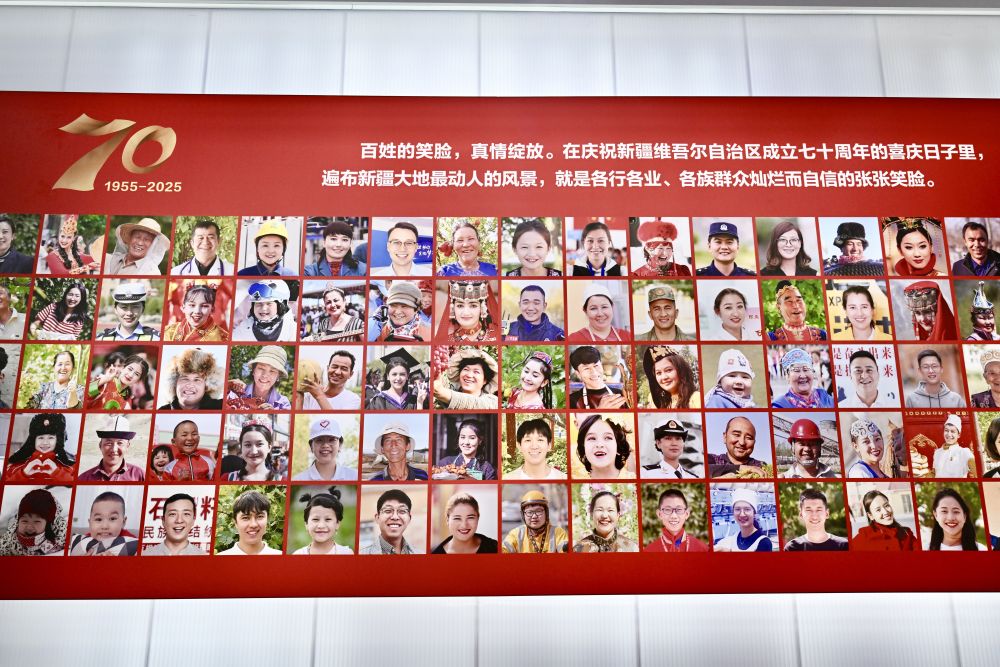
Core Points - The 70th anniversary of the Xinjiang Uyghur Autonomous Region showcases significant achievements and transformations over the decades, reflecting the broader historical progress of the Chinese nation [1][3][20] - President Xi Jinping's visit to Xinjiang included a review of historical milestones and a celebration of the contributions made by various groups in the region [4][21] Group 1 - The theme exhibition features a "smile wall" representing the happiness and achievements of different demographics in Xinjiang, including farmers, workers, and children [1][3] - Xi Jinping expressed deep emotions while reflecting on the historical contributions of early builders and the spirit of those who have dedicated their lives to the development of Xinjiang [4][8] - The exhibition highlights the stories of unsung heroes, including soldiers and workers, who have played crucial roles in the region's development [7][12] Group 2 - The celebration included a grand ceremony with representatives from various sectors, emphasizing the unity and dedication of the people in Xinjiang [10][14] - Local representatives shared their experiences, showcasing improvements in infrastructure and quality of life, such as better roads and nutrition programs for children [16][20] - The event featured artistic performances that illustrated the rapid changes and cultural richness of Xinjiang, reinforcing a sense of pride among the local population [18][22]
文化润疆是新时代党的治疆方略的重大创新(深入学习贯彻习近平新时代中国特色社会主义思想·原创性概念标识性概念纵横谈)
Ren Min Wang· 2025-09-29 22:29
Core Viewpoint - The article emphasizes the importance of cultural integration in Xinjiang as a strategic approach to ensure social stability and long-term peace, highlighting the need for a comprehensive understanding of the Party's governance strategy in the region [2][19]. Summary by Relevant Sections Cultural Integration Strategy - Cultural integration in Xinjiang is identified as a crucial component of the Party's governance strategy, aimed at fostering social stability and a sense of community among various ethnic groups [2][3][19]. - The concept of "cultural integration" is presented as an original and significant idea within the Party's governance framework, reflecting historical confidence and responsibility [3][11]. Historical Context and Governance - Xinjiang has a rich history of cultural diversity, and effective governance has historically relied on promoting mainstream values and traditional Chinese culture [4][11]. - The governance of Xinjiang has evolved over 2000 years, with a consistent emphasis on cultural promotion and exchange as a means to enhance social cohesion [4][6]. Party's Leadership and Cultural Development - The article discusses the Party's historical commitment to cultural development in Xinjiang, emphasizing the importance of cultural leadership in maintaining national unity and stability [5][6][19]. - The Party's approach includes promoting education, protecting cultural heritage, and fostering inter-ethnic communication to enhance cultural confidence and identity [6][19]. Modernization and Community Building - The strategy of cultural integration is positioned as essential for modernizing governance and building a cohesive national identity, particularly in the context of China's modernization efforts [13][14]. - The article stresses the need for shared development and collective progress among all ethnic groups in Xinjiang, reinforcing the idea of a unified national community [14][15]. Future Directions - The article calls for ongoing efforts to strengthen cultural integration, emphasizing the importance of education and community engagement in fostering a shared national identity [15][16]. - It highlights the necessity of addressing ideological challenges and promoting a positive narrative about Xinjiang to enhance its image both domestically and internationally [18][19].
总书记新疆行 | 记者手记:时代面孔里的沧桑巨变
Xin Hua She· 2025-09-29 15:06
Core Points - The 70th anniversary of the Xinjiang Uyghur Autonomous Region was celebrated with a theme exhibition showcasing the happiness and achievements of over 26 million people in the region [1][2] - President Xi Jinping highlighted the significant changes in Xinjiang over the past 70 years as a vivid reflection of the historical process of the great rejuvenation of the Chinese nation [1][2] Group 1: Achievements and Historical Context - The exhibition featured a "smile wall" with 90 photos representing the joyful lives of various groups, including farmers, workers, and children [1] - Xi Jinping expressed deep feelings while viewing historical photos of past leaders and builders, emphasizing their inspiring contributions to the region [3][4] - The narrative of collective effort and sacrifice by generations of builders in Xinjiang was highlighted, showcasing their dedication to the development of the region [5][6] Group 2: Cultural and Emotional Resonance - The celebration included emotional moments, such as a young girl expressing her pride in the national flag, symbolizing the deep connection between the people and their country [8][9] - The event featured representatives from various sectors, including education and public transport, who shared their positive experiences and improvements in their communities [11][12] Group 3: Future Aspirations and Development - Xi Jinping encouraged continued efforts to enhance the region's development, emphasizing the importance of unity and hard work among the people of Xinjiang [16] - The celebration showcased the transformation of Xinjiang into a vibrant area with high-quality development and strategic significance in the broader national context [15][16]
“开创新疆更加美好的明天”
Ren Min Ri Bao· 2025-09-28 22:28
Core Points - The visit of General Secretary Xi Jinping to Xinjiang marks the first time a central leader has attended the celebration of the establishment of the Xinjiang Uyghur Autonomous Region, highlighting the importance placed on Xinjiang by the central government [1][2] - The visit aims to express congratulations and outline a new chapter for socialist modernization in Xinjiang, with a packed schedule of meetings and events to engage with various representatives from different ethnic groups [3][4] - Significant achievements in Xinjiang's development over the past 70 years were highlighted, including economic growth, social stability, and improvements in living standards [4][5][8] Economic and Social Development - Xinjiang's GDP is projected to exceed 2 trillion yuan in 2024, representing a 204.3-fold increase since its peaceful liberation [4] - The per capita disposable income for urban and rural residents has increased by 133.2 times and 162.3 times, respectively, since 1978 [4] - Over 3.06 million people from various ethnic groups have been lifted out of poverty, and there has been a comprehensive implementation of free education and health check-ups [5][8] Cultural and Ethnic Unity - The visit emphasized the importance of cultural integration and the unity of various ethnic groups, with Xi Jinping encouraging the promotion of a shared national identity [17][18] - The theme of the celebration included performances that showcased the rich cultural heritage of Xinjiang, reinforcing the message of unity among different ethnic communities [18][19] Strategic Importance - Xinjiang's strategic position as a key area for national development and security was underscored, with plans to enhance its role as a hub for the Silk Road Economic Belt [24][25] - The region is set to become a critical point for energy resources and agricultural products, contributing significantly to national food security [25][27] Future Directions - The central government aims to continue supporting Xinjiang's development through targeted investments and projects, focusing on high-quality growth and the integration of various industries [26][27] - The emphasis on maintaining social stability and promoting economic prosperity is seen as essential for the long-term success of the region [11][12]