
党风廉政建设

Search documents
在新时代新征程上一刻不停推进全面从严治党
Shan Xi Ri Bao· 2025-11-05 23:19
Group 1 - The core message emphasizes the importance of the Party's self-revolution and the need for strict governance to ensure the Party's leadership in advancing Chinese-style modernization [1][2][3] - The 20th Central Committee's Fourth Plenary Session outlines systematic deployments to strengthen the Party's leadership and promote strict governance [1][2] - There is a strong call among Party members and officials to implement the spirit of the plenary session, enhancing awareness and commitment to the Party's strategic directives [1][2][3] Group 2 - The session highlights the necessity of long-term efforts in improving work styles and emphasizes the importance of discipline in building a capable Party workforce [2][3] - Local officials express a commitment to integrating the plenary session's spirit into daily operations, focusing on grassroots governance and community engagement [5] - The emphasis on maintaining a high-pressure stance against corruption and ensuring political integrity is reiterated as essential for effective governance [2][4] Group 3 - The session stresses the need for continuous improvement in Party conduct and the establishment of a robust political ecosystem to support high-quality development [4][5] - Financial institutions, such as the Agricultural Bank of China, are urged to align their operations with the Party's directives to enhance service to the real economy and maintain financial stability [3][4] - Educational institutions are called to strengthen Party leadership in education, aiming for a high-level research-oriented university while promoting integrity and discipline [4]
多事之秋早亮廉灯
Zhong Guo Neng Yuan Wang· 2025-11-05 04:42
Core Viewpoint - The company emphasizes the importance of integrity and anti-corruption measures, especially during the year-end period, to ensure a stable and disciplined environment for its operations [1][3]. Group 1: Education and Training - The company focuses on deepening education and guidance to build a strong ideological barrier against corruption, with comprehensive learning initiatives for all employees [2]. - A dual classroom approach is implemented, utilizing both online platforms and offline lectures to enhance awareness of integrity and compliance [2]. - Responsibility is reinforced through a commitment system, where all levels of management sign integrity commitments, creating a shared responsibility for ethical conduct [2]. Group 2: Supervision and Accountability - The company establishes a robust supervision network targeting key personnel, ensuring strict adherence to reporting and accountability measures [2]. - A "red and black list" system for qualified subcontractors is introduced, promoting dynamic management of contractor relationships to prevent conflicts of interest [2]. - Grassroots supervision is activated through the use of QR codes for anonymous reporting of misconduct, ensuring constant oversight [2]. Group 3: Cultural Development - The company aims to cultivate a culture of integrity by creating "clean demonstration projects" and integrating integrity culture into project management and safety assessments [2]. - Family involvement in integrity initiatives is encouraged, with activities designed to strengthen ethical behavior outside of work [2]. Group 4: Overall Impact - Through these comprehensive measures, the company effectively integrates integrity and anti-corruption practices into its governance and project management, supporting sustainable and high-quality development [3].
蒋超良被双开,湖北省委常委会:坚决拥护党中央决定
Bei Jing Ri Bao Ke Hu Duan· 2025-10-27 10:11
Core Points - The Hubei Provincial Standing Committee held an expanded meeting to discuss the expulsion of Jiang Chaoliang from the Party and public office, emphasizing the Party's commitment to strict governance and anti-corruption measures [1][2][3] Group 1: Party Discipline and Governance - The meeting underscored the importance of political discipline and the need for all Party members to align their thoughts and actions with the decisions made by the central leadership [1][2] - Emphasis was placed on learning from Jiang Chaoliang's case to strengthen Party loyalty and integrity, urging members to resist corruption and uphold Party values [2][3] - The meeting called for a rigorous approach to political supervision, ensuring that political discipline and rules are prioritized [3] Group 2: Leadership Responsibilities - Provincial leaders are expected to lead by example, adhering strictly to Party regulations and fostering a culture of accountability and integrity [4] - The importance of implementing the "three major decisions" system and ensuring fair and lawful use of power was highlighted [4] - Leaders are tasked with promoting a positive atmosphere within their jurisdictions, actively combating negative influences and fostering a culture of discipline [4]
湖北:坚决拥护党中央决定
Xin Jing Bao· 2025-10-27 09:29
Core Points - The expulsion of Jiang Chaoliang from the Party and public office reflects the central government's strong commitment to strict party governance and anti-corruption measures [1][2][3] - The meeting emphasized the need for all party members to align their thoughts and actions with the central government's decisions, enhancing political judgment and execution [1][2] - The importance of learning from Jiang's case to prevent similar issues in the future was highlighted, with a focus on maintaining integrity and resisting corruption [2][3] Summary by Sections Disciplinary Actions - Jiang Chaoliang was expelled from the Party and public office, indicating a zero-tolerance approach to corruption [1] - The decision was supported unanimously by the provincial committee, showcasing a unified stance against corruption [1] Political Education and Conduct - Emphasis on the need for party members to strengthen their political beliefs and maintain loyalty to the Party [2] - A call for self-discipline and adherence to party rules, with a focus on resisting hedonism and privilege [2][3] Strengthening Supervision and Accountability - The meeting stressed the importance of rigorous political supervision and maintaining political discipline [3] - A commitment to addressing corruption through strict enforcement of rules and regulations was reiterated [3] Leadership Responsibilities - Provincial leaders are urged to set an example in adhering to party discipline and regulations [4] - The necessity for leaders to manage their teams effectively and promote a culture of integrity was emphasized [4]
湖北省委常委会(扩大)会议召开,坚决拥护党中央对蒋超良的处理决定,不断推动全面从严治党向纵深发展
Xin Lang Cai Jing· 2025-10-27 09:26
Core Points - The meeting emphasized the importance of strict political discipline and the need for comprehensive and rigorous governance of the Party, reflecting the central leadership's commitment to anti-corruption and self-reform [1][3][4] - The decision to expel Jiang Chaoliang from the Party and public office was unanimously supported, highlighting the Party's zero-tolerance stance on corruption [1][2] Group 1 - The meeting called for a deep reflection on the lessons learned from Jiang Chaoliang's case, urging Party members to strengthen their political beliefs and loyalty to the Party [2][3] - It was stressed that leaders must set an example by adhering to Party rules and regulations, promoting a culture of integrity and accountability [4] Group 2 - The need for strict political supervision was highlighted, with a focus on maintaining the authority of the central leadership and ensuring compliance with political discipline [3] - The meeting outlined measures to combat corruption, including strict oversight of key decision-making processes and the establishment of a robust responsibility system for Party governance [3][4]
国网岷县供电公司:以巡察促提升 筑牢监督保障
Zhong Guo Neng Yuan Wang· 2025-10-22 03:01
Core Viewpoint - The State Grid Dingxi Power Supply Company is conducting a "regular + special" inspection of the Min County Power Supply Company to enhance party discipline and anti-corruption efforts [1][2] Group 1: Inspection Overview - The inspection is part of the implementation of the party's integrity construction and anti-corruption work deployment by the Dingxi Power Supply Company [1] - The inspection team will focus on both regular inspections for comprehensive coverage and special inspections for targeted risk areas [1] Group 2: Company Response - The Min County Power Supply Company has organized its departments to prepare work records in advance to ensure accurate and efficient data submission [1] - The company emphasizes the importance of a proactive attitude and practical approach from all staff to support the inspection [1][2] Group 3: Goals and Outcomes - The inspection is viewed as an opportunity for "political health checks" and "development empowerment," aiming to improve management and service quality [2] - The company plans to convert the inspection results into motivation for enhancing work processes and purifying the political environment [2]
系统施策提升基层治理效能
Zhong Yang Ji Wei Guo Jia Jian Wei Wang Zhan· 2025-10-22 00:56
Group 1 - The grassroots supervision system is essential for ensuring the implementation of party and state policies, acting as the "last mile" of governance [1] - Sichuan Province's Ren Shou County is enhancing grassroots supervision by integrating various supervisory responsibilities and promoting a collaborative supervision framework [1] - The county is focusing on comprehensive supervision, specialized supervision, and coordination among different types of supervision to create an effective grassroots supervision network [1] Group 2 - The county is categorizing and addressing issues identified during supervision checks, ensuring that every problem is resolved and feedback is provided [2] - Common issues are being addressed through feedback to relevant departments, while a "廉情监督员" team is established for follow-up evaluations to gauge public satisfaction [2] - For significant issues, the county is implementing a "guarantee" approach, where department heads are responsible for creating and tracking rectification plans [2] Group 3 - The approach emphasizes both immediate and long-term solutions, combining punitive measures with preventive education to address disciplinary violations [3] - The county is focusing on early detection and correction of issues by establishing a risk assessment mechanism that operates both online and offline [3] - Educational initiatives are being implemented to raise awareness among party members and officials about compliance and ethical standards through case studies and discussions [3]
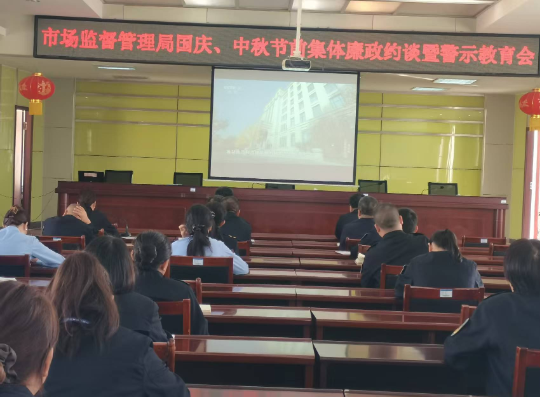
新疆乌苏市市场监管局召开国庆中秋“双节”前集体廉政约谈暨警示教育会
Zhong Guo Shi Pin Wang· 2025-09-29 02:12
Core Points - The article emphasizes the importance of maintaining integrity and preventing misconduct during the National Day and Mid-Autumn Festival periods [1][3] - A meeting was held by the Urumqi Market Supervision Administration to guide all party members and staff in strengthening their anti-corruption measures [1][3] Group 1 - The meeting reported eight typical cases of violations of the Central Eight Regulations, highlighting issues such as the improper acceptance of gifts and banquets [3] - Participants were urged to recognize the significance of maintaining discipline during the festive period and to avoid complacency and a sense of entitlement [3] - Strict adherence to disciplinary boundaries was mandated, prohibiting the acceptance of gifts, shopping cards, and participation in informal gatherings during the holidays [3] Group 2 - The meeting stressed the need for accountability, requiring leaders to manage both their own conduct and that of their teams, addressing any emerging issues promptly [3] - The market supervision department plays a crucial role in maintaining market order and ensuring public safety during the festive season [3] - All party members were encouraged to integrate integrity requirements into their daily responsibilities, particularly in areas such as food safety, drug safety, and price regulation [3]

国网金塔县供电公司:深化廉洁教育 筑牢思想防线
Zhong Guo Neng Yuan Wang· 2025-09-23 03:15
Core Viewpoint - The company emphasizes the construction of a clean culture as a fundamental project to promote strict governance, enhancing the awareness of integrity among party members and key personnel for high-quality development [1][4]. Group 1: Innovative Education Approaches - The company integrates integrity education as a mandatory course for party members, utilizing a combination of positive and negative educational models to instill integrity awareness [1][2]. - Special integrity warning education meetings are held before major holidays, focusing on typical violations of the Central Eight Regulations, and specific disciplinary requirements are outlined [1][2]. - The company employs real cases and reflective materials in educational films to vividly demonstrate the severe consequences of violations, encouraging party members to learn from these examples [1][2]. Group 2: Strengthening Institutional Constraints - Institutional construction is viewed as the fundamental guarantee for integrity risk prevention, with a focus on implementing responsibility through a key task list for discipline inspection [2][3]. - Comprehensive supervision methods, including special inspections and reminders, are employed to ensure the standardized operation of power [2][3]. - Emphasis is placed on supervising key personnel and positions through visits, reminders, and guidance to ensure accountability is effectively communicated [2][3]. Group 3: Enhancing Grassroots Supervision - The company focuses on the operation of "micro-powers," establishing clear standards and processes for supervision in areas closely related to public interests [3]. - Methods such as surprise inspections and random checks are utilized to improve the effectiveness of supervision against grassroots corruption [3]. - The company aims to ensure that supervision is targeted and effective, addressing integrity risks at the grassroots level [3]. Group 4: Deepening Risk Prevention - The company balances immediate corrections with long-term establishment of integrity education, integrating it into daily operations [3][4]. - Regular warning and discipline education sessions are conducted, especially during critical periods, to reinforce the importance of integrity [3]. - The company actively addresses issues affecting its image and employee stability, such as drunk driving and drug use, through regular checks and early interventions [3][4]. Group 5: Commitment to Integrity - The company is committed to strengthening discipline and integrity education, ensuring that rules and regulations are prioritized in its operations [4]. - A firm determination and practical measures are emphasized to advance the construction of a clean governance environment, supporting high-quality development and local economic contributions [4].
实践与思考丨持之以恒抓好巡视整改监督
Zhong Yang Ji Wei Guo Jia Jian Wei Wang Zhan· 2025-09-18 00:56
Core Viewpoint - The Central Commission for Discipline Inspection emphasizes the importance of implementing and supervising the rectification of issues identified during inspections to ensure high-quality development within state-owned enterprises [1][2]. Group 1: Rectification Responsibility - The focus on rectification responsibility is crucial for effective outcomes, with the supervisory body closely monitoring the implementation of responsibilities at all levels [2][3]. - The supervisory group encourages the leadership to enhance political awareness and take rectification as a concrete action to uphold the "two safeguards" [2][3]. - The supervisory group has established a rectification leadership team and work units to ensure clear responsibilities and regular updates on progress [3][4]. Group 2: Supervision Mechanisms - A long-term mechanism for supervising rectification has been established, focusing on key stages and important timelines to ensure thorough oversight [4][5]. - The supervisory group has created a comprehensive supervision plan that includes regular assessments and updates on the rectification process [5][6]. - Emphasis is placed on a "one-on-one" supervision approach to ensure that unresolved issues are closely monitored until fully rectified [6]. Group 3: Focus on Key Issues - The supervisory group prioritizes significant issues highlighted during inspections and integrates them into a broader supervision strategy to drive comprehensive rectification [7][8]. - Specific attention is given to the coal chemical sector, with tailored supervision strategies to address long-term development challenges [8][9]. - The group actively engages in risk management by addressing procurement and construction issues, ensuring that systemic vulnerabilities are identified and mitigated [9][10]. Group 4: Anti-Corruption Efforts - The supervisory group is committed to addressing corruption and misconduct, particularly during key holiday periods, by implementing strict oversight measures [11][12]. - A focus on educating employees about integrity and compliance is emphasized through various initiatives, including case studies and warning education [13]. - The group aims to strengthen the overall governance framework by addressing identified weaknesses and ensuring accountability at all levels [13].