
碳达峰

Search documents
打造中国特色ESG服务生态 助力经济绿色转型
Zhong Guo Zheng Quan Bao· 2025-12-21 21:06
● 本报记者刘丽靓 近日,国新证券党委书记、董事长张海文在接受中国证券报记者专访时表示,公司锚定政策导向,将 ESG业务作为服务国家战略、践行金融"五篇大文章"、助力美丽中国建设的重要抓手,通过ESG咨询服 务创新、评价体系升级、生态协同共建,推动ESG业务质效提升,积极助力实体经济绿色转型,彰显央 企券商的责任担当。 打造特色ESG业务品牌 "ESG是一种关注企业可持续发展的投资理念和评估框架,契合我国经济社会发展阶段要求,在帮助企 业绿色低碳转型、管理风险方面可以发挥积极作用。"张海文介绍,国新证券将ESG业务聚焦于合规管 理筑基、专业体系驱动、智能技术提效、服务生态共赢四个维度,致力于打造特色ESG业务品牌。 金融多维支持绿色转型 面对"十五五"规划建议提出的"加快经济社会发展全面绿色转型,建设美丽中国"的明确要求,张海文表 示,以碳达峰、碳中和为牵引,协同推进降碳、减污、扩绿、增长是一项系统工程,金融要加大支持实 体经济力度,把握好战略、路径、风险和创新等多个维度的平衡。 在战略层面,金融需要确保支持实体经济转型安全有序,实现平稳过渡。"一方面要优先支持绿色新动 能的培育,比如对传统产业绿色升级的支持 ...
太子河抽水蓄能电站通风洞提前85天贯通
Xin Lang Cai Jing· 2025-12-20 22:07
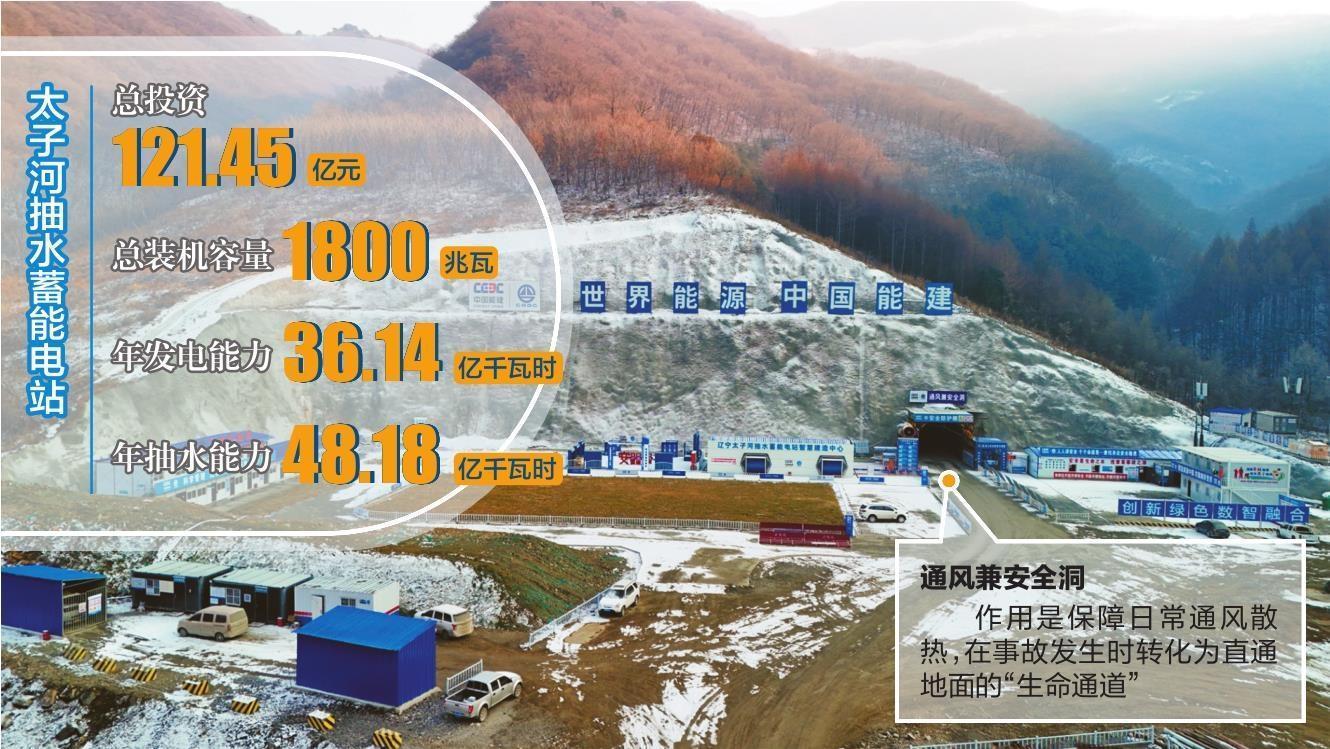
Core Insights - The Taizi River Pumped Storage Power Station in Liaoning has achieved a significant milestone with the completion of the ventilation and safety tunnel, finishing 85 days ahead of schedule, which lays a solid foundation for subsequent construction phases [2] - The project is the largest pumped storage power station under construction in Northeast China, with a total investment of 12.145 billion yuan and a designed capacity of 1,800 megawatts [2] - The project aims to generate 3.614 billion kilowatt-hours annually and has a water pumping capacity of 4.818 billion kilowatt-hours, with the first unit expected to be connected to the grid by 2030 [2] Construction Progress - The ventilation and safety tunnel spans 1,395 meters and is a critical control project within the overall pumped storage initiative, achieving a monthly advancement record of 203 meters [2] - The construction team has worked continuously since the first blast on December 6, 2024, to complete the tunnel three months ahead of the planned schedule [2] Digitalization and Management - The smart construction center for the Taizi River Pumped Storage Power Station has been put into operation, utilizing IoT, big data, AI, 5G, and BIM technologies to enhance construction efficiency and safety [3] - The project has received strong support from local government, which has established working groups and streamlined administrative processes to facilitate timely project advancement [3] Future Impact - Once completed, the power station will primarily serve the Liaoning power grid, playing a crucial role in peak shaving, valley filling, energy storage, frequency modulation, and emergency backup, thereby supporting the development of clean energy and improving power supply quality [4] - The project aligns with national goals for carbon peak and carbon neutrality, contributing to the optimization of the energy structure and the layout of pumped storage in the power grid [4]

预见2025:《2025年中国锂电池行业全景图谱》(附市场现状、竞争格局和发展趋势等)
Qian Zhan Wang· 2025-12-20 02:10
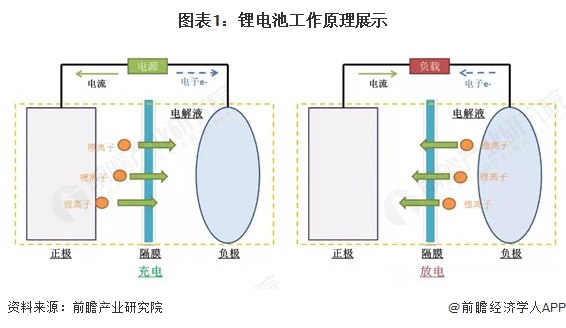
Industry Overview - The lithium-ion battery industry is defined as the manufacturing sector engaged in the production of lithium batteries, primarily focusing on lithium-ion batteries, which are the most commonly used type in the market [1][3] - Lithium batteries are categorized into two types: those using metallic lithium as the anode and lithium-ion polymer batteries, which utilize polymer electrolytes [1][3] Industry Chain Analysis - The lithium battery industry chain consists of upstream suppliers of core materials (anodes, cathodes, electrolytes, separators), midstream manufacturers, and downstream applications and recycling [4][7] Industry Development History - The lithium battery industry in China has evolved through four stages: core technology accumulation, production scale expansion, application field expansion, and high-quality development [11] - By 2024, China's lithium battery shipments are expected to account for over 80% of the global market share, solidifying its position as a leading producer [11] Policy Background - National policies support the stable development of the lithium battery industry through funding, resource sharing, and regulatory simplifications [14][15] - Key policies include export controls on high-performance lithium-ion batteries and regulations on the recycling of used batteries [15][16] Current Industry Status - In 2024, China's lithium battery production is projected to exceed 940 GWh, with a year-on-year growth of 25%, and the total industry output value surpassing 1.4 trillion yuan [17] - The lithium battery shipment volume is expected to reach 1,175 GWh in 2024, reflecting a year-on-year increase of 32.62% [18] - The installed capacity of lithium batteries is anticipated to exceed 645 GWh in 2024, with a growth rate of 48% [19][22] - The average price of lithium batteries is forecasted to drop to $115 per kWh in 2024, marking a significant decline of 20% from 2023 [24] Product Structure - Phosphate iron lithium batteries have become the mainstream due to their cost advantages and safety features, accounting for 60% of lithium battery shipments in 2024 [25] Competitive Landscape - China is the largest lithium battery producer globally, with major companies like CATL, BYD, and others leading the market [29] - In 2024, the top 15 domestic power battery companies by installed capacity include CATL, BYD, and others, with CATL holding a market share of 42.7% [29] Future Development Prospects - The lithium battery market is expected to grow significantly, driven by the expansion of the electric vehicle market and the push for carbon neutrality [31] - The industry is predicted to maintain a growth rate of approximately 26% until 2030, with the market size potentially reaching 5,022 GWh [31] - Future trends indicate an increase in the market share of polymer lithium-ion batteries and advancements in solid-state battery technology [32]





“十五五”关键时期,绿色转型进入系统推进阶段
Feng Huang Wang Cai Jing· 2025-12-20 01:12
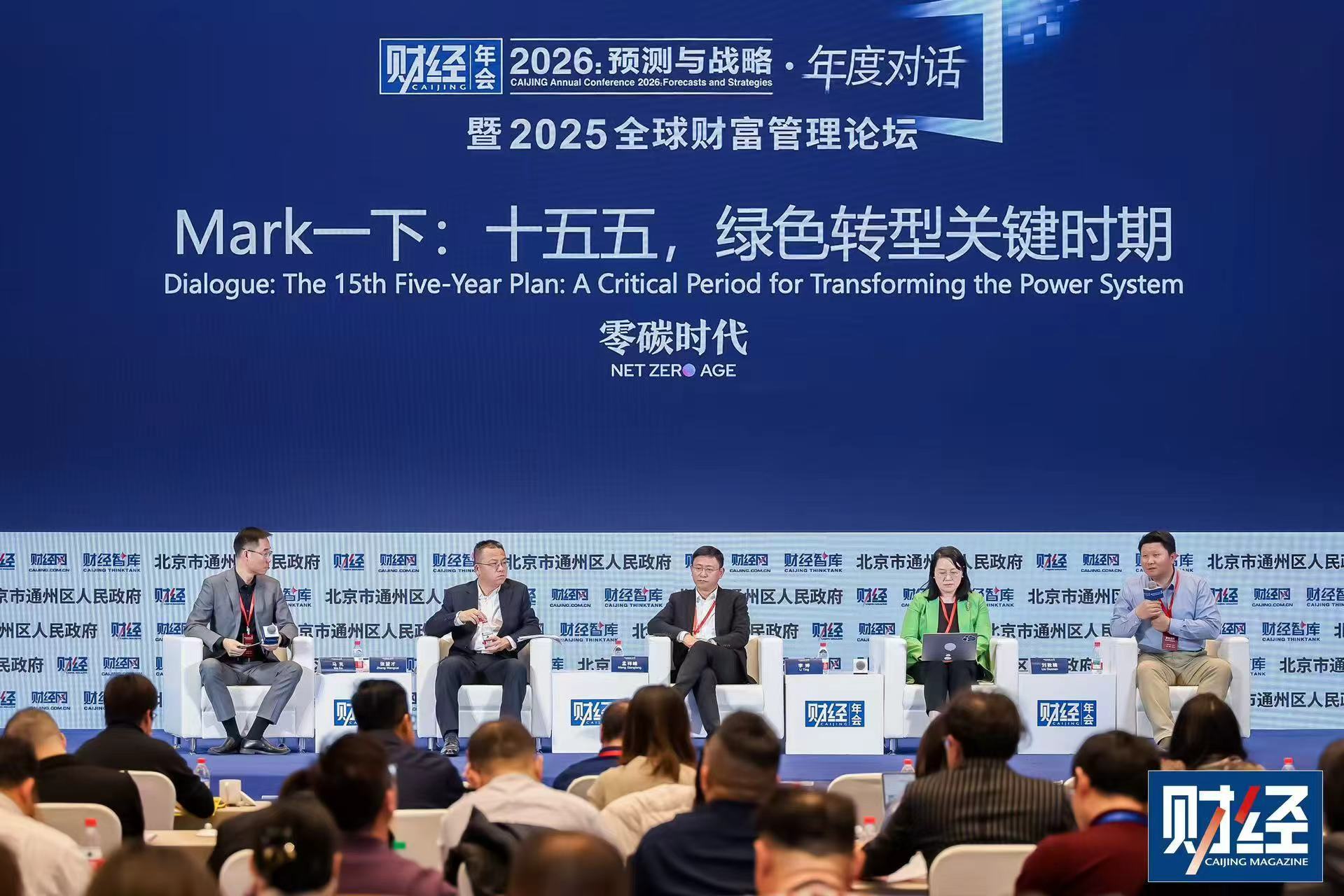
Group 1: Core Insights - The roundtable discussion highlighted the need for China to achieve substantial progress in flexibility of the power system, market mechanism improvement, and shaping a green production and lifestyle in the next five years, building on the foundation of the largest renewable energy system globally and a significant increase in non-fossil energy consumption during the 14th Five-Year Plan period [4] - Beijing aims to reduce the use of refined oil and natural gas while increasing the share of green electricity, with plans to import over 40 billion kilowatt-hours of green electricity from outside the city by 2025 [4] - The rapid development of renewable energy in China is becoming a major driving force for the green transition across society, positioning China as a leader in the global renewable energy system [5] Group 2: Industry Perspectives - The application of batteries in green transition is expanding beyond electric vehicles and energy storage, with companies like CATL providing battery solutions for over 900 electric ships and addressing the needs of high-energy-consuming industries like steel and cement through electrification and energy storage [5] - The establishment of a unified national electricity market framework in China has been progressing, with innovations in green electricity purchasing and direct connections being implemented [5] - The electricity market is expected to play a crucial role in guiding long-term investment decisions through price signals, influencing where new energy projects are directed based on local electricity prices [6] Group 3: Future Initiatives - The launch of the journal "Zero Carbon Era" aims to contribute insights into energy system transformation, green technology innovation, and low-carbon development paths, establishing a high-end think tank platform with international influence [6] - The upcoming "Finance Annual Conference 2026" will focus on China's resilience amid changing circumstances, serving as a significant platform for international economic exchange and observation of China's future direction [7]
国家能源局新能源司:1-10月全国光伏发电利用率同比下滑2.2个百分点
Xin Lang Cai Jing· 2025-12-18 12:29
他也谈到,供给侧方面,光伏产业转型升级的任务依然艰巨,内卷式竞争对行业整体利润的侵蚀,对技 术创新空间的挤压影响依然存在,部分关键环节的核心技术护城河仍需加深;需求方面,光伏大规模高 比例接入,对高效消纳挑战日益突出,1-10月全国光伏的发电利用率仅为94.9%,同比下滑了2.2个百分 点,电力系统的消纳压力非常大。(刘丽丽) 他也谈到,供给侧方面,光伏产业转型升级的任务依然艰巨,内卷式竞争对行业整体利润的侵蚀,对技 术创新空间的挤压影响依然存在,部分关键环节的核心技术护城河仍需加深;需求方面,光伏大规模高 比例接入,对高效消纳挑战日益突出,1-10月全国光伏的发电利用率仅为94.9%,同比下滑了2.2个百分 点,电力系统的消纳压力非常大。(刘丽丽) 责任编辑:何俊熹 责任编辑:何俊熹 12月18日消息,在今天举行的2025光伏行业年度大会上,国家能源局新能源和可再生能源司副司长桂小 阳表示,2025年对于光伏行业来说是极不平凡的一年,光伏行业整治内卷式竞争持续高位推进,举措立 即落地,产业链各环节的价格企稳回暖,竞争秩序逐步修复,新能源全面参与电力市场绿电直连,促进 新能源集成融合发展和消纳调控等政策也相继 ...
聚焦“双碳”目标 发挥“盛先锋”品牌引领 盛京银行全力做好绿色金融大文章
Jin Rong Jie· 2025-12-18 07:48
Core Viewpoint - Shengjing Bank actively implements the requirements of the central financial work conference on green finance, enhancing its social responsibility and innovating green financial services to support sustainable development [1][2]. Group 1: Green Credit Expansion - Shengjing Bank focuses on serving the development of green low-carbon industries, with a significant increase in green credit balance reaching 15.721 billion yuan, an increase of 4.775 billion yuan, representing a growth rate of 43.62% by the end of November 2025 [2]. - The bank is set to launch implementation plans and management measures for green finance starting in 2024, aiming to enhance its green finance business [2][3]. - The bank hosted a forum to discuss trends in the green low-carbon industry, showcasing its innovative achievements in green finance [2]. Group 2: Mechanism and Incentives - Shengjing Bank incorporates green finance lending scale into its core evaluation indicators, establishing a long-term incentive mechanism to encourage lending for green projects [3]. - The bank emphasizes training for its staff on business management and risk responsibility, aiming to enhance the professional capabilities of its green finance personnel [3]. Group 3: Innovative Financial Products - Shengjing Bank has developed a range of green financial products, including "Liaocarbon Loan," "Water-saving Loan," and "Green Procurement Loan," to support enterprises in accessing financing for green projects [4]. - The bank tailored financial solutions for a startup focused on agricultural waste resource utilization, addressing its financing challenges by leveraging future carbon reduction benefits as collateral [4][5]. Group 4: Successful Case Studies - With the bank's support, a company increased its biomass fuel processing capacity from 20,000 tons to over 50,000 tons, achieving a 40% increase in annual biomass fuel production and significant carbon reduction [5]. - Shengjing Bank has successfully implemented various innovative financing tools, including the first local carbon reduction support loan in Liaoning Province and the first carbon emission rights pledge loan in the national carbon market [5]. Group 5: Efficient Financial Services - The bank has streamlined its loan approval processes, significantly reducing the time required for financing, as demonstrated by a 20 million yuan loan provided to a company expanding its electric vehicle production line [7]. - The bank's Shanghai branch facilitated nearly 40 million yuan in financing for a green energy storage project by simplifying the approval process and ensuring timely funding [8]. Group 6: Commitment to Green Finance - Shengjing Bank aims to continue enhancing its "Sheng Pioneer" brand while focusing on green finance as a key support direction, ensuring financial resources are directed towards critical areas of green development [8].
【能源广角】煤炭消费负增长不是“终场哨”
Jing Ji Ri Bao· 2025-12-18 01:00
短期看,煤炭需求仍有韧性。中国煤炭运销协会预计,明年我国煤炭需求仍有一定增长空间。其中,受 绿电价格下滑影响,明年新能源装机和发电增速可能呈现回落态势,可再生能源发电增量难以完全覆盖 用电量增量,为火电发展留出空间,电煤需求有望保持增长;煤化工行业效益相对较好,煤化工新增产 能陆续投产,产能利用率有望维持高位,将带动化工煤需求较快增长。 中长期看,煤炭消费下滑大势不可阻挡。"十五五"时期是实现碳达峰的收官期,作为我国能源供应主 体,煤炭是推进碳达峰的重点领域。我国将在保障能源安全供应前提下,逐步减少煤炭消费。但这并非 断崖式下跌,据预测,煤炭消费将在2027年前后达峰,并进入一个平台期,电力、化工行业用煤将保持 增长,钢铁、建材、民生等用煤稳中有降。此后,煤炭消费才会进入较为明显的下降通道,其角色将从 主体能源逐步转向兜底保障能源。 近日,中国煤炭运销协会在煤炭经济运行分析会上,披露了一个引人关注的数据:今年以来,我国煤炭 消费总体偏弱,自2017年以来同比首次出现负增长,预计明年煤炭需求仍有增长空间,煤炭供应将相对 稳定。煤炭消费为何出现下滑?这一数据是短期波动,还是长期趋势的起点?在"十五五"规划建议明确 ...

中经评论:煤炭消费负增长不是“终场哨”
Jing Ji Ri Bao· 2025-12-18 00:08
近日,中国煤炭运销协会在煤炭经济运行分析会上,披露了一个引人关注的数据:今年以来,我国 煤炭消费总体偏弱,自2017年以来同比首次出现负增长,预计明年煤炭需求仍有增长空间,煤炭供应将 相对稳定。煤炭消费为何出现下滑?这一数据是短期波动,还是长期趋势的起点?在"十五五"规划建议 明确提出"推动煤炭和石油消费达峰"的背景下,我们该如何理解煤炭角色转变? 煤炭消费下滑首要原因是火电用煤减少。燃煤发电行业仍是煤炭消费主力,今年以来,新能源装机 和发电量快速增长,预计全年风电光伏新增装机约3.7亿千瓦。持续高增长下,新能源规模化替代效应 凸显,煤电装机占比继续下降,煤电发电量受到制约。同时,受房地产市场持续调整等因素影响,钢 铁、建材两大传统耗煤行业煤炭需求也有所减少。 有人认为,煤炭消费下滑是经济动能不足的表现。但事实绝非如此。随着我国能源转型深入推进和 产业结构升级,煤炭消费增速与宏观经济增速的关系,已由密切相关转为弱相关。一方面,在经济高质 量发展要求下,钢铁、建材等高耗能行业不再是简单的规模扩张,而是致力于提质增效和节能减排。单 位产出煤耗持续降低,意味着我们可以用更少的煤支撑经济稳定增长。 另一方面,我国经济 ...
煤炭消费负增长不是“终场哨”
Jing Ji Ri Bao· 2025-12-17 20:08
Core Insights - China's coal consumption has shown a decline for the first time since 2017, indicating a potential shift in the energy landscape [1][3] - The decrease in coal consumption is primarily attributed to reduced coal use in thermal power generation, driven by rapid growth in renewable energy installations [1][2] - The relationship between coal consumption growth and macroeconomic growth has weakened, reflecting a transition towards high-quality economic development [1][2] Group 1: Current Trends - Coal consumption has experienced a negative growth rate this year, with expectations for a stable supply and potential growth in demand next year [1][3] - The coal industry is facing challenges from traditional high-consumption sectors like steel and construction, which are seeing reduced coal demand due to market adjustments [1][3] - The anticipated growth in electricity demand will increasingly be met by renewable energy sources, leading to a decoupling of electricity demand growth from coal consumption growth [2] Group 2: Future Outlook - Short-term projections suggest that coal demand may still have resilience, with potential growth driven by coal chemical industries and a temporary slowdown in renewable energy growth [3] - Long-term forecasts indicate that coal consumption will peak around 2027, transitioning from a primary energy source to a backup energy source [3][4] - The coal sector is expected to play a crucial role in the new energy system as a reliable and economical regulator, emphasizing the need for new market mechanisms to reflect its value [4] Group 3: Strategic Recommendations - The industry should focus on the transition from coal as a fuel to coal as a raw material, particularly in the chemical sector, to align with carbon reduction goals [4] - A balanced approach to energy transition is necessary, ensuring that coal production capacity remains sufficient until renewable energy can fully support the system [4] - The narrative surrounding coal consumption decline should be viewed as a commitment to transformation rather than a sign of decline, highlighting the ongoing evolution of the coal sector [4]
2026年全国碳市场年度行情展望:全国碳市场:此消彼长,余震仍存
Guo Tai Jun An Qi Huo· 2025-12-17 11:49
Report Title - "National Carbon Market: One Thing Gains While Another Loses, Aftershocks Still Linger — Outlook for the Annual Market of the National Carbon Market in 2026" [1] Report Industry Investment Rating - Not provided in the report Core Views of the Report - The macro - emission reduction target will provide an important reference for the downward adjustment path of the power generation industry's quota benchmark value. If 2025 is the peak - year, the average annual emission reduction rate of carbon dioxide from 2026 to 2035 needs to reach about 0.7% - 1.0%. In the neutral power generation growth scenario, the power generation emission intensity in 2026 needs to be reduced by at least about 1.1% - 1.4% compared with 2025. The estimated quota gap rate of the power generation industry in 2025 may expand to about 1.1% - 1.4%, corresponding to an annual gap of about 0.6 - 0.7 billion tons [2]. - The supply capacity of CCER will continue to expand in 2026, which will weaken the upward driving force of carbon prices. The total supply of "new supply + inventory" of CCER in 2026 is expected to reach about 25 - 32.5 million tons. If the CCER price returns to the normal range of "discount to CEA" in 2026, key emission units may use CCER on a large scale to replace quotas or fill compliance gaps [3]. - In 2026, the market will continue to digest the past quota surpluses, but the decline in surpluses is limited. Under the existing policies, the carbon price is expected to rise moderately, but it is difficult to return to the historical high. If new policies can give the market a clear expectation of the emission reduction path, the carbon price is expected to break through the historical high [3]. - The annual strategy is to go long on dips below 70 yuan/ton and take profit above 90 yuan/ton [3] Summary by Relevant Catalogs 2025 Review Carbon Price Breakdown and Limited Rebound - In 2025, the price of China's national carbon market carbon emission allowances (CEA) showed a downward trend, with the price center shifting down by about 35% year - on - year. As of December 5, 2025, the average transaction price of the whole market was about 61.48 yuan/ton, a year - on - year decline of about 35%. The price trend can be divided into three stages: sharp decline in the first three quarters, a sharp drop and then a rebound in October, and a rise and then a fall in mid - November [8]. - The older the year - label of the quota, the firmer the quota price. As of December 5, 2025, the average transaction price of CEA24 was the lowest at about 59.04 yuan/ton, while CEA19 - 20 had the highest average transaction price at 75.13 yuan/ton [13] Nearly 9% Annual Turnover Rate and Increased Share of Listing Transactions - Thanks to "advance allocation" and "quota carry - over", the market trading activity continued to improve. As of December 5, 2025, the cumulative trading volume was about 194.23 million tons, the cumulative turnover was about 11.9 billion yuan, and the annual turnover rate was nearly 9%. The cumulative trading volume increased by about 53% year - on - year, and the turnover rate increased by 5.3 percentage points [15]. - Bulk agreement transactions still dominated, but the share of listing agreement transactions increased significantly, rising by about 11 percentage points year - on - year. The one - way call auction trading introduced in July was relatively inactive due to the rule setting and the market decline [17][19]. - CEA24 was the main trading target in 2025, accounting for about 71% of the trading volume as of December 5, 2025 [19] Four Key Policy Nodes Affected Market Trading Rhythm - The "rectification and volume increase" expectation in February was falsified as the 2023 compliance completion rate was high. The release of the expansion plan in March led to the release of forced - circulation quotas. The pre - allocation of quotas in April and the stable recovery of carbon prices doubled the market trading scale. The final allocation of quotas in August led to the largest concentrated trading volume of the year. The release of the quota plan for newly - included industries in November increased the potential demand, but the actual procurement demand was limited [21][24][25] 2026 Supply - Demand Outlook Power Generation Industry: Disassembling Macro - Emission Reduction Targets to Anchor the Downward Adjustment Path of Benchmark Values - China's attitude towards achieving the 2030 intensity target is relatively prudent, leaving room for policy adjustment. When setting the 2035 emission target, China took a relatively cautious attitude, leaving necessary strategic space for the implementation of the 2030 intensity target [33]. - Assuming 2025 as the peak - year, the average annual emission reduction rate of carbon dioxide from 2026 to 2035 needs to reach about 0.7% - 1.0%. In the neutral power generation growth scenario, the power generation emission intensity in 2026 needs to be reduced by at least about 1.1% - 1.4% compared with 2025. The estimated quota gap rate of the power generation industry in 2025 may expand to about 1.1% - 1.4%, corresponding to an annual gap of about 0.6 - 0.7 billion tons [38][39][44] CCER: Expanding Supply Capacity and Weakening the Upward Driving Force of Carbon Prices - The CCER market restarted in January 2022, but the project development rhythm was slower than expected in the early stage due to factors such as methodological disputes and the slowdown of project review and verification by the regulatory authorities [45]. - The CCER supply in 2025 was about 15 million tons, and about 5 million tons were used for 2024 compliance. The estimated market surplus at the end of 2025 was about 10 million tons [47][49]. - It is estimated that the new supply of CCER in 2026 will be 15 - 22.5 million tons, and the total supply of "new supply + inventory" is expected to reach about 25 - 32.5 million tons. If the CCER price returns to the normal range of "discount to CEA", it may significantly weaken the annual supply - demand contradiction in the national carbon market [52][53] 2026 Market Outlook - In 2026, the quota gap in the power generation industry may expand, but it will be partially offset by the increase in CCER supply. The market will continue to digest the past quota surpluses, but the decline in surpluses is limited [55]. - In the first half of 2026, the market may be in a "near - stagnant" state. The carry - over rule will still have a residual impact on the market, and the market confidence needs to be restored before the introduction of new policies [55][56]. - Under the existing policies, the carbon price is expected to rise moderately, but it is difficult to return to the historical high. If new policies can give the market a clear expectation of the emission reduction path, the carbon price is expected to break through the historical high [58]