
中华优秀传统文化

Search documents
“儒学传播与中国古代北方民族融合”学术论坛在沈举行<br/> 孙春兰出席并致辞 周波致辞
Liao Ning Ri Bao· 2025-09-27 01:35
Group 1 - The forum "Dissemination of Confucianism and Integration of Ancient Northern Ethnic Groups in China" was held in Shenyang, aiming to promote Xi Jinping's cultural thoughts and enhance the awareness of the Chinese national community [1][2] - Sun Chunlan emphasized the importance of cultural confidence and the need to draw wisdom and strength from history to support the construction of the Chinese national community [1][2] - The forum highlighted the significance of integrating traditional culture, including Confucianism, with Marxism to foster the modern transformation of Chinese civilization [1][2] Group 2 - Liaoning, as a multi-ethnic region and a significant birthplace of Chinese civilization, aims to enhance the protection and utilization of historical cultural heritage [2] - The province has set a goal to become a high-quality demonstration area for the integration of culture, sports, and tourism, achieving important results since the 20th National Congress of the Communist Party [2] - The International Confucian Federation looks forward to deepening cooperation with Liaoning to fulfill the cultural mission of the new era [2][3]
第四届巴蜀文化艺术展在成都开幕
Zhong Guo Xin Wen Wang· 2025-09-26 02:02
Core Viewpoint - The fourth Bashu Cultural and Art Exhibition and the eighth Sichuan Provincial Fine Brushwork Painting Society Exhibition opened in Chengdu, showcasing over 200 works that highlight the charm of Bashu culture and the latest achievements in Sichuan fine brushwork painting [1] Group 1: Event Overview - The exhibition is organized by the Sichuan Provincial United Front Work Department, Sichuan Socialist Academy, and Sichuan Artists Association [1] - The theme focuses on integrating traditional essence with contemporary innovation, presenting a rich artistic feast [1] Group 2: Cultural Significance - The event features works from renowned calligraphers and painters, illustrating the vibrant practice of unity between the united front and the Party [1] - The Sichuan Provincial United Front Work Department emphasizes the importance of using culture to convey socialist advanced culture, promote excellent traditional Chinese culture, and unite people for modern development in Sichuan [1]
守正创新,传统文化为新质生产力注入灵魂
Bei Jing Ri Bao Ke Hu Duan· 2025-09-25 01:13
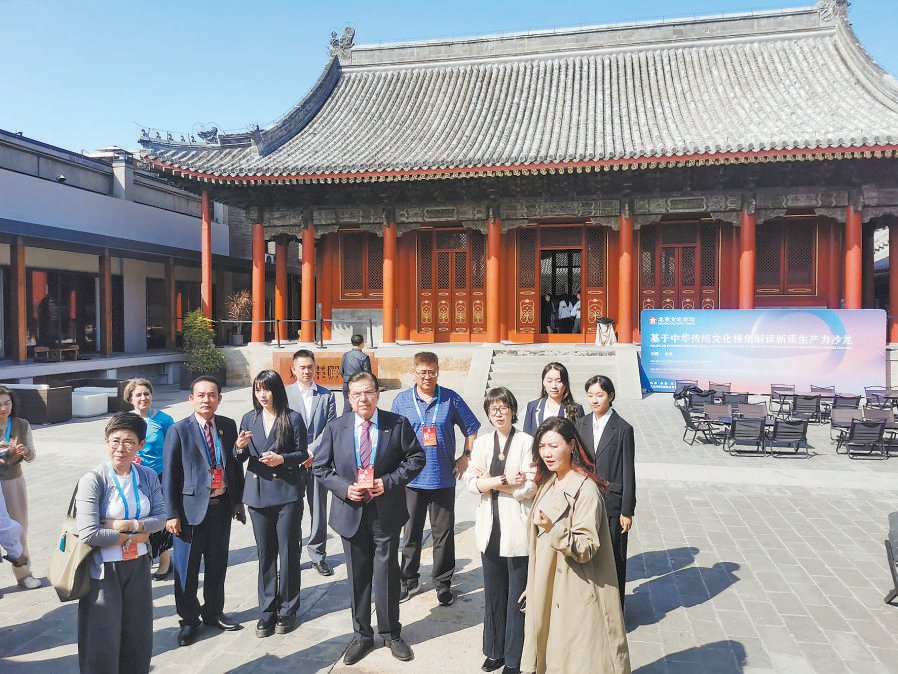
Group 1 - The core theme of the 2025 Beijing Cultural Forum is the cultivation of new productive forces in the cultural sector, highlighting the intersection of traditional culture and new productivity [2][3] - The forum features discussions on the integration of traditional culture and new productive forces, with insights from various international experts emphasizing the importance of cultural roots in innovation [3] - The event underscores that traditional Chinese culture is not a static heritage but a dynamic force that can infuse new productive forces with vitality [3][4] Group 2 - The development of AI models is currently hindered by a lack of Chinese language data, with over 60% of training data being in English, indicating a need for more culturally relevant data sources [4] - The unveiling of the book "Decoding New Productive Forces" and the establishment of a cultural soft power laboratory signal a commitment to integrating traditional culture with digital technology for future development [4] - The future of new productive forces is envisioned to be rooted in traditional Chinese culture while leveraging digital technology, aiming to promote economic growth and cultural exchange [4]

学有所悟丨为文化强国建设贡献青春力量
Zhong Yang Ji Wei Guo Jia Jian Wei Wang Zhan· 2025-09-25 00:57
Core Viewpoint - The articles emphasize the importance of inheriting and promoting traditional Chinese culture among the youth, highlighting its role in enhancing cultural confidence and moral character, as well as its significance in building a culturally strong nation [1][2][5]. Group 1: Cultural Confidence - Cultural confidence is described as a fundamental and enduring force for national and ethnic development, rooted in the unique identity of Chinese civilization [2][3]. - The youth are encouraged to draw from the spiritual nourishment of traditional culture to strengthen their cultural identity and confidence in a globalized world [2][4]. Group 2: Moral Character - The articles stress the importance of traditional virtues such as "benevolence, righteousness, propriety, wisdom, and trust" as essential moral guidelines for contemporary youth [3][4]. - Young people are urged to integrate virtues like integrity, kindness, and dedication into their daily lives to contribute to a harmonious society [3][5]. Group 3: Historical Wisdom - Traditional Chinese culture is portrayed as a source of wisdom that supports the nation’s resilience and progress, with concepts like "self-improvement" and "moral integrity" being highlighted [4][5]. - Philosophical ideas from historical figures are presented as valuable tools for addressing complex social issues and enhancing critical thinking [4][6]. Group 4: Cultural Development - The articles call for the youth to actively participate in the construction of a culturally strong nation, emphasizing the need for cultural inheritance and innovation [5][6]. - There is a focus on creatively transforming and developing traditional culture to meet contemporary needs and preferences [6][7]. Group 5: International Perspective - The importance of cultivating an international perspective among the youth is highlighted, with an emphasis on effectively communicating Chinese stories and culture to the world [7]. - The articles advocate for enhancing China's cultural soft power and influence through active participation in international cultural exchanges [7].
以中华优秀传统文化视角解读新质生产力
Bei Jing Ri Bao Ke Hu Duan· 2025-09-24 12:47
Core Insights - The 2025 Beijing Cultural Forum emphasizes the integration of traditional culture and new productive forces, showcasing a blend of AI technology and intangible cultural heritage [1][4] - The forum serves as a platform for global dialogue, promoting diverse perspectives and reflections on cultural innovation amidst global challenges [2] Group 1: Cultural Integration and Innovation - The forum highlights that traditional culture is not a static heritage but a dynamic force that can infuse new productive forces with vitality [4] - The discussion underscores the importance of cultural dialogue and fusion in breaking barriers and building consensus for the development of new productive forces [4] - The integration of Chinese traditional cultural values is seen as foundational for fostering new productive forces, with a focus on international communication [4] Group 2: Cultural Values and AI Development - The forum identifies five cultural genes essential for the development of new productive forces: harmony, long-termism, prioritizing people's livelihoods, innovation, and openness [4] - Concerns are raised about the predominance of English in AI training datasets, highlighting the need for more Chinese cultural content to shape AI's development [4] - The importance of embedding Chinese cultural wisdom into AI is emphasized to align technology with local values and behaviors [4] Group 3: Future Directions - The unveiling of the book "Decoding New Productive Forces" and the establishment of a cultural soft power laboratory signal a commitment to leveraging traditional culture and digital technology for economic growth [6] - The future development of new productive forces is envisioned as a means to transmit Chinese cultural spirit and contribute to building a community with a shared future for humanity [6]
江苏联通:从中华优秀传统文化中汲取强企动能
Xin Hua Ri Bao· 2025-09-24 07:00
Core Viewpoint - Jiangsu Unicom is integrating traditional Chinese culture into its corporate culture and employee training to enhance moral values and promote high-quality development in party building and corporate culture [1][5][6]. Group 1: Integration of Traditional Culture - Jiangsu Unicom is conducting activities themed "Connecting the Past and Present, Civilizations Moving Together" to draw wisdom and strength from traditional Chinese culture for reform and progress [1]. - The company is incorporating traditional culture into its political education for employees, emphasizing a human-centered approach and enriching ideological work with cultural elements [2][3]. - Various cultural activities, such as photography exhibitions and traditional craft experiences, are being organized to promote local cultural heritage and enhance employee engagement [3][4]. Group 2: Moral and Ethical Development - Jiangsu Unicom is focusing on enhancing employees' moral qualities by integrating traditional cultural values into its corporate philosophy and training programs [3][4]. - The company is promoting virtues such as integrity and respect through activities that combine traditional culture with ethical education [4]. - Initiatives like establishing interest groups for calligraphy and reading are being implemented to foster a culturally rich environment for employees [4]. Group 3: Innovation and Corporate Governance - Jiangsu Unicom is applying traditional cultural principles like honesty and innovation to its management practices, aiming for a harmonious development between culture and corporate governance [5][6]. - The company is committed to enhancing its core competitiveness by embracing a spirit of responsibility and innovation in its operations [5]. - Jiangsu Unicom is actively engaging in social responsibility initiatives, leveraging technology to support rural revitalization and community service projects [6]. Group 4: Future Directions - Jiangsu Unicom plans to continue drawing from the profound wisdom of Chinese civilization to foster innovation and strengthen its corporate culture [6].

新视野丨探寻中华优秀传统文化的时代价值
Zhong Yang Ji Wei Guo Jia Jian Wei Wang Zhan· 2025-09-23 08:16
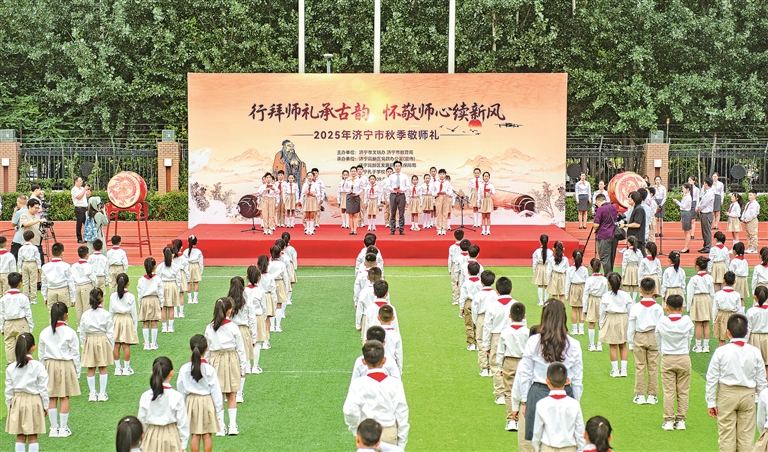
Core Viewpoint - The recent "Respect for Teachers" activities in Jining, Shandong Province, aim to integrate traditional culture with modern education, guiding youth to build a solid foundation for their lives [2] Group 1: Cultural Significance - Chinese traditional culture, as a vital part of Chinese civilization, embodies essential values that contribute to national confidence and resilience [2][5] - The enduring nature of Chinese traditional culture allows it to adapt and thrive in contemporary society, reflecting its continuous evolution and relevance [2][4] Group 2: Global Context - The rise of China on the global stage has increased international interest in Chinese culture, highlighting its potential contributions to global civilization [5] - The challenges of modern technology and globalization prompt a reevaluation of human values and relationships, emphasizing the importance of moral and ethical considerations [4][6] Group 3: Philosophical Insights - Chinese traditional culture promotes a harmonious relationship between humanity and nature, advocating for a balanced existence that transcends materialism [6][9] - The cultural emphasis on virtues such as filial piety and community well-being fosters a sense of social responsibility and collective harmony [9][10] Group 4: Modernization and Cultural Integration - The integration of Chinese traditional culture into the process of modernization offers a unique perspective that contrasts with Western models, presenting a new vision for human civilization [10] - The ongoing dialogue between traditional values and contemporary societal needs is crucial for the development of a modern Chinese identity [10]
第九届海峡两岸艺术名家邀请展在台北开幕
Xin Hua She· 2025-09-20 11:47
展览主办机构台湾非营利组织联合总会荣誉总会长张连兴表示,海峡两岸艺术名家邀请展已成功举办8 届,并在两岸文艺界产生较大的影响,已成为两岸一年一度的文化盛事。 台湾知名书法家、中华书学会会长张炳煌表示,两岸文化同根同源,中华传统书画文化在台湾的传承又 发展出了不同的特色。两岸通过书画艺术交流,有助于更好传承和弘扬中华优秀传统文化。 新华社台北9月20日电(记者齐湘辉、周文其)第九届海峡两岸艺术名家邀请展20日在台北开幕,吸引 400多名各界人士同享艺术盛宴,感受中华文化。 本次展览共展出两岸200多位艺术家约330件书画及陶瓷作品,内容多以"两岸""山川""龙"为主题。参展 艺术家包括大陆的王书平、张惠臣、孔维克等,以及台湾的欧豪年、李奇茂、黄光男等。 开幕式上,海峡两岸20位书画名家共同创作署名的巨幅画作《两岸同源图》吸引了许多观众驻足观赏, 作品以精到的笔墨描绘了晨曦中的壮丽山河,展现了一派欣欣向荣的景色。 据悉,展览将持续至9月28日,期间还将举办讲座、论坛等多场文化活动。 ...
东西问·北京文化论坛|舒勇:数字时代如何用好AI这支“新画笔”?
Zhong Guo Xin Wen Wang· 2025-09-20 09:45
Core Viewpoint - The 2025 Beijing Cultural Forum will focus on the integration of culture and technology, emphasizing the role of AI in artistic creation and the preservation of traditional culture [1][3]. Group 1: AI in Artistic Creation - AI is seen as a powerful tool that can redefine the role of the creator, allowing for a more interactive and exploratory approach to art [6][10]. - The speed of AI-generated art significantly reduces the time required for creation, enabling artists to capture their thoughts and ideas more efficiently [6][10]. - However, there are concerns about the potential loss of originality and the homogenization of artistic styles due to AI's reliance on existing data [7][8]. Group 2: Skills and Ethical Considerations - Artists using AI must possess a combination of traditional artistic knowledge and technical skills to effectively guide AI in the creative process [10][11]. - It is crucial for creators to maintain their agency and creativity, viewing AI as a collaborative partner rather than a replacement [10][11]. - Ethical practices should be followed, including transparency about AI's role in the creation process and avoiding the generation of harmful content [11][13]. Group 3: Cultural Heritage and Future Plans - The integration of AI in the preservation and innovation of traditional Chinese culture is a significant area of exploration, aiming to bridge classical aesthetics with contemporary expressions [15][16]. - There is a need to develop a database rooted in Chinese culture to ensure accurate representation and transmission of Chinese values through AI [16]. - Future initiatives include establishing a laboratory focused on the deep integration of technology and art, aiming to explore the intelligent translation of traditional aesthetics [16].

新时代党的治疆方略的成功实践白皮书丨白皮书:中国历代中央政权将新疆地区置于国家大一统格局下进行治理
Xin Hua Wang· 2025-09-19 07:15
Core Viewpoint - The white paper titled "Successful Practices of the New Era's Governance Strategy in Xinjiang" emphasizes the importance of national unity and the governance of Xinjiang as an integral part of China's historical and cultural identity [1] Summary by Relevant Sections - Historical Governance: The white paper outlines that throughout history, various central governments in China have adhered to the principle of national unity, effectively governing Xinjiang within this framework, which has contributed to the accumulation of governance experience in border regions [1] - Cultural Integration: It highlights the efforts made to promote ethnic integration and religious coexistence in Xinjiang, utilizing excellent traditional Chinese culture to unite various ethnic groups [1] - Importance of Xinjiang: The document asserts that Xinjiang is a sacred territory of China and has been an indispensable part of the multi-ethnic nation throughout its 2,000-year governance history, adapting different governance methods over time [1]