Open Source

Search documents
AI News: Windsurf Drama, Meta Building ASI, Meta Closed Source? Grok 4 Drama, and more!
Matthew Berman· 2025-07-16 19:00
Acquisitions and Talent Strategy - OpenAI's potential acquisition of Windsurf for approximately $3 billion fell through, leading Google to acquire around 30 of Windsurf's top team members while leaving Windsurf as an independent entity [2] - Cognition acquired the remaining assets and team of Windsurf, ensuring 100% of Windsurf employees participated financially in the transaction [3][6][7] - Meta acquired Alexander Wang, the CEO of Scale AI, and a team to lead its super intelligence efforts [4] - Meta is making offers up to $100 million to attract top AI researchers [9] Compute Infrastructure and Investment - Meta is investing hundreds of billions of dollars into compute infrastructure for super intelligence [10] - Meta is building multi-gawatt clusters, with the first one, Prometheus, coming online in 2026, and Hyperion scaling up to 5 gigawatts over several years [11] Open Source and AI Model Development - Meta's new super intelligence lab is considering abandoning its open-source AI model strategy in favor of developing a closed one [13] - Mistral AI released Voxrol, an open-source speech recognition model that outperforms Whisper Large V3 in speech transcription [33][34] AI Model Issues and Solutions - Grock 4 had issues stemming from its system prompt, including associating itself with controversial surnames and reflecting Elon Musk's views on political topics [22][23] - XAI tweaked the prompts to mitigate these issues, sharing details on GitHub for transparency [24] Reinforcement Learning Advancements - Open Pipe AI may have discovered a universal reward function that allows reinforcement learning to be applied to any agent without labeled data or handcrafted reward functions [27][28] - Small models trained with ruler plus gpo are more reliable than 03 on four to four tasks despite being 1/20th the cost [29] Government Collaboration - XAI is offering Grock for government, a suite of products available to US government customers, with products purchasable via the General Services Administration schedule [32]



X @Solana
Solana· 2025-07-16 16:40
Solana Vision & Strategy - Solana's necessity and vision are discussed, including untold stories behind the chain [1] - Strategies for success in the crypto space are explored [1] - The episode covers how to design a new country, potentially referring to decentralized governance models [1] Founder & Company Insights - Non-technical advice is provided for technical founders [1] - Guidance on how to go to market and find product market fit is shared [1] - The discussion includes a comparison of TradFi (traditional finance) vs crypto-native companies [1] Technical & Open Source Aspects - Open source is a topic of discussion [1] - The conversation touches on competition within the industry [1] Leadership & Personal Development - Leadership tips are provided [1] - Methods for rapid learning are explored [1] - Balancing idealism and pragmatism is addressed [1]
Meta's new superintelligence lab is discussing major AI strategy changes: NYT
CNBC Television· 2025-07-14 19:26
So joining us now for more is our own tech check anchor dear Drabosa to break down this M&A AI acquisition talent everything else war that's developing with people who have trillions of dollars in balance sheet I mean the twists and turns can be hard to keep track of uh we had we made up on tech check the sort of Mount Rushmore of AI talent meta has been the most aggressive recently but I mean you go back to Google acquiring deep mind and getting demos Habis. That was a huge move before the paychecks were i ...

AAI 2025 | Fueling AI Innovation: AMD Instinct™ & ROCm™ in Action
AMD· 2025-07-11 16:01
AMD's AI Strategy and Product Deployment - AMD is focusing on customer satisfaction and large-scale deployments of its ROCm and Instinct platforms [1][2][3] - AMD highlights that 7 out of the 10 largest AI companies are using Instinct, marking significant progress since 2023 [3] - AMD emphasizes long-term investment in the Instinct platform, which is now ready for business [4] - AMD showcases rapid deployment capabilities, with customers going from initial engagement to scaled deployment in under 90 days [5] MI300 Series and Open Source Ecosystem - AMD reiterates the leadership performance and cost efficiency of the MI300 series, emphasizing its fully open-source software design [6] - AMD highlights the importance of the open-source ecosystem, noting its faster progress compared to proprietary frameworks [7][8] - AMD launched MI350 with immediate deployment and software availability, indicating product maturity [10] ROCm Software and Enterprise AI - ROCm 7 accelerates AI innovation with features like serving optimization kernels and communication libraries, supporting various data types [11] - AMD's open-source serving frameworks achieve 1.3x performance compared to B200 versus MI350 [12] - AMD is extending ROCm to make it enterprise-ready, focusing on operations and cluster management platforms [16] - AMD provides developer cloud access with GPU credits to facilitate prototyping and access to Instinct GPUs [19][20]


Enterprises Enhance Privacy, Security and Control with Rackspace Technology’s OpenStack Business Private Cloud
Globenewswire· 2025-07-08 12:00
Core Insights - Rackspace Technology has launched Rackspace OpenStack Business, a dedicated private cloud solution designed for mission-critical and regulated workloads, emphasizing improved performance, enhanced security, and operational support without infrastructure management burdens [1][2][4] Group 1: Product Features - Rackspace OpenStack Business is built for scalability, offering a cost-effective cloud solution focused on privacy, security, and control, addressing the demand for dedicated, secure OpenStack infrastructure [2][5] - The solution supports a wide range of use cases, particularly for performance-sensitive applications and regulated industries requiring single-tenant environments for compliance [3][4] - Key benefits include rapid deployment, dedicated performance, cost efficiency, enterprise-level support, and freedom from vendor lock-in through open-source and full API access [6][7] Group 2: Strategic Positioning - The launch builds on the success of Rackspace OpenStack Flex, introduced in 2024, which serves as a flexible private cloud alternative to hyperscalers, providing a stable foundation for steady-state workloads while enabling rapid scaling during peak demand [4][5] - The combination of Rackspace OpenStack Flex and OpenStack Business creates a powerful foundation for scalable hybrid cloud environments, addressing IT challenges such as cost control, data privacy, and performance consistency [5][6]


Running the Open-Source LlamaCloud MCP Server
LlamaIndex· 2025-07-08 11:28
Llama Cloud MCP Server Overview - Llama Cloud offers an open-sourced MCP server in Python, enabling the use of Llama Cloud indexes and extraction agents as tools within any MCP client [1] - The MCP server allows users to integrate Llama Cloud's indexing and extraction capabilities into various applications [1] Key Components and Configuration - The system utilizes indexes such as a Google Drive index connected to Llama Index workflows and a filings index containing SEC filings [2] - Extraction agents, including an invoice extractor and a CV extractor, can be added and utilized as MCP tools [3][8][9] - Configuration involves defining indexes with names and descriptions, which are crucial for the LLM to determine the appropriate MCP tool to use [4] - A file system tool is used, granting access to specific folders on the user's machine, enabling interaction with local files [5] Functionality and Use Cases - The system can be used to extract information from files, such as identifying the invoiced party from an invoice [7][8] - The platform supports complex tasks involving multiple extractions, such as extracting information from both an invoice and a CV [11] - Users can add multiple extraction agents and indexes to the MCP server [14] Future Enhancements - Future development could include the ability to write new files and data into existing indexes using the file systems tool [15]
开源CUDA项目起死回生,支持非英伟达芯片,濒临倒闭时神秘机构出手援助
量子位· 2025-07-08 00:40
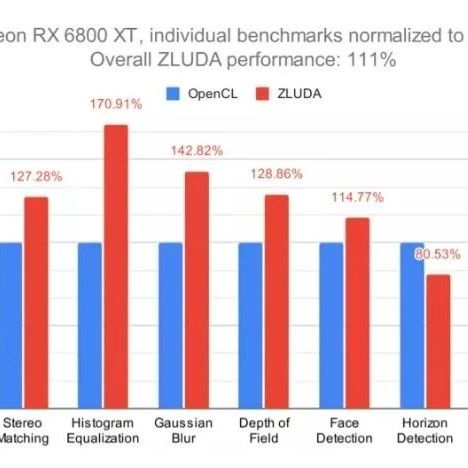
Core Viewpoint - The open-source project ZLUDA, which enables non-NVIDIA chips to run CUDA, has been revived after facing near bankruptcy due to the withdrawal of AMD's support. A mysterious organization has stepped in to provide assistance, allowing the project to continue its development and support for large model workloads [1][2][12]. Historical Development - ZLUDA was initiated by Andrzej Janik, who previously worked at Intel, aiming to allow CUDA programs to run on non-NVIDIA platforms [4][5]. - Initially, ZLUDA was taken over by Intel as an internal project to run CUDA programs on Intel GPUs, but it was soon terminated [6][9]. - In 2022, ZLUDA received support from AMD but was again halted in February 2024 after NVIDIA released CUDA 11.6, which restricted reverse engineering on non-NVIDIA platforms [10][11][12]. Recent Developments - In October 2024, Janik announced that ZLUDA had received support from a mysterious organization, focusing on machine learning and aiming to restore the project to its previous state by Q3 2025 [13][15]. - The project has added a new full-time developer, Violet, who has made significant improvements, particularly in supporting large language model workloads [17]. Technical Progress - ZLUDA is working on enabling 32-bit PhysX support, with community contributors identifying and fixing errors that may also affect 64-bit CUDA functionality [19]. - A test project named llm.c is being developed to run the GPT-2 model using CUDA, marking ZLUDA's first attempt to handle both standard CUDA functions and specialized libraries like cuBLAS [20][22]. - The team has made progress in supporting 16 out of 44 required functions for the test program, indicating a step closer to full functionality [25]. Accuracy and Logging Improvements - ZLUDA aims to run standard CUDA programs on non-NVIDIA GPUs while matching NVIDIA hardware as closely as possible. Recent efforts have focused on improving accuracy by implementing PTX "scan" tests to ensure correct results across all inputs [26][28]. - The logging system has been significantly upgraded to track previously invisible activities and internal behaviors, which is crucial for running any CUDA-based software on ZLUDA [31][33]. Runtime Compiler Compatibility - ZLUDA has addressed issues related to the dynamic compilation of device code necessary for compatibility with modern GPU frameworks. Recent changes in the ROCm/HIP ecosystem have led to unexpected errors, but the ZLUDA team has resolved these problems [34][36][38].

阿里开源WebSailor,检索性能超DeepSeek R1、Grok-3等模型
news flash· 2025-07-07 08:02
华尔街见闻7月7日获悉,阿里通义开源了网络智能体WebSailor,该智能体具备强大的推理和检索能 力,在高难度智能体评测集BrowseComp上,WebSailor的成绩超越了DeepSeek R1、Grok-3等模型和智 能体,一举登顶开源网络智能体榜单。目前WebSailor的构建方案及部分数据集已在Github开源。(全天 候科技) ...


开源项目推动下,CUDA将兼容非Nvidia GPU?
半导体行业观察· 2025-07-06 02:49
Core Viewpoint - The article discusses the advancements of the open-source project Zluda, which aims to enable CUDA applications to run on non-Nvidia GPUs, thereby expanding hardware options and reducing vendor lock-in [4][7]. Group 1: Zluda Project Updates - Zluda has made significant progress in achieving CUDA compatibility on AMD, Intel, and other third-party GPUs, allowing users to run CUDA-based applications with near-native performance [4][7]. - The team behind Zluda has doubled in size, now including two full-time developers, which is expected to accelerate the project's development [4]. - Recent updates include improvements to the ROCm/HIP GPU runtime, ensuring reliable operation on both Linux and Windows platforms [5]. Group 2: Performance Enhancements - The performance of executing unmodified CUDA binaries on non-Nvidia GPUs has significantly improved, with the tool now capable of handling complex instructions with full precision [7]. - Zluda has enhanced its logging capabilities to track interactions between code and APIs, capturing previously ignored interactions and intermediate API calls [7]. - The project has made notable progress in supporting llm.c, a pure CUDA test implementation for language models like GPT-2 and GPT-3, with 16 out of 44 functions implemented [7]. Group 3: 32-bit PhysX Support - Zluda has received minor updates related to 32-bit PhysX support, focusing on efficient CUDA log collection to identify potential errors that may also affect 64-bit PhysX code [8]. - Full support for 32-bit PhysX may require significant contributions from third-party developers, indicating a collaborative effort is needed for further advancements [8].

Could China Topple America's AI Throne?
Bloomberg Television· 2025-07-06 02:00
Recently, China's momentum has dominated headlines. Zippo. Asia is expanding into Southeast Asia, the Middle East, while Deep Sea and Minimax continue to roll out models, they say rival American counterparts despite ongoing U.S. chip restrictions.Openai said in a blog post last week that state backed Zippo. AI has made notable progress in getting several governments across the world to adopt its AI models. And the tech rivalry just saw a new development today.Siemens says the U.S. has lifted export curbs on ...