
AI视频生成

Search documents
一对分别为 19 岁与 20 岁的斯坦福辍学生兄弟完成 410 万美元、超额认购的种子轮融资,用于打造 Golpo AI 并重塑 AI 视频生成方式
Globenewswire· 2025-10-21 09:31
Core Insights - Golpo AI has successfully raised $4.1 million in an oversubscribed seed funding round, led by BNVT Capital, with participation from Emergence Capital, Y Combinator, and Afore Capital [1][2] - The platform aims to transform communication through interactive AI-generated videos, addressing a significant gap in the current AI video landscape [1][2] - Founders Shraman Kar and Shreyas Kar, both young entrepreneurs, have a vision to make AI video communication practical, scalable, and accessible [1][3] Company Overview - Golpo AI is designed to automatically generate explanatory videos based on prompts, documents, and business workflows, with a mission to democratize and sustain AI video technology [3][4] - The platform supports coherent, interactive videos of up to 30 minutes, significantly surpassing other models that support less than 10 seconds [4] - Golpo AI features a unique frame-by-frame editing capability, allowing users to manage and adjust specific segments of videos without needing to regenerate entire clips [2][4] Market Position - Golpo AI is positioned as a breakthrough tool across various use cases and industries, enabling tasks that previously took months to be completed in seconds [2][4] - The technology is reported to be 45 times cheaper than existing AI video models like VEO, while also being technically precise in handling spelling, charts, and workflows [4] - The platform is being adopted in education, corporate training, sales, and internal communications, showcasing its versatility and effectiveness in enhancing knowledge sharing [4]
Vidu Q2携「王炸」登场!杀手锏「参考生」功能全球上线,APP体验全面革新
量子位· 2025-10-20 10:29
Core Viewpoint - The article highlights the rapid advancements in the AI video generation field, particularly focusing on the new features and upgrades of the Vidu platform, which aims to enhance user experience and creativity in content creation. Group 1: New Features of Vidu - The long-awaited Vidu Q2 reference generation feature is officially launched, allowing for high consistency, faster processing, and more affordable pricing without the need for an invitation code [2][13]. - Vidu's video extension feature allows users to extend videos up to five minutes, with free users able to generate videos up to 30 seconds [20]. - The Vidu app has undergone a comprehensive redesign, transforming from an AI creation platform to a one-stop AI content social platform, enabling users to easily create and share videos [4][12]. Group 2: User Experience Enhancements - Users can create engaging duet videos by simply tagging a subject and providing a brief prompt, significantly lowering the creative barrier [7]. - The app includes a vast library of subjects, including characters and effects, allowing users to generate fun videos anytime and anywhere [8]. - The platform now supports browsing various AI-generated video content, enhancing the social aspect of video sharing [9]. Group 3: Performance Improvements - Vidu Q2 shows a threefold increase in generation speed compared to the previous version, allowing creators to transform ideas into videos more efficiently [40]. - The platform maintains high video quality, ensuring that even demanding scenarios like animation and advertising are well-handled [25]. - The combination of high consistency, video extension capabilities, and 1080P resolution meets the needs of content creators and companies for quality AI video generation [24]. Group 4: Commercial Applications - The advancements in Vidu's technology significantly lower the production costs and barriers for marketing videos, making it accessible for small and medium-sized businesses [47]. - A typical application scenario in the e-commerce sector allows merchants to create dynamic product showcase videos quickly by providing static images and simple prompts [43][46]. - The democratization of technology is expected to unleash creativity among users, enabling anyone to generate high-quality videos with minimal effort [47].


数码家电行业周度市场观察-20251018
Ai Rui Zi Xun· 2025-10-18 09:27
Investment Rating - The report does not explicitly provide an investment rating for the industry Core Insights - The digital home appliance industry is experiencing significant growth, with a projected retail sales figure of 608.7 billion yuan by 2025, reflecting a 14.9% increase [2] - The AI industry is shifting towards a "Results as a Service" (RaaS) model, which emphasizes quantifiable business outcomes and charges clients only upon achieving these results [2] - The humanoid robot sector is moving from isolated efforts to ecosystem collaborations, with leading companies investing in early-stage projects to enhance supply chain stability and expand application scenarios [4] - The AI video generation market is witnessing a divide between product-focused startups and ecosystem-oriented large companies, with the former facing challenges in monetization [4] - AI is at a pivotal point, transitioning from "human-machine collaboration" to "human-machine delegation," which will redefine job roles and organizational structures [5] - The pre-prepared food controversy has sparked interest in cooking robots, with B2B applications gaining traction despite slower consumer adoption [6] - AI advertising is becoming mainstream, with over 50% of advertisers utilizing AI-generated content, significantly reducing production costs [7] - The travel and local living sectors are leveraging AI to enhance service efficiency during peak travel periods, marking a shift from traffic acquisition to value creation [8] - The cloud computing market in China is undergoing a transformation driven by generative AI, with significant capital investments from aggressive players like ByteDance and Alibaba [14] - The mobile internet landscape is evolving, with major platforms seeing substantial user growth and increased competition in various sectors [14] Summary by Sections Industry Environment - The report highlights the release of a market trend report predicting a retail sales figure of 608.7 billion yuan for home appliances by 2025, driven by consumer segmentation and technological advancements [2] - The AI industry is transitioning to a RaaS model, focusing on measurable outcomes and value creation, with companies like Hengwei Technology leading the charge [2] - The humanoid robot industry is shifting towards collaborative ecosystems, with significant investments in early-stage projects to enhance supply chain stability [4] - The AI video generation sector is characterized by a split between product-focused startups and large companies emphasizing ecosystem development [4] - The AI landscape is evolving towards a model where human roles are redefined, emphasizing strategic oversight rather than direct task execution [5] - The cooking robot market is gaining traction in the B2B sector, driven by efficiency improvements despite slower consumer acceptance [6] - AI advertising is becoming prevalent, with over half of advertisers adopting AI-generated content, leading to significant cost reductions [7] - The travel and local living sectors are increasingly utilizing AI to enhance service efficiency, marking a shift in competitive strategies [8] - The cloud computing market is experiencing a transformation due to generative AI, with aggressive capital investments from leading players [14] - The mobile internet landscape is evolving, with major platforms experiencing significant user growth and competition intensifying across various sectors [14] Top Brand News - Alibaba Cloud launched the AgentOne platform, integrating AI capabilities into business processes to enhance operational efficiency [17] - Volcano Engine is leading the market in model-as-a-service (MaaS), with a significant increase in token usage indicating a surge in demand for AI capabilities [18] - Midea and Huawei have formed a strategic partnership to enhance their smart home ecosystem, focusing on AI and smart manufacturing [19] - OpenAI is making strides towards becoming a "computing empire" with significant cloud service contracts and plans for self-developed chips [20] - JD Health is advancing AI in healthcare, aiming to improve access to quality medical resources through innovative solutions [21] - The AI eyewear market is facing challenges, with Meta's new product failing to meet expectations, highlighting the industry's struggles with technology maturity [27] - The automotive industry is exploring AI integration, with a focus on smart transformation and collaboration across the supply chain [31] - Yushutech is preparing for an IPO, potentially becoming the first publicly listed humanoid robot company in China [32]
季度AI视频生成产品:多模态输入成标配,角逐一站式生成能力 | 量子位智库AI 100
量子位· 2025-10-18 07:33
Core Insights - The article highlights the rapid growth and competition in the AI video generation sector, with significant advancements in technology and user engagement metrics [3][6][7]. Group 1: Market Trends - Sora2 has achieved over 1 million downloads in just five days, indicating a surge in interest in AI video generation [3]. - Major companies like Google are launching competitive products such as Veo3.1, focusing on audio generation, which is expected to further intensify market competition [4]. - The integration of visual models with world models is enhancing the realism of AI-generated videos, allowing for the creation of intricate 3D physical scenes [6]. Group 2: Technological Advancements - The latest AI 100 list from Quantum Bit Think Tank shows a diverse technological evolution in AI video generation, with multi-modal input becoming standard [7]. - Output quality has significantly improved, with video lengths extending from seconds to minutes, and resolutions reaching 2K and 4K, with frame rates up to 60fps [7]. - User data reflects this trend, with five AI video generation products exceeding 200,000 visits, showcasing the growing demand [8]. Group 3: Product Highlights - The article details several leading AI video generation products, including: - **Jimeng AI**: Over 11 million downloads, with a 27% increase in visits, reaching approximately 9.5 million [9]. - **Keling AI**: Web version monthly visits surpassing 1 million, indicating strong user engagement [9]. - **RoboNeo**: A product from Meitu, focusing on image and video generation with a comprehensive workflow [10]. Group 4: Competitive Landscape - The competitive landscape features various companies, each with unique offerings: - **Jimeng AI**: A one-stop AI creation platform with advanced video generation capabilities [15]. - **Tencent's Mixed Yuan 3D**: A platform for creating immersive 3D content [18]. - **Keling AI**: A creative productivity platform with robust video generation features [20]. - Other notable products include **Sea Cucumber AI**, **Drawing Ideas**, and **Medeo**, each contributing to the diverse capabilities in the AI video generation market [24][56].

爱诗科技完成1亿元B+轮融资 ARR超4000万美元
Sou Hu Cai Jing· 2025-10-17 16:28
Group 1 - AI video company Aishi Technology announced the completion of a 100 million RMB B+ round financing on October 17, with investments from Fosun Ruijun, Tongchuang Weiye, and Shunxi Fund [1] - The company's product PixVerse has surpassed 100 million users globally, with an annual recurring revenue (ARR) exceeding 40 million USD and monthly active users (MAU) over 16 million [1] - Aishi Technology's revenue has grown more than tenfold in less than a year, making it one of the fastest-growing AI platforms in terms of revenue and user growth globally [1] Group 2 - PixVerse V5 was launched on August 27, featuring real-time generation capabilities and optimizations in dynamic effects, high-definition visual processing, consistency maintenance, and instruction adherence [2] - The new Agent creation assistant allows ordinary users to generate professional-level videos without mastering complex prompt techniques, enhancing user accessibility [2] - The platform has established a solid foundation for commercialization, with ARR primarily derived from subscription services, and an API ecosystem that generated over 10 million videos in the past six months [2] Group 3 - Aishi Technology significantly lowers the creative threshold through core technologies like real-time generation and character-driven video [4] - PixVerse is one of the earliest platforms to achieve character-driven video generation, enhancing content liveliness and emotional connection [4] - The transition from technical exploration to large-scale application in AI video generation is a critical phase, with few products successfully gathering a large user base and demonstrating a clear commercialization path [4]
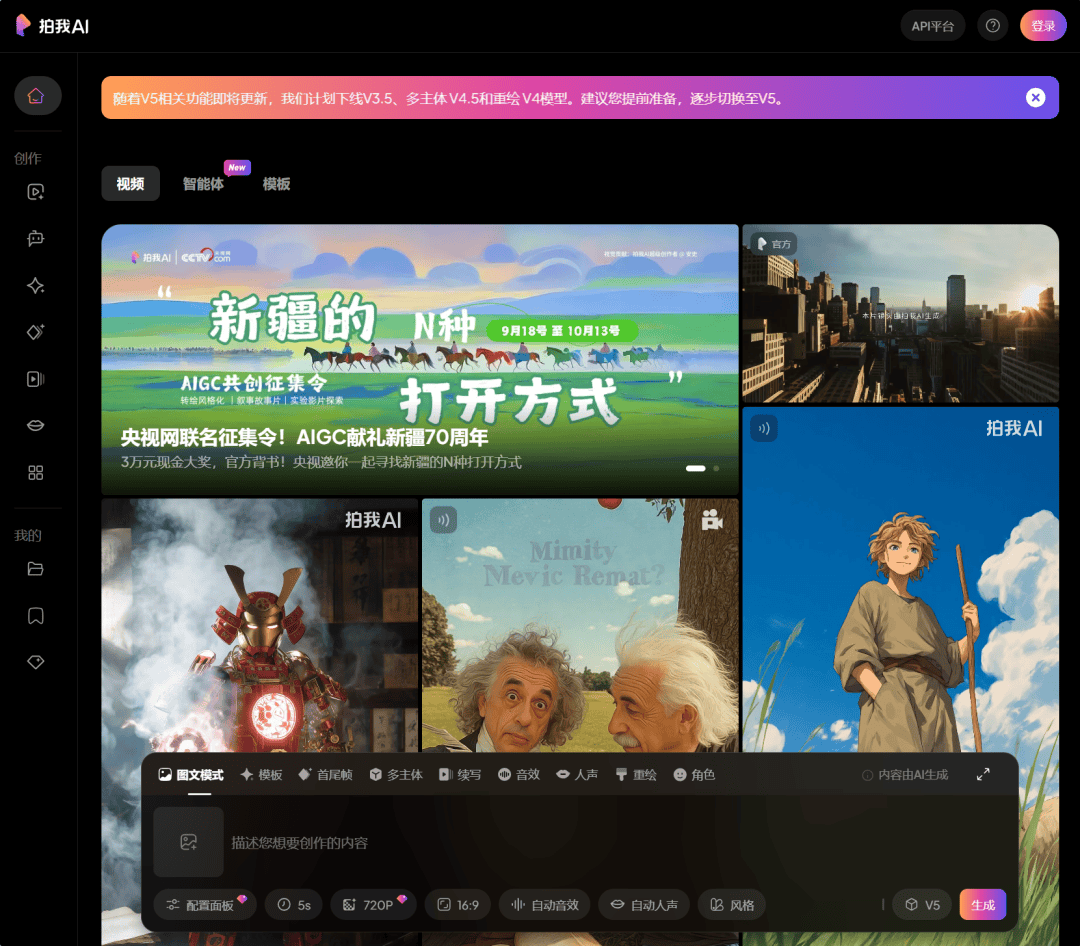
爱诗科技完成1亿元B+轮融资:过去一年收入和用户增长最快的AI平台之一
IPO早知道· 2025-10-17 11:14
Group 1 - The core viewpoint of the article highlights the rapid growth and significant funding of AI video company Aishi Technology, which recently completed a 100 million RMB Series B+ financing round, with previous funding exceeding 60 million USD [2][4] - Aishi Technology has achieved a user base exceeding 100 million and an annual recurring revenue (ARR) surpassing 40 million USD, marking it as one of the fastest-growing AI platforms globally in terms of revenue and user growth [4][6] - The company has developed its video generation model, DiT architecture, and has undergone five iterations in two years, providing high-quality, near-real-time video generation services [2][4] Group 2 - The launch of PixVerse V5 has optimized dynamic effects, ultra-clear visual processing, consistency maintenance, and instruction adherence, significantly enhancing both efficiency and quality [4] - The introduction of the new Agent creation assistant allows ordinary users to generate professional-level videos without needing complex prompt skills, further lowering the creative barrier [4][6] - In the past six months, the PixVerse open platform has generated over 10 million videos through API, with a doubling of API call volume in August, indicating a strong demand for narrative-driven video content [6]

百度蒸汽机,盯上长视频生成实时交互
2 1 Shi Ji Jing Ji Bao Dao· 2025-10-17 11:00
Core Insights - The competition in the multimodal video generation space remains intense, with no company holding a definitive long-term technological advantage, according to Baidu's Chief Architect of Commercial R&D, Li Shuanglong [2]. Group 1: Industry Developments - OpenAI recently launched its latest multimodal video generation model, Sora 2, prompting domestic AI video players, including Baidu, to frequently update their offerings [3]. - On October 15, Baidu upgraded its video generation model, Baidu Steam Engine (Wenxin Specialized), focusing on enhancing user interaction experience [3]. Group 2: Technological Advancements - The Steam Engine model now supports real-time interactive generation of long AI videos, overcoming the traditional limitation of approximately 10 seconds in video length [4]. - Users can initiate the video generation process by uploading an image and a prompt, allowing for real-time previews and modifications throughout the generation process, enabling control over the video’s plot, visuals, and transitions [4]. - The industry typically employs "head and tail frame continuation" technology to extend video length, but this can lead to a lack of coherence. Baidu aims to provide interactive and editable support to better meet creators' needs [4]. Group 3: Technical Challenges and Updates - Baidu's Steam Engine team has faced numerous technical challenges in achieving these advancements, including infrastructure upgrades and the introduction of Autoregressive Diffusion Models to eliminate training and inference biases and optimize consistency [4]. - Since the release of the Steam Engine model in July, it has maintained a significant update frequency on a monthly basis [4]. - Baidu is also planning an app for the Steam Engine, as revealed by Liu Lin, General Manager of Baidu's Commercial R&D [4].

爱诗科技完成B+轮1亿元融资 ARR突破4000万美元
Zheng Quan Ri Bao Wang· 2025-10-17 10:47
Core Insights - AI video company Beijing Aishi Technology Co., Ltd. has completed a Series B+ financing round of 100 million yuan, led by Fosun Ruijing, Tongchuang Weiye, and Shunxi Fund [1] - The company's product PixVerse has surpassed 100 million users and achieved an annual recurring revenue (ARR) of over 40 million USD, with a monthly active user (MAU) count exceeding 16 million [1] - Aishi Technology's revenue has grown more than tenfold in less than a year, making it one of the fastest-growing AI platforms globally in terms of revenue and user growth [1] Financing and Growth - The recent financing round marks the largest single financing amount in the domestic video generation sector, following a previous round in September that raised over 60 million USD [1] - The funds will support the company's future technology research and market expansion, promoting the accessibility of AI video generation technology [1] Product Development and Features - Aishi Technology has achieved global leadership in key dimensions such as rapid generation and consistency with its self-developed video generation model, which has undergone five iterations and eight version updates in two years [2] - The launch of PixVerse V5 has optimized dynamic effects, high-definition visual processing, consistency, and instruction adherence, enhancing both efficiency and quality [2] - The new Agent creation assistant feature allows ordinary users to generate professional-level videos without mastering complex prompt techniques [2] User Engagement and Commercialization - The platform has seen stable user growth and high community engagement, laying a solid foundation for commercialization, which is set to begin in November 2024 [2] - The ARR primarily comes from subscription services, and the recently opened API ecosystem has also shown strong performance [2][3] Industry Impact and Recognition - As of August 31, the PixVerse open platform generated over 10 million videos through its API in the past six months, with API call volume doubling in August [3] - Aishi Technology's CEO expressed excitement for experimental and innovative works, highlighting the potential of AI-generated content [3] - PixVerse showcased ten AI-generated works at the Busan International Film Festival, further establishing its presence in the creative industry [3]
晚点独家丨爱诗科技完成 1 亿元 B+ 轮新融资,ARR 突破 4000 万美元
晚点LatePost· 2025-10-17 07:29
Core Insights - The article discusses the competitive landscape of AI video generation, highlighting the rapid growth and potential of companies like Aishi Technology and OpenAI's Sora [5][7][11]. Company Developments - Aishi Technology has completed a B+ round financing of 100 million RMB, bringing its total funding to over 100 million USD since its establishment in April 2023 [5]. - Aishi's products, PixVerse and Pai Wo AI, have over 100 million total users and a monthly active user count exceeding 16 million, with an annual recurring revenue (ARR) of 40 million USD [5]. - OpenAI launched the Sora 2 video generation model and Sora App, which quickly topped the US App Store free chart and surpassed 1 million downloads in less than two weeks [8][13]. Market Dynamics - The video generation app market is vast, with existing tools unable to cover all users, as evidenced by TikTok and Douyin's monthly active users exceeding 2 billion [9]. - Aishi's CEO noted that the emergence of AI is reshaping content consumption, similar to the impact of short videos [8]. - Despite Sora's rapid growth, Aishi's PixVerse has not been negatively impacted, indicating a large market capacity for multiple players [9]. Competitive Landscape - The current leading models in video generation are dominated by Chinese companies, with Kuaishou's Kling, Aishi's PixVerse, and MiniMax ranking in the top three, while Sora ranks 31st [11]. - ByteDance's video generation models, Seedance and Waver, are also strong competitors, with significant daily active user growth targets [12]. - The competition in the multi-modal field is intensifying, driven by the enormous consumer and entertainment potential [13].

视频生成赛道竞争白热化 百度押注“实时交互”求破局
Mei Ri Jing Ji Xin Wen· 2025-10-16 12:53
Core Insights - The article discusses the evolution of AI video tools, emphasizing the shift from mere generation to real-time interaction, likening it to the transition from 3G to 4G in telecommunications [1][2][5] - The focus is on how companies like Baidu are exploring sustainable production models in the content industry, aiming to lower barriers for user participation in content creation [1][4][6] Group 1: Technological Evolution - The AI video generation landscape is moving towards real-time, interactive capabilities rather than just generating content, which is seen as a significant advancement [2][3] - Baidu's "Steam Engine" architecture has been upgraded to a self-regressive streaming expansion model to facilitate real-time interaction, addressing limitations of traditional generation methods [3][4] - The competition in AI video generation is intensifying globally, with companies like OpenAI and Google rapidly advancing their models, focusing on user experience and innovation as key differentiators [5][6][7] Group 2: Market Dynamics - The demand for real-time interaction in content creation is underestimated, as it enhances user engagement and transforms content consumption from a one-way to a two-way interaction [3][6] - Baidu's video generation capacity has significantly increased, with production scaling from millions to tens of millions, driven by lower barriers and richer user experiences [6][7] - The current focus for Baidu is on internal empowerment through technology to enhance user retention and engagement, with marketing and content creation being the primary application areas [7]