新一代信息技术

Search documents
2025上合全球创新创业大赛在山东青岛启动
Zhong Guo Xin Wen Wang· 2025-07-28 16:13
本届大赛创业赛设置10个金奖项目,每个可获10万元分阶段奖金、最高1000万元股权投资等奖励。创新 赛金奖团队奖励3万元,合作企业通过省揭榜挂帅平台最高可获100万元补贴。 "以培育重点项目、解决行业难题为导向,创业赛和创新赛双轨赛制不仅能强力支持优质项目落地发 展,更能通过企业与专家的双向选择,精准破解重点产业瓶颈,赋能地方经济发展。"胶州市科技创新 服务中心主任侯朝旭表示。 本届大赛项目征集通道已于7月28日开启,将持续至8月31日。10月下旬,创业赛与创新赛的20强项目将 在青岛·上合之珠国际博览中心角逐桂冠。 中新网青岛7月28日电(王禹王明敏)2025上合全球创新创业大赛28日在山东青岛正式启动,本届大赛设 置创业赛、创新赛双赛道,并同步举行校地校企合作系列活动。 据介绍,本届大赛由中国—上海合作组织地方经贸合作示范区管委会、青岛胶东临空经济示范区管委 会、胶州市人民政府联合主办,已成为上合示范区核心区所在的胶州市服务国家战略、深化示范区建设 的重要载体。(完) 上合全球创新创业大赛始办于2021年,已累计吸引海内外459个顶尖团队同台竞技,成功推动11个优质 项目落地,累计获得股权投资超4000万 ...

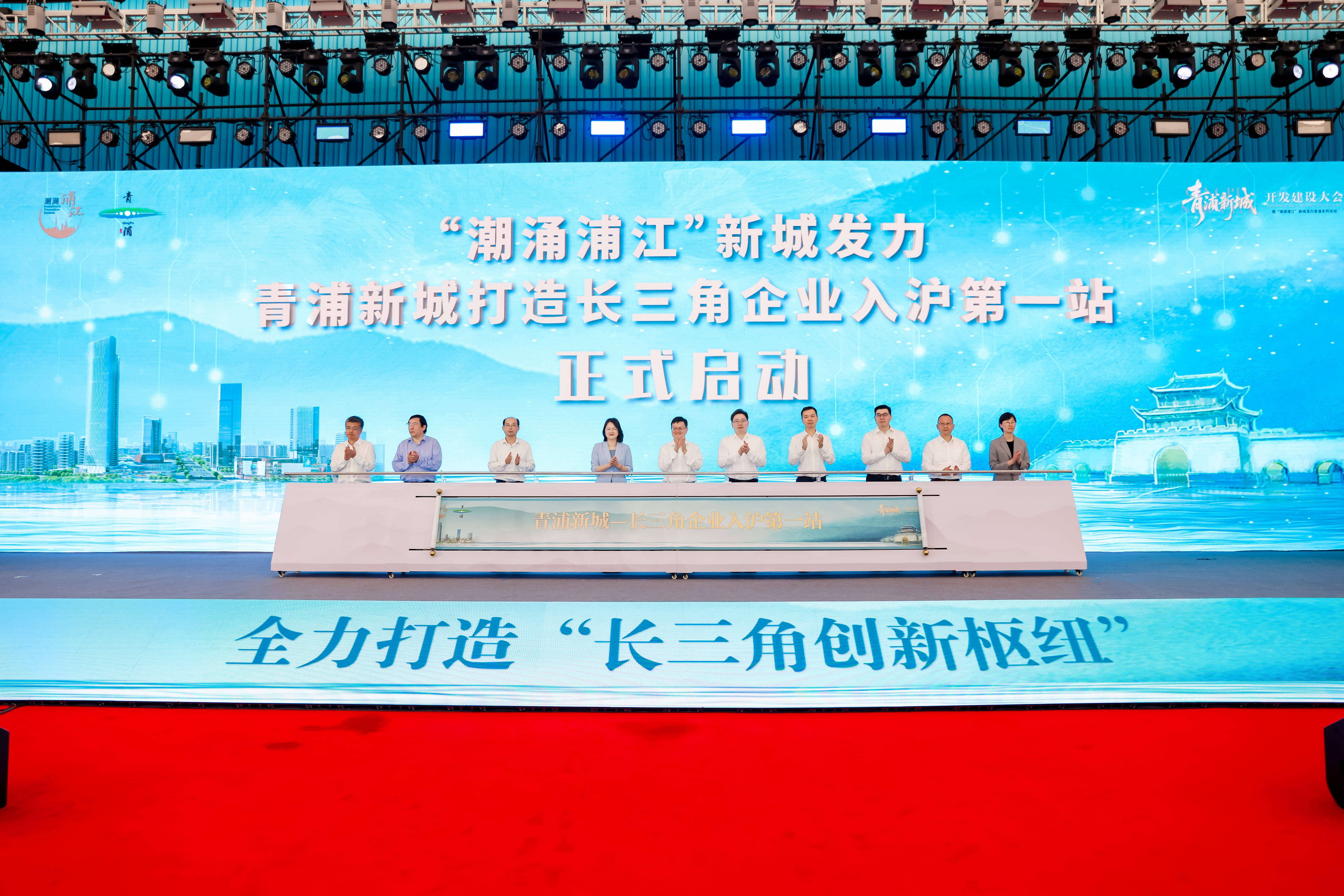
打造“长三角企业入沪第一站” 40个项目集中签约上海青浦
Zheng Quan Ri Bao Wang· 2025-07-27 08:49
Group 1 - The core viewpoint of the news is the strategic development and collaboration initiatives in Qingpu District, Shanghai, focusing on the "Yangtze River Delta Innovation Hub" and the establishment of the "AI+ Joint Innovation Center" with Huawei [1][2] - A total of 40 projects were signed during the development conference, indicating strong investment interest and commitment to the region's growth [1] - Qingpu New City covers an area of 91.1 square kilometers, accounting for 13% of Qingpu District's land but generating 40% of the district's GDP and 65% of its industrial output [1] Group 2 - The "2025 Qingpu New City Development Action Plan" emphasizes the focus on the new generation information technology industry, aiming to cultivate a trillion-yuan industrial cluster centered around leading companies like Huawei [2] - The "Beidou and Low-altitude Economy" will be a distinctive industry in Qingpu New City, integrating with high-end equipment manufacturing and modern logistics to foster collaborative development [2] - The launch of the "Enterprise Response" digital service platform aims to enhance service efficiency for local businesses, ensuring comprehensive support and feedback mechanisms [2]
打造“长三角企业入沪第一站” 上海青浦向世界发出邀约
Sou Hu Cai Jing· 2025-07-25 11:38
Core Insights - On July 25, 40 projects were signed at the Shanghai Qingpu New City Development Conference, highlighting strategic partnerships with Shanghai University of Technology, China Telecom Shanghai, and Bank of Communications Shanghai Branch [1] - Huawei and the Qingpu District Government launched the "Yangtze River Delta AI+ Joint Innovation Center" collaboration, emphasizing the focus on technological innovation [1] Group 1: Strategic Development - Qingpu is leveraging major strategic tasks such as the integration of the Yangtze River Delta, the Hongqiao International Open Hub, and the China International Import Expo to advance the "Yangtze River Delta Innovation Hub" [5] - Qingpu New City aims to be the "first station" for enterprises entering Shanghai, positioning itself as a key player in regional development [5] Group 2: Economic Impact - Qingpu New City covers an area of 91.1 square kilometers, accounting for 13% of Qingpu's land but generating 40% of the district's GDP and 65% of its industrial output [10] - The development plan includes a focus on the new generation of information technology industries, aiming to cultivate a trillion-yuan industrial cluster centered around leading companies like Huawei [10] Group 3: Infrastructure and Services - The central business district, covering 6.5 square kilometers, is identified as the core area for development within Qingpu New City [10] - The "Qihuwoying" digital service platform was launched to streamline services for local enterprises, ensuring efficient management of business needs and fostering a supportive environment for industrial growth [11]

科顺股份参设一支并购基金
FOFWEEKLY· 2025-07-25 09:58
Core Viewpoint - The company is actively exploring a second growth curve and accelerating its strategic transformation by establishing an industrial merger and acquisition fund in collaboration with professional investment institutions [1][2]. Group 1 - The company approved the establishment of an industrial merger and acquisition fund with a total subscription scale of 481 million yuan, aiming to invest in cutting-edge technology fields such as new generation information technology, new materials, new technologies, and advanced manufacturing [1][2]. - The subsidiary Zhuhai Hengqin Yidong Investment Partnership (Limited Partnership) will contribute 240 million yuan of its own funds to the fund, partnering with related parties including Guangdong Shunde High-tech Venture Capital Management Co., Ltd. and Guangdong Shunde Science and Technology Innovation Management Group Co., Ltd. [1][2]. - The fund's objective is to promote industrial innovation, intelligent transformation, and quality improvement and efficiency enhancement within the company [2].

上海经济半年报出炉:GDP同比增长5.1%
第一财经· 2025-07-25 07:38
Economic Overview - The city's GDP reached 26,222.15 billion yuan in the first half of the year, with a year-on-year growth of 5.1% [1] - The first industry added value was 36.54 billion yuan, growing by 1.9%; the second industry added value was 5,445.91 billion yuan, growing by 3.9%; and the third industry added value was 20,739.70 billion yuan, growing by 5.4% [1] Industrial Production - Industrial added value increased by 5.0% year-on-year, with total industrial output value growing by 5.6%, accelerating by 2.1 percentage points compared to the first quarter [2] - Key industries such as computer, communication, and other electronic equipment manufacturing saw a 21.7% increase, while railway, shipbuilding, and aerospace manufacturing grew by 18.1% [2] - The three leading industries in manufacturing achieved a 9.1% growth, outpacing the overall industrial output [2] Tertiary Sector Growth - The tertiary sector's added value grew by 5.4%, with information transmission, software, and IT services increasing by 14.6% [3] - The financial sector's added value reached 4,500.81 billion yuan, growing by 8.8% [3] Investment Trends - Fixed asset investment rose by 6.2%, with industrial investment increasing by 19.8% and urban infrastructure investment growing by 17.9% [4] - New residential property sales area reached 7.9564 million square meters, a 1.6% increase [4] Consumer Market - The total retail sales of consumer goods amounted to 8,260.41 billion yuan, with a year-on-year growth of 1.7% [5] - The sales of energy-efficient home appliances surged by 63.9% due to the trade-in policy [6] Financial Market Performance - Major financial markets saw a transaction volume increase of 6.6%, with the Shanghai Stock Exchange's securities transaction volume growing by 28.6% [7] - By the end of June, the balance of deposits in financial institutions reached 22.90 trillion yuan, a 7.5% increase [7] Price Stability and Income Growth - The consumer price index (CPI) rose by 0.1% year-on-year, while the industrial producer price index decreased by 2.8% [8] - The per capita disposable income reached 46,805 yuan, growing by 4.6% [8] Innovation and New Drivers - The number of valid invention patents reached 293,700, increasing by 12.2% [12] - High-tech manufacturing output grew by 16.0%, with significant increases in the production of smart devices [12] Policy Effects - Retail sales showed signs of recovery, with a 1.7% year-on-year increase [13] - Industrial investment continued to expand, particularly in electronic information products, which saw a 43.0% increase [13] Market Dynamics - The volume of goods transported and international container throughput increased by 7.5% and 6.1%, respectively [14] - The industrial output of private enterprises grew by 8.8%, outperforming the overall industrial output growth [14]
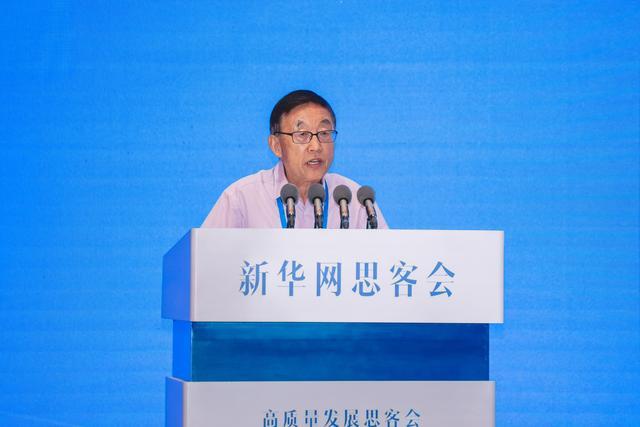
柴天佑:新一代信息技术推动工业智能化发展
Xin Hua Wang· 2025-07-25 04:53
Core Insights - The conference focused on promoting collaborative efforts in technological innovation and developing new productive forces tailored to local conditions [1][3] - The report by academician Chai Tianyou emphasized the importance of integrating new generation information technologies with industrial scenarios to accelerate the development of industrial intelligence systems [1] Group 1: Industrial Revolution - The core of the current industrial revolution is the construction of intelligent systems that possess self-perception, self-decision-making, and self-execution capabilities [3] - Two significant flows have changed: the energy flow, particularly the emergence of new energy sources, and the information flow, which includes the integration of information technology with industrial processes [3] Group 2: Technological Integration - The integration of new technologies such as artificial intelligence, industrial internet, and industrial metaverse is opening new pathways for developing industrial intelligent systems [3] - This integration enables the rapid development of industrial technology, achieving a unified perception, decision-making, and control process in manufacturing [3]
中国推动多领域扩大开放 鼓励外资布局中西部和东北地区
Zhong Guo Xin Wen Wang· 2025-07-21 07:11
Group 1 - The Chinese government will fully eliminate foreign investment restrictions in the manufacturing sector and promote orderly expansion in telecommunications and internet fields, encouraging foreign investment in central and northeastern regions [1] - The event in Nanning aims to strengthen service guarantees for key foreign investment projects and build high-level open cooperation platforms, facilitating cross-border industrial cooperation and connections [1] - China is supporting local governments to accelerate the digital and green transformation of manufacturing, upgrade traditional industries, and develop strategic emerging industries [1] Group 2 - The event resulted in 296 signed projects with a total investment of 217.3 billion RMB, covering areas such as artificial intelligence, new generation information technology, high-end equipment manufacturing, new materials, and specialty light industry [2] - The Guangxi region is enhancing industrial cooperation with ASEAN and accelerating the establishment of the China-ASEAN Artificial Intelligence Innovation Center, encouraging foreign investment in innovation and industrial chains [1][2] - Analysts believe that expanding manufacturing openness will boost global investor confidence and better integrate central and northeastern regions into international industrial chains [1]
涉及人工智能、新一代信息技术等,2025中国产业转移发展对接活动签约金额超2100亿元
news flash· 2025-07-21 01:05
7月20日,2025中国产业转移发展对接活动(广西)在南宁举行。本次活动共促成签约项目296个,签约 金额2173亿元,涉及人工智能和新一代信息技术、高端装备制造产业、新材料产业、特色轻工产业等领 域。(央视新闻) ...
高技术制造业宏观周报:信周频高技术制造业扩散指数涨幅持平-20250713
Guoxin Securities· 2025-07-13 05:23
Group 1: High-tech Manufacturing Index - The Guosen weekly high-tech manufacturing diffusion index A recorded 0.2, while index B was at 51.0, indicating a slight recovery compared to the previous period[1] - The price of dynamic random access memory (DRAM) increased to $1.4490, up by $0.031 from last week[3] - The price of 6-amino penicillanic acid rose to 230 RMB/kg, an increase of 50 RMB/kg from the previous week[3] Group 2: Market Trends and Economic Indicators - Fixed asset investment cumulative year-on-year growth was reported at 3.70%[2] - The total retail sales year-on-year growth for the month was 6.40%[2] - The month-on-month export growth was 4.80%[2] Group 3: Industry Insights - The price of lithium hexafluorophosphate decreased to 50,500 RMB/ton, down by 1,200 RMB/ton from last week, indicating a decline in the new energy sector's prosperity[3] - The price of acrylonitrile remained stable at 8,200 RMB/ton, showing no change from the previous week[3] - The price index for electronic products in Zhongguancun remained unchanged, indicating stable conditions in the aerospace and computer industries[1] Group 4: Policy and Development - A new action plan for measuring support for industrial productivity development from 2025 to 2030 was issued, focusing on ten key industries including AI and aerospace[4] - The launch of the WebSailor intelligent agent by Alibaba Tongyi demonstrates advancements in AI capabilities, surpassing several closed-source models[4]
中国物流信息化市场动态监测及竞争格局分析报告2025~2031年
Sou Hu Cai Jing· 2025-07-12 21:16
Core Insights - The report analyzes the dynamics and competitive landscape of China's logistics information technology market from 2025 to 2031, highlighting the growth potential and challenges within the sector [1][3]. Group 1: Overview of Logistics Information Technology - Logistics information technology is defined as the integration of information technology into logistics processes to enhance efficiency and service quality [3]. - The report outlines the basic characteristics of logistics information technology, including its role in supply chain integration and the use of advanced technologies like big data and AI [5][6]. Group 2: Global Development Trends - The global logistics information technology market has experienced significant growth, influenced by economic, political, and technological factors, including the impact of the COVID-19 pandemic [4][6]. - The report provides insights into the logistics information technology landscape in major regions such as the United States and Europe, detailing their development environments and current trends [4][5]. Group 3: China's Logistics Information Technology Landscape - China's total social logistics volume has shown consistent growth, with significant increases in logistics costs and revenue over recent years [5][6]. - The report identifies key players in China's logistics industry, including the top 50 logistics companies, and discusses the barriers to entry for new entrants [5][6]. Group 4: Market Demand and Challenges - The demand for logistics information technology is driven by factors such as the need for improved service quality, the integration of smart logistics, and the growth of cold chain logistics [5][6]. - Challenges faced by the logistics information technology sector include issues related to standardization, infrastructure, and the need for regulatory support [5][6]. Group 5: Policy and Regulatory Environment - The report outlines the regulatory framework governing logistics information technology in China, including the establishment of standards and policies aimed at promoting industry growth [6][7]. - Key national policies, such as the "14th Five-Year Plan" and the "Special Action Plan for High-Quality Development of Commercial Logistics (2025-2031)," are discussed in terms of their implications for the logistics information technology sector [6][7]. Group 6: Technological Integration - The integration of new technologies such as big data, AI, cloud computing, blockchain, and IoT is transforming the logistics information technology landscape, enhancing operational efficiency and service delivery [7][8]. - Case studies of companies like China Foreign Trade Development Co. and JD Logistics illustrate successful applications of these technologies in logistics operations [8][9]. Group 7: Market Forecast and Investment Strategies - The report forecasts significant growth in the logistics information technology market in China, with an emphasis on investment opportunities and strategic planning for stakeholders [10][11]. - Recommendations for investment strategies and sustainable development practices are provided to guide companies in navigating the evolving logistics information technology landscape [10][11].