工业智能化

Search documents
中创智领(00564) - 中创智领(郑州)工业技术集团股份有限公司2025年年度报告摘要
2026-03-30 14:09
香港交易及結算所有限公司及香港聯合交易所有限公司對本公告的內容概不 負 責,對 其 準 確 性 或 完 整 性 亦 不 發 表 任 何 聲 明,並 明 確 表 示,概 不 對 因 本 公 告 全部或任何部分內容而產生或因倚賴該等內容而引致的任何損失承擔任何責 任。 ZCZL Industrial Technology Group Company Limited 中創智領(鄭州)工業技術集團股份有限公司 (在 中 華 人 民 共 和 國 註 冊 成 立 的 股 份 有 限 公 司) (股 份 代 碼:00564) 海外監管公告 本公告乃根據香港聯合交易所有限公司證券上市規則第13.10B條 作 出。 茲載列中創智領(鄭 州)工業技術集團股份有限公司在上海證券交易所網站及 中 國 報 章 刊 登 公 告 如 下,僅 供 參 閱。 承董事會命 中創智領(鄭 州)工業技術集團股份有限公司 董事長 焦承堯 中 國,鄭 州,2026年3月30日 於本公告日期,本公司執行董事為焦承堯先生、賈浩先生、孟賀超先生及李開順 先 生;非 執 行 董 事 為 崔 凱 先 生;而 獨 立 非 執 行 董 事 為 季 豐 先 生、方 遠 ...
99.99%机器视觉识别准确率!华睿科技赴港上市,工业相机中国第三、AMR全球第七
Jin Rong Jie· 2026-02-02 10:31
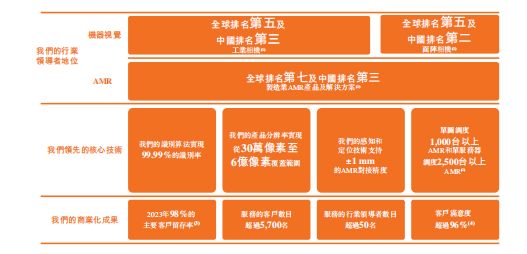
Core Viewpoint - Zhejiang Huari Technology Co., Ltd. is a leading player in the industrial camera and AMR (Autonomous Mobile Robot) sectors, focusing on high-end equipment manufacturing for strategic industries such as new energy, semiconductors, and automotive [1][3]. Business Overview - The company was established in 2016 and primarily operates in two segments: machine vision and AMR, providing critical components and solutions to equipment manufacturers and leading enterprises [1]. - Machine vision is the main revenue source, contributing 66.2% of total revenue in the first three quarters of 2025, while AMR accounts for 33.8% [1]. Market Position - According to Frost & Sullivan, Huari Technology ranks fifth globally and third in China in the industrial camera sector, and ranks seventh globally and third in China in the manufacturing AMR products and solutions market, indicating strong market competitiveness [3]. Technical Capabilities - The company's machine vision recognition algorithm boasts an accuracy rate of 99.99%, with product resolutions ranging from 300,000 to 600 million pixels, and AMR docking precision of ±1mm [5]. - In 2023, customer retention rate reached 98%, with a customer satisfaction rate exceeding 96.4% [5]. Financial Performance - Huari Technology's revenue for 2023 and 2024 was 1.05 billion yuan and 902 million yuan, respectively, with a 27.0% year-on-year revenue growth to 824 million yuan in the first three quarters of 2025 [6]. - The gross margin improved from 29.3% in the first three quarters of 2024 to 35.6% in the same period of 2025, surpassing 2023 levels [6]. Profitability - The company recorded a net loss of 152 million yuan in 2024 due to market demand slowdown and ongoing R&D investments, but significantly narrowed the loss to 26 million yuan in the first three quarters of 2025 [7]. - Adjusted EBITDA reached 20.6 million yuan, with adjusted net profit of 4.7 million yuan, indicating a recovery in profitability [7]. Revenue Growth Drivers - The core components and products of machine vision are the main drivers of revenue growth, with a 40.9% year-on-year increase to 530 million yuan in the first three quarters of 2025 [8]. - The AMR business saw an increase in the sales proportion of high-margin products, raising the AMR gross margin from 19.3% to 36.2% [8]. Industry Outlook - The global industrial camera market is projected to grow at a compound annual growth rate (CAGR) of 11.2% from 2025 to 2029, with the Chinese market expected to grow at 14.0% [8]. - The global manufacturing AMR market is forecasted to grow at a CAGR of 18.3%, with the Chinese market at 16.8% [8]. Policy Support - Chinese policies such as the "14th Five-Year Plan for Robot Industry Development" are promoting industrial automation and intelligent upgrades, providing solid policy support for industry growth [10]. - The demand for machine vision and AMR products is expected to be driven by capacity expansion and equipment upgrades in sectors like new energy, semiconductors, and logistics [10]. Fundraising Plans - The company plans to use the net proceeds from its Hong Kong listing to enhance its machine vision and AMR technology platforms, upgrade smart manufacturing capabilities, expand marketing networks, and supplement working capital [10].

【追梦·一线职工风采录】戈壁数字工厂里的新工匠
Xin Lang Cai Jing· 2026-02-01 21:22
Core Viewpoint - The article highlights the innovative contributions of Cao Zhiye, a labor model from Xinjiang Tianye Group, in advancing the coal chemical industry through technology and skill development [1][2][4]. Group 1: Technological Innovations - The modern coal chemical digital factory in Xinjiang operates efficiently with smart robots and a cloud-based control system that optimizes production parameters in real-time [1]. - Cao Zhiye led the successful implementation of the largest single-set coal-to-ethylene glycol project in China, achieving the fastest startup record for similar coal chemical installations [1]. - The advanced process control (APC) system developed under Cao's leadership reduces operator intervention by over 95%, enhancing safety in production [2]. Group 2: Skill Development and Recognition - The "Cao Zhiye Labor Model Innovation Studio" was established in 2023, focusing on technical breakthroughs and talent cultivation, resulting in 10 innovation patents and 3 invention patents [2]. - Cao Zhiye obtained the TUV Rheinland Functional Safety Engineer certification, gaining international recognition in industrial safety [3]. - He was included in the expert database for digital transformation of small and medium enterprises, contributing to professional literature and sharing his expertise [3]. Group 3: Personal Journey and Impact - Cao Zhiye transitioned from a basic electrician to a leading engineer over 20 years, demonstrating dedication and innovation in the industry [1][4]. - His efforts have significantly empowered industrial upgrades, showcasing the role of modern labor in the evolving industrial landscape [4].

海尔旗下卡奥斯冲港股,6成营收来自关联交易
Shen Zhen Shang Bao· 2026-01-31 15:13
Core Viewpoint - Kaos IoT Technology Co., Ltd., a subsidiary of Haier Group, has initiated the process for listing on the Hong Kong Stock Exchange, focusing on industrial intelligence solutions through advanced technologies like AI and IoT [1] Group 1: Company Overview - Kaos is a leading provider of industrial intelligence products and solutions in mainland China, aiming to accelerate the digital transformation of the manufacturing industry [1] - The company has developed the COSMOPlat industrial internet platform, integrating industrial software, operating systems, and IoT systems to provide data intelligence and IoT solutions [1] Group 2: Financial Performance - Kaos achieved a revenue of RMB 4.994 billion in 2023, projected to slightly increase to RMB 5.069 billion in 2024, with RMB 4.421 billion generated in the first nine months of 2025 [2] - The company's net profit improved significantly from a loss of RMB 82.72 million in 2023 to a profit of RMB 65.14 million in 2024, further increasing to RMB 176 million in the first nine months of 2025 [2] Group 3: Revenue Sources and Risks - A significant portion of Kaos's revenue comes from related party transactions, with sales to related parties amounting to RMB 3.662 billion, RMB 3.465 billion, and RMB 2.478 billion for the years 2023, 2024, and the first nine months of 2025, respectively, representing 73.3%, 68.4%, and 68.2% of total revenue [2] - The company has a high customer concentration, with revenue from the top five customers accounting for 81.7%, 80.2%, and 69.7% of total revenue for the respective periods [3] Group 4: Regulatory and Compliance Issues - Kaos has previously engaged third-party institutions for handling specific employee social insurance and housing fund payments, which may lead to potential liabilities for unpaid amounts or penalties due to regulatory non-compliance [3] - The company has also received government subsidies amounting to RMB 97.6 million, RMB 79.7 million, RMB 61 million, and RMB 50.5 million for the years 2023, 2024, and the first nine months of 2025 [4]

泰国税务局“翻旧账”,三丰智能孙公司被追讨税款并被冻结银行账户
Shen Zhen Shang Bao· 2026-01-27 15:43
Core Viewpoint - Sanfeng Intelligent announced that its subsidiary in Thailand, Xinyanlong (Thailand) Co., Ltd., is required to pay back taxes and penalties totaling approximately 59.67 million Thai Baht (about 13.28 million RMB) for the years 2017 to 2024 due to a tax audit by the Thai Revenue Department [1][2] Group 1: Tax Payment Details - The total amount to be paid includes 20.95 million Thai Baht in taxes, 18.27 million Thai Baht in fines, 18.88 million Thai Baht in late fees, and 1.57 million Thai Baht in additional penalties [1] - The Thai Revenue Department has temporarily frozen the bank account of Xinyanlong at the Bank of China (Thailand) [1] Group 2: Company Response and Impact - Sanfeng Intelligent stated that all tax filings were conducted in compliance with local regulations through professional financial institutions, and there was no intention of tax evasion [2] - The company has established a special task force to address the issue and is actively communicating with the Thai Revenue Department to resolve misunderstandings regarding tax incentives and specific tax assessments [2] - The tax payment will be recorded in the financial results for the year 2025, and it is not expected to have a significant adverse impact on the company's normal operations [2] Group 3: Company Performance - Sanfeng Intelligent's main business includes the research, design, production, sales, installation, debugging, and operation services of industrial automation and intelligent production lines [3] - For the third quarter of 2025, the company reported a revenue of 294 million RMB, a year-on-year decrease of 40.6%, while the net profit attributable to shareholders increased by 71.51% to 16.07 million RMB [3] - The company’s net profit for the first three quarters of 2025 was 37.89 million RMB, a year-on-year increase of 104.84% [3]

高工对话|磅旗科技吴小倩:用AI智能体工厂重构万亿新能源制造
高工锂电· 2026-01-26 10:23
Core Viewpoint - The article emphasizes the need for a paradigm shift in manufacturing, moving from traditional automation to an "AI Intelligent Factory" model that enables machines to collaborate autonomously and think independently, addressing the inefficiencies caused by the "semi-automation trap" [1][2]. Group 1: Challenges in Traditional Manufacturing - As factories scale up, they face increased management burdens due to automation gaps and data silos, leading to a reliance on human decision-making despite localized efficiency improvements [2]. - The lack of AI-driven global collaboration exacerbates management inefficiencies as more automated devices are added [2]. Group 2: The Need for New Paradigms - Major manufacturing giants are urgently seeking unified command and decision-making efficiency, which is becoming a critical battleground for profit margins [3]. - The capital market is shifting focus from hardware and software integration to opportunities that define a new generation of production collaboration paradigms, particularly through decentralized AI decision-making [3]. Group 3: Phongqi Technology's Solutions - Phongqi Technology proposes an "AI Intelligent Factory" model, leveraging decentralized AI decision intelligence and a full-stack self-developed robotics product line, including AGV/AMR and embodied robots, to create a "Robotics as a Service" (RaaS) model [3][4]. - The company aims to build an intelligent neural system for super factories, including major energy and lithium battery corporations, enabling autonomous thinking and global collaboration [4]. Group 4: Redefining Manufacturing Roles - Phongqi redefines the role of AI in factories, introducing AI Agents as autonomous digital workers capable of perception, decision-making, execution, and learning, transforming factory collaboration from centralized command to group autonomy [9]. - This cognitive shift is essential for overcoming collaboration delays in manufacturing [9]. Group 5: Technological and Architectural Reconstruction - The "Industrial Operating System (OS)" serves as the foundation for Phongqi's intelligent life form, addressing key issues such as the transition from high-cost custom projects to sustainable evolution and the establishment of a distributed intelligence network [10]. - The OS framework supports a replicable business model through standardized platforms and modular model libraries, creating a "model economy" that enhances revenue predictability [10]. Group 6: Hardware and Business Logic Redefinition - Under the OS framework, all hardware is redefined as autonomous nodes within an intelligent neural network, facilitating decision-making transactions among intelligent agents [11]. - The RaaS model allows clients to subscribe to operational capabilities without purchasing assets, thus closing the loop from selling tools to selling productivity [11]. Group 7: Proven Success and Market Impact - Phongqi has successfully implemented over 2,000 projects globally, achieving a 100% repurchase rate from major clients, demonstrating the effectiveness of its integrated delivery system [34]. - The company has significantly improved production efficiency for clients in various industries, including lithium battery and energy sectors, showcasing its ability to deliver measurable financial results [39][40]. Group 8: Future Aspirations and Industry Positioning - Phongqi aims to redefine China's manufacturing competitiveness by becoming a provider of industrial infrastructure and collaborative rules in the era of AI-defined production methods [45]. - The company focuses on enhancing decision-making efficiency in manufacturing, addressing the industry's shift from scale competition to speed competition [46].

科大智能拥抱“A+H”模式:收入波动VS盈利反弹强劲下的“最优解”?
Zhi Tong Cai Jing· 2026-01-23 07:26
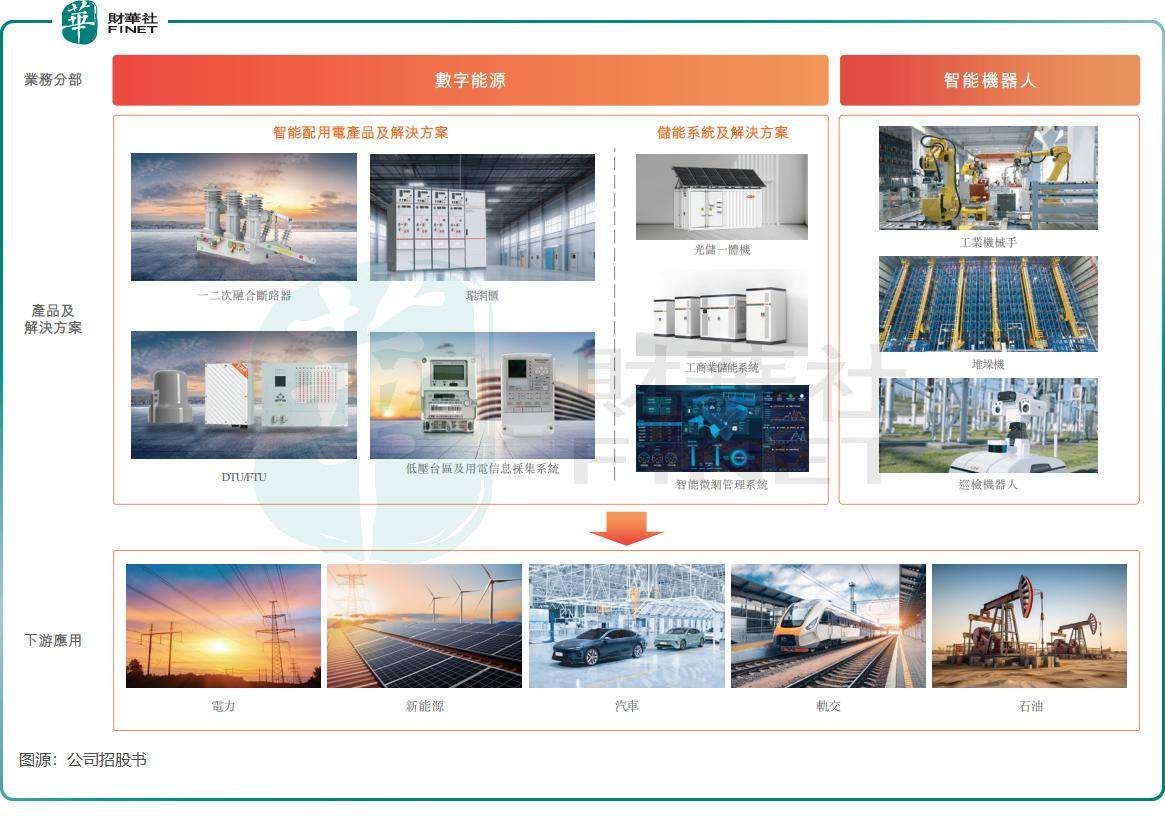
Core Viewpoint - The company Keda Intelligent is pursuing an IPO on the Hong Kong Stock Exchange, aiming to leverage its dual leadership in the digital energy and intelligent robotics sectors to attract investor attention and write a new growth story [1] Group 1: Business Overview - Keda Intelligent, founded in 2002, focuses on power automation and mid-voltage power line communication technology, having established a "digital energy + digital industry" strategy by 2019 [1] - The company's main business segments include digital energy, which encompasses products like circuit breakers and energy storage systems, and intelligent robotics, providing solutions for industrial clients [1] - The company was listed on the Shenzhen Stock Exchange in 2011 but has faced challenges in market performance, with a current stock price of 12.23 yuan and a market capitalization of 9.518 billion yuan as of January 22 [1] Group 2: Financial Performance - Keda Intelligent's revenue from 2023 to the first nine months of 2025 showed fluctuations: 3.025 billion, 2.687 billion (down 11.17% year-on-year), and 1.904 billion (up 1.12% year-on-year) [3] - The digital energy segment is a significant revenue contributor, accounting for 78.2% of total revenue in 2024, while the intelligent robotics segment has seen a substantial decline of 42.8% year-on-year [3] - The company's profitability has rebounded strongly, with profits of -171 million, 61.57 million, and 73.48 million from 2023 to the first nine months of 2025, reflecting a 228% year-on-year growth [3] Group 3: Market Opportunities - The digital energy sector is expected to grow significantly, with a projected market size of 1.515 trillion yuan by 2029 and a compound annual growth rate (CAGR) of 8.7% from 2024 to 2029 [5] - The industrial robotics market is also on an upward trajectory, with an anticipated market size of 166.3 billion yuan by 2029 and a CAGR of 14.6% from 2024 to 2029 [5] Group 4: Challenges - The robotics business faces intense competition and is heavily influenced by the cyclical nature of downstream industries, leading to an imbalance in the company's business structure [6] - The company has a high customer concentration, with the top five clients accounting for 51.6% of revenue, which may weaken its bargaining power and lead to revenue volatility [6] Group 5: IPO and Future Strategy - The IPO proceeds will be used to strengthen technological advantages in both digital energy and robotics, enhance global sales networks, and develop key equipment for AI and quantum technology applications [7] - The company aims to convert industry benefits from electric grid investments into solid cash flow and improve financial health while revitalizing its robotics segment to demonstrate diversification and growth potential [7]

新股前瞻|科大智能拥抱“A+H”模式:收入波动VS盈利反弹强劲下的“最优解”?
智通财经网· 2026-01-23 07:24
Core Viewpoint - The company Keda Intelligent is pursuing an IPO on the Hong Kong Stock Exchange, aiming to leverage its dual leadership in digital energy and intelligent robotics to attract investor attention and capitalize on growth opportunities in these sectors [1][7]. Group 1: Business Overview - Keda Intelligent, founded in 2002, focuses on power automation and mid-voltage power line communication technology, having established a "digital energy + digital industry" strategy by 2019 [1]. - The company's main business segments include digital energy, which encompasses products like circuit breakers and energy storage systems, and intelligent robotics, providing solutions for industrial clients [1][2]. - Keda Intelligent is recognized as a leading player in the digital energy sector, ranking second in the market for integrated circuit breakers and first in the FTU market, with significant deployments across 31 provincial regions in China [2]. Group 2: Financial Performance - The company's revenue from 2023 to the first nine months of 2025 showed volatility, with figures of 30.25 billion, 26.87 billion (down 11.17% year-on-year), and 19.04 billion (up 1.12% year-on-year) respectively [3]. - The digital energy segment accounted for 78.2% of revenue in 2024, while the intelligent robotics segment saw a significant decline of 42.8% year-on-year [3]. - Despite revenue fluctuations, the company demonstrated strong profit recovery, with profits of -1.71 billion, 615.7 million, and 734.8 million, reflecting a 228% year-on-year increase in the latest period [3]. Group 3: Market Opportunities - The digital energy sector is expected to see significant growth, with a projected market size of 15.15 trillion yuan by 2029 and a compound annual growth rate (CAGR) of 8.7% from 2024 to 2029 [5]. - The industrial robotics market is also poised for expansion, with an anticipated market size of 166.3 billion yuan by 2029 and a CAGR of 14.6% during the same period [5]. Group 4: Challenges and Strategic Focus - The company faces challenges in its robotics business due to intense competition and reliance on a few major clients, with the top five clients accounting for 51.6% of revenue [6]. - The IPO proceeds will be used to strengthen technological advantages in both business segments, enhance global sales networks, and improve operational efficiency [7]. - The company's ability to convert industry opportunities into solid cash flow and financial stability will be crucial for its investment value and growth potential [7].
德风新征程冲刺港股IPO:AIoT赛道上的“带刺玫瑰”?
3 6 Ke· 2026-01-22 12:35
Core Viewpoint - The capital market is witnessing a convergence of AI and industrial upgrades, with Beijing Defeng New Journey Technology Co., Ltd. (Defeng New Journey) applying for an IPO in Hong Kong, highlighting the dual nature of investment logic in the AIoT sector, which relies on long-term technological accumulation and client relationships rather than rapid growth [1] Group 1: Company Overview - Defeng New Journey focuses on AI-enabled industrial IoT production optimization software solutions and has served over 200 state-owned enterprises, delivering more than 600 projects [1] - The company reported cumulative revenue exceeding 1.24 billion yuan from 2023 to September 2025, but also accumulated losses of nearly 640 million yuan [1] - The growth trajectory is characterized by steady revenue increase, with revenue projected to grow from 313 million yuan in 2022 to 525 million yuan in 2024, reflecting a compound annual growth rate of over 29% [2] Group 2: Financial Performance - Despite revenue growth, Defeng New Journey has not achieved profitability, with net losses continuing from 2022 to 2024, totaling 700 million yuan over three years [2] - The gross margin improved from approximately 22% in 2022 to about 26% in the first half of 2025, indicating the emergence of scale effects [2] - The company's revenue structure heavily relies on AIoT solutions, which contributed approximately 93.9% of revenue in the first half of 2025, highlighting the challenges of high R&D and market development costs [3] Group 3: Industry Context - The AIoT market in China is projected to grow from approximately 54.1 billion yuan in 2020 to about 111.9 billion yuan in 2024, with expectations to reach around 220.9 billion yuan by 2029 [4] - Defeng New Journey ranks fifth among independent AIoT service providers in China, with a market share of about 1.8%, and third in the energy sector with a market share of approximately 9.9% [4] - The industry is characterized by high fragmentation and intense competition, with no clear market leader, posing challenges for Defeng New Journey against established competitors [4] Group 4: Business Model and Challenges - The company faces a dilemma between scale economy and customization, as industrial AIoT solutions require tailored development, leading to high delivery costs and long project cycles [7] - Transitioning from a project-based revenue model to a subscription-based model is essential for improving financial health, but this depends on changes in customer purchasing habits and product standardization [8] - Key factors for potential value reassessment post-IPO include effective cash flow management, the ability to lower delivery costs through platform modularization, and successful market expansion beyond the energy sector [8]
左手能源右手机器人,科大智能港股IPO的底气与挑战
Sou Hu Cai Jing· 2026-01-22 06:57
Core Viewpoint - Keda Intelligent has initiated its dual listing process by submitting a prospectus to the Hong Kong Stock Exchange, aiming to leverage its position in the digital energy and intelligent robotics sectors, despite facing challenges in stock performance and industry competition [1][8]. Group 1: Business Overview - Keda Intelligent operates in two key sectors: digital energy and intelligent robotics, aligning with the trends of "new infrastructure" and "industrial intelligence" [1]. - The digital energy segment is the company's foundational business, with a product matrix that includes core devices such as integrated circuit breakers and distribution terminal units, ranking first in the FTU market and second in the integrated circuit breaker market in China [1][3]. - The intelligent robotics segment showcases the company's diversification ambitions, providing products like industrial robots and inspection robots, with the industrial robot revenue leading the market from 2020 to 2024 [3][4]. Group 2: Financial Performance - Keda Intelligent's revenue has shown significant volatility, with 2023 revenue at 3.025 billion RMB, dropping to 2.687 billion RMB in 2024, before recovering to 1.904 billion RMB in the first three quarters of 2025 [4][5]. - The company recorded a net loss of 171 million RMB in 2023, turning profitable in 2024 with a net profit of 61.57 million RMB, and further increasing to 73.48 million RMB in the first three quarters of 2025 [4][5]. - The digital energy business accounted for 78.2% of total revenue in 2024, while the intelligent robotics business saw a significant decline, with a 42.8% drop in revenue in 2024 [4][6]. Group 3: Market Challenges - The decline in the intelligent robotics segment is attributed to both industry cyclical factors and strategic adjustments, with a reported actual revenue decline of approximately 21.3% after excluding the impact of divested subsidiaries [6][7]. - Increased competition from rivals such as Siasun Robot and Estun in the AI-enabled and high-end customization sectors is further squeezing market space for Keda Intelligent [7]. Group 4: Future Opportunities - The upcoming IPO in Hong Kong presents an opportunity for Keda Intelligent to break through growth bottlenecks, with the national grid's 4 trillion RMB investment plan expected to boost demand for digital energy solutions [8]. - The intelligent robotics market is projected to reach 166.3 billion RMB by 2029, with a compound annual growth rate of 14.6% from 2024 to 2029, providing potential growth avenues for the company [8]. - The international capital platform of the Hong Kong market may assist Keda Intelligent in expanding its overseas market presence, which currently accounts for less than 2% of its revenue [8].