
防水

Search documents
建材周专题 2026W10:防水再度提价传导,继续看好电子布紧缺
Changjiang Securities· 2026-03-22 09:16
Investment Rating - The industry investment rating is "Positive" and is maintained [9]. Core Insights - The waterproof industry has seen frequent price increases since March, with a strong determination to pass on rising costs. The first price increase on March 1 raised prices of asphalt-based products by 5%-10%, followed by a second increase on March 11 of 10-15% across all products [3][4]. - The cement market is experiencing weak shipment performance, while glass costs are pushing prices up. The demand for cement is slowly increasing due to improved weather and higher construction rates, with a national cement shipment rate of approximately 24.5%, up 9.5 percentage points month-on-month [4][22]. - The electronic fabric market is tight, with significant price increases observed in March. Downstream demand remains strong, supporting further price hikes [5][47]. Summary by Sections Waterproof Industry - The waterproof sector is actively passing on cost increases, with a total price increase of at least 15% calculated based on the lower end of the price hikes. This is greater than the cost increase from asphalt price rises, which have gone from approximately 3600 RMB/ton to about 4200 RMB/ton, impacting costs by about 7% [3][4]. Cement Market - The cement market is showing signs of recovery with a shipment rate of 24.5%, reflecting a month-on-month increase of 9.5 percentage points and a year-on-year increase of 2.5 percentage points. However, some high-price regions continue to see price declines due to weak demand recovery [4][22][23]. Glass Market - The float glass market is supported by rising costs, with prices experiencing slight increases. The overall supply and demand remain stable, but high inventory levels persist. The production capacity slightly decreased, with 206 out of 264 production lines operational, and daily melting capacity at 147,785 tons [4][33]. Electronic Fabric - The electronic fabric market is characterized by a significant price increase, with new prices being implemented smoothly. The demand from downstream CCL and PCB manufacturers is robust, leading to expectations of further price increases [5][47]. 2026 Outlook - The report identifies three main lines for investment in 2026: the stock chain focusing on demand optimization and supply clearance, the undervalued African chain benefiting from population and urbanization trends, and the AI chain with opportunities in electronic fabrics. Key companies recommended include Sanhe Tree, Rabbit Baby, and China Jushi [6].
建材周专题2026W8:防水再迎涨价函,继续看好电子布超级周期
Changjiang Securities· 2026-03-04 10:43
Investment Rating - The industry investment rating is "Positive" and maintained [9] Core Views - The waterproof industry is experiencing a price increase, with leading companies like Oriental Yuhong announcing price hikes of 5%-10% for asphalt-based products starting March 15, 2026, due to rising raw material costs [5] - The electronic fabric sector is expected to enter a "super cycle" driven by strong demand from AI-related applications and supply constraints, leading to sustained price increases [6] - The cement sector is facing a decline in shipments, but there are expectations for recovery in demand post-Lantern Festival, with potential price increases in regions where prices have bottomed out [7] Summary by Sections Waterproof Industry - Oriental Yuhong's price increase reflects an effort to restore profitability and signals a positive trend for industry earnings recovery, especially if demand grows [5] Electronic Fabric - The anticipated "super cycle" in electronic fabric is characterized by strong demand and supply constraints, particularly benefiting companies like China Jushi and Zhongcai Technology [6] Cement Sector - Cement shipments have decreased month-on-month, with glass inventory slightly increasing. However, demand is expected to recover after the Lantern Festival, and there is potential for price increases in certain regions [7][22] - The average national cement price is reported at 343.71 yuan/ton, down 2.58 yuan/ton month-on-month, and down 49.03 yuan/ton year-on-year [23] 2026 Outlook - The report identifies three main investment themes for 2026: the stock chain focusing on demand optimization, the undervalued African market, and the AI chain emphasizing upgrades in specialty electronic fabrics [8]


防水涨价函频发-消费建材在油价传导链上
2026-03-03 02:52
Summary of Conference Call Records Industry Overview - The waterproofing sector is experiencing significant price elasticity due to high leverage in recent years, rapid supply clearance during downturns, and a prolonged price war leading to low price bases. The correlation between asphalt prices and oil prices is strong, making price recovery in 2026 feasible [1][3][4]. Key Points Price Recovery and Market Dynamics - The construction materials industry has undergone a four to five-year price decline, with profits hitting rock bottom. Companies are eager for profit recovery, leading to a significant reduction in supply and a decrease in the number of players, which forms a basis for a collective price increase demand [1][3]. - Major waterproofing companies have issued price increase notices due to fluctuations in asphalt costs, which recently rebounded from a low of approximately 2,800-2,900 to around 3,300. Companies plan to raise prices by 5%-10% starting mid-month [1][5]. Company-Specific Insights - Rain虹's price increase primarily covers engineering rolls and asphalt-related products, accounting for about 40-60% of its revenue. The price hike is expected to not only cover recent cost increases but also provide additional profit margin [1][5]. - Other leading companies in the waterproofing sector are also expected to cover nearly all revenue with their price increases, reflecting a strong alignment in the industry [6]. Market Concentration and Supply Dynamics - The concentration in the waterproofing and coatings sectors has significantly increased, with the top three companies' market share nearly doubling from just over 20% in 2020 to close to 40% by the end of 2025. This reflects the exit of smaller producers and a clear reduction in effective supply, which supports profit recovery and price increases [7]. Cost Structure and Price Transmission - In waterproofing materials, asphalt costs account for approximately 30%-40% of total costs. A recent 15% increase in asphalt prices is expected to raise costs by about 3-4 percentage points, necessitating price increases to offset these costs [8][9]. - The coatings sector is driven by raw materials such as emulsions and titanium dioxide, with emulsions accounting for nearly 30% of costs. Recent energy cost increases and price hikes from overseas suppliers are influencing domestic price adjustments [8][9]. Future Outlook and Recommendations - The operational turning point for leading construction material companies was observed in Q3 and Q4 of 2025, with a trend of profit recovery and positive revenue growth expected to continue into 2026. Companies with strong alpha characteristics are recommended for investment, even in a weak beta environment [3][10]. - Key companies to watch include 三棵树, 兔宝宝, 汉高, 雨虹, 科顺, 中国联塑, and 北新建材, which are expected to benefit from ongoing price increases and market dynamics [10]. Additional Considerations - The demand side is showing signs of stabilization, with expectations that the sharpest declines in demand have passed. Structural opportunities exist in lower-tier markets and non-real estate sectors [4][9]. - The industry consensus is shifting towards avoiding chaotic price declines and instead aiming for a moderate return to reasonable price levels to ensure profitability and survival [4].
地产政策加码+建材提价催化,建材ETF易方达(159787)标的指数涨超3%
Mei Ri Jing Ji Xin Wen· 2026-02-25 07:05
Core Viewpoint - The construction materials sector is experiencing significant activity, driven by supportive policies and a recovering market outlook, leading to a notable increase in the China Construction Materials Index by 3.5% [1] Policy Developments - The Shanghai real estate market has introduced new policies, including a reduction in the social security requirement for non-local families purchasing homes within the outer ring to one year, an increase in the maximum public housing loan limit to 2.4 million yuan, and a temporary exemption from property tax for the only housing of adult children [1] Industry Trends - Post-holiday resumption of work has accelerated, leading to a positive outlook for the construction supply chain, with price increases reported in the waterproofing and coating sectors as some product prices rebound from their lows [1] - The fiberglass industry is seeing sustained improvement, with a favorable supply-demand balance for electronic fabric products, and the industry is expected to steadily improve by 2026 [1] - A new supply-demand equilibrium is forming in the construction materials industry due to accelerated supply clearance [1] Investment Opportunities - The China Construction Materials Index includes leading companies in cement, waterproofing, and coatings, with top ten constituents such as Conch Cement, Oriental Yuhong, BNBM, and Huaxin Cement [1] - The E Fund Construction Materials ETF (159787) offers a low management fee of 0.15% per year, making it a cost-effective option for investors looking to capitalize on the recovery in the construction materials sector [1]
地产政策放松+建材小阳春提价,今日建筑材料指数涨超4%(截至14:00),建材ETF易方达(159787)备受关注
Xin Lang Cai Jing· 2026-02-25 06:37
Fundamental Aspects - The pace of resumption of work and production in downstream sectors has accelerated post-holiday, leading to a minor recovery in the construction chain [1] - The supply side of the building materials industry is rapidly clearing, with some product prices rebounding from the bottom, such as waterproofing and coatings, where companies have issued price increase notices [1] - The fiberglass industry is experiencing improved market conditions, particularly for electronic cloth products, with a continuously favorable supply-demand balance [1] Policy Aspects - The "New Seven Measures" for the Shanghai real estate market have been released, which include: 1) Non-local families only need one year for housing purchase eligibility within the outer ring 2) Increased public housing loan limits 3) Exemption from property tax for the only housing of adult children [1] - Supportive policies for the real estate sector continue to be released, with an article in "Qiushi" emphasizing the need to improve and stabilize market expectations for real estate, clarifying the financial attributes of real estate and suggesting that a comprehensive policy approach could positively boost market expectations for the stabilization and recovery of real estate chain enterprises [1] Related Products - The E Fund Building Materials ETF (159787) tracks the CSI All Share Building Materials Index, covering leading companies in China's cement industry, serving as a convenient tool for investors to capitalize on the expected stabilization and improvement in cement industry performance and shareholder returns [1] - The E Fund Building Materials ETF has a management and custody fee rate of 0.15% + 0.05% per year, significantly lower than similar products linked to the CSI All Share Building Materials Index, effectively reducing cost expenditures for investors and providing a higher cost-performance ratio for long-term investment in the building materials industry [1]
建材、建筑及基建公募REITs半月报(1月17日-1月30日):部分防水企业提价,期待行业盈利修复-20260202
EBSCN· 2026-02-02 11:16
Investment Rating - The report maintains a "Buy" rating for several companies, including China Giant Glass, Conch Cement, and Oriental Yuhong, while suggesting "Hold" for others like Puyang Refractories and Keren Co. [8] Core Insights - Leading waterproof companies such as Oriental Yuhong and Keshun have raised prices by 5-10% due to significant increases in raw material costs, indicating a potential recovery in industry profitability [4][6] - The real estate sector is showing signs of recovery after a prolonged adjustment period, with expectations of policy support and improved transaction volumes in the second-hand housing market [4][6] - Intel's glass substrate technology has achieved mass production, which could impact the domestic supply chain positively, with recommendations to focus on companies like Kaisheng Technology and Gobika [4][6] Summary by Sections Price Increases in Waterproof Companies - Companies like Oriental Yuhong and Keshun have announced price hikes of 5-10% for their waterproof products, driven by rising costs of acrylic emulsions and other raw materials [4][6] - The waterproof membrane industry has seen its first year-on-year production growth since November 2025, indicating a positive shift in the market [4][6] Company Profit Forecasts and Valuations - The report includes detailed earnings per share (EPS) forecasts and price-to-earnings (P/E) ratios for various companies, with notable mentions such as: - Oriental Yuhong: EPS forecast of 0.68 yuan for 2026, with a P/E ratio of 20 [8] - China Giant Glass: EPS forecast of 1.09 yuan for 2026, with a P/E ratio of 17 [8] - Conch Cement: EPS forecast of 2.09 yuan for 2026, with a P/E ratio of 12 [8] Weekly Market Review - The report provides insights into the weekly performance of the construction and building materials sectors, highlighting fluctuations in various indices [10][11] - Specific companies have shown significant weekly gains, such as *ST Lifan with a 47.33% increase, while others like Huamin Co. experienced a 16% decline [19]
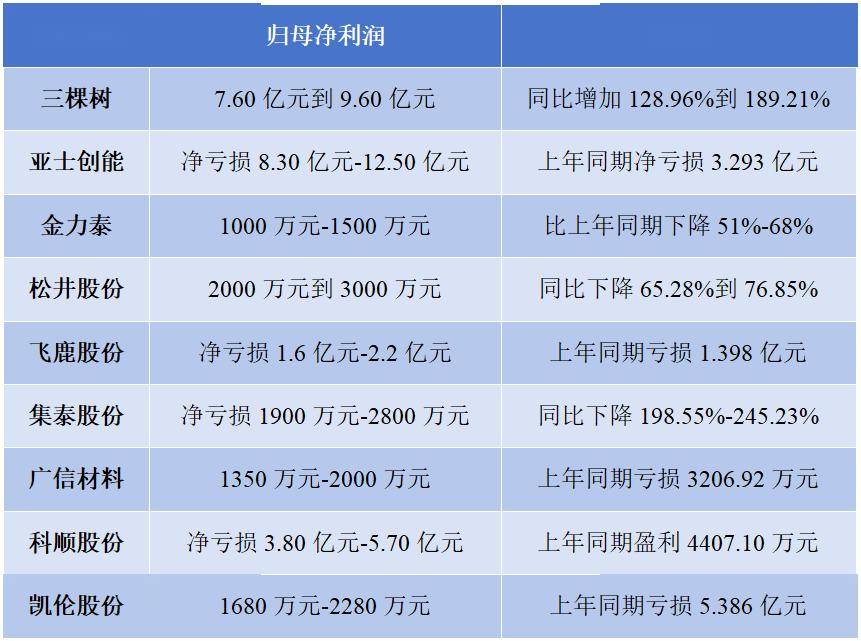
【聚焦】9家涂料及防水上市公司业绩预告:最高净赚9.6亿,最高亏损12.5亿
Sou Hu Cai Jing· 2026-01-31 13:24
Industry Overview - The overall demand for the paint market in China is expected to weaken in 2025 due to intensified supply-demand conflicts, a declining real estate market, severe price competition, and weak demand in multiple industrial end markets [1] - According to the China Coatings Industry Association, the total paint production in China from January to November 2025 is projected to be 31.723 million tons, a year-on-year decrease of 7.7% [1] - The main operating revenue is expected to be 352.403 billion yuan, down 3.2% year-on-year, while total profit is expected to increase significantly by 15.7% to 27.271 billion yuan due to declining raw material prices [1] Company Performance - Seven listed paint companies, along with two waterproof companies, have released their performance forecasts for 2025, with five companies reporting losses, the highest being 1.25 billion yuan [1] - Six companies are expected to see a decline in net profit attributable to shareholders, while five companies are projected to be profitable, with the highest net profit expected to be 960 million yuan [1] Individual Company Insights - **Sankeshu**: Expected net profit between 760 million to 960 million yuan, a year-on-year increase of 128.96% to 189.21% [2] - **Yasichuangneng**: Projected net loss of 830 million to 1.25 billion yuan, compared to a net loss of 329.3 million yuan in the same period last year [2] - **Jinlitai**: Expected net profit between 10 million to 15 million yuan, a decline of 51% to 68% year-on-year [2] - **Songji Co.**: Expected net profit between 20 million to 30 million yuan, a decrease of 65.28% to 76.85% year-on-year [2] - **Feilu Co.**: Projected net loss of 160 million to 220 million yuan, compared to a loss of 139.8 million yuan in the previous year [2] - **Jitai Co.**: Expected net loss of 19 million to 28 million yuan, a year-on-year decline of 198.55% to 245.23% [2] - **Guangxin Materials**: Expected net profit between 13.5 million to 20 million yuan, compared to a loss of 32.0692 million yuan in the same period last year [2] - **Keshun Co.**: Projected net loss of 380 million to 570 million yuan, compared to a profit of 44.071 million yuan in the previous year [2] - **Kailun Co.**: Expected net profit between 16.8 million to 22.8 million yuan, compared to a loss of 53.86 million yuan in the same period last year [2] Performance Variability Reasons - Companies are experiencing stable revenue due to optimized sales systems and product layouts, which have driven sales volume and established a solid revenue foundation [2] - Increased investment in new technologies and products has led to higher sales, management, and R&D expenses, contributing to profit declines [2] - Non-recurring gains and losses are expected to impact net profit attributable to shareholders by approximately 1 million yuan, mainly from investment dividends and equity sales [2] Strategic Outlook - **Songji Co.**: Short-term profitability is under pressure due to accelerated business development and strategic layout, with a focus on long-term growth in high-end manufacturing and new product markets [3] - **Jitai Co.**: The company is undergoing strategic transformation and capacity upgrades, facing pressure from traditional businesses while experiencing growth in new key areas [4][5]


掘金顺周期-多行业系列联合会议
2026-01-30 03:11
Summary of Key Points from Conference Call Records Industry Overview - **General Economic Outlook**: The Chinese economy shows signs of stabilization, with nominal GDP growth expected to enhance corporate profits. Supply contraction outpacing demand may improve industry prices and corporate earnings, highlighting opportunities in cyclical industries [1][2][3]. Real Estate Sector - **Investment Value**: The real estate sector is deemed to have high investment value, with significant growth in second-hand housing transaction volumes and a narrowing decline in listing prices. Major cities like Beijing and Shanghai have seen listing volumes drop by over 15% [1][3]. - **Policy Catalysts**: Continuous policy support for real estate investment trusts (REITs) and other measures are expected to catalyze the market. The valuation of real estate stocks is considered to have a sufficient margin of safety, with many leading companies trading at a price-to-book (PB) ratio significantly below 1 [1][3][11]. - **Market Dynamics**: The short-term data indicates positive changes in the real estate market, with a notable decrease in listings for older urban properties, as owners prefer renting or waiting for redevelopment rather than selling at lower prices [4][5]. Travel and Transportation Sector - **Positive Outlook**: The travel industry is expected to benefit from government policies promoting tourism, with signs of recovery in duty-free and hotel sectors. The airline industry anticipates strong growth in passenger traffic, with ticket prices expected to be higher than last year [1][8][9]. - **Airline Performance**: During the 2026 Spring Festival travel period, the airline industry is projected to see a 5-6% increase in passenger traffic, with improved ticket pricing compared to 2025. The industry is entering a positive development phase, with a supply growth rate of about 4% and demand growth of approximately 5.5% [9]. Home Appliance Sector - **Investment Opportunities**: The home appliance sector is currently undervalued, presenting good investment opportunities across various segments, including kitchen appliances and white goods. Leading companies are expected to maintain stable performance and high dividend payouts [1][10][11]. Coal Industry - **Market Conditions**: The coal industry is experiencing a marginal improvement in supply-demand dynamics, with a stable price recovery expected. Supply constraints are anticipated to reduce domestic coal supply by 70 million to 100 million tons in 2026, while demand remains resilient [2][19][20]. Chemical Industry - **Future Trends**: The chemical industry is gaining attention due to increased market liquidity and expectations of positive producer price index (PPI) trends. Supply-side constraints and improved demand from global markets are expected to drive price increases [17][18]. Consumer Healthcare Sector - **Recovery Signs**: The consumer healthcare sector is showing early signs of stabilization, particularly in ophthalmology and dental services. Key players in these segments are expected to benefit from a recovering market environment [16]. Food and Beverage Sector - **Market Performance**: The food and beverage sector has seen significant price increases, particularly for premium brands like Moutai. However, potential risks include the release of pent-up supply post-holiday, which could impact prices [21][22]. Construction and Building Materials - **Market Changes**: The construction materials sector is adapting to a shift in demand from new housing to renovations of existing properties. Recent data indicates a recovery in demand for glass and other materials, with expectations of price stabilization and potential increases [24][25]. Conclusion - **Investment Strategy**: Overall, the cyclical industries, particularly real estate, travel, and home appliances, present promising investment opportunities. The focus should be on companies with strong fundamentals and favorable market conditions as the economy stabilizes [1][3][8][11].
防水发布涨价函,关注内需弹性品种
China Post Securities· 2026-01-26 03:09
Investment Rating - The industry investment rating is "Outperform the Market" and is maintained [1]. Core Views - The construction materials sector has shown good performance recently, driven by price increases in waterproof materials and a shift in market style. There is a strong expectation for continued price increases in consumer building materials such as waterproofing, coatings, and gypsum boards in 2026, despite the current off-season demand [3][4]. - The cement market is entering a seasonal downturn, with national demand showing a downward trend. However, the cement industry's capacity is expected to decline under policies limiting overproduction, which will enhance profit elasticity [3][4]. - The glass industry is facing sustained demand pressure due to the real estate sector, with traditional peak season orders showing limited improvement. Supply-side adjustments are ongoing, but overall supply-demand pressures remain [4][14]. - The fiber glass sector is experiencing a mixed demand environment, with AI-driven demand in specific segments showing potential for growth [4]. Summary by Sections Cement - The national cement market is entering a seasonal downturn, with demand expected to decrease significantly as the New Year approaches. December 2025 cement production was 144 million tons, down 6.6% year-on-year [8]. - The civil market shows relatively rigid demand, while the construction market remains weak. Future price trends are expected to be stable but weak [8]. Glass - The glass industry is under pressure, with traditional peak season demand not showing significant improvement. High inventory levels among intermediaries are a concern. Recent supply-side adjustments have occurred, but overall supply-demand pressures persist [14]. Fiber Glass - The fiber glass sector is seeing a mixed demand landscape, with AI-related products experiencing growth. The industry is expected to see a trend of increasing volume and price due to this demand [4]. Consumer Building Materials - The profitability of the consumer building materials sector has reached a bottom, with strong calls for price increases due to competitive pressures. Major categories like waterproofing and coatings are expected to see continued price hikes in 2026 [4]. Market Performance - The construction materials sector index increased by 9.23% over the past week, outperforming other major indices [5].
如何看待年初周期行情的持续性
2026-01-26 02:49
Summary of Conference Call Records Industry Overview Coatings and Waterproofing Materials - There are opportunities for price increases in the coatings and waterproofing materials sectors, with coatings showing signs of growth in 2025 and waterproofing expected to follow in 2026. Key companies to focus on include Yuhong, Keshun, and Sankeshu [1][2] Pipe Manufacturing - Companies targeting the C-end market are performing steadily with good cash flow and dividends, making them suitable for conservative investors. Recommended companies include Tubao and Weixing [1][2] Glass Fiber Sector - The demand outlook for the glass fiber sector is positive, with significant price increases in ordinary electronic cloth since the beginning of the year. China Jushi and Zhongcai Technology have considerable growth potential in the high-end electronic cloth market [1][2] Construction Sector - Large companies with low valuations and high dividend yields, such as Tunnel Co. and China State Construction, are worth attention. A recovery in traditional construction demand will benefit upstream material suppliers like Honglu Steel Structure and Jinggong Steel Structure [1][2] Non-Ferrous Metals Industry - The non-ferrous metals sector is currently at a high PB valuation, around the 75th percentile over the last 20 years, but still has upward potential based on PE valuation at approximately the 35th percentile. Gold stocks are valued at 12-13 times earnings, with a potential increase of 50%-70% during a bull market. Energy metals like copper and aluminum also show around 40% upside potential. The gold sector has risen 30% since the beginning of the year and is in the middle of a quarterly uptrend [3][4] Coal Industry Current Fundamentals - The coking coal sector shows strong fundamentals, with a recent increase in the coal index by 1.44%, outperforming the CSI 300 index. Supply-side data is low, with significant inventory reductions. As of January 23, coal inventory was 168 million tons, down 3.3% year-on-year, with coking coal inventory down 12% [5][6] Future Expectations - The coal sector is expected to see significant price increases following policy changes that will affect inventory and production levels. High-quality coking coal companies and high-dividend thermal coal companies are recommended for investment [6] Real Estate Sector Market Trends - The real estate sector is nearing the end of its bottoming phase, with recommendations to accumulate stocks that have improved fundamentals but have not yet realized performance. Jianfa Co. is highlighted, with expected losses of 5.2 to 10 billion yuan in 2025 but a commitment to maintain dividends of at least 0.7 yuan per share [7][8] Company Performance - Jianfa Co. has a stable supply chain business with significant growth in overseas operations, achieving sales of 14 billion USD, a 37% year-on-year increase. Major losses are attributed to its home furnishing business and real estate operations [9][10] Future Performance Expectations - The year 2025 is anticipated to be a low point for Jianfa Co., with a projected rebound in 2026, estimating profits between 3 to 3.5 billion yuan. The company is expected to maintain a stable dividend strategy, supported by strong cash flow [11]
