创新药研发

Search documents
13.65亿定增获受理!海思科解转型资金之渴?
Guo Ji Jin Rong Bao· 2025-07-17 08:29
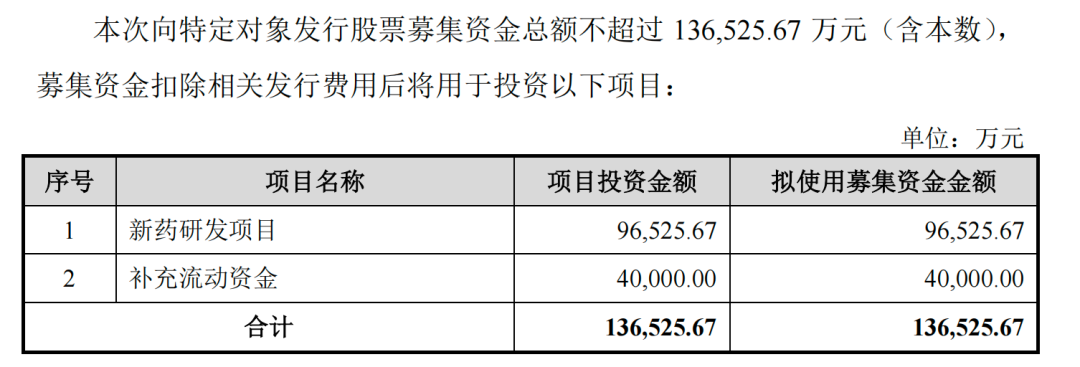
Core Viewpoint - Recently, Haisco Pharmaceutical Group Co., Ltd. announced that the Shenzhen Stock Exchange has accepted its application for a private placement of shares, aiming to raise up to 1.365 billion yuan for new drug research and development and to supplement working capital [1] Company Overview - Haisco is a diversified and specialized pharmaceutical group engaged in new drug research and development, manufacturing, and marketing, with a product portfolio covering multiple segments including anesthesia, parenteral nutrition, anti-tumor, and cardiovascular drugs, among others [3] - The company has over 40 products, including four Class 1 new drugs that have been approved for market, with many others being the first or sole generic versions in China [3] Strategic Transformation - Haisco is undergoing a rapid transformation from focusing on "innovative generics" to a "combination of generics and innovation" due to the impact of generic drug procurement policies [3][4] - The proportion of revenue from generic drugs has decreased from over 80% in 2019 to below 60% in 2024, while the revenue from innovative drugs is expected to exceed 40% by 2025 [4][5] Financial Performance - In 2024, Haisco achieved a revenue of 3.721 billion yuan, a year-on-year increase of 10.92%, and a net profit of 396 million yuan, up 34% year-on-year [5] - Following the release of the annual report, the company's stock price hit the limit up, and its market capitalization exceeded 50 billion yuan for the first time, reflecting market recognition of its innovative drug transformation strategy [5] Funding Needs - The innovative drug research and development process is characterized by long cycles, high investment, and low success rates, leading to significant funding needs for Haisco [6] - The company reported a total R&D investment of 1.589 billion yuan from 2022 to 2024, with 624 million yuan allocated in 2024, marking a 20.7% increase year-on-year [6] Future Plans - Haisco plans to use the raised funds for the research and development of several innovative drugs, including HSK31679 for non-alcoholic fatty liver disease and HSK31858 for respiratory diseases, among others [6] - The company aims to enhance its R&D investment, accelerate clinical trials, and improve the efficiency of drug registration processes, thereby expanding its product line and creating new profit growth points for sustainable development [6]


科兴制药(688136):创新管线出海可期,重视创新药平台价值
Hua Yuan Zheng Quan· 2025-07-17 08:24
Investment Rating - The investment rating for the company is "Buy" (maintained) [5] Core Views - The value of the company's innovative drug platform is gradually becoming apparent, with multiple leading technology platforms established, focusing on oncology, immunology, and degenerative diseases, indicating potential for revaluation [5][6] - The innovative pipeline provides expectations for international expansion, granting the company new valuation flexibility [6] Summary by Relevant Sections Market Performance - Closing price as of July 16, 2025, is 49.30 CNY, with a total market capitalization of 9,921.98 million CNY [3] Earnings Forecast and Valuation - Projected revenues for 2025-2027 are 1,684 million CNY, 2,071 million CNY, and 2,650 million CNY, respectively, with year-on-year growth rates of 19.68%, 22.98%, and 27.96% [7] - Expected net profit for the same period is 107 million CNY, 207 million CNY, and 346 million CNY, with significant year-on-year growth rates [7] - Price-to-earnings ratios (P/E) for 2025-2027 are projected at 93.02, 47.97, and 28.69, respectively [9] Innovative Pipeline - The company has developed several innovative drugs targeting significant medical needs, including GB18 for cancer cachexia, GB12 for atopic dermatitis, and GB20/GB24 for inflammatory bowel disease, all showing promising clinical progress [8][21][35] - GB18, targeting GDF15, has received IND approval in both China and the US, with a favorable competitive landscape and high clinical success probability [21][30] - GB20 and GB24, targeting TL1A, are positioned to address the growing market for inflammatory bowel disease, with significant patient numbers projected [35][39] Investment Logic - The company is expected to maintain high growth rates in overseas sales, particularly with the commercialization of key products in the EU and emerging markets [11] - The innovative drug development pipeline is progressing positively, with potential for significant valuation increases through successful business development (BD) transactions [11][19]

中国生物制药拟全控创新药“黑马” 十年投288亿研发完善管线布局
Chang Jiang Shang Bao· 2025-07-17 05:16
Core Viewpoint - China National Pharmaceutical Group is planning a significant acquisition of Lixin Pharmaceutical Technology for up to $951 million, aiming to enhance its position in the innovative drug sector [1][4]. Group 1: Acquisition Details - The acquisition involves purchasing 95.09% of Lixin Pharmaceutical, with a total transaction value not exceeding $951 million (approximately 6.822 billion RMB) [1][4]. - China National Pharmaceutical Group previously acquired a 4.91% stake in Lixin Pharmaceutical for 142 million RMB during its C1 financing round [4]. - After the acquisition, China National Pharmaceutical Group will hold 100% of Lixin Pharmaceutical [5]. Group 2: Lixin Pharmaceutical Overview - Founded in 2019, Lixin Pharmaceutical has quickly gained global recognition for its innovative drug development, focusing on First-in-Class and Best-in-Class products [6]. - The company has established a robust pipeline with multiple projects, all possessing global intellectual property rights, including several promising candidates for clinical trials [6][8]. - Lixin Pharmaceutical has secured nearly $4 billion in external licensing agreements, with significant collaborations with AstraZeneca and Merck [7][8]. Group 3: Financial Performance - Since 2006, China National Pharmaceutical Group has reported cumulative profits of approximately 47.4 billion RMB [2]. - The company's stock price has doubled since the beginning of the year, reflecting strong market performance [3][10]. - As of July 16, 2023, the company's market capitalization reached approximately 120.8 billion HKD (around 110.5 billion RMB) [12]. Group 4: Strategic Importance - The acquisition is seen as a strategic move to bolster China National Pharmaceutical Group's core competitiveness and international influence in the oncology innovation sector [9][10]. - The company has a history of strategic acquisitions that have enhanced its capabilities in various therapeutic areas, including oncology and autoimmune diseases [11][12].

罕见!国内巨头整体收购创新药企
第一财经· 2025-07-17 01:58
Core Viewpoint - The acquisition of innovative drug company Lixin Pharmaceutical by China National Pharmaceutical Group for up to $951 million marks a new era for Chinese biopharma companies, transitioning from a focus on generic drugs to innovative drug development [1][2]. Group 1: Acquisition Details - China National Pharmaceutical Group's stock surged nearly 6% following the announcement of the acquisition [1]. - This acquisition is seen as a significant move, as it is uncommon for biotech companies to sell themselves entirely, with previous transactions often involving pipeline sales or product collaborations [1][2]. - The deal is viewed as a win-win situation, benefiting both the buyer and the seller, with the potential to stimulate a new wave of innovation in China's pharmaceutical market [2]. Group 2: Industry Trends - Chinese biopharma companies, traditionally focused on generic drug production, are increasingly investing in innovative drug research and development [2]. - Notable companies leading this transformation include Hengrui Medicine, CSPC Pharmaceutical Group, and Kelun Pharmaceutical, which are actively pursuing innovative drug development [2][3]. - Recent collaborations, such as AstraZeneca's partnership with CSPC and Hengrui's licensing agreement with Merck, highlight the growing trend of strategic alliances in the industry [3].
百诚医药净利预降100%或靠补助盈利 股价破发近三年楼金芳拟最高增持1亿
Chang Jiang Shang Bao· 2025-07-16 23:32
Core Viewpoint - Baicheng Pharmaceutical (301096.SZ) has faced significant financial challenges, reporting a projected net profit of 0 to 6 million yuan for the first half of 2025, a decline of 95.53% to 100% compared to the previous year, with a non-recurring net loss expected between 9 million to 15 million yuan, a drop of 107.31% to 112.18% [1][3] Financial Performance - In 2023, Baicheng Pharmaceutical achieved a revenue of 1.017 billion yuan, a year-on-year increase of 67.51%, and a net profit of 272 million yuan, up 40.07% [3] - The company revised its 2024 performance, reporting a revenue of 802 million yuan, a decrease of 21.18%, and a net loss of approximately 52.74 million yuan, a decline of 119.39% [5] - For 2024, the company projected a net profit of 45 million to 65 million yuan, a decrease of 83.45% to 76.10%, and a non-recurring net profit of 26.1 million to 39.1 million yuan, down 89.91% to 84.89% [4] Research and Development - Baicheng Pharmaceutical's R&D expenses increased from 166 million yuan in 2022 to 318 million yuan in 2024, reflecting a growth of 104.68%, 45.13%, and 32.06% respectively [6] - The company reported a decrease in R&D personnel by 0.16% from 1249 to 1247 individuals by the end of 2024, with a slight reduction in the number of employees holding bachelor's and master's degrees [9][10] Market Activity - Since October 2022, Baicheng Pharmaceutical's stock price has remained below its initial offering price, indicating a prolonged period of underperformance [2][12] - The controlling shareholder, Lou Jinfang, announced plans to increase her stake in the company by investing between 50 million to 100 million yuan, which has led to a slight increase in stock price following the announcement [2][13]
科兴“宫斗”背后,第一大股东的算盘→
第一财经· 2025-07-16 16:04
Core Viewpoint - The ongoing equity dispute at Sinovac Biotech is highlighted, with current chairman Li Jiaqi aiming to resolve the conflict while ensuring fair treatment for all shareholders [1][3]. Group 1: Company Background - Li Jiaqi controls approximately one-third of Sinovac Biotech's shares through his company, Strong New Capital, making him the largest shareholder [1]. - Strong New Technology, founded by Li Jiaqi in 2011, is a Chinese biotech company focused on developing innovative drugs without foreign investors [2]. - The company aims to achieve a breakthrough in innovative drug development led entirely by Chinese nationals [2]. Group 2: Market Context - The global capital market is closely watching China's innovative drug development, contrasting with the less exciting vaccine sector, as exemplified by Moderna's market cap dropping to about $12 billion, less than one-tenth of its peak [2]. - The development and clinical investment in innovative drugs require substantial funding, and winning the equity battle at Sinovac could enhance Li Jiaqi's capital positioning for Strong New Technology [2]. Group 3: Equity Dispute Dynamics - The equity struggle at Sinovac Biotech intensified in 2018, leading to the company's suspension from NASDAQ [3]. - Initially a conflict between founders Yin Weidong and Pan Aihua, it evolved into a confrontation between buyer groups led by Yin Weidong and Pan Aihua, with Strong New Capital involved after Pan Aihua's imprisonment in 2022 [3].
科兴“宫斗”背后,第一大股东强新资本的算盘
Di Yi Cai Jing· 2025-07-16 14:06
Group 1 - The core issue revolves around the ongoing equity dispute at Sinovac Biotech, with current chairman Li Jiaqi aiming to resolve the conflict to ensure fair treatment for all shareholders [1][2][4] - Li Jiaqi controls approximately one-third of Sinovac Biotech's shares through his company, Strong New Capital, making him the largest shareholder [2][4] - The equity struggle has been ongoing since 2018, evolving from a dispute between the original founders to a broader conflict involving multiple investment groups [4] Group 2 - Strong New Technology, founded by Li Jiaqi in 2011, is a Chinese innovative pharmaceutical company focused on developing original drugs without any foreign investors [1][3] - The global capital market is increasingly interested in China's innovative drug development, contrasting with the less exciting vaccine sector, as exemplified by Moderna's market cap decline [3] - Winning the equity battle at Sinovac could enhance Li Jiaqi's capital positioning for Strong New Technology's drug development efforts, although future capital raising plans remain unclear [3]
股价10日翻倍触发异动,广生堂提示:多期财报连续亏损,创新药研发存重大不确定性
Shen Zhen Shang Bao· 2025-07-16 13:07
Core Viewpoint - The stock of Fujian Guangshentang Pharmaceutical Co., Ltd. has experienced a significant price increase of over 100% in a span of 10 trading days, raising concerns about potential risks as the company's fundamentals have not changed significantly [1][2] Group 1: Stock Performance and Market Reaction - The company's stock price rose sharply from July 3 to July 16, 2025, with a cumulative price deviation exceeding 100% [1] - As of July 15, 2025, the company's price-to-book ratio was reported at 30.85, significantly higher than the industry average of 2.92 for the pharmaceutical manufacturing sector [1] - The company has warned investors about the risks associated with the stock's volatility and the potential for a price correction [1] Group 2: Financial Performance - The company has reported continuous losses over the past three years, with net profits of -127.40 million yuan in 2022, -348.59 million yuan in 2023, -156.30 million yuan in 2024, and -28.49 million yuan in the first quarter of 2025 [2][4] - The revenue figures for the years 2021 to 2024 were approximately 370 million yuan, 386 million yuan, 423 million yuan, and 441 million yuan, respectively, indicating a gradual increase in revenue despite ongoing losses [4] - The first quarter of 2025 saw a revenue decline of 18.69% year-on-year, with a net profit loss of 94.56% compared to the previous year [4] Group 3: R&D and Future Prospects - The company has announced a fundraising plan of 977 million yuan, with over 60% allocated to the development of two innovative hepatitis B drugs [3] - The innovative drug GST-HG131 has been included in the list of breakthrough therapeutic products, but this does not guarantee market approval or immediate financial impact [2][3] - The company is focusing on transitioning from generic drugs to innovative drug development, which has led to sustained R&D investments and associated losses [4]

国内巨头罕见整体收购创新药企,如何影响生物医药市场格局
Di Yi Cai Jing· 2025-07-16 10:33
Core Viewpoint - The acquisition of innovative drug company Lixin Pharmaceutical by China Biopharma for up to $9.51 billion marks a significant milestone in the Chinese biopharmaceutical industry, indicating a shift towards a model of mergers and acquisitions combined with independent development [1][2]. Group 1: Acquisition Details - China Biopharma's stock surged nearly 6% following the announcement of the acquisition [1]. - This acquisition opens a new era for mature biopharma companies, primarily focused on generic drug development, to acquire biotech startups that focus on innovative drug research [1]. - Previous transactions in the industry often involved biotech companies selling pipelines or product collaborations, rather than complete company sales [1]. Group 2: Market Reactions and Implications - A biopharma investor noted that a positive market reaction to the acquisition could stimulate a new wave of innovation in China's drug market, benefiting both the buyer and seller [2]. - The trend of established Chinese biopharma companies transitioning from generic production to increased investment in innovative drug development is evident, with companies like Hengrui Medicine and CSPC Pharmaceutical actively pursuing this strategy [2]. - Recent collaborations, such as AstraZeneca's partnership with CSPC and Hengrui's licensing agreement with Merck, highlight the growing focus on innovative drug development within the industry [2].
广生堂:股价阶段性新高难掩业绩“虚火”,四连亏下“补血”押注乙肝创新药研发,前次募投项目“烂尾”遭拷问
Zheng Quan Zhi Xing· 2025-07-16 09:00
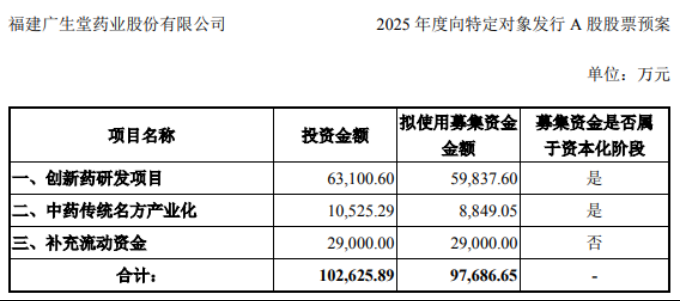
Core Viewpoint - The recent favorable policies have ignited interest in innovative drugs, leading to a surge in Guangshengtang's stock price, despite the company facing four consecutive years of net losses from 2021 to 2024 [1][7]. Fundraising and Investment Plans - Guangshengtang has announced a fundraising plan of 977 million yuan, with over 60% allocated to the development of two innovative hepatitis B drugs [1][2]. - The company plans to invest 598 million yuan in innovative drug research and development, with a total project investment of 631 million yuan [2][3]. - The fundraising will also allocate 884.9 million yuan for traditional Chinese medicine industrialization and 290 million yuan for working capital [2][3]. Clinical Trials and Drug Development - The innovative drug projects include clinical trials for GST-HG141 and GST-HG131, both targeting chronic hepatitis B treatment, with no competing products registered [3][8]. - GST-HG141 has been included in the breakthrough therapy list by CDE, while GST-HG131 is part of a pilot project for optimizing clinical trial reviews [3][8]. Financial Performance and Challenges - Guangshengtang's financial performance has been declining, with revenues of approximately 370 million yuan, 386 million yuan, 423 million yuan, and 441 million yuan from 2021 to 2024, while net losses were 35 million yuan, 127 million yuan, 349 million yuan, and 156 million yuan respectively [7]. - The company attributes its losses to the transition from generic to innovative drugs, ongoing R&D investments, and the impact of national drug procurement policies [7][8]. Previous Fundraising Issues - Previous fundraising efforts in 2020 and 2023 faced challenges, with projects either underperforming or being terminated due to economic viability concerns [9][10]. - The 2020 fundraising for a raw material drug production base did not yield expected results, leading to a significant loss of investment [9][10]. Regulatory Scrutiny - Regulatory authorities have requested explanations regarding the background of Guangshengtang's 2023 capital increase and whether it involves "hidden debt" scenarios [4][6]. - The company has defended its position, stating that the investment is purely equity-based and not a form of disguised debt [6].