
万隆精神

Search documents
构建新型合作框架,媒体称赞“意义非凡”,三方峰会向世界提供“亚洲方案”
Huan Qiu Shi Bao· 2025-05-25 23:00
Core Points - The article discusses the upcoming ASEAN-China-GCC summit in Malaysia, highlighting China's commitment to enhancing cooperation with ASEAN and GCC countries for mutual benefits and regional stability [1][5][6] - Chinese Premier Li Qiang's visit to Indonesia emphasizes strengthening bilateral relations and strategic cooperation, particularly in areas like trade, investment, and infrastructure development [1][4][6] Group 1: ASEAN-China-GCC Summit - The summit is expected to enhance cooperation in trade, investment, security, political dialogue, education, and energy among the three parties [5] - The summit represents a shift towards a new cooperation framework that integrates ASEAN's resources, China's industrial capabilities, and GCC's capital advantages [6] - Malaysia's Prime Minister Anwar suggests establishing multi-national projects and a fund to facilitate collaboration during the summit [6] Group 2: Bilateral Relations with Indonesia - Li Qiang's discussions with Indonesian President Prabowo focus on deepening strategic partnerships and enhancing cooperation in various sectors, including high-quality Belt and Road initiatives [1][4] - Both countries aim to strengthen market connectivity and industry collaboration, particularly in finance, renewable energy, digital economy, and artificial intelligence [1][4] - The visit marks the 75th anniversary of diplomatic relations between China and Indonesia, highlighting the importance of this partnership in addressing global challenges [3][4] Group 3: Global Economic Context - The article notes the rising unilateralism and protectionism globally, which poses challenges to international trade and economic order [3] - Both China and Indonesia express a commitment to multilateralism and free trade, aiming to promote a more inclusive and equitable global economy [3][4] - The changing global power dynamics are leading countries to seek alternative partnerships, with China being viewed as an attractive collaborator compared to traditional Western powers [8]

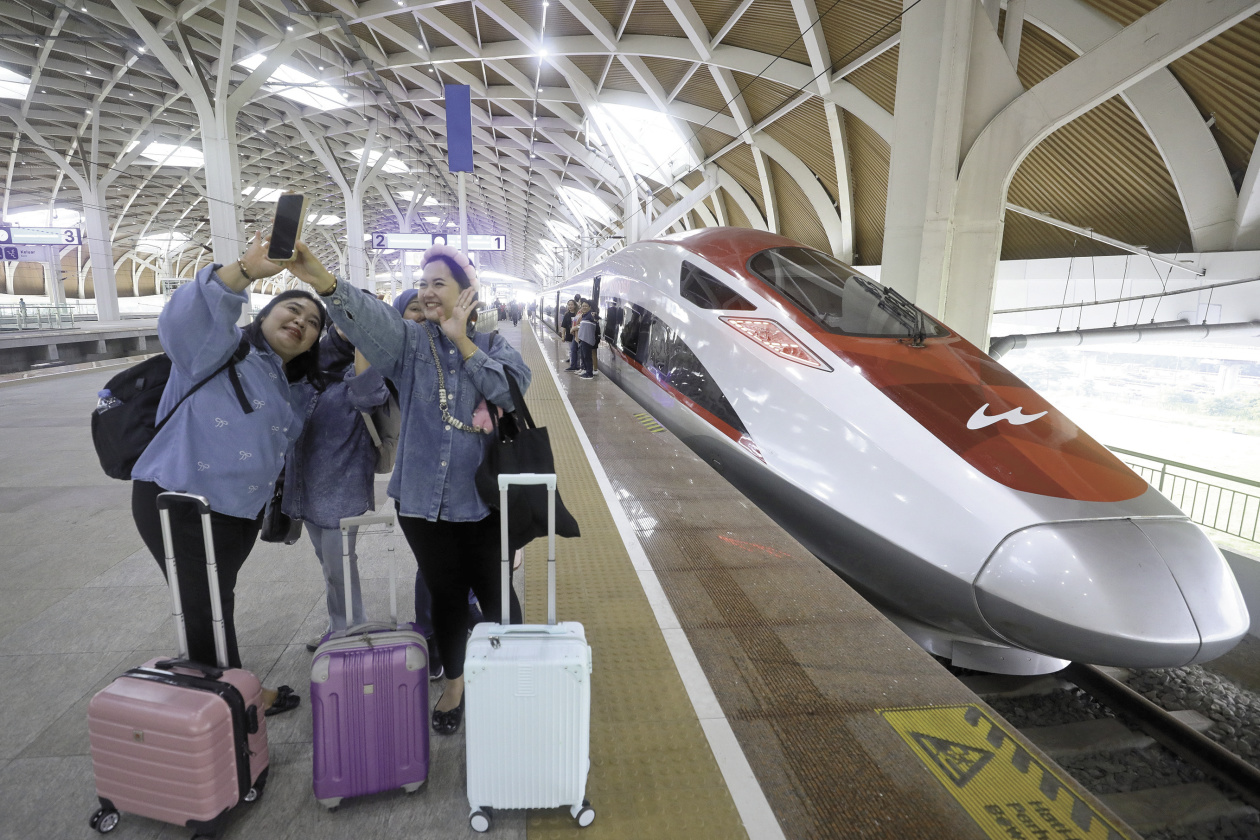
李强同印度尼西亚总统普拉博沃会谈
news flash· 2025-05-25 08:21
Core Points - The meeting between Chinese Premier Li Qiang and Indonesian President Prabowo focused on enhancing strategic cooperation and high-quality Belt and Road Initiative projects, particularly the Jakarta-Bandung High-Speed Railway [1] - Both sides aim to strengthen market connectivity and industrial collaboration, improving trade and investment facilitation, and expanding cooperation in finance, new energy, digital economy, artificial intelligence, aerospace, and marine sectors [1] - The leaders emphasized the importance of cultural exchanges and cooperation in agriculture, poverty alleviation, and health to benefit the people of both nations [1] - Li Qiang highlighted the rising unilateralism and protectionism globally, advocating for unity and cooperation as the correct approach to face challenges [1] Agreements and Collaborations - Following the talks, both parties witnessed the signing of cooperation documents in economic development policies, supply chain, and finance [2]
李强同印尼总统普拉博沃共同出席中国-印尼工商界晚宴并致辞
证监会发布· 2025-05-25 06:07
Core Views - The article emphasizes the significance of the Bandung Spirit in fostering cooperation and unity among developing countries, particularly in the context of the current global challenges such as unilateralism and protectionism [1][2]. Group 1: Economic Cooperation - China and Indonesia have been enhancing their comprehensive and pragmatic cooperation, leading to increased bilateral trade and rapid growth in mutual investments [1][2]. - The Chinese government is implementing strategies to expand domestic demand and boost consumption, which is expected to release significant market potential [2]. - There is a focus on technological innovation in China, with advancements in AI, robotics, and biomedicine creating new opportunities for investment and collaboration [2]. Group 2: Strategic Partnership - Indonesia views its relationship with China as one of the most strategic and promising bilateral relationships of the 21st century, with a commitment to strengthen cooperation in various fields including trade, green economy, and education [3]. - Both countries aim to promote mutual benefits and maintain regional peace and stability, emphasizing the importance of the Bandung Spirit in their diplomatic relations [3]. Group 3: Cultural and Historical Significance - The year marks the 75th anniversary of diplomatic relations between China and Indonesia and the 70th anniversary of the Bandung Conference, highlighting the historical context of their cooperation [1][4]. - Leaders from both nations participated in exhibitions showcasing the achievements of China-Indonesia economic cooperation and the significance of the Bandung Conference [4].
传承胞波情谊 捍卫人间正道
人民网-国际频道 原创稿· 2025-05-22 08:31
Core Points - The meeting between Chinese President Xi Jinping and Myanmar leader Min Aung Hlaing emphasizes the commitment to uphold the UN-centered international system and international law, reflecting a shared stance against colonialism and hegemony among developing countries [1][5] - The historical ties between China and Myanmar are highlighted, particularly their joint efforts during World War II against foreign invasions, showcasing a deep-rooted friendship and cooperation [2][5] - The two countries have a history of promoting peace and cooperation, with Myanmar being one of the first countries to recognize the People's Republic of China and to resolve border issues peacefully [3][5] - Myanmar's support for China during its restoration of UN rights in 1971 is noted, illustrating the mutual support on the international stage [4] - The current era of cooperation is marked by a commitment to mutual assistance in times of crisis, such as natural disasters and the COVID-19 pandemic, reinforcing the notion of a shared destiny [5] Summary by Sections Historical Context - The historical memory of resistance against foreign invasion and the fight for national independence is a significant aspect of China-Myanmar relations, particularly during World War II [2] - The construction of the Burma Road during the war symbolizes the cooperation and sacrifices made by both nations [2] Diplomatic Relations - Myanmar was one of the first countries to recognize the new China and played a crucial role in promoting the principles of peaceful coexistence and non-alignment among developing nations [3] - The Bandung Conference in 1955 marked a significant moment for developing countries, advocating for unity and cooperation against colonialism [3] International Support - Myanmar's support for China's UN representation in 1971 is a key example of their diplomatic solidarity, with Myanmar's then-foreign minister playing a pivotal role [4] - China has actively participated in international affairs to protect the rights of developing countries, including Myanmar, since regaining its UN seat [4] Current Cooperation - The relationship has evolved into a comprehensive strategic partnership, with both countries supporting each other in various crises, including natural disasters and health emergencies [5] - The commitment to uphold the principles of peaceful coexistence and to advocate for the interests of developing countries is emphasized as both nations face global challenges [5]
王毅会见印尼国家经济委员会主席卢胡特
news flash· 2025-05-20 08:25
Core Viewpoint - The meeting between Wang Yi and Luhut emphasizes the need for China and Indonesia to strengthen cooperation and resist unilateralism and trade bullying in the face of global challenges [1] Group 1: Bilateral Relations - Wang Yi highlighted the importance of adhering to the original intention of establishing diplomatic relations and maintaining independence and autonomy in cooperation with Indonesia [1] - China congratulated Indonesia on becoming a formal member of BRICS, indicating a strengthening of ties and mutual support in international platforms [1] Group 2: Regional Stability and Cooperation - The discussion focused on promoting the Bandung spirit of unity and cooperation to maintain peace and stability in the Asia-Pacific region [1] - There is a commitment to advancing regional economic integration and building a shared community in the Asia-Pacific, which reflects a strategic partnership between China and Indonesia [1]
赋予万隆精神新的时代内涵(国际论坛)
Ren Min Ri Bao· 2025-05-16 22:01
Core Viewpoint - The commemoration of the 70th anniversary of the Bandung Conference serves as an important opportunity for Asian and African countries to further inspire unity and cooperation among themselves [1][2]. Group 1: Historical Significance - The Bandung Conference is recognized as a significant milestone in world history, where unity led to freedom, and it continues to guide developing countries in mutual support and cooperation [1]. - China's contributions to the Bandung Conference, particularly through Premier Zhou Enlai's diplomatic efforts, were crucial in promoting dialogue and cooperation among nations [1]. Group 2: Current Global Context - The current global landscape is fraught with challenges such as war, refugee crises, poverty, and food shortages, highlighting the need for enhanced dialogue and cooperation among global South countries [2]. - The principles established at the Bandung Conference, including peaceful coexistence and non-interference, remain relevant in addressing contemporary issues and promoting a fair international order [2]. Group 3: China's Role and Initiatives - China is portrayed as a proactive advocate of the Bandung spirit and a key player in maintaining peace, exemplified by its role in facilitating reconciliation among Palestinian factions [3]. - The cooperation between China and Indonesia under the Belt and Road Initiative, particularly the Jakarta-Bandung High-Speed Railway, showcases the practical application of the Bandung spirit in enhancing infrastructure and connectivity [3]. Group 4: Future Implications - The Bandung spirit is emphasized as a timeless principle that should be inherited and promoted by the younger generation of global South countries to contribute to a just and equitable international order [3].
习近平会见缅甸领导人敏昂莱
证监会发布· 2025-05-10 03:52
Group 1 - The core viewpoint emphasizes the strong bilateral relationship between China and Myanmar, highlighting their shared destiny and mutual support [3][4] - China aims to deepen the construction of a community of shared destiny with Myanmar, focusing on high-quality cooperation under the Belt and Road Initiative and various global initiatives [3] - Following a recent earthquake in Myanmar, China provided immediate humanitarian assistance and expressed a commitment to support Myanmar's reconstruction efforts [3][4] Group 2 - Myanmar's leadership expressed gratitude for China's timely assistance during the earthquake disaster, reflecting the deep friendship between the two nations [4] - Myanmar is committed to enhancing cooperation with China in trade, energy, and ensuring the safety of Chinese projects and personnel in Myanmar [4] - Both countries are keen to work together to address common challenges and uphold the principles of international law and the rights of developing countries [3][4]

东西问|苏长和:为何今天依然要继承、弘扬和践行万隆精神?
Zhong Guo Xin Wen Wang· 2025-05-05 02:43
Core Viewpoint - The article emphasizes the importance of inheriting, promoting, and practicing the "Bandung Spirit" in today's international relations, especially for developing countries, as a response to current global challenges [3][12]. Group 1: Historical Significance of the Bandung Conference - The Bandung Conference, held 70 years ago, was a significant event where leaders from 29 Asian and African countries gathered to form the "Bandung Spirit," centered on "unity, friendship, and cooperation" [3][4]. - The conference marked the beginning of a new era in international relations for developing countries, providing a framework for their political awakening and the decolonization movement [8][10]. Group 2: Current Relevance of the Bandung Spirit - The "Bandung Spirit" remains relevant today as it encourages developing countries to foster new political awareness and actions aimed at building a new type of international relations based on mutual assistance and peaceful development [10][12]. - The article highlights that the world is at a crossroads again, and the principles of the Bandung Spirit can guide nations in navigating contemporary challenges, promoting dialogue over confrontation [12][13]. Group 3: The Role of China - China is portrayed as a loyal inheritor and promoter of the Bandung Spirit, advocating for peaceful development and mutual respect in international relations [13]. - The current positive development of China's relationships with neighboring countries is seen as a reflection of its commitment to the Bandung Spirit [13].


中国—拉共体合作辉映万隆精神
Jing Ji Ri Bao· 2025-05-02 22:09
Core Viewpoint - The rise of the "Global South," including China and Latin American and Caribbean countries, is becoming a driving force for globalization, guided by the Bandung Spirit and its ten principles, with China playing a key role in promoting cooperation between China and Latin America [1][2]. Group 1: Historical Context and Significance - The Bandung Conference in 1955 marked the first collective voice of developing countries for global governance reform, advocating for a more just international order [2]. - By the end of 2024, the contribution of Global South countries to world economic growth is projected to reach 80%, with their share of global GDP exceeding 40% [2]. - The upcoming ninth summit of the Community of Latin American and Caribbean States (CELAC) in April 2025 will honor the Bandung Conference, reflecting the enduring relevance of its principles [3]. Group 2: Mechanisms of Cooperation - CELAC serves as a platform for regional countries to strengthen collaboration and address global challenges, with its development over 14 years demonstrating the continuity of the Bandung Spirit [3]. - The ninth summit will release the Tegucigalpa Declaration, reaffirming the Global South's commitment to anti-hegemony and mutual respect in international relations [3]. Group 3: China-Latin America Relations - The China-CELAC Forum, established in 2015, has become a vital platform for enhancing political trust and cooperation between China and Latin America, resulting in thousands of cooperation agreements over the past decade [4][5]. - China aims to provide stable expectations for CELAC countries, with a long-term trade target of $500 billion set during the first ministerial meeting [5]. - China emphasizes mutual respect and non-interference in domestic affairs while providing "patient capital" to help Latin America balance debt and development [5]. Group 4: Infrastructure and Connectivity - China's cooperation with CELAC focuses on infrastructure projects, addressing the region's connectivity challenges, with significant projects like the Chancay Port in Peru enhancing links between Latin America and the Asia-Pacific [5]. - Planned railway projects are expected to boost internal connectivity within Latin America, contributing to regional economic integration [5]. Group 5: Future Prospects - The fourth ministerial meeting of the China-CELAC Forum, coinciding with the 70th anniversary of the Bandung Conference, is anticipated to strengthen cooperation and provide stability in a turbulent world [6].
“万隆精神无论何时都不会过时”
Ren Min Ri Bao· 2025-05-02 22:01
Core Viewpoint - The 70th anniversary of the Bandung Conference is commemorated through a thematic photo exhibition in Jakarta, highlighting the spirit of unity, friendship, and cooperation among developing countries, as exemplified by Premier Zhou Enlai's role during the conference [1][2]. Group 1: Historical Significance - The Bandung Conference was the first large-scale international meeting of Asian and African countries without colonial powers, focusing on the interests of the peoples of these regions [2]. - Zhou Enlai led the Chinese delegation to overcome Western obstacles and misunderstandings among participating countries, resulting in the establishment of ten principles of the Bandung Conference [2]. - The conference significantly inspired developing countries in their struggles for national independence and liberation, marking the beginning of South-South cooperation and the non-aligned movement [2]. Group 2: Legacy and Modern Relevance - The spirit of Bandung continues to resonate today, emphasizing dialogue over confrontation and cooperation over zero-sum games as pathways to mutual understanding and progress [3]. - The years 2024 and 2025 are designated as the China-ASEAN Cultural Exchange Years, reflecting the continuation and transmission of the Bandung spirit in the modern era [3]. - Ongoing cooperation between China and ASEAN in trade, infrastructure, education, and culture is expected to deepen, further solidifying friendship and promoting the construction of a China-ASEAN community of shared destiny [3].