
以赛促研

Search documents
世界人形机器人运动会现场观察:以赛事推动技术提升 以竞技加速产业进程
Zhong Guo Zheng Quan Bao· 2025-08-17 23:51
Core Insights - The 2025 World Humanoid Robot Games showcased advancements in humanoid robotics, with 280 teams and over 500 robots competing in various events, highlighting the progress towards commercialization of humanoid robots [1][6] Group 1: Performance Highlights - Yushu G1 humanoid robot won the gold medal in the 100-meter obstacle race with a time of 33.71 seconds, showcasing significant speed improvements [2] - Yushu H1 achieved speeds of 3.8 m/s and 4.5 m/s in the 1500m and 400m races respectively, indicating advancements in robotic speed compared to previous competitions [2] - The Xingdong L7 robot won the high jump event with a height of 0.95 meters, demonstrating complex dynamic control and high precision in robotics [2] Group 2: Commercialization and Market Potential - The event served as a platform for companies to demonstrate their technological capabilities, with a focus on practical applications in various sectors such as education and retail [3][5] - The Beijing Humanoid Robot Innovation Center's Tianyi 2.0 robot excelled in material sorting tasks, showcasing its autonomous capabilities and precision, which are crucial for real-world applications [4][5] - The market for humanoid robots in China is projected to reach nearly 38 billion yuan by 2030, with sales expected to increase to 271,200 units, indicating significant growth potential [6][7] Group 3: Industry Collaboration and Development - The competition fostered collaboration among various stakeholders, including universities and leading companies, to accelerate the transition from research to commercial products [6][7] - The integration of AI technologies and advancements in the electric vehicle supply chain are expected to support the development of humanoid robots, making them more accessible to consumers [7]

以赛事推动技术提升 以竞技加速产业进程
Zhong Guo Zheng Quan Bao· 2025-08-17 20:07
Core Insights - The 2025 World Humanoid Robot Games showcased advancements in humanoid robotics, with 280 teams and over 500 robots competing in various events, highlighting the progress towards commercialization of humanoid robots [1][6] - UTree Technology's G1 robot won the 100-meter obstacle race, demonstrating significant improvements in speed and agility [1][2] - The event served as a platform for companies to demonstrate their technological capabilities and foster collaboration within the industry [3][6] Group 1: Performance Highlights - UTree's H1 robot achieved speeds of 3.8 m/s and 4.5 m/s in the 1500m and 400m races, respectively, indicating a notable increase in performance compared to previous competitions [2] - The Star Motion L7 robot won the high jump event with a height of 0.95 meters, showcasing advanced dynamic control and sensor precision [2] - The "Little Rascal" robot from Songyan Power excelled in the gymnastics event, winning with a score of 41.60, emphasizing the competitive nature of the event [3] Group 2: Technological Advancements - The Tianyi 2.0 robot from the Beijing Humanoid Robot Innovation Center demonstrated high precision in a material sorting competition, completing tasks autonomously and efficiently [4] - The Galbot team won the medical sorting competition with a score of 336, showcasing the robot's ability to autonomously identify and sort medications [4][5] - Continuous data collection from real-world applications is enhancing the intelligence of robots, leading to iterative improvements in hardware and software [5] Group 3: Industry Implications - The event is seen as a catalyst for the humanoid robotics industry, promoting collaboration between universities, consumer manufacturers, and leading companies [6][7] - The market for humanoid robots in China is projected to reach nearly 38 billion yuan by 2030, with sales expected to increase to 271,200 units [6] - The integration of AI advancements and the electric vehicle supply chain is expected to drive the development of humanoid robots, making them more accessible to consumers [7]
极限赛场数据反哺用户 长城环塔夺冠背后的技术逻辑
Zhong Guo Jing Ying Bao· 2025-06-07 06:28
Core Viewpoint - Great Wall Motors has successfully participated in the challenging Rally of the Silk Road, achieving top positions in both fuel and new energy categories, showcasing its commitment to quality and performance in extreme conditions [1][10][19]. Group 1: Event Overview - The Rally of the Silk Road, known as Asia's largest and most difficult off-road event, spans approximately 4500 kilometers across diverse terrains including deserts, gobi, and riverbeds [3][8]. - Great Wall Motors entered the competition with its three major brands: Haval, Tank, and Great Wall Pickup, competing in the original factory production categories for diesel, gasoline, and new energy vehicles [8][19]. Group 2: Performance and Achievements - Great Wall Motors' team secured the top three positions in the T2.1 fuel category and the first place in the T2.E new energy category, demonstrating the reliability and durability of their vehicles under extreme conditions [10][21]. - The Tank Hi4 team achieved a total score of 84 points in the T2.E new energy category, outperforming competitors with scores of 58 and 44 points [10]. Group 3: Technical Insights - The rigorous conditions of the rally tested the vehicles' components, including engines and transmissions, under high temperatures and dust, ensuring that the vehicles sold to consumers have been validated in extreme environments [10][21]. - The technology transfer from the racing environment to mass production is a key strategy for Great Wall Motors, enhancing the quality of their vehicles through real-world data and experiences gained from the rally [7][23]. Group 4: Company Philosophy and Future Directions - Great Wall Motors emphasizes the importance of safety and reliability in vehicle manufacturing, adhering to high-quality standards throughout the development process [21]. - The company aims to leverage the data and experiences from the rally to continuously improve its vehicle offerings, reinforcing its commitment to quality and performance [23].


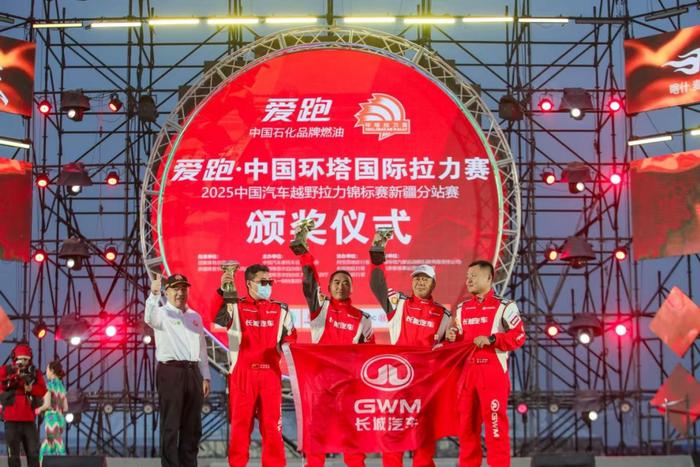
环塔赛再成车企“心头好”
Zhong Guo Qi Che Bao Wang· 2025-06-03 01:34
Core Viewpoint - The 2025 China Rally Championship (referred to as "Rally") has seen a significant increase in participation from domestic automotive brands, indicating a shift towards using the event as a platform for brand promotion and marketing [1][3][4]. Group 1: Participation and Competition - This year's Rally features a total distance of 5,183 kilometers, attracting nearly 130 teams, including 105 cars (with 10 electric vehicle teams) and 23 motorcycles, totaling 233 participants [3]. - Major domestic manufacturers, including Chery and Great Wall Motors, are actively participating, with Chery's upgraded model leading in the T1.1 category as of May 25 [3][4]. Group 2: Technological Testing and Development - The Rally is recognized as "Asia's toughest event," with 65% of the course through desert terrain, providing a rigorous testing ground for automotive technology and product performance [5][6]. - The extreme conditions of the Rally allow manufacturers to collect valuable data on vehicle performance, which can be used to optimize mass-produced models, enhancing their competitiveness in the market [6][7]. Group 3: Brand Building and Market Strategy - Participation in the Rally serves as a platform for manufacturers to enhance their brand image and consumer trust by demonstrating product reliability under extreme conditions [7][8]. - The event is viewed as a long-term strategic investment for manufacturers, aiming to improve product quality and brand loyalty while also providing opportunities for international market exposure [9][10]. Group 4: Industry Trends and Future Outlook - The increasing involvement of domestic brands in the Rally reflects a growing focus on SUVs and off-road vehicles, driven by market demand and consumer preferences among younger demographics [10][11]. - Long-term participation in high-level international events like the Rally is seen as a way for manufacturers to gain technical and standard-setting authority, which is crucial for enhancing competitiveness and market share [10][11].
