哈弗

Search documents
2228亿元营收背后的逻辑:长城汽车用“求真求实”打破行业价格战魔咒
证券时报· 2026-03-28 07:49
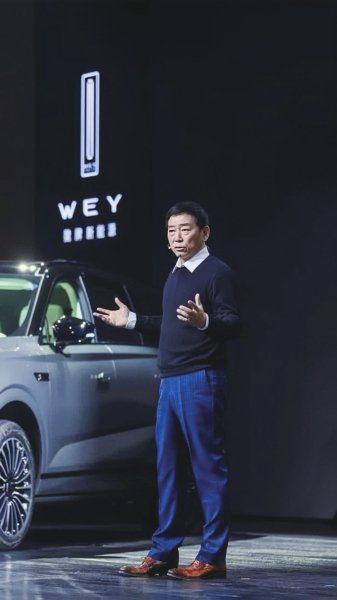
Core Viewpoint - 2025 is a pivotal year for Great Wall Motors' high-end strategy, marking a transition from "quantitative change" to "qualitative change" [1] Group 1: Financial Performance - Great Wall Motors achieved a revenue of 222.824 billion yuan and sales of 1.324 million vehicles in 2025, setting new records for both new energy and overseas sales [1] - The sales of vehicles priced above 200,000 yuan reached 534,000 units, increasing from 35% to 41% of total sales; the average vehicle price surpassed 200,000 yuan for the first time, reaching 201,300 yuan [3] - The average revenue per vehicle increased by approximately 4,500 yuan year-on-year to 168,300 yuan, indicating a shift from volume-driven growth to value-driven growth [3] Group 2: Strategic Transition - The growth structure is undergoing a qualitative change, moving from "addition" through more models and channels to "multiplication" with a higher proportion of high-value models [3] - The sales of the WEY brand increased by 86.29% year-on-year, and the Tank SUV maintained its leading position in the rugged off-road market, showcasing the effectiveness of the dual-driven model of direct sales and technological leadership [7] Group 3: Operational Health - Great Wall Motors reduced its asset-liability ratio by 2.73 percentage points, with a net cash flow from operating activities of approximately 40.4 billion yuan, reflecting a healthy financial status [5] Group 4: Brand and Customer Relations - The number of WEY brand direct sales stores exceeded 500, enhancing the relationship between the brand and users, and improving service transparency and efficiency [7] - Great Wall Motors received the "Benchmark Brand for After-Sales Service" award for the eighth time, indicating strong customer trust as a foundation for brand elevation [8] Group 5: Commitment to Quality and Technology - The company emphasizes "truth and realism" as the fundamental logic for growth, with a focus on building credibility and consumer trust [9][10] - Great Wall Motors has invested heavily in R&D, with a team of 23,000 engineers and leading the industry in new energy vehicle patent authorizations for five consecutive years [12] Group 6: Global Expansion - The company is deepening its globalization process, transitioning from product output to system and standard output, with the inauguration of its factory in Brazil marking a milestone [14] - The export structure is evolving, with high-value models being launched in over 30 countries, contributing to a total overseas sales volume of over 2 million vehicles [16]


年销售费用超百亿元!长城汽车净利大跌22%
Shen Zhen Shang Bao· 2026-03-27 15:37
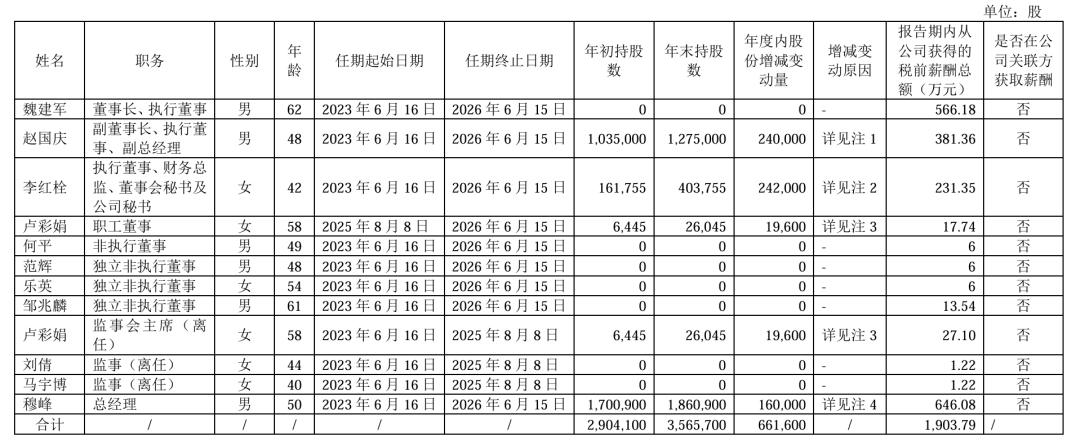
Core Viewpoint - Great Wall Motors reported a revenue of 222.82 billion yuan for 2025, marking a year-on-year increase of 10.20%, while net profit attributable to shareholders decreased by 22.07% to 9.87 billion yuan [1] Financial Performance - Revenue for 2025 reached 222.82 billion yuan, up 10.20% year-on-year [1] - Net profit attributable to shareholders was 9.87 billion yuan, down 22.07% year-on-year [1] - Non-recurring net profit decreased by 37.5% to 6.06 billion yuan [1] - Accounts receivable stood at 9.60 billion yuan, an increase of 31.98% [1] - The asset-liability ratio was 60.99%, down 4.29% year-on-year [1] Cost Structure - Sales expenses surged by 43.93% to 11.27 billion yuan, attributed to the acceleration of new channel models and increased marketing for new models and technologies [1] - R&D expenses rose by 12.13% to 10.43 billion yuan [1] - Management expenses slightly decreased by 0.83% to 4.75 billion yuan [1] Executive Compensation - Total compensation for directors and senior management was 19.04 million yuan (pre-tax), an increase from 18.01 million yuan in 2024 [1] - Key executives, including the Vice Chairman and CFO, received salary increases [1] Sales Performance - Total vehicle sales for 2025 increased by 7.33% to 1.32 million units [2] - Sales by brand showed growth for Haval, WEY, Great Wall Pickup, and Tank brands, while sales for the Ora brand decreased by 23.68% to 48,300 units [2] Brand Strategy - The Ora brand has completed a strategic transformation, shifting from a focus on "refined women" to targeting "global young urban dwellers," expanding from a pure electric brand to a full-power coverage brand [3] Market Performance - As of March 27, Great Wall Motors' A-shares rose by 0.72% to 20.88 yuan per share, with a total market capitalization of 178.7 billion yuan [4] - The company's Hong Kong shares increased by 0.48% to 12.48 HKD per share, with a market capitalization of 106.8 billion HKD [4]
美国关税砸遍的废墟上,站着中国车企
虎嗅APP· 2026-03-21 02:48
Core Viewpoint - The article discusses the evolving dynamics in the global automotive industry, particularly how Chinese automakers are adapting to new trade realities and exploring collaborative models to enhance their international presence [3][21]. Group 1: Trade Dynamics and Challenges - The imposition of tariffs by the U.S. has significantly impacted the profitability of foreign manufacturing plants, such as Mercedes-Benz's East London factory in South Africa, which has faced existential threats due to increased tariffs on imports [5][6]. - South Africa's automotive production has declined sharply, with only 560,000 vehicles produced last year, a nearly 40% drop from peak levels, leading to a reliance on imports from countries like China and India [6][10]. - The South African government has raised tariffs on imported vehicles from China and India, with rates increasing from 25% to 50%, further complicating the local automotive market [6]. Group 2: Strategic Shifts in Automotive Manufacturing - Mercedes-Benz's East London factory has been upgraded with a €600 million investment, positioning it as a potential hub for multiple brands and battery recycling, reflecting a shift towards flexible manufacturing [7][8]. - Chinese automakers, such as Great Wall Motors, are transitioning from merely exporting products to integrating global production capabilities, seeking optimal solutions for cost and capacity [10][21]. - The article highlights the trend of Chinese companies exploring partnerships with traditional automakers to utilize idle production capacities, as seen in collaborations between Jaguar Land Rover and Chery, and between Geely and Renault in Brazil [13][17]. Group 3: Technological Collaboration and Innovation - The collaboration between Volkswagen and Xpeng to develop new electric vehicles signifies a shift towards technology sharing and innovation, with a focus on integrating advanced engineering from both parties [14]. - The partnership between Leap Motor and Stellantis aims to leverage Leap Motor's electric vehicle technology for use in Stellantis's European brands, marking a significant step in cross-border technological collaboration [17]. - The article emphasizes that the concept of "Manufacturing as a Service" is becoming a reality in the automotive sector, similar to trends seen in the electronics industry, where brand identity is less tied to manufacturing capabilities [18][21].


长城汽车:2月海外表现亮眼,销量占比近60%-20260311
Changjiang Securities· 2026-03-11 02:45
Investment Rating - The investment rating for Great Wall Motors is "Buy" and is maintained [5]. Core Views - In February 2026, Great Wall Motors sold 73,000 vehicles, a year-on-year decrease of 6.8% and a month-on-month decrease of 19.6%. Export sales accounted for 58.8% of total sales, with 43,000 vehicles exported. New energy vehicle sales reached 13,000 units, representing 21.0% of total sales [1][9]. - The company is accelerating its global expansion and is committed to transitioning to new energy vehicles. The ongoing new vehicle cycle is expected to drive improvements in sales and performance. Long-term strategies are anticipated to open up growth opportunities, while the shift towards smart technology is expected to enhance profitability across the entire industry chain [1][9]. Summary by Sections Sales Performance - In January and February 2026, total sales reached 163,000 vehicles, a slight year-on-year increase of 2.6%. New energy vehicle sales totaled 31,000 units, a year-on-year decrease of 17.7% [9]. - In February, the breakdown of sales by brand included Haval at 94,173 units (+2.5% YoY), Tank at 24,541 units (-0.3% YoY), WEY at 13,488 units (+55.9% YoY), Ora at 3,320 units (-18.8% YoY), and Great Wall pickups at 27,361 units (-7.5% YoY) [9]. Global Expansion - In February, Great Wall achieved overseas sales of 42,675 units, a year-on-year increase of 37.4% and a month-on-month increase of 6.0%. The overseas sales accounted for 58.8% of total sales, marking an increase of 18.9 percentage points year-on-year [9]. - The company has implemented the "ONE GWM" strategy to accelerate its international presence, covering over 170 countries and regions with more than 1,400 overseas sales channels [9]. Strategic Initiatives - Great Wall is focusing on product, channel, and supply chain adjustments domestically, emphasizing the new energy transition and launching multiple new models across its brands [9]. - The company is investing in smart technology, enhancing its capabilities in data, algorithms, and computing power, which are expected to strengthen its competitive position in the smart vehicle market [9]. Financial Projections - The projected net profits for Great Wall Motors from 2025 to 2027 are 9.91 billion, 14.20 billion, and 17.40 billion yuan, respectively. The corresponding A-share price-to-earnings ratios are expected to be 17.4X, 12.2X, and 9.9X [9].
长城汽车(601633):点评:2月海外表现亮眼,销量占比近60%
Changjiang Securities· 2026-03-10 13:14
Investment Rating - The investment rating for the company is "Buy" and is maintained [7] Core Views - In February 2026, the company sold 73,000 vehicles, a year-on-year decrease of 6.8% and a month-on-month decrease of 19.6%. Among these, export sales reached 43,000 vehicles, accounting for 58.8% of total sales. New energy vehicle sales were 13,000 units, representing 21.0% of total sales [2][10] - The company is accelerating its global expansion and is committed to transitioning to new energy vehicles. The ongoing new vehicle cycle is expected to drive improvements in sales and performance. Long-term strategies are set to open up growth opportunities for sales, while the shift towards smart technology is expected to enhance profitability across the entire industry chain [2][10] Summary by Relevant Sections Sales Performance - In January and February 2026, total sales reached 163,000 vehicles, showing a slight year-on-year increase. In February alone, total sales were 73,000 vehicles, with new energy vehicle sales at 13,000 units, down 15.7% year-on-year [10] - The company’s brands showed varied performance: Haval brand sold 94,173 vehicles (+2.5% YoY), Tank brand 24,541 vehicles (-0.3% YoY), WEY brand 13,488 vehicles (+55.9% YoY), Ora brand 3,320 vehicles (-18.8% YoY), and pickup trucks 27,361 vehicles (-7.5% YoY) [10] Global Expansion - In February, the company achieved overseas sales of 42,675 vehicles, a year-on-year increase of 37.4% and a month-on-month increase of 6.0%, with overseas sales accounting for 58.8% of total sales [10] - The company’s "ONE GWM" strategy is accelerating its international presence, covering over 170 countries and regions, with more than 1,400 overseas sales channels established [10] Future Outlook - The company is focusing on product, channel, and supply chain adjustments domestically, with a strong emphasis on new energy vehicle development. The introduction of multiple new models across various brands is expected to contribute significantly to future sales growth [10] - The company is enhancing its technological capabilities in the smart vehicle sector, focusing on data, algorithms, and computing power to strengthen its competitive edge [10] - Profit forecasts for the company indicate net profits of 99.1 billion, 142.0 billion, and 174.0 billion yuan for 2025, 2026, and 2027 respectively, with corresponding A-share P/E ratios of 17.4X, 12.2X, and 9.9X [10]
研报掘金丨爱建证券:维持长城汽车\"买入\"评级,盈利弹性进入释放阶段
Ge Long Hui· 2026-03-03 07:10
Core Viewpoint - Great Wall Motors experienced a decline in February 2026 sales, with a total of 72,594 vehicles sold, representing a year-on-year decrease of 6.79% and a month-on-month decrease of 19.61% [1] Sales and Production Summary - February production was recorded at 64,811 vehicles, showing a year-on-year decline of 13.42% [1] - The month-on-month sales drop is attributed to the reduced working days during the Spring Festival holiday and seasonal fluctuations in market demand [1] Brand Performance Summary - Haval's sales remain stable, while the premium brand Wey has made significant breakthroughs [1] - The Tank brand faces short-term pressure due to intensified competition in the off-road segment [1] - Ora is undergoing a transformation, but the pickup segment maintains its leading position [1] Overseas Sales Summary - Overseas sales in February reached 42,675 vehicles, marking a year-on-year increase of 37.36%, with a cumulative total of 82,953 vehicles sold in January and February [1] - The company is enhancing its influence in markets like Brazil and Australia through sports event marketing, continuing its ecological overseas strategy [1] Profitability Outlook - With the rollout of new platform models, improved efficiency in direct sales channels, and an increase in the proportion of high-value overseas models, the company is expected to achieve scale effects and improve per-vehicle profitability, entering a phase of profit elasticity release [1] - The investment rating is maintained at "Buy" [1]
研报掘金丨爱建证券:维持长城汽车"买入"评级,盈利弹性进入释放阶段
Ge Long Hui A P P· 2026-03-02 08:48
Core Viewpoint - Great Wall Motors experienced a decline in February 2026 sales, with a total of 72,594 vehicles sold, representing a year-on-year decrease of 6.79% and a month-on-month decrease of 19.61% [1] Sales and Production Summary - February production was recorded at 64,811 vehicles, showing a year-on-year decline of 13.42% [1] - The month-on-month sales drop is attributed to the reduced working days during the Spring Festival holiday and seasonal fluctuations in market demand [1] Brand Performance Summary - Haval's sales remain stable, while the premium brand Wey has shown significant breakthroughs [1] - The Tank brand faces short-term pressure due to intensified competition in the off-road segment [1] - Ora is undergoing a transformation, while the pickup truck segment maintains its leading position [1] Overseas Sales and Strategy Summary - Overseas sales reached 42,675 vehicles in February, marking a year-on-year increase of 37.36%, with a cumulative total of 82,953 vehicles sold in January and February [1] - The company is enhancing its influence in markets like Brazil and Australia through sports event marketing, continuing its ecological overseas strategy [1] Profitability and Future Outlook Summary - With the rollout of new platform models, improved efficiency in direct sales channels, and an increase in the proportion of high-value overseas models, the company is expected to achieve scale effects and improved profitability per vehicle [1] - The profitability elasticity is entering a release phase, indicating potential for future growth [1] - The company maintains a "Buy" rating [1]
海外市场成车企销量关键支撑
Jin Rong Shi Bao· 2026-02-05 02:31
Core Insights - In January 2026, the Chinese automotive market entered a traditional off-season, with new energy vehicle (NEV) companies facing significant sales pressure and a reshuffling of the sales rankings [1][2] New Energy Vehicle Sales Dynamics - Hongmeng Zhixing topped the new energy vehicle sales in January with 57,915 units delivered, marking a 65.6% year-on-year increase [2] - Xiaomi Auto delivered over 39,000 units, with a focus on the YU7 model as the initial SU7 model has been phased out [2] - Leap Motor delivered 32,059 units, a 27% year-on-year increase, but showed a notable month-on-month decline [2] - Li Auto's deliveries were 27,668 units, experiencing both year-on-year and month-on-month declines due to delays in the i6 model's delivery [3] - NIO delivered 27,182 units, a 96.1% year-on-year increase, with the new ES8 model performing exceptionally well [3] - XPeng Motors delivered 20,011 units, facing declines as it is in a product iteration phase [3] Traditional Automakers' Performance - BYD achieved total NEV sales of 210,051 units in January, with exports reaching 100,482 units, a 51.47% year-on-year increase [4] - Chery Group exported 119,605 vehicles, a 48.1% year-on-year increase, maintaining its position as a leading exporter [4] - SAIC Group sold 327,413 vehicles, a 23.9% year-on-year increase, with a significant rise in overseas sales [4] - Geely's total sales reached 270,167 units, with a notable increase in exports, achieving a doubling in export numbers [4] - Great Wall Motors sold 90,312 vehicles, with overseas sales growing by 43.77% [5] Market Trends and Future Outlook - The decline in market demand is attributed to changes in the new energy vehicle purchase tax policy and the release of pent-up demand from 2025 [5] - Analysts suggest that the domestic passenger car market's growth momentum will shift towards overseas markets, with companies focusing on international expansion as a core growth strategy [5]
未知机构:国金汽车长城汽车还原后Q4业绩环比增长出口高端化加速向上-20260202
未知机构· 2026-02-02 02:05
Summary of Conference Call for Great Wall Motors Company Overview - **Company**: Great Wall Motors - **Industry**: Automotive Key Financial Metrics - **Q4 2025 Performance**: - Revenue: 69.21 billion CNY, YoY +16%, QoQ +13% [1] - Net Profit: 1.28 billion CNY, YoY -44%, QoQ -44% [1] - Non-recurring Net Profit: 680 million CNY, YoY -50%, QoQ -64% [1] - **Full Year 2025 Performance**: - Total Revenue: 222.8 billion CNY, YoY +10% [3] - Net Profit: 9.9 billion CNY, YoY -22% [3] - Non-recurring Net Profit: 6.2 billion CNY, YoY -36% [3] Sales and Market Dynamics - **Sales Performance**: - Q4 total sales: 400,000 units, YoY +5%, QoQ +13% [3] - Average Selling Price (ASP): 173,000 CNY, YoY increase of 15,000 CNY, QoQ stable [3] - **Export and High-end Model Growth**: - Q4 export volume: 172,000 units, YoY +33%, QoQ +26% [1] - High-end model sales (Tank and Wey brands): 86,000 units, YoY +22%, QoQ +18% [1] Profitability Insights - **Profit Adjustments**: - Reported profit of 1.3 billion CNY adjusted for scrappage tax and year-end bonus provisions results in operational profit of approximately 4.4 billion CNY, YoY -9%, QoQ +34% [1] - Year-end bonus provision impacts Q4 profit by approximately 3 billion CNY [1] - **Cost Structure**: - Increased costs due to new store openings (over 100 new stores) and new model launches leading to higher sales and R&D expenses [1] Future Outlook - **Product Launches and Profit Contributions**: - Continued high profitability from the Tank series, with new models expected to contribute 30,000-40,000 CNY per month in profit [1] - Anticipated profit increase from domestic sales of the Tank series, projected to exceed 2.5 billion CNY in 2026 [1] - **Export Growth Potential**: - Conservative target for 2026 export growth set at 100,000 units, with reduced reliance on Russian markets [1] - Strong performance expected in South America and Australia, with local factories ramping up production [1] - **New Model Launches**: - Over 10 new models expected under the Wey and Haval brands in 2026, projected to add over 200,000 units in sales [1] Investment Recommendations - **Valuation**: - Projected net profit for 2026: 15 billion CNY, with current A/H share valuations at 12x and 7x respectively [2] - Significant undervaluation noted, with export and high-end vehicle sales contributing over 50% of profits [2]
企业家秘籍
Zhong Guo Jing Ying Bao· 2026-01-19 12:23
Group 1 - The core idea of building a high-end brand is to represent responsibility and credibility, as seen in the naming of brands after their founders, which reflects a commitment to quality and trustworthiness [2] - A true high-end brand must possess a value proposition that resonates with users on a spiritual level, emphasizing "trust" and "safety" as key components of luxury [3] - The process of creating a high-end brand requires patience, as many new brands in China are still in their entrepreneurial stages [4] Group 2 - Wei Jianjun has been the chairman of Great Wall Motors since June 2001, overseeing the company's strategic planning and business development [5] - Under Wei's leadership, Great Wall Motors has transformed from a small local factory into a modern multinational enterprise, with a diverse portfolio of brands and products, including SUVs, sedans, and new energy vehicles, operating in over 170 countries [6] - Wei emphasizes a philosophy of specialization and continuous improvement, advocating for companies to act as "technical translators" and risk "advisors" for users [6]