
作风建设

Search documents
苏州市政协党组2025年度民主生活会暨省委巡视整改专题民主生活会召开
Su Zhou Ri Bao· 2026-02-11 22:48
会前,市政协党组成员认真学习,为开好民主生活会打牢了思想基础。会议书面通报了市政协党组 深入贯彻中央八项规定精神学习教育整改整治情况、2024年度民主生活会整改措施落实情况和本次民主 生活会征求意见情况;朱民代表市政协党组作对照检查,并带头进行个人对照检查,其他党组成员逐一 作对照检查,开诚布公地开展批评与自我批评。 朱民在总结讲话中指出,要深入学习贯彻习近平总书记关于作风建设的重要论述,推动政协作风建 设常态长效。具体要做到"四个坚持":始终坚持政治统领、铸魂强基,把牢政协工作正确政治方向;始 终坚持纠治"四风"、激浊扬清,推动作风建设向纵深发展;始终坚持实干担当、履职为民,提升专门协 商机构效能;始终坚持标本兼治、长效常治,巩固拓展作风建设成果。 市政协领导班子出席会议。 按照中央部署和省委、市委要求,昨天(2月11日),市政协党组2025年度民主生活会暨省委巡视 整改专题民主生活会召开。市政协党组书记、主席朱民主持会议并作总结讲话。 ...
破除形式主义之弊激发实干担当之力
Xin Lang Cai Jing· 2026-02-11 20:52
作风建设永远在路上,整治形式主义没有休止符。站在"十五五"规划开局的新起点,唯有始终坚持问题 导向、目标导向、结果导向相统一,把减负与增效结合起来、把纵向治理与横向共治贯通起来,持之以 恒整治形式主义顽疾,才能营造良好的干事创业氛围,有效激发干部队伍内生动力和整体活力,凝聚起 奋进新征程的磅礴力量。 形式主义不仅是基层负担的"显性砝码",更是阻滞工作潜能释放、侵蚀治理肌体的"隐性栓塞"。近年 来,全党上下锚定目标,在厘清权责边界、强化数字赋能、精简督查考核方面持续用力,让减负清风持 续吹拂基层,党的作风建设不断呈现新气象。然而,形式主义之弊,绝非止于基层之"累"。若仅仅把整 治形式主义视为卸载基层"重负",则难免失之浅表。各级机关内部、部门之间,往往是形式主义容易被 忽视的"温床"。机关间的"文来文往"若蜕变为机械流转,征求意见若流于"己圈阅"式的过场,这些看 似"内部流程"的形式主义,同样消耗精力,降低工作质效。 整治形式主义是一个系统工程,对内影响单位运转效能,对外关乎党和政府的形象、公信力。要坚持立 体纵深与全面覆盖的思维和视角,既"上下贯通"纵向发力,持续巩固为基层减负的成效,亦"左右协 同"横向扫除 ...
让守好“廉关”成为党员干部的“标配”
Xin Lang Cai Jing· 2026-02-11 06:24
Core Viewpoint - The recent public notifications by various disciplinary inspection and supervision agencies regarding violations of the Central Eight Regulations signal a strong commitment to addressing "Four Winds" issues during the critical period of the Spring Festival [1][2]. Group 1: Importance of the Spring Festival - The Spring Festival is a time for family gatherings and social interactions, which also serves as a test for the integrity and conduct of party members and officials [1]. - The emphasis on maintaining a "clean and happy year" during this festive period acts as a preventive measure against corruption, akin to giving party members a "preventive shot" [1]. Group 2: Party Discipline and Supervision - The Central Committee and State Council have issued notifications to ensure the continuation of efforts to correct "Four Winds" and promote new customs during the 2026 New Year and Spring Festival [2]. - Party members are urged to prioritize legal and disciplinary awareness, maintaining a respectful attitude towards party discipline and national laws to avoid temptations and misconduct [2][3]. Group 3: Leadership and Self-Discipline - Leaders, especially those in key positions, are expected to set an example by strictly adhering to self-discipline regulations and resisting corrupt practices [3]. - Ordinary party members must uphold their moral standards and remain unaffected by external influences, ensuring their integrity in all circumstances [3]. Group 4: Organizational Responsibilities - Party organizations are tasked with implementing strict party governance responsibilities, including pre-festival education, mid-festival supervision, and post-festival reflection [4]. - Efforts should be made to enhance awareness of integrity through various educational methods, such as warning education and communication sessions, to reinforce the importance of maintaining a clean festive atmosphere [4]. Group 5: Cultural and Ethical Implications - The concept of "nodes" as "examination points" emphasizes the need for party members to maintain a clear mindset and adhere to integrity, especially during critical periods [4]. - A commitment to integrity at every key moment is essential for fostering a positive party culture and ensuring that the festive season is filled with both familial warmth and a spirit of integrity [4].
学纪知纪明纪守纪丨风清气正过廉节
Zhong Yang Ji Wei Guo Jia Jian Wei Wang Zhan· 2026-02-11 00:06
Core Viewpoint - The article emphasizes the importance of maintaining discipline and integrity among party members, especially during the festive season, to prevent corruption and uphold a clean atmosphere [2][12]. Group 1: Key Issues During the Festive Season - Party members must be vigilant against "Four Winds" issues disguised as personal connections during the festive period [3][4]. - Common violations include accepting gifts under the guise of New Year greetings, hosting banquets without proper reporting, and engaging in inappropriate dining arrangements [4][5][8]. - The article highlights the need for strict adherence to regulations regarding gifts, dining, and travel arrangements to avoid disciplinary breaches [5][14]. Group 2: Supervision and Education Measures - The article outlines the necessity for early and effective education on discipline, including pre-festival talks and reminders to reinforce compliance among party members [6][10]. - It stresses the importance of targeted education for key individuals, particularly new and young leaders, to ensure they understand the implications of their actions [6][9]. - Continuous supervision and strict enforcement of regulations are essential to maintain a high-pressure environment against violations during the festive season [10][11]. Group 3: Promoting a Clean and Positive Atmosphere - Party members are encouraged to lead by example, demonstrating integrity and self-discipline during the holiday season [12][13]. - The article calls for a collective effort to foster a culture of honesty and simplicity, steering clear of extravagant behaviors and promoting a positive public image [12][13][17]. - It emphasizes the role of party members in addressing community concerns and ensuring public welfare during the festive period [13][16].

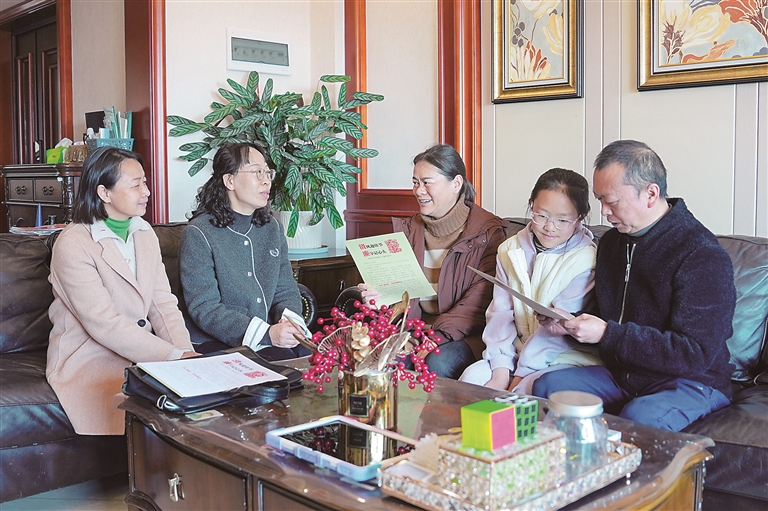
深化系统整治 夯实立德树人根基
Zhong Yang Ji Wei Guo Jia Jian Wei Wang Zhan· 2026-02-11 00:06
Core Viewpoint - The article emphasizes the importance of strict governance and integrity in higher education institutions, particularly at Anhui Medical University, to foster a positive educational environment and uphold the mission of nurturing talent for the country and the Party [1]. Group 1: Responsibility and Accountability - Anhui Medical University’s discipline inspection committee focuses on implementing the "two responsibilities" framework, ensuring that the school’s Party committee, discipline inspection, and functional departments work collaboratively to fulfill their roles [2]. - The university has identified 75 issues and developed 117 corrective measures, all of which have been completed, demonstrating a commitment to accountability [2]. - A new annual assessment method for leadership positions has been established, incorporating indicators related to ideological awareness and professional ethics into the evaluation system [2]. Group 2: Problem Rectification - The university is conducting a comprehensive review of eight key areas, including admissions and hospital ethics, to identify and address significant issues [3]. - A closed-loop system for supervision, feedback, and rectification has been established, focusing on critical tasks such as the management of research funding, with 25 issues identified during inspections [3]. - The institution is committed to both immediate corrections and long-term institutional improvements, particularly in enhancing the teacher ethics assessment mechanism [3]. Group 3: Continuous Improvement in Conduct - The article highlights the necessity of ongoing supervision and checks to ensure the effectiveness of the integrity initiatives, with dynamic problem resolution being a priority [4]. - Educational materials and warning cases are being utilized to promote self-discipline among faculty and staff, reinforcing the importance of integrity [4]. - The construction of a "clean school" culture is being integrated into the overall educational framework, encouraging students to actively participate in promoting integrity [5].
靶向重拳治顽疾 驰而不息纠“四风”
Xin Lang Cai Jing· 2026-02-10 22:10
Group 1 - The core message emphasizes the ongoing efforts of the Bijie City Discipline Inspection Commission to combat corruption and promote integrity among public officials, highlighting specific cases of violations of the Central Eight Regulations [1][2] - In 2025, the commission aims to implement a "zero tolerance" policy for misconduct, focusing on maintaining a good work ethic and practical governance to foster development [1] - A total of 1,631 cases of violations of the Central Eight Regulations were investigated, resulting in 1,688 disciplinary actions against officials [1] Group 2 - The commission has developed a special rectification plan to address issues related to excessive drinking and dining during official activities, with 778 problem leads identified since the 20th National Congress of the Communist Party [2] - A total of 170 individuals have been prosecuted, with 151 receiving disciplinary actions for violations related to drinking and dining [2] - The commission has implemented measures to simultaneously address both corruption and misconduct, issuing guidelines and reporting on cases where misconduct has led to corruption [2]
“避风头”心态要不得
Ren Min Ri Bao· 2026-02-10 00:53
Core Viewpoint - The article emphasizes the persistent issues of corruption and improper conduct among party members, highlighting the need for continuous vigilance and enforcement of regulations against indulgent behaviors such as excessive drinking and gift-giving [1][2]. Group 1: Psychological Attitudes - The article identifies three concerning psychological attitudes among party members: a gambling mentality believing they can evade scrutiny, a herd mentality that normalizes improper conduct as part of social interactions, and a speculative mindset that seeks to exploit loopholes in regulations [1]. - These attitudes reflect a lack of understanding of the seriousness of the central eight regulations and the increasing strictness of enforcement [1]. Group 2: Anti-Corruption Measures - The 20th Central Commission for Discipline Inspection's fifth plenary session reiterates the commitment to combat hedonism and extravagance, particularly focusing on issues like improper dining and gift-giving [2]. - The article stresses that the fight against corruption is an ongoing battle, not a temporary measure, and any attempts to evade accountability will be met with serious consequences [2]. Group 3: Supervision and Enforcement - The article discusses the evolution of governance methods, including increased surveillance during holidays, the use of big data for monitoring public spending, and community reporting mechanisms to enhance oversight of corruption [2]. - It highlights the importance of maintaining regular supervision alongside targeted actions against visible and hidden forms of misconduct to eliminate the conditions that foster corruption [2]. Group 4: Cultural Change - The article concludes that fostering a culture of accountability and integrity among party members is essential, where fear of repercussions becomes a habitual part of their conduct, thereby diminishing the appeal of evading scrutiny [2].
市政府党组召开2025年度民主生活会 扎实推动作风建设常态化长效化 奋力实现镇江高质量发展争先进位 徐曙海主持会议并作总结讲话
Zhen Jiang Ri Bao· 2026-02-09 23:58
Group 1 - The city government held a democratic life meeting to address issues and improve work efficiency, emphasizing the importance of unity and self-criticism among members [1][2] - Xu Shuhai, the mayor, highlighted the need to create a rectification list based on identified issues and criticisms, ensuring that the outcomes of the meeting translate into high-quality development [2] - The meeting focused on reinforcing theoretical education, maintaining loyalty to the Party, and aligning actions with the central government's directives to face major challenges and risks [2] Group 2 - The city government aims to prioritize high-quality development and address systemic obstacles and challenges by encouraging innovative thinking and breaking away from traditional constraints [2] - A commitment to a people-centered development approach was reiterated, emphasizing the importance of enhancing public service capabilities and addressing community concerns effectively [2] - The need for strict adherence to integrity and the establishment of a robust supervisory framework for power operations was stressed to maintain a clean political environment [2]
树牢正确政绩观 笃行实干建新功
Xin Lang Cai Jing· 2026-02-08 18:30
优良作风是推动事业发展的关键支撑。要以思想淬炼筑牢根基,坚持不懈用习近平新时代中国特色社会 主义思想武装头脑、凝心铸魂,深刻领悟"两个确立"的决定性意义,做到"两个维护"。纪律是党的生命 线,严守党的纪律是党攻坚克难的法宝。要以严明纪律净化生态,巩固拓展深入贯彻中央八项规定精神 学习教育成果,深化群众身边不正之风和腐败问题集中整治,严肃财经纪律,习惯过紧日子,铲除滋生 错误政绩观的土壤,确保每一项工作都落到实处、见到实效。要坚持依法行政、依法办事,以法治红线 守好安全底线,更好发挥法治对改革发展稳定的引领、规范、保障作用,在法治轨道上全面深化改革、 推进中国式现代化。干部干部,"干"字当头。"十五五"时期,各项工作任务艰巨繁重,新形势、新任 务、新挑战对党员干部的能力作风提出了更高要求。要当好"执行者、行动派、实干家",将担当尽责作 为作风试金石;提升服务效能,用心用情用力增进民生福祉,用发展实绩和群众口碑检验作风建设成 果。 新时代奔腾向前,新使命重任在肩。2026年是"十五五"规划开局之年,全省两会传递的核心共识清晰而 坚定:"要树立和践行正确政绩观,始终懂感恩、有情怀、重实干,坚持从实际出发、按规律办事 ...
省委理论学习中心组学习会议强调自觉践行“笃信务实担当自律”的重要要求奋力谱写中国式现代化建设的陕西新篇章
Shan Xi Ri Bao· 2026-02-07 23:11
2月6日,省委理论学习中心组举行会议,聚焦2025年度民主生活会暨中央巡视反馈意见整改专题民 主生活会主题,深入学习习近平总书记在中央政治局民主生活会上的重要讲话和历次来陕考察重要讲话 重要指示,开展交流研讨,为开好民主生活会打牢思想基础。 省委理论学习中心组成员出席。 省委书记赵一德主持会议并讲话。省委副书记、省长赵刚,省政协主席徐新荣,省委副书记邢善萍 出席。 会议要求,要认真落实党中央关于开好民主生活会的部署要求,以中央政治局民主生活会为标杆, 精心组织安排,做好各项准备,确保开出高质量、好效果。 会上,有关省领导作了发言。大家一致认为,习近平总书记在中央政治局民主生活会上的重要讲 话,高屋建瓴、思想深邃,对领导干部在笃信、务实、担当、自律上当好党性党风标杆提出明确要求, 为新时代新征程深化作风建设、推进党的自我革命进一步指明了方向。大家一致表示,要深入学习领会 习近平总书记重要讲话精神,与学习贯彻习近平总书记对陕西提出的"五个扎实""五项要求""四个着 力"等重要要求结合起来,增强理论学习的针对性、理解把握的系统性、对标对表的自觉性,坚定不移 沿着习近平总书记指引的方向奋勇前进,奋力谱写中国式现代化建 ...