供应链生态

Search documents
焕新了家装|星艺装饰总裁孙师恒:坚持交付为王 聚焦客户“焕家”需求精准发力
Xin Hua Wang· 2025-08-12 06:05
Core Insights - The home decoration industry is experiencing a new wave of growth driven by the "Two New" policies, particularly the old-for-new consumption policy, which has significantly stimulated consumer activity [1] - The industry is facing challenges such as increasing market concentration and intensified cross-industry competition, leading to a focus on deep integration and innovative business models [2][4] Industry Trends - The home decoration market is seeing a shift towards head enterprises as market concentration increases, with companies like Beike and JD.com actively reshaping the market landscape [2] - There is a noticeable contraction in the incremental market, with a focus on sectors like existing housing renovation, partial decoration, and aging-friendly modifications becoming competitive focal points for decoration companies [2] Company Performance - Despite a generally "cold" market sentiment, Starry Decoration has maintained stable performance, with contract amounts, construction volume, and cash flow remaining consistent with previous years, and 20%-30% of units achieving growth against the trend [4] - Starry Decoration has a robust national presence with over 300 operating outlets across more than 20 provinces, emphasizing a strong internal management structure without franchisees [5] Corporate Values and Management - The company has undergone three key adjustments in its corporate values, focusing on employee welfare, entrepreneurial spirit, and sustainable management practices [5][6][8] - Starry Decoration's unique "Three Affinity Culture" is based on blood, kinship, and geographical ties, which fosters a strong self-regulatory network among its management [9] Operational Strategy - The company emphasizes brand management, talent cultivation, and strict financial oversight to ensure efficient operations across its numerous branches [11] - Starry Decoration is shifting its strategy from pursuing scale to enhancing internal capabilities, focusing on quality delivery as a core principle [12][14] Quality and Learning - The company prioritizes high-quality delivery through standardized management practices, rigorous inspections, and skill competitions to enhance craftsmanship [15] - Continuous learning is a core philosophy, with significant investments in training and development for employees to adapt to market changes [16][18] Competitive Positioning - Starry Decoration aims to maintain competitiveness by focusing on design innovation, digital transformation, supply chain integration, and ensuring high-quality delivery [19] - The company recognizes the importance of understanding customer needs, with a clear differentiation between improvement-oriented and essential customer segments [20][21] Customer-Centric Approach - The company is adapting to the trend of personalized and intelligent home decoration solutions, moving towards a more integrated supply chain approach to meet diverse customer demands [21] - Starry Decoration defines "good decoration" as the ability to deeply understand and address customer needs, ensuring comfort and satisfaction in their living spaces [23]

超百亿!楚能新能源再签采购订单
鑫椤锂电· 2025-07-29 07:20
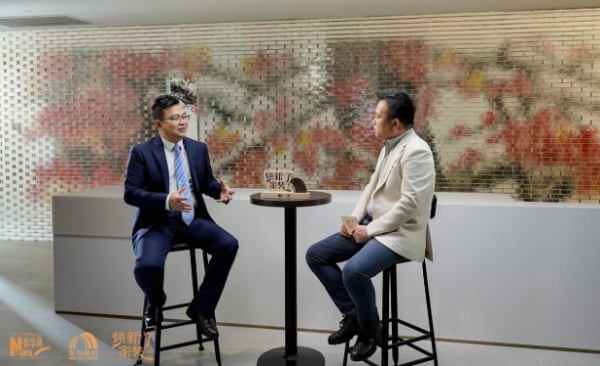
Core Viewpoint - The strategic cooperation agreement between Chuangneng New Energy and Keda Li signifies a long-term procurement partnership exceeding 10 billion yuan in battery precision structural components, enhancing both companies' strategic relationship and supply chain resilience [1][2]. Group 1: Strategic Cooperation Details - The agreement focuses on a comprehensive and in-depth collaboration in the field of battery precision structural components, moving beyond traditional procurement models [1]. - Both companies will establish a joint product research and development laboratory and specialized project teams to optimize product performance, improve manufacturing efficiency, and ensure quality and safety [1]. Group 2: Industry Outlook and Supply Chain Strategy - This partnership reflects Chuangneng's confidence in the long-term development prospects of the lithium battery industry and its commitment to building a stable, technology-driven, and value-sharing supply chain ecosystem [2]. - Chuangneng aims to continue collaborating with more supply chain partners to empower industrial innovation and shape a core paradigm for high-quality development in the new energy sector [2].
“链”就可持续创新生态——访霍尼韦尔中国总裁余锋
Zhong Guo Hua Gong Bao· 2025-07-29 02:46
Core Insights - Honeywell showcased its innovative products at the third China International Supply Chain Promotion Expo, emphasizing the importance of collaboration in upgrading the industrial chain and supporting the digital transformation and sustainable development of the oil and chemical industries [1][2] Group 1: Expectations and Goals - Honeywell aims to display its innovative technologies and solutions in automation, energy transition, and future aviation at the expo, while also seeking to deepen partnerships with Chinese enterprises [2] - The company expresses confidence in the Chinese market and plans to introduce more products and services that meet local demands, contributing to sustainable economic development [2] Group 2: Supply Chain Ecosystem - Honeywell views the supply chain as a multidimensional ecosystem that integrates research, manufacturing, services, policies, and social value, emphasizing a "coexistence and win-win" approach [3] - The company actively collaborates with local suppliers from the product development stage to ensure supply chain stability and has integrated high-quality Chinese suppliers into its global procurement system [3] Group 3: Local and Global Integration - Honeywell's "Eastern service for the East" strategy merges local innovation with global expertise, allowing the company to balance global standards with local needs effectively [3] - The company highlights China's complete industrial chain, which is essential for innovation-driven enterprises, and recognizes the efficiency of Chinese suppliers in quality, cost, and delivery [4] Group 4: Future Directions - Honeywell plans to strengthen the strategic position of local supply chains and enhance diverse collaborations with industry partners to build a resilient, agile, and sustainable supply chain ecosystem [4] - The company has developed various products for the electric vehicle sector, which are not only used by major Chinese manufacturers but also exported to countries like South Korea and Japan [4]

鲁企科技硬实力闪耀链博会
Qi Lu Wan Bao· 2025-07-20 21:24
Group 1 - The third China International Supply Chain Promotion Expo (Chain Expo) was held from July 16 to 20, showcasing 78 participating companies and covering an exhibition area of 2,600 square meters with over 1,000 exhibits [1] - Shandong enterprises displayed innovations in key sectors such as new generation information technology, agricultural equipment, and port logistics, attracting significant audience engagement [1] - Tianzhong Kangyuan Pharmaceutical introduced nutritional supplements at the expo, receiving positive feedback, particularly from the demanding European and American markets, leading to multiple international business negotiations [1] Group 2 - The "One Plate of Goods" strategy was highlighted by Shandong enterprises, emphasizing the construction of an efficient and resilient supply chain ecosystem that integrates production and consumption [2] - This ecosystem aims to break internal business barriers and link global partners, supporting the transition from foreign trade to domestic sales while extending into cultural and enterprise services [2] Group 3 - Lan Jian Intelligent showcased a 4.5-meter high dynamic three-dimensional shelf intelligent system, featuring multiple Spider-Man box robots and T40 picking robots for smart selection of goods [3] - The intelligent warehousing system also supports vertical planting technology and soil-free cultivation, producing pollution-free, additive-free hydroponic vegetables, exemplifying smart agriculture applications [3] - Shandong has leveraged its geographical advantages and comprehensive industrial system to enhance its supply chain resilience and integrate deeply into global supply chains, showcasing the vitality of local enterprises at the expo [3]

北交所策略专题报告:化工新材周涨3.04%:车企账期缩短催化,贝特瑞、禾昌聚合等汽车链迎弹性
KAIYUAN SECURITIES· 2025-06-15 11:36
Group 1 - Major automotive companies have committed to significantly shorten payment terms to suppliers, ensuring payments are made within 60 days, which is a response to the new regulations aimed at protecting small and medium enterprises [10][11][14] - The average accounts receivable turnover days for companies in the automotive supply chain, such as Beiterui and Hechang Polymer, was 160 days in Q1 2025, indicating a long collection cycle that the new payment terms aim to alleviate [16][17] - The automotive industry is working towards establishing a more transparent and fair cooperation mechanism between automakers and suppliers, promoting a healthier and more sustainable supply chain ecosystem [14][16] Group 2 - The chemical new materials sector on the North Exchange saw a weekly increase of 3.04%, outperforming other sectors, with non-metal materials and textile manufacturing leading the gains [19][21] - Key stocks in the chemical new materials sector, such as Keli Co. and Benlang New Materials, experienced significant weekly gains of 37.78% and 34.19% respectively, indicating strong market performance [25][28] - The price trends for various chemical products showed a mixed performance, with Brent crude oil prices rising by 11.7% while MDI and TDI prices decreased by 2.0% and 8.0% respectively [30][31]
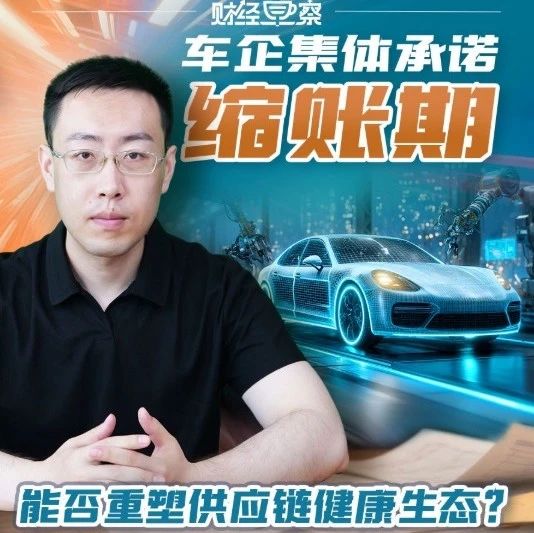
车企集体承诺缩账期,能否重塑供应链生态?
21世纪经济报道· 2025-06-14 04:27
Group 1 - The core viewpoint of the article discusses the collective commitment of multiple automotive companies to shorten payment cycles to suppliers to within 60 days, in response to a new regulation aimed at supporting small and medium-sized enterprises (SMEs) [1][2] - The new regulation, effective from June 1, 2025, mandates that payments to SMEs cannot exceed 60 days and prohibits forcing suppliers to accept non-cash payment methods such as commercial bills [1][2] - This initiative is seen as a governmental effort to address the longstanding issue of "difficulties in collecting payments" faced by upstream SMEs in the supply chain [1]