
家装

Search documents
装修的「天坑」,京东要用AI来填平?
36氪· 2026-03-19 09:38
Core Viewpoint - The article discusses the transformation of the home decoration industry through the integration of AI and supply chain capabilities, aiming to make the renovation process more predictable and user-friendly, moving away from the traditional gamble of home decoration [1][20]. Group 1: Industry Challenges and Opportunities - The home decoration market in China is expected to show resilience by 2025, driven by the demand for renovations in existing homes despite various challenges [1]. - Traditional home decoration models face issues such as chaotic product selection, unclear pricing, and poor smart experience, which hinder industry growth [1]. - The renovation process is often fraught with compromises and regrets, leading to a need for a more systematic approach to home decoration [1]. Group 2: JD's AI Smart Home Decoration Initiative - JD launched the "JD Home Decoration" AI smart home decoration brand, leveraging its supply chain and AI capabilities to address the industry's challenges [1][3]. - The company aims to simplify the renovation process, making it as straightforward as purchasing a computer, by integrating various brands and products into a cohesive system [1][3]. Group 3: Supply Chain Integration and Innovation - JD's approach focuses on integrating existing brands to enable cross-brand and cross-category smart interconnectivity, addressing the fragmentation in the smart home market [4][5]. - The company has begun incorporating its Joy AI model into all powered product categories, enhancing the smart capabilities of traditional home appliances [4][6]. - JD is also developing innovative smart products, such as the "AI Smart Door" and "Smart Window Fresh Air Machine," which integrate multiple functionalities into single units [7][9]. Group 4: Cost Efficiency and Transparency - The traditional home decoration supply chain is plagued by high prices and lack of transparency, with significant profit margins lost in the distribution process [12]. - JD's strategy involves direct sourcing and large-scale procurement, which can reduce material costs by at least 30% [12][11]. - The company aims to redefine the production relationships in the home decoration industry by separating the construction and smart device installation processes, enhancing user experience without increasing costs [13]. Group 5: User Experience and Future Vision - JD's integration of online and offline experiences through JD MALL allows users to experience products physically before making purchases, significantly increasing conversion rates [14]. - The ultimate goal is to create a unified smart home control system, where users can manage all devices through simple voice commands, enhancing convenience and user engagement [10]. - JD's long-term vision is to transition the home decoration industry from a "assembly machine era" to a "brand machine era," where users can make informed choices without compatibility concerns [19].



从新能源高管到AI家居破局者:一位Spark学员的“碳硅合创”之路
混沌学园· 2026-02-24 12:08
Core Viewpoint - The article discusses the transformative journey of a former executive in the renewable energy sector, who shifted to the home decoration industry with the aim of improving the quality of life for families through AI and systematic thinking. This transition is driven by personal experiences and a desire to address the inefficiencies and complexities within the home decoration industry [1][4][12]. Group 1: Personal Motivation and Industry Transition - The executive, known as "Dong Ge," left a lucrative position to pursue a more meaningful career after reflecting on his parents' lack of care in their later years [1][2]. - His decision to enter the home decoration industry stemmed from frustrating personal renovation experiences and a keen professional insight into the need for systematic approaches in a traditionally chaotic sector [4][5][6]. Group 2: Challenges and Realizations - Initial attempts to apply management techniques from the energy sector to home decoration proved ineffective due to the industry's inherent complexity and lack of trust among stakeholders [6][11]. - The COVID-19 pandemic forced a pause in operations, allowing for a period of reflection and strategic reassessment, which led to a deeper understanding of the industry's core issues [11][22]. Group 3: Innovative Approaches and AI Integration - The executive adopted a new perspective by applying first principles thinking to identify the root causes of inefficiencies in the home decoration industry, recognizing the mismatch between consumer desires for personalized services and the industry's inability to deliver them affordably [6][9]. - The introduction of AI into the business model is seen as a pivotal move, with the executive advocating for a shift from traditional human resource management to an "organizational efficiency department" that leverages data and algorithms [13][14]. Group 4: Community and Ecosystem Development - The establishment of a co-creation center in Dongtai is aimed at fostering connections and collaboration among various stakeholders, emphasizing the importance of shared learning and innovation [16][18]. - The executive's long-term vision includes transforming the organization into a self-driven unit that integrates human creativity with AI capabilities, positioning AI as a collaborative partner rather than just a tool [14][15][24]. Group 5: Future Outlook and Philosophy - Despite the current lack of profitability in the home decoration business, the executive maintains a belief in the correctness of the chosen direction, emphasizing a long-term perspective on success and the importance of tackling challenging yet meaningful endeavors [22][23][24]. - The article concludes with a call to action for those interested in exploring innovative methodologies and collaborative practices within traditional industries, highlighting the potential for significant change through systematic approaches and AI integration [25][29].

专访丨东易日盛创始人陈辉:轻装上阵要耐力也要勇气
Bei Jing Shang Bao· 2026-02-12 14:37
Core Viewpoint - The company, Dongyi Risheng, is undergoing a transformation by leveraging digitalization and ecological construction to explore new opportunities in the home decoration industry during the "stock era" [7]. Group 1: Company Transformation - Dongyi Risheng has restructured by introducing industrial and financial investors to gradually repay debts, allowing the company to operate with a lighter burden [7]. - The company aims to operate dual main businesses of "home decoration + computing power" and plans to integrate its digital foundation with advanced AI capabilities [7]. - The shift from traditional large store models to community-based small stores is intended to reduce operational costs and enhance customer trust through local partnerships [9][16]. Group 2: Industry Trends - The home decoration industry is witnessing a shift from a focus on "one-time large expenditures" to "frequent small upgrades," reflecting changing consumer demands for personalized and transparent services [8][11]. - The demand for home decoration is increasingly driven by the need for localized upgrades rather than complete renovations, with a growing interest in adapting spaces for changing family dynamics [12][15]. - The company recognizes the potential in fragmented upgrade demands, such as aging adaptations and pet space creation, which are expected to grow in the future [11][12]. Group 3: Future Strategies - Dongyi Risheng plans to enhance its digital home decoration services by utilizing AI to streamline the design process, allowing customers to generate personalized design plans quickly [10]. - The company aims to trigger consumer demand through content and experiential marketing, shifting from a reactive to a proactive approach in engaging potential customers [17]. - The focus on community stores is to create a "home upgrade consultant" role, enhancing customer interaction and reducing traditional service response times [16].

数字化重塑品质生态 头部引领行业升级——北京家装行业高质量发展观察
Bei Jing Shang Bao· 2026-02-12 02:24
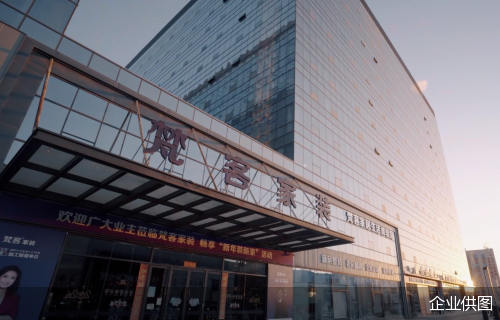
Group 1: Industry Transformation - The home decoration industry in Beijing is undergoing structural changes, shifting from extensive expansion to refined operations and from price competition to value competition, driven by urban renewal and rising residential quality demands [1] - The market is entering a deep adjustment period characterized by the survival of the fittest, with leading companies demonstrating resilience through stable operations while weaker firms exit due to single business models and unstable delivery [1][8] - Companies like Vanke Home Decoration are aiming for market leadership by strengthening their comprehensive capabilities, reflecting a long-term trend towards brand reputation, delivery capability, and operational efficiency [1] Group 2: Digitalization and AI Integration - Digitalization and AI technologies are becoming the core foundation for high-quality development in the home decoration sector, addressing industry pain points such as transparency and efficiency [3] - Leading companies are accelerating full-chain digital transformation, with Vanke Home Decoration planning to achieve comprehensive digital operations and AI customer service coverage by 2026, significantly enhancing operational efficiency and customer experience [3] Group 3: Consumer Experience and Trust - The industry is shifting from selling products to selling experiences and trust, with rising consumer demands for personalized, high-quality, and comprehensive decoration services [5] - Companies are focusing on core consumer pain points, implementing strict commitments to avoid delays and enhance consumer rights protection through contractual measures [5] Group 4: Competitive Landscape and Growth Models - The competitive landscape is evolving towards differentiated and sustainable growth models, with leading companies adopting a dual approach of "advertising + operations" to balance traffic acquisition and refined operations [7] - Companies are innovating product systems and enhancing talent development to build core barriers, including plans for personalized high-end products and incentives for skilled professionals [7] Group 5: Opportunities and Challenges - The Beijing home decoration industry faces both opportunities and challenges, including fluctuating traffic costs, service commitment fulfillment, talent system development, and intensified market competition [8] - Long-term, the industry is supported by policy guidance, technological advancements, and consumer upgrades, with leading companies like Vanke Home Decoration expected to drive the sector towards higher quality and sustainability [8]
梵客集团举办2026新春年会,董事长李静三大中心思想护航“最好的发展年”
Sou Hu Cai Jing· 2026-02-11 03:30
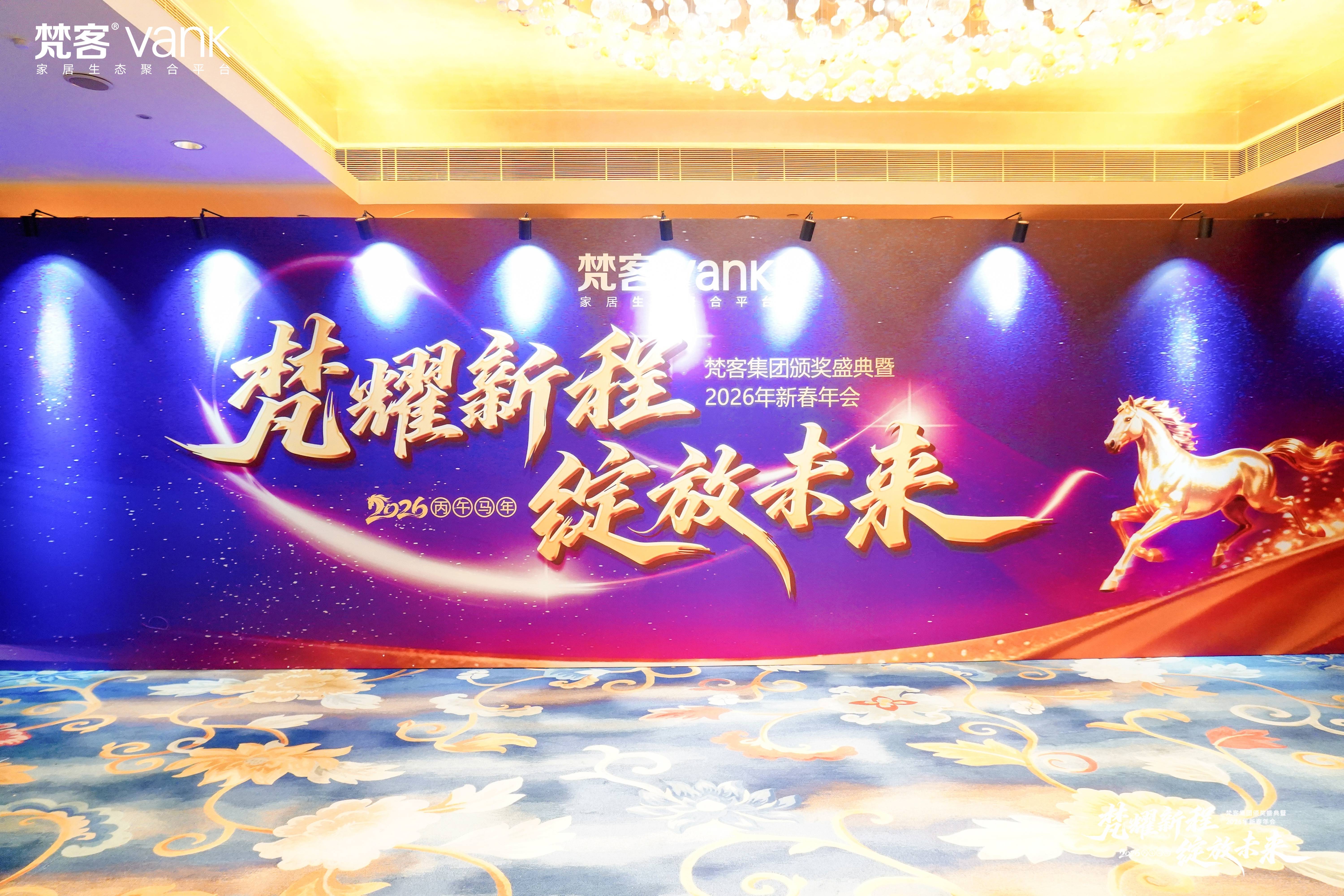
Core Insights - The event "Fankai New Journey, Blooming Future" was held by Fankai Group in Beijing, marking the company's annual awards ceremony and Spring Festival gathering [1] Group 1: Company Development and Strategy - Fankai Group's Chairman, Li Jing, reviewed the company's achievements from the previous year and shared strategic plans for 2026, indicating that it could be the "best development year" for Fankai Home Decoration [6] - The company emphasizes a long-term approach, avoiding short-term speculation and price competition, focusing on delivery and service to exceed customer expectations [6] - For 2025, Fankai Home Decoration will prioritize brand building, terminal layout, and integrated traffic strategies to enhance market recognition and solidify its reputation [6] Group 2: 2026 Development Focus - The company has outlined three central themes for 2026: 1. **Growth Maintenance**: Focus on dual-driven investment and operations to reduce reliance on single investments and optimize resource allocation [6] 2. **Reputation Strengthening**: Enhance customer satisfaction and encourage user-generated content to boost referral rates, making reputation a core support for development [6] 3. **Profit Improvement**: Utilize digital tools to enhance operational efficiency and create a lean team to pursue effective results, fostering collaboration across all product categories and employees to improve profitability [6] Group 3: Market Positioning - Fankai Home Decoration aims to establish clear development goals in the Beijing market, leveraging reputation, efficient management, and service capabilities to achieve sustainable growth during the industry's transformation [7]
深圳今年如何“花钱”?财政将支持实施提振消费专项行动
Nan Fang Du Shi Bao· 2026-02-10 12:00
Core Insights - Shenzhen's budget report for 2025 and draft for 2026 highlights a strong financial position with a general public budget revenue of 11,302 billion yuan in 2025, marking five consecutive years above 10,000 billion yuan [1] - The report emphasizes a focus on enhancing public welfare and economic development through strategic fiscal policies and spending [6] Revenue Structure - Shenzhen's local revenue reached 4,163.8 billion yuan in 2025, reflecting a growth of 6.4%, with tax revenue contributing 3,510.6 billion yuan, a 7.5% increase, and non-tax revenue at 653.1 billion yuan, growing by 0.6% [1] - Tax revenue accounts for 84.3% of the local revenue, positioning Shenzhen's revenue structure among the best in the country [1] Expenditure Overview - The total general public budget expenditure for 2025 is set at 4,502.5 billion yuan, with nine categories of public welfare spending amounting to 3,048.8 billion yuan, representing 67.7% of total fiscal expenditure [3] - Key areas of spending include education, healthcare, and social welfare, with initiatives for free preschool education and enhanced healthcare funding [3][6] Debt Management - Shenzhen's local government debt limit for 2025 is set at 1,063 billion yuan, with all issued bonds comprising 68 billion yuan in general bonds and 995 billion yuan in special bonds [4] - The focus on special bonds aims to support infrastructure, social welfare, and investment expansion [4] Future Fiscal Policies - For 2026, Shenzhen plans to maintain a proactive fiscal policy, with public welfare spending expected to remain around 65% of total fiscal expenditure [6] - The city aims to stimulate consumption through fiscal subsidies and support for various sectors, including automotive and electronics [8] - There is a commitment to fostering a modern industrial system and enhancing the business environment for private enterprises [8]

政策加力,以旧换新激发市场潜能
Sou Hu Cai Jing· 2026-02-10 02:23
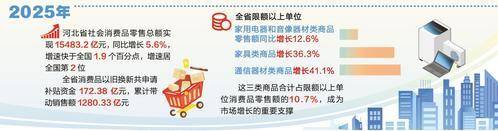
Core Viewpoint - The retail sales of consumer goods in Hebei Province reached 1,548.32 billion yuan in 2025, with a year-on-year growth of 5.6%, outpacing the national average by 1.9 percentage points, ranking second in the country [1] Group 1: Policy Impact - The "old-for-new" policy has significantly boosted consumer spending, with 172.38 billion yuan in subsidies leading to a sales increase of 1280.33 billion yuan [1] - The Hebei Province has expanded its "old-for-new" policy framework, enhancing its coverage and ensuring effective implementation through a combination of short-term and long-term strategies [2] - The introduction of subsidies for digital products such as smartphones, tablets, and smartwatches marks a significant expansion of the policy's scope, supporting consumers in adopting smart technologies [2] Group 2: Consumer Experience - The "Huanxin Life" app in Langfang has facilitated the purchase of electronic products, offering substantial subsidies and creating a new consumer service environment [4] - In Baoding, a streamlined online platform for electric bicycle exchanges has been established, allowing consumers to complete the entire process quickly and efficiently [4] - The "old-for-new" initiative not only stimulates consumption but also drives quality supply, creating a positive cycle of policy stimulation, industrial upgrading, and consumption expansion [4] Group 3: Sales Growth Data - In 2025, retail sales of household appliances and audio-visual equipment increased by 12.6%, furniture by 36.3%, and communication equipment by 41.1%, collectively accounting for 10.7% of retail sales in the province [5]
4个涨停后突现“天地板”,“豪宅设计专家”名雕股份6500万元布局新公司,打什么算盘?
Hua Xia Shi Bao· 2026-02-07 04:32
Core Viewpoint - On February 5, 2025, Shenzhen Mingdiao Decoration Co., Ltd. (002830.SZ) experienced significant stock volatility, hitting a peak of 34.05 CNY per share before closing at the daily limit of 27.86 CNY after a series of four consecutive trading days of price increases [2][4]. Group 1: Company Dynamics - Mingdiao Decoration has recently established two new companies, one of which focuses on artificial intelligence, indicating a potential shift towards digitalization or new business ventures [2][5]. - The company has a strong market position, targeting mid-to-high-end clients with services including residential design, engineering construction, and customized wood products [3][5]. - The founder, Lan Jixiao, retains a significant ownership stake of 22.55% in the company, which was founded in 1999 and went public in 2016 [3][5]. Group 2: Financial Performance - For the first three quarters of 2025, Mingdiao Decoration reported a revenue of 438 million CNY, reflecting a year-on-year decline of 2.09%, with a net profit of 15.90 million CNY, down 1.21% [5][6]. - The company has been focusing on enhancing service quality and has introduced a high-end comprehensive service brand aimed at young, high-income households [5][6]. Group 3: Digital Transformation - Mingdiao Decoration has made strides in digital transformation, launching the Mingdiao SAAS digital home decoration platform, which integrates cloud computing, AI, big data, and IoT technologies [6]. - The company claims to be a pioneer in digital transformation within the industry, having started exploring digital home decoration paths as early as 2008 [6]. - However, the R&D expenditure for 2024 was reported at 4.59 million CNY, a decrease of 39.13% year-on-year, primarily focused on new materials and the digital home decoration platform [6].

2025年全国消协受理投诉超200万件:售后问题占比最高,汽车、情感、黄金消费成为投诉热点
Bei Jing Shang Bao· 2026-02-06 03:54
Core Insights - The report from the China Consumers Association indicates that consumer complaints in 2025 reached 2,016,448, a year-on-year increase of 14.45%, with a resolution rate of 52.84% and a total economic loss recovery of 925 million yuan for consumers [1] Complaint Nature Summary - After-sales service issues accounted for 27.68% of complaints, contract issues for 23.79%, quality issues for 19.51%, false advertising for 7.88%, safety issues for 5.93%, pricing issues for 4.73%, counterfeit issues for 3.48%, personal rights issues for 1.08%, measurement issues for 0.78%, and other issues for 5.13% [1] - Compared to 2024, complaints regarding counterfeits, false advertising, and contract issues increased, while complaints about after-sales service, quality, and other issues decreased [1] Complaint Category Summary - Among all complaints, product-related complaints totaled 1,081,511, representing 53.63% of the total, an increase of 4.4 percentage points from 2024; service-related complaints were 845,710, accounting for 41.94%, a slight decrease of 0.27 percentage points; other complaints numbered 89,227, making up 4.42% [1] Product Complaint Details - The top five categories for product complaints were home electronics, daily goods, clothing and footwear, food, and transportation [2] - Compared to 2024, complaints in daily goods and clothing and footwear increased, while complaints in tobacco, alcohol, and beverages decreased [2] Service Complaint Details - The leading categories for service complaints included life and social services, internet services, education and training services, sales services, and cultural, entertainment, and sports services [2] - Compared to 2024, complaints in internet services, education and training services, and public facility services increased, while complaints in telecommunications and life and social services decreased [2] Specific Complaint Areas - Automotive complaints highlighted new types of disputes, including issues with after-sales service commitments due to dealership closures and transparency problems in the delivery of new energy vehicles [3] - Emotional consumption faced issues with anxiety marketing, where some businesses exploited information asymmetry to manipulate consumers [3] - The home decoration market experienced problems with low-price bait and additional charges, leading to contract disputes and quality issues [3] - Travel complaints included hidden add-ons and "default checkboxes," with platforms using standard clauses to hinder reasonable refunds [3] - Gold consumption disputes involved issues with material authenticity and weight misrepresentation [4] - Online training complaints included false promises of easy earnings and misleading course content [5] - Non-bank financial institutions exhibited improper collection practices, raising actual borrowing costs and potentially engaging in usury [5]
涉及汽车、黄金等 2025年全国消费领域投诉热点集中在这些领域
Xin Lang Cai Jing· 2026-02-05 15:05
Group 1: Automotive Industry - The automotive consumption structure is undergoing rapid changes, leading to new types of disputes and risks, particularly in the context of traditional fuel vehicles and the rise of online pre-sales for electric vehicles [2] - Issues include the closure of 4S stores affecting after-sales service commitments, transparency problems in delivery timelines for electric vehicles, and misleading advertising practices [2] Group 2: Emotional Economy - The rise of the "loneliness economy" and "emotional economy" has led to a surge in emotional consulting and online companionship services, with some businesses exploiting vulnerable consumers through anxiety marketing [3][4] - Complaints highlight deceptive marketing tactics, difficulties in obtaining refunds, and a pattern of incremental charges for services that lack substance [4] Group 3: Home Decoration Market - The home decoration market is facing issues with low-price bait-and-switch tactics, leading to increased complaints about hidden charges and contract disputes [5][6] - Common problems include unclear additional costs during the renovation process, failure to fulfill contractual obligations, and poor quality of work and materials [6] Group 4: Travel Industry - Complaints in the travel sector are prevalent, particularly regarding hidden add-ons and difficulties in modifying or canceling bookings [6] - Issues include deceptive practices in upselling services, platforms using restrictive terms to deny refunds, and discrepancies between advertised and actual service quality [6] Group 5: Gold Market - The rising demand for gold has led to increased complaints, particularly regarding misleading pricing and product authenticity [7] - Key issues include "one-price" gold sales obscuring critical information, counterfeit products sold online, and discrepancies in declared weights [7] Group 6: Online Skill Training - Complaints in the online skill training sector are on the rise, with issues centered around false promises and inducements to take out loans [8] - Problems include exaggerated claims about potential earnings, misleading loan offers, and discrepancies between promised and delivered course content [8] Group 7: Second-Hand Market - The second-hand market is experiencing growth, but it is also facing numerous complaints regarding product quality and after-sales service [9][10] - Common issues include misleading quality reports, frequent product malfunctions shortly after purchase, and inadequate after-sales support [10] Group 8: Non-Bank Financial Services - The non-bank financial sector is seeing a significant increase in complaints, particularly related to improper collection practices and disguised high-interest loans [11] - Key issues include aggressive collection tactics, hidden fees that inflate borrowing costs, and predatory lending disguised as equipment rental agreements [11]