
依法行政

Search documents
以高水平法治护航中国式现代化的贵州实践
Xin Lang Cai Jing· 2025-12-28 22:35
Core Viewpoint - The article emphasizes the significant progress made in the legal system of Guizhou province during the "14th Five-Year Plan" period, highlighting the integration of legal governance into economic and social development, and the establishment of a comprehensive legal service network to enhance public welfare and governance efficiency [3][4][16]. Group 1: Legal System Development - The provincial legal system has effectively integrated legal governance into the overall development strategy, with the establishment of a scientific work system involving multiple stakeholders [4][6]. - A total of 41 local regulations and 59 government rules have been proposed for formulation, modification, or repeal, alongside the cleaning of over 14,000 regulatory documents to promote good governance [8][9]. - The implementation of a legal supervision mechanism has led to the recognition of several cities in Guizhou as national models for legal government construction [6][9]. Group 2: Public Legal Services - A public legal service network has been established, covering urban and rural areas, with 103 legal service centers and 1,510 service stations, providing over 170,000 legal consultations [12][14]. - The "15-minute public legal service circle" initiative has been recognized as an excellent public relations case, enhancing accessibility to legal services for citizens [12]. - Legal aid services have been provided to 238,600 individuals, showcasing the commitment to public welfare [12]. Group 3: Legal Education and Awareness - The province has built 4,684 legal culture sites and implemented the "Eight-Five" legal education plan, significantly increasing public awareness of legal rights and responsibilities [13][14]. - The "Qianwei Legal Education" initiative has reached 2.58 million users, with over 60 million total reads, indicating a strong engagement with legal education [13]. - The establishment of legal vice-principal positions in over 11,000 schools has ensured that legal education is integrated into the school curriculum [13]. Group 4: Conflict Resolution and Community Governance - The province has established 21,000 people's mediation committees, with over 120,000 cases mediated, significantly reducing litigation rates [14][15]. - Community correction systems have been enhanced, helping over 71,000 individuals reintegrate into society, with a recidivism rate below the national average [15]. - The "Fengqiao Experience" has been adopted to improve grassroots conflict resolution efficiency, demonstrating the effectiveness of local governance [14][15]. Group 5: Future Directions - The legal system in Guizhou aims to further strengthen its role in supporting the modernization of the province, focusing on enhancing legislative quality and optimizing public legal services [16]. - The commitment to integrating legal governance into economic development will continue to be a priority, ensuring that legal frameworks support sustainable growth [16].


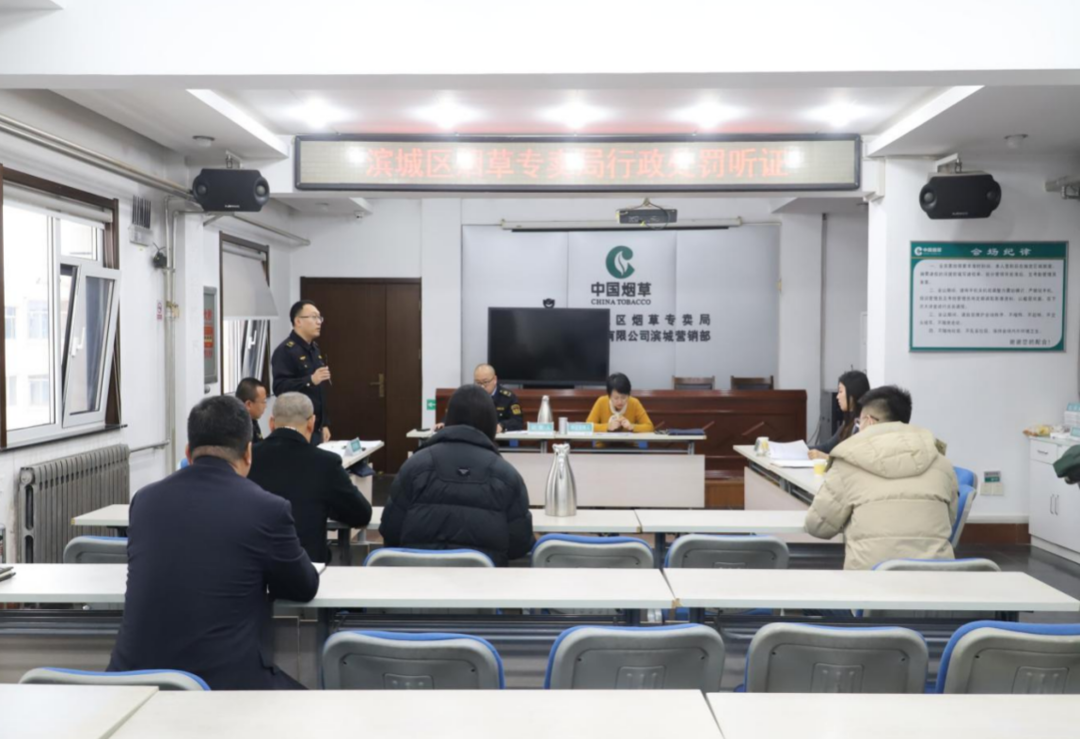
滨州市烟草系统首例行政处罚案件听证在滨城区烟草专卖局举行
Qi Lu Wan Bao· 2025-12-26 15:47
Core Viewpoint - The recent administrative hearing organized by the Bincheng District Tobacco Monopoly Bureau marks a significant step towards the standardization and legalization of tobacco monopoly law enforcement in Binzhou, contributing valuable practical experience to the construction of a law-based society in the region [1][3]. Group 1 - The hearing is the first of its kind in Binzhou's tobacco system, indicating a proactive approach to legal administration and market governance [1][3]. - The hearing was conducted in strict accordance with the Administrative Penalty Law of the People's Republic of China and relevant regulations, ensuring a standardized and orderly process [3]. - The event reflects the increasing legal awareness and rights protection consciousness among cigarette retailers and consumers, which demands higher standards and stricter requirements for market governance and law enforcement [3]. Group 2 - The Bincheng Tobacco Monopoly Bureau aims to enhance the transparency and credibility of administrative penalties through standardized enforcement procedures, ensuring the protection of legal rights throughout the enforcement process [3]. - The bureau plans to use this hearing as a model to continuously improve the standardization of tobacco monopoly law enforcement and enhance the precision of law enforcement [3]. - Future efforts will focus on promoting market governance with legal thinking and methods, aiming to ensure that each case withstands legal scrutiny and time, thereby building a solid legal foundation for a fair and orderly cigarette market [3].
司法部负责人就《行政执法监督条例》答记者问
Xin Lang Cai Jing· 2025-12-23 11:52
Core Viewpoint - The newly issued Administrative Law Enforcement Supervision Regulations aim to strengthen and standardize administrative law enforcement supervision, promote strict, standardized, fair, and civilized law enforcement, enhance the level of law-based administration, and reinforce the construction of a law-based government [1][2]. Group 1: Background of the Regulations - Administrative law enforcement supervision is a crucial part of the party and state supervision system, serving as a fundamental method for various levels of party committees and governments to coordinate administrative law enforcement work [2]. - Since the 18th National Congress of the Communist Party, the administrative law enforcement supervision system has been continuously improved, leading to significant progress in standardizing law enforcement behavior and enhancing the law enforcement system [2]. - Despite improvements, issues such as arbitrary charges, fines, inspections, and illegal enforcement still occur, indicating a need for legislative measures to further strengthen administrative law enforcement supervision [2]. Group 2: Scope of Administrative Law Enforcement Supervision - The regulations specify that supervision will cover the implementation of major decisions and deployments regarding administrative law enforcement by the central government, as well as various administrative law enforcement systems and practices [3]. - There will be enhanced qualification management and supervision of the qualifications of administrative law enforcement entities and personnel [4]. - Behavioral supervision will focus on issues such as failure to file cases, evasion of responsibility, improper enforcement practices, and arbitrary charges and fines [4]. Group 3: Methods of Administrative Law Enforcement Supervision - The regulations clarify supervision methods, allowing for comprehensive, all-process, and long-term supervision through daily, key, and special supervision [5]. - Key supervision will involve focused oversight on significant enforcement issues that have a major social impact, utilizing feedback mechanisms from enterprises and the public [5]. - Special supervision will be conducted by provincial-level administrative law enforcement supervision agencies on specific fields and issues that relate to economic and social development and public interests [5]. Group 4: Handling of Supervision Issues - The regulations standardize handling procedures for issues identified during supervision, including issuing supervision notices and requiring immediate corrections when possible [6]. - Results from administrative law enforcement supervision will be integrated into the evaluation of the effectiveness of law-based government construction [6]. - There will be enhanced collaboration between administrative law enforcement supervision and other oversight mechanisms, including government inspections and administrative reviews [6]. Group 5: Support for Administrative Law Enforcement Supervision - The regulations emphasize the need to strengthen the capacity building of the administrative law enforcement supervision team, enhancing both political and professional skills [7]. - There will be a push for standardized construction, with the establishment of standards for administrative law enforcement [7]. - Information technology will be leveraged to improve the integration of national administrative law enforcement supervision, utilizing big data, cloud computing, and artificial intelligence for rapid problem detection [7].
“两高”联合发布第三批行政公益诉讼典型案例
Yang Shi Wang· 2025-12-22 07:08
Core Viewpoint - The release of the third batch of typical administrative public interest litigation cases by the Supreme People's Court and the Supreme People's Procuratorate aims to enhance the guidance and leading role of typical cases in promoting the rule of law and protecting public interests in various sectors [1][2]. Group 1: Administrative Public Interest Litigation Cases - The seven typical cases cover multiple fields and reflect the importance of administrative public interest litigation in serving national interests and protecting the well-being of the people [1][2]. - The cases emphasize a problem-oriented approach, addressing issues where public interests are neglected due to the absence of direct stakeholders, thus highlighting the necessity of litigation to resolve governance deadlocks [1][2]. Group 2: Case Summaries - The case from Haikou City involves a company illegally occupying agricultural land and causing environmental damage, leading to a public interest lawsuit initiated by the local procuratorate after ineffective administrative responses [4][5][6]. - In Guizhou Province, a case was filed against the local agricultural bureau for failing to regulate pesticide use, which resulted in significant harm to local beekeepers and agricultural safety [10][11][12]. - A case in Chongqing highlighted the failure of the market supervision bureau to manage prescription drug sales, leading to public health risks due to improper sales practices by pharmacies [15][16][17]. - The case from Heilongjiang Province focused on the local housing authority's neglect in managing public rental housing, resulting in significant public asset losses and ineffective use of resources [20][21][22]. - In Henan Province, a case was initiated against the urban management bureau for failing to address safety hazards posed by improperly installed street fixtures, impacting the mobility of disabled individuals [25][26][27]. - The case in Anhui Province involved the local human resources bureau's inaction against gender discrimination in job postings, infringing on women's employment rights [30][31][32]. - A case in Shaanxi Province addressed the cultural heritage protection responsibilities of the local tourism bureau, which failed to act on the deteriorating condition of a significant historical site [35][36][37]. Group 3: Implications and Significance - The typical cases demonstrate the collaborative efforts of various departments under the unified leadership of the Party, showcasing a comprehensive public interest protection framework [2]. - The cases serve as a model for enhancing legal standards and promoting the stability and development of China's administrative public interest litigation system [2]. - The outcomes of these cases reinforce the importance of judicial oversight in ensuring that administrative bodies fulfill their legal responsibilities, thereby protecting public interests and promoting social governance [19][24][29].
水利部举办“12·4”国家宪法日专题讲座
Shui Li Bu Wang Zhan· 2025-12-05 14:38
Core Viewpoint - The lecture organized by the Ministry of Water Resources emphasizes the importance of rule of law in government administration, particularly in the water sector, addressing challenges and requirements for effective governance in the new era [1] Group 1: Key Themes of the Lecture - The core essence and requirements of lawful administration in the new era were systematically explained, highlighting the need for a law-based government [1] - The lecture analyzed the key tasks and real challenges of lawful administration within the water sector, focusing on the importance of legal norms and governance [1] - Basic requirements and key tasks for higher-level lawful administration were discussed, including the scientific nature of the legal norm system and rational government-market relations [1] Group 2: Participants and Format - The lecture was attended by senior officials from the Ministry of Water Resources, including the Chief Planner and Chief Economist, as well as all civil servants in the ministry [1] - Various subordinate units participated in the lecture through online video format, indicating a broad engagement across the ministry [1]
市政府法律顾问工作会议召开 徐曙海出席并讲话
Zhen Jiang Ri Bao· 2025-11-22 00:00
Core Points - The city government held a meeting to summarize the work of legal advisors and appoint a new team of legal advisors, emphasizing the importance of legal counsel in promoting the rule of law and supporting economic and social development [1][2] Group 1 - The new legal advisors were selected through a rigorous process and are expected to contribute significantly to the government's legal decision-making and administration [1][2] - The meeting highlighted the role of legal advisors in providing legal support for economic policies, major contracts, and asset management, aligning with national policy directions [2] - Legal advisors are tasked with enhancing risk assessment for major decisions and projects, ensuring effective legal support during emergencies, and acting as guardians against legal risks [2] Group 2 - The city government aims to build a high-quality professional team of legal advisors who adhere to principles of independence, objectivity, and fairness [2] - There is a focus on improving the quality of legal services and enhancing the ability to address new challenges and conflicts [2] - The implementation of the legal advisor system is emphasized as a means to support the rule of law and regulate the exercise of administrative power [2][4]
贵州厅持续健全依法行政工作机制
Zhong Guo Zi Ran Zi Yuan Bao· 2025-11-21 09:54
《通知》明确,要建立多机构法治工作会商剖析机制。全省各级自然资源主管部门在办理跨部门、 跨行业、跨领域业务,包括审计、督察、耕地保护考核反馈重大问题整改时,有牵头机构组织本级各相 关业务机构、事业单位,共同会商该业务涉及的部门、行业、领域法律法规适用问题,按照上位法优于 下位法、特殊法优于一般法的原则,梳理新旧法衔接,正确引用法律法规依据破解业务难题和问题。建 立多机构案例剖析机制,各级自然资源主管部门法治工作领导机构通过组织案例剖析会,由主办机构梳 理被纠错、败诉理由,举一反三,找准问题症结,总结经验教训,属于制度漏洞的,及时建章立制,堵 塞漏洞;属于有法不依、执法不严的,通过深刻剖析吸取教训,避免今后再犯类似错误,实现剖析一个 案例,解决一类问题,纠错一人,提醒一群的良好效果。 《通知》强调,要加强全省自然资源系统法治人才队伍建设。构建"统一管理、按需调配、动态优 化"的人才工作体系,建立省、市、县三级法治人才库。人才库实行分类登记、动态管理,按专业领域 和业务特长进行标注,根据人员调动等情况及时更新。人才库的法治工作者承担本部门依法履职问题研 究、会审会商、案例剖析、法治培训等工作任务。厅法治办负责厅法 ...
靶向施治规范涉企行政执法
Zhong Yang Ji Wei Guo Jia Jian Wei Wang Zhan· 2025-11-18 01:44
中央纪委国家监委网站 鲍爽 习近平总书记强调,营商环境是企业生存发展的土壤。二十届中央纪委四次全会要求,聚焦吃拿卡要、 冷硬横推、违规收费、趋利性执法等严重影响市场秩序问题,督促纠治整改,促进保持公平公正的市场 环境、风清气正的营商环境。严格规范涉企执法是提高依法行政水平、优化营商环境的重要一环。各地 纪检监察机关立足职能职责,把整治涉企行政执法领域突出问题作为护航优化营商环境的抓手,聚焦存 在的不正之风和腐败问题强化监督执纪问责,既严肃查处个案、形成震慑,又推动行业性、系统性治 理,促进整体提升。 行政执法领域突出问题涉及部门多、范围广,实践中,各地纪检监察机关注重压紧压实各方责任,促进 同向发力,推动多部门、跨层级统筹联动、合力攻坚。 山东省纪委监委机关与省司法厅等部门制定《关于建立纪检监察监督与法治督察、行政复议、行政执法 监督贯通协调机制的实施意见》,明确5个方面12项具体措施,强化信息互通、措施配合、线索移交、 成果共享。潍坊市纪委监委与市司法局定期会商,通报工作情况、研商阶段性重点难点工作,对司法行 政机关在涉企行政执法监督中发现的重点执法领域问题线索,共同会商研判,开展联合调研督导。今年 8月, ...
安徽六安局“以案促学”提升依法行政能力
Zhong Guo Zi Ran Zi Yuan Bao· 2025-10-24 02:33
Core Viewpoint - The Anhui Province Lu'an City Natural Resources and Planning Bureau is enhancing the legal literacy and government transparency capabilities of its staff through immersive legal education by attending a court hearing related to government information disclosure [1] Group 1: Legal Education Initiatives - The bureau organized staff to observe a court case involving a citizen's request for public disclosure of construction project planning, emphasizing the importance of legal compliance in administrative duties [1] - The court hearing allowed participants to witness the litigation process, including evidence presentation and legal debates, thereby gaining a practical understanding of administrative litigation procedures [1] Group 2: Responsibilities and Compliance - The bureau's head actively participated in the court proceedings, highlighting the necessity of fulfilling legal responsibilities regarding information disclosure and asserting that the bureau has complied with relevant laws [1] - The initiative aims to instill a legal mindset among staff, reinforcing the principle that "legal duties must be fulfilled, and actions without authorization are prohibited" [1] Group 3: Future Plans - The bureau plans to continue promoting legal governance through various methods such as court observation, case discussions, and specialized training to integrate legal awareness into all business processes [1]
下达罚没指标违法,执法绝不是“创收工具”
Nan Fang Du Shi Bao· 2025-10-13 21:46
Core Viewpoint - The article highlights a case of administrative enforcement in a county in Henan, where the local fire rescue team imposed rigid monthly penalties, indicating a shift from public safety to revenue generation in administrative law enforcement [1][2]. Group 1: Administrative Enforcement Issues - The county's fire rescue team set a monthly target for administrative penalties, requiring each street and town to issue at least 2 penalties with fines between 2000-2500 yuan, leading to uniformity in enforcement actions [1]. - The essence of administrative enforcement is to protect public interest and ensure safety, but the focus on revenue generation can lead to selective or excessive enforcement, neglecting real risks [1][3]. Group 2: Government Response and Oversight - The local administrative enforcement supervision bureau intervened quickly upon discovering the issue, issuing a corrective opinion, which reflects the positive role of internal oversight mechanisms [2]. - The Ministry of Justice has highlighted this case as part of a broader initiative to regulate administrative enforcement practices, demonstrating a commitment to lawful administration at the central level [2]. Group 3: Recommendations for Systemic Change - To fundamentally eliminate such issues, reforms are needed at both the institutional and regulatory levels, including strict adherence to the prohibition of profit-driven enforcement and the elimination of penalty quotas [3]. - There is a need to strengthen financial discipline and implement a clear separation of penalty collection and departmental revenue to sever the link between enforcement actions and economic interests [3]. - Enhancing the enforcement assessment system to prioritize quality and public satisfaction over mere quantity is essential for improving enforcement practices [3].